L.A. Fires, One Year Later
Erasure in the Historically Black Community of Altadena
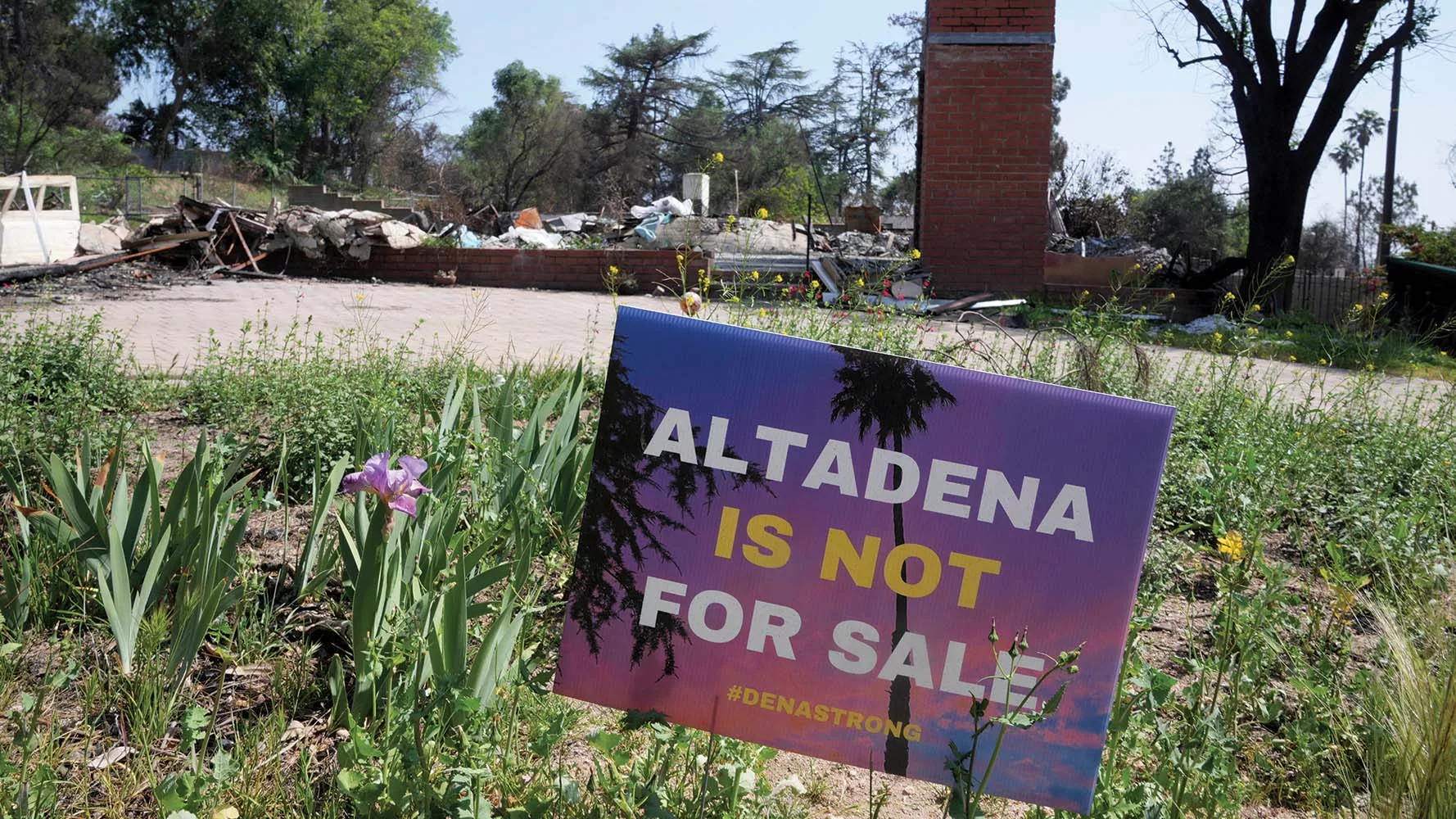
As climate change reshapes the American landscape and habitable land shrinks, people are forced to reconsider what it means to be “on safe ground.” The Eaton Fire in Altadena makes for one such reckoning. Cycles of risk and recovery have deep roots in this country, and the burdens they impose are never evenly borne. Some rebuild while others are left behind. This is the story of Altadena’s Black community.
Through the 1960s, restrictive covenants and redlining barred Black Americans from neighboring Pasadena and Los Angeles. Altadena, an unincorporated area in the San Gabriel foothills, offered something different: a place to own land. Over the decades, residents erected modest bungalows, ranch houses, and architect-designed residences, built in defiance of the very systems designed to exclude them.
On January 7, 2025, the Eaton Fire swept through, destroying over 6,000 homes. Black-owned homes suffered disproportionate losses, with 6 in 10 destroyed, the highest damage rate for any racial group. Today, brick chimneys stand over empty lots as totems of what once was there. What has been lost are not merely structures but a collective spatial memory, the material record of Black placemaking in Southern California erased in a single event. Yet recovery itself threatens to complete what the fire began—displacement.
Ironically, the unincorporated status that once enabled Black homeownership now limits residents’ ability to access recovery resources. This structural vulnerability was evident from the outset: only one fire truck reached the predominantly Black western section in the first 12 hours. The path forward has been marked by obstacles: contaminated soil, underinsurance, and slow permitting, all exacerbated by reduced federal support. FEMA assistance has totaled less than a third of what previous California disaster survivors received, due both to the unprecedented scale of simultaneous fires and to the Trump Administration’s punitive shift in federal aid policies. Altadena’s unincorporated status compounds these challenges, eliminating access to the municipal resources and advocacy that incorporated cities can leverage for their residents.
The question now is not just how to rebuild, but who will return, and on what terms.
A grim answer has begun to emerge. According to UCLA researchers, 73 percent of Black homeowners showed no progress toward reconstruction nine months after the fire. The gap between decades-old insurance coverage and soaring construction costs is unbridgeable for many Altadena households. Unable to rebuild, residents sell to investors and developers acquiring parcels at reduced prices. County data show only 282 Altadena permits issued by late November 2025, compared to more than 1,070 in Pacific Palisades, as reported by the Los Angeles mayor’s office, a fourfold disparity.
Some architects, such as Mira Henry and Matthew Au of Current Interests (a 2025 Design Vanguard), are pushing back against this tide by collaborating intimately with clients and employing cost-effective materials and strategies. “The folks we are partnering with wouldn’t usually think of engaging an architect,” notes Henry. Their Small Long House exemplifies incremental, phased recovery that makes architectural services accessible to those who could not otherwise afford them. Now permitted for construction in early 2026, the slender 100-foot-long, 1,600-square-foot bar made of noncombustible masonry blocks and clad in fiber-cement panels will initially house a family of four before being converted to an ADU once they can build a larger house.
Looking for quick answers on architecture and design topics?
Try Ask RECORD, our new smart AI search tool.
Ask RECORD →
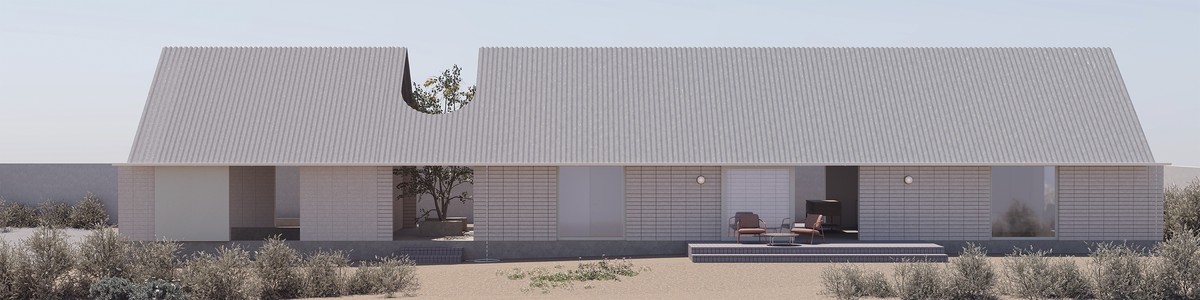
The Small Long House, by Current Interests, explores strategies for an economical phased reconstruction in Altadena. Image © Current Interests, click to enlarge.
Peter Tolkin and Sarah Lorenzen of TOLO Architecture demonstrate similar principles through spatial ingenuity. Working with an art curator who lost a small single-story house in western Altadena, the architects inverted the typical lot arrangement. A two-story residence would now occupy the rear of the property while a 400-square-foot ADU would buffer the street. Still at a conceptual stage, this strategic reversal frees the site’s center for garden space, restoring what the client valued most while creating defensible perimeters. The compact cubic forms maximize flexibility while an upper-level deck reconnects to mountain views. Like Current Interests’ phased recovery, TOLO’s design prioritizes the client’s needs over anecdotal solutions, demonstrating how constraints can yield more responsive architecture. Together, these interventions propose an alternative recovery model: incremental, client-driven, and operating within each project’s own timeline.
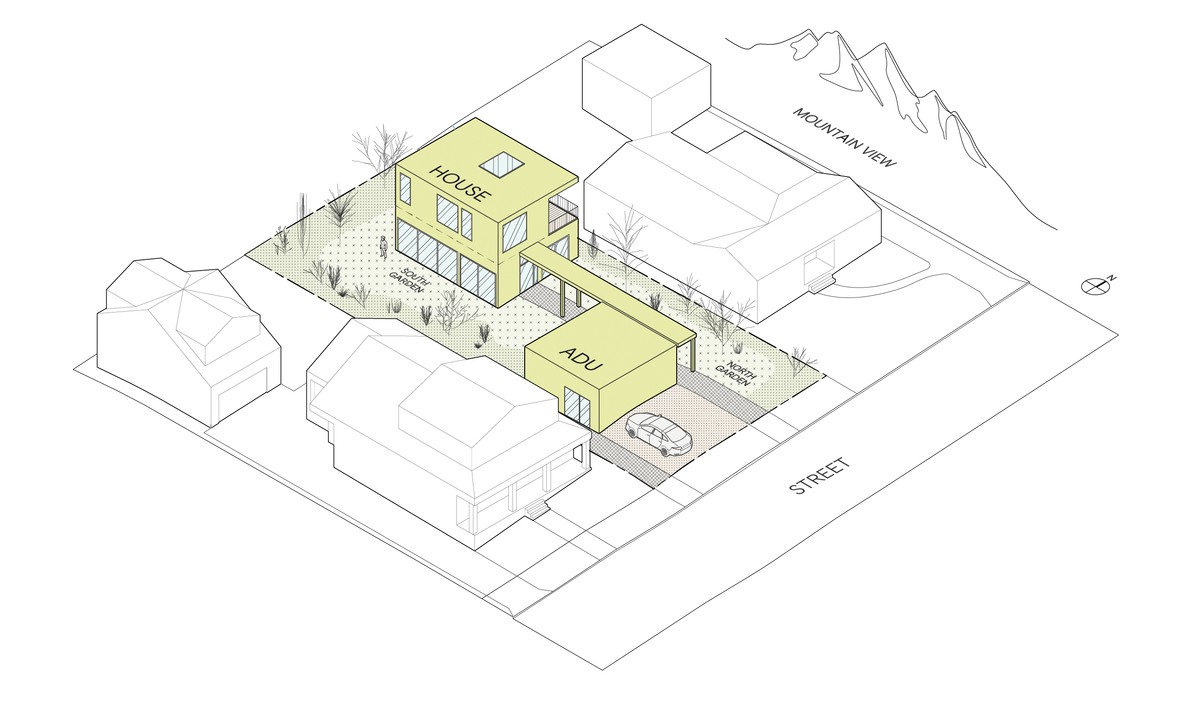
TOLO Architecture inverts the typical arrangement of a house and an ADU. Image © TOLO Architecture
Kenturah Davis, an artist and Altadena native, launched a grassroots initiative, Rest Stops, to install 10 gardens by 2027 at zero cost to residents. Rather than waiting for top-down reconstruction plans, Davis mobilized immediately through community partnerships, engaging residents in selecting native plants from prepared catalogues. Drawing inspiration from Black quilting traditions, the 10 gardens create a patchwork of green spaces distributed throughout Altadena’s scorched landscape that serve as places for rest, reflection, food production, and aromatherapy, while remediating fire-contaminated soils. The project also challenges restrictive tree codes, mandated by Los Angeles County, that threaten what remains of Altadena’s historic tree canopy. By establishing collaborative stewardship models linking seniors, schools, and local organizations to ecological experts, Rest Stops demonstrates how community-initiated interventions can address both urgent recovery needs and long-term resilience without waiting for institutional approval or funding.
As climate disasters accelerate, this story will repeat, especially in communities already marked by inequality. The recovery process will compound injustice. Architects must shape what comes next, but the question remains: In whose interest? From these embers, we can help communities remain or, through silence and complicity, facilitate their erasure. There is no neutral position.
Looking for a reprint of this article?
From high-res PDFs to custom plaques, order your copy today!