Close Up
Pezo von Ellrichshausen’s Restaurant Pavilion Stands Out in a Sprawling Botanical Garden in South Korea
Yangpyeong, South Korea

Architects & Firms
In the tranquil valleys of Yangpyeong, a county in Korea’s Gyeonggi-do province, lie Les Jardins de Médongaule. This botanical garden of approximately 42 acres protects an indigenous ecosystem while incorporating exotic species and architectural experiences. Pezo von Ellrichshausen’s contributions to this ambitious undertaking include branding, a central path, nine pavilions, and a restaurant aptly named Rest, which has been recently completed.
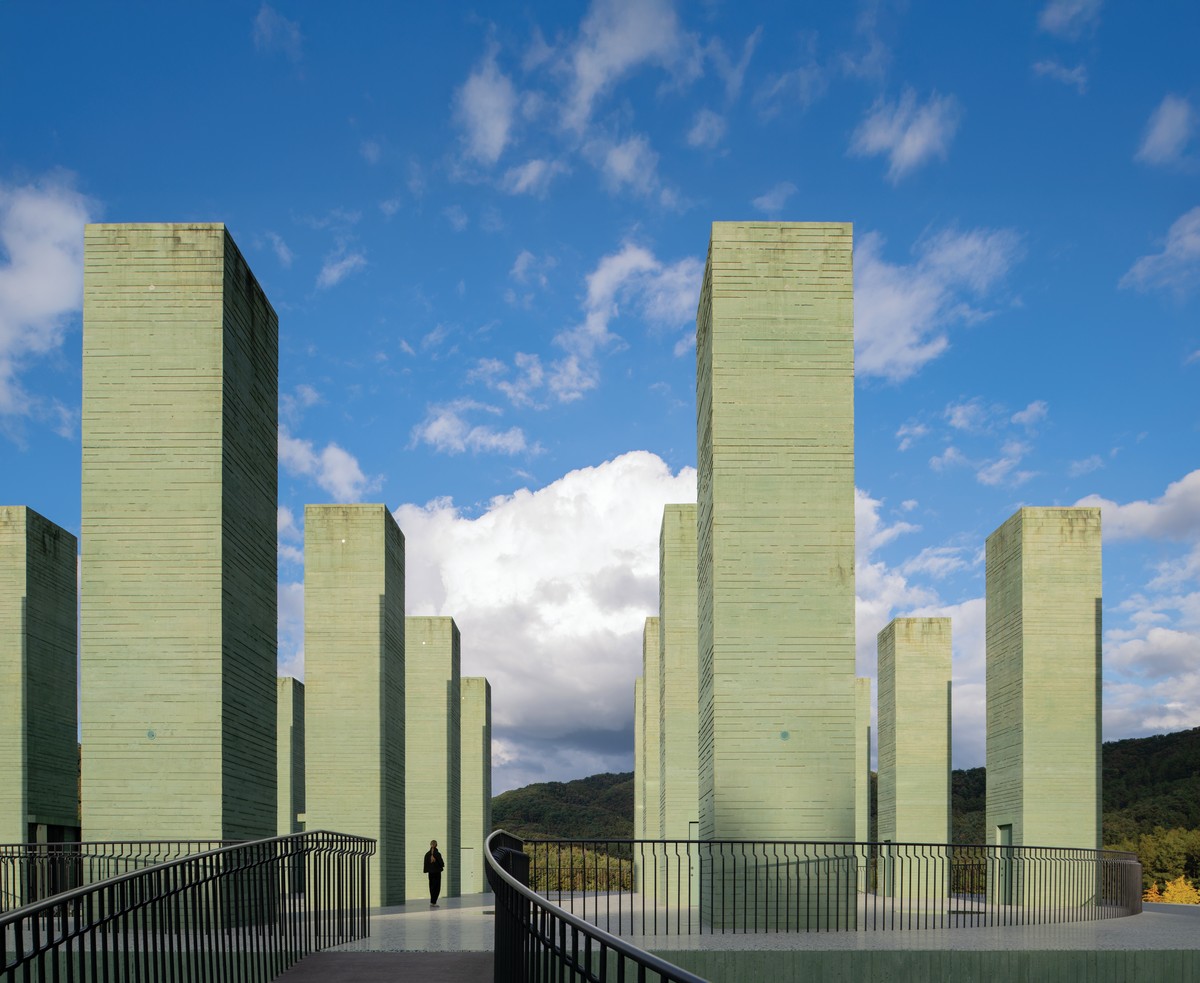
The pavilion is a forest of 16 columns (top of page) that rises 33 feet from the roof terrace (above). Photo © Pezo Von Ellrichshausen, click to enlarge.
Mauricio Pezo and Sofía von Ellrichshausen, whose work first appeared in RECORD 19 years ago (Casa Poli, April 2007), are partners in architecture and in life. Their home is a farm in the foothills of the Andes mountains in Chile, far from Korea. But international interest in their totemic renderings of geometric forms, along with regular teaching stints at American architecture schools including IIT, Harvard, Cornell, Yale, and Penn, have accustomed them to frequent far-flung travel. So in 2018, when they were invited to Gyeonggi-do to participate in the design of Médongaule, they didn’t hesitate.
Médongaule’s lofty mission, according to its website, is to “promote nature-friendly living and cultivate the humanities, fostering sustainability and intellectual growth for a better world.” It’s a good fit for Pezo von Ellrichshausen, whose work often involves the creation of carefully conceived, rigorously ordered structures in lush natural settings. One obvious example is the firm’s Solo House, a gridded composition of concrete columns and slabs floating above a rugged landscape.
“The client invited us to produce a foundational piece within the garden, a destination in which visitors could meet and have a rest from their walk,” says von Ellrichshausen of the restaurant commission. The building is intended, she adds, “to be a mute monument almost without memory, function, or scale.” On a more basic level, it’s also meant to be a food and drink venue for everything from casual snacks to large social events.
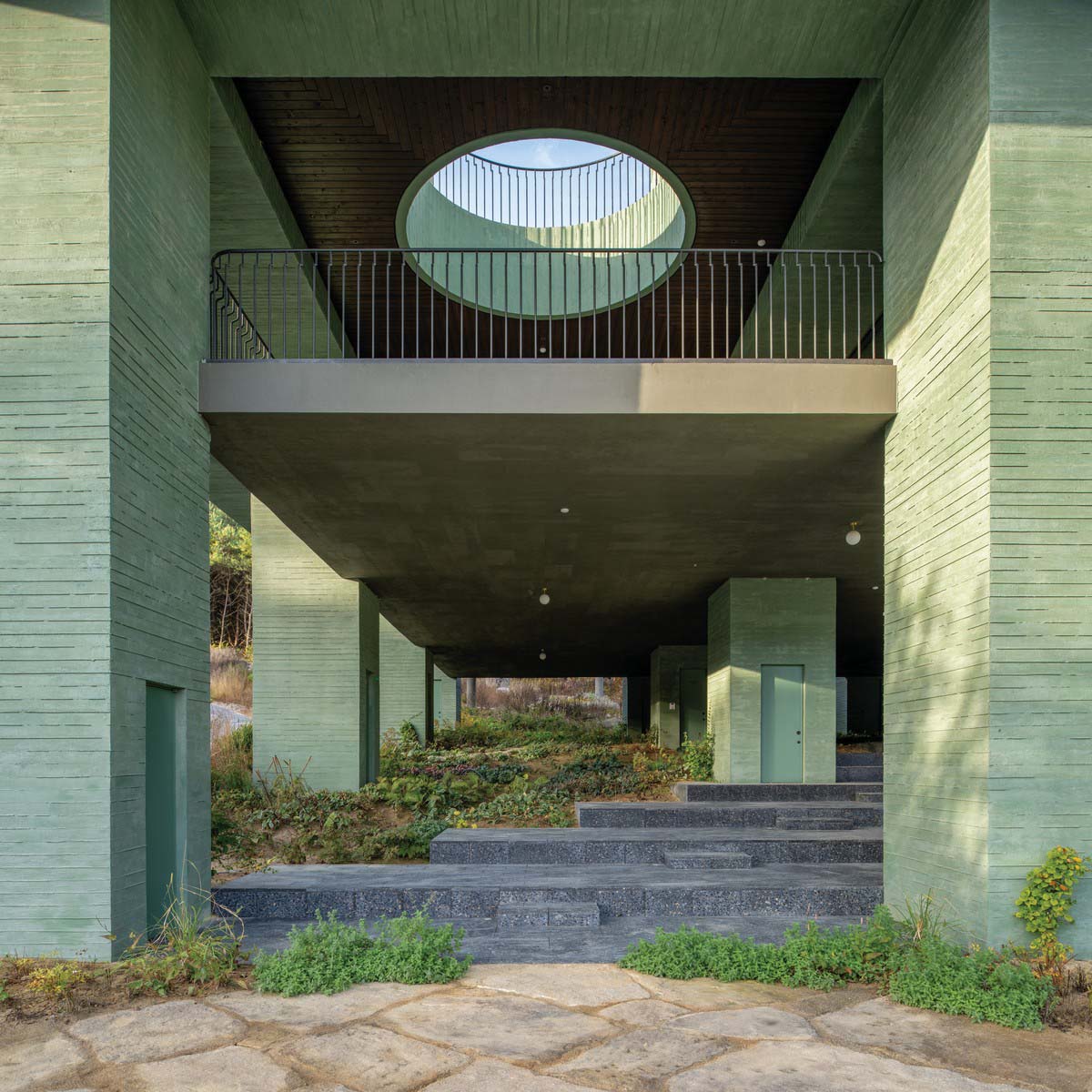
A stepped ground level lies beneath the pavilion. Photo © Pezo Von Ellrichshausen
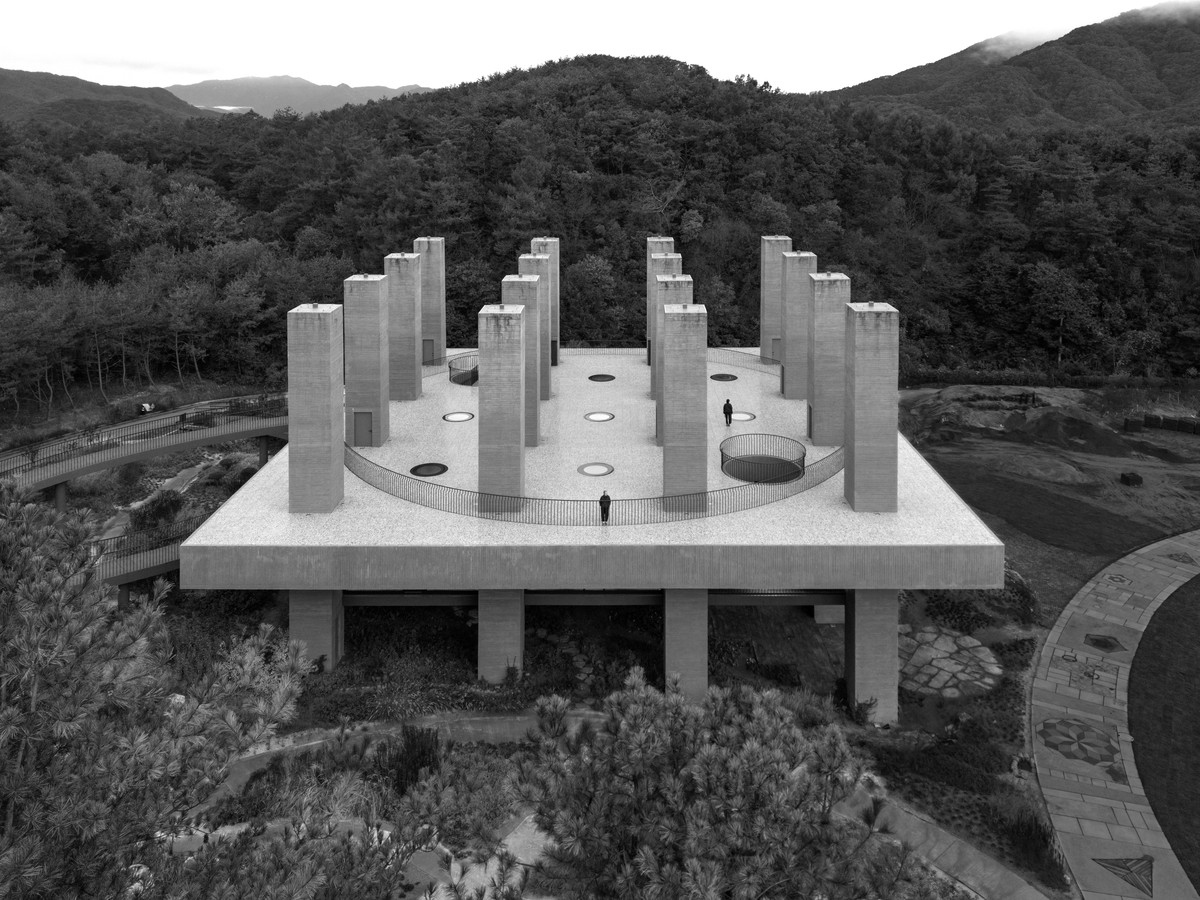
Von Ellrichshausen mischievously refers to the project as “a bunch of columns,” but it is, of course, much more. She and Pezo have stayed true to their well-known love of geometric archetypes by organizing those columns—16 of them, each 2 meters (6½ feet) square and hollow, to contain services—in a nine-square grid. These support two square floor slabs. The lower one is a 100-seat restaurant. The upper one is a roof terrace that cantilevers 3.5 meters (11½ feet) on all four sides and offers panoramic views framed by the columns, which rise 10 meters (33 feet) above it. Everything is proportioned with mathematical precision. The stepped ground level, which follows the site’s topography, serves as a covered amphitheater. A rectangular basement, extending beyond the structural framework above and accessed by elevators discreetly tucked into columns, holds a kitchen and restrooms.
The nine-square grid, “a nonprescriptive spatial configuration” according to von Ellrichshausen, informs the restaurant’s layout. Glass encloses all but two squares at outside corners diagonally across from each other. These are terraces, one of which contains a spiral stair leading down to the amphitheater and up to the roof. Within the enclosure, the central square is a lounge, two others contain service stations, and the remaining four accommodate dining tables and chairs designed by the architects.
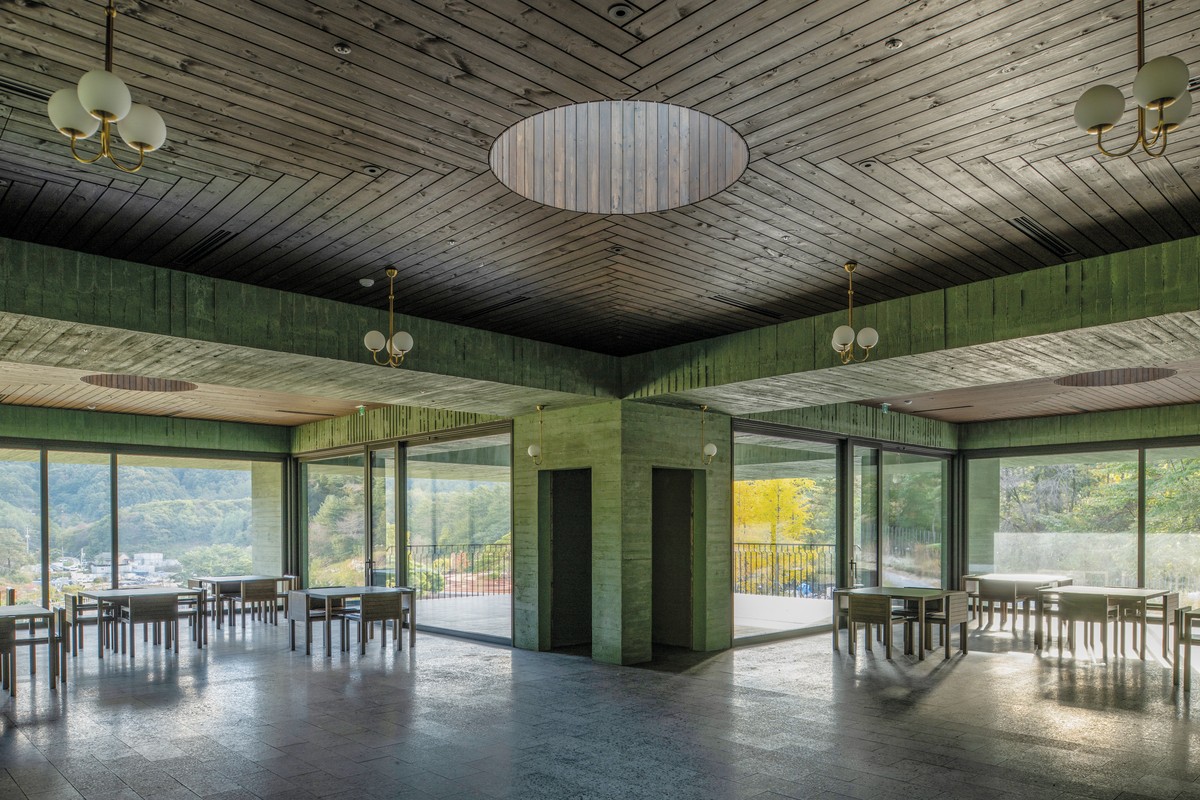
The entire building is made of poured-in-place reinforced concrete that bears the horizontal markings of precisely dimensioned form boards. Its integral green tint comes from a silicate pigment. Asked why she chose this color, von Ellrichshausen replies wryly, “We did not choose it. The landscape did so for us,” before going on to cite several reasons: to evoke “an illusion, an invisible temple, a ghost” in the garden; to contrast with traditional Korean temples that are made of wood stained red; and to create a calm setting in a neutral tone that works well with colorful food. The architects reviewed more than 20 on-site samples before making a choice. Floors are covered in terrazzo pavers, and the restaurant’s ceiling is clad in oak boards arranged radially around skylights. Its glass enclosure and sliding doors are framed in bronze-colored aluminum. Delicately profiled railings are coated steel. The overall effect is one of scrupulously structured simplicity and serenity.
Looking for quick answers on architecture and design topics?
Try Ask RECORD, our new smart AI search tool.
Ask RECORD →
1
2
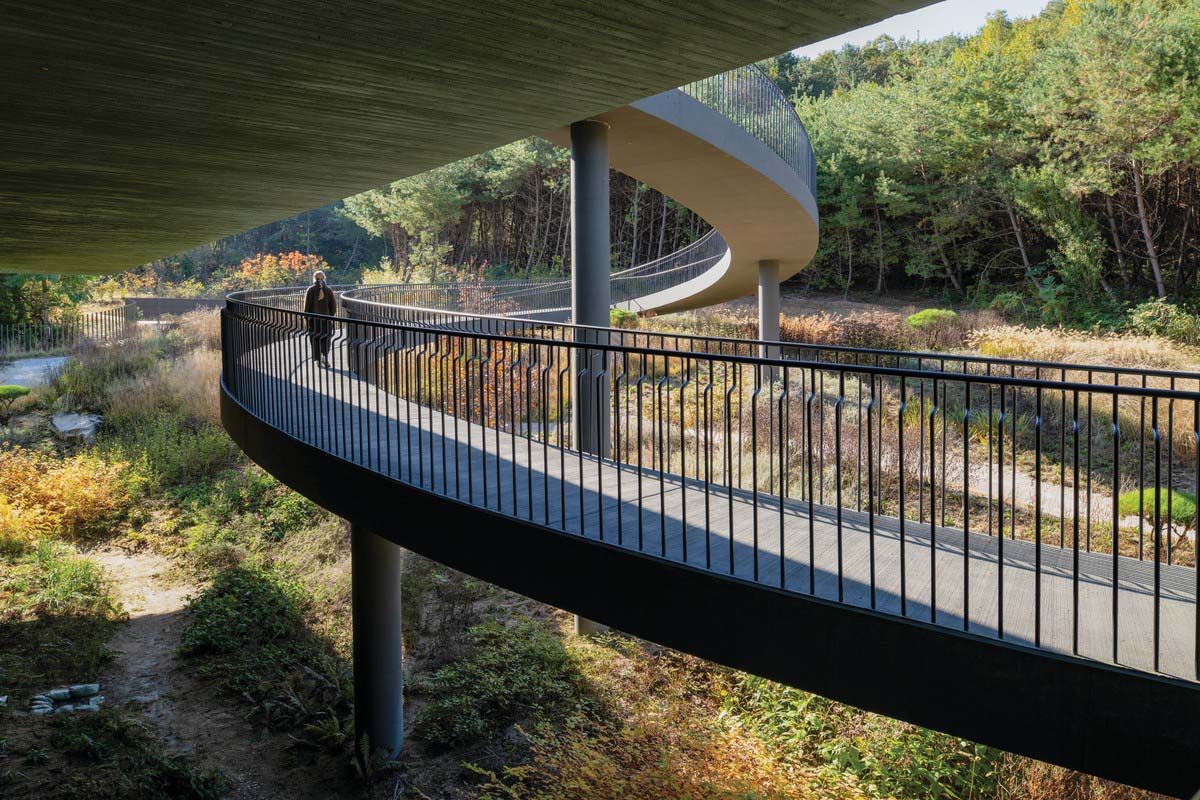
While surrounded by rolling hills (1), lush vegetation, and playful curving ramps (2), the restaurant itself, with terrazzo floors and oak ceilings, is stark and minimal (3). Photos © Pezo Von Ellrichshausen
3
The building is only half the story. The other half is the circuitous approach to it. In counterpoint to the square structure, the garden’s site plan features curvilinear paths, which morph into elevated ramps, also of concrete, leading up to both restaurant and roof terrace. The result is a sinuously processional promenade.
Enigmatic and evocative, Rest is a noteworthy addition to Pezo von Ellrichshausen’s ever-expanding body of projects that juxtapose the linear rigor of architecture with the painterly irregularity of nature. Asked about this continuity, von Ellrichshausen jokes, “We always say our projects are an ‘eternal return,’ like the two of us running in circles.”
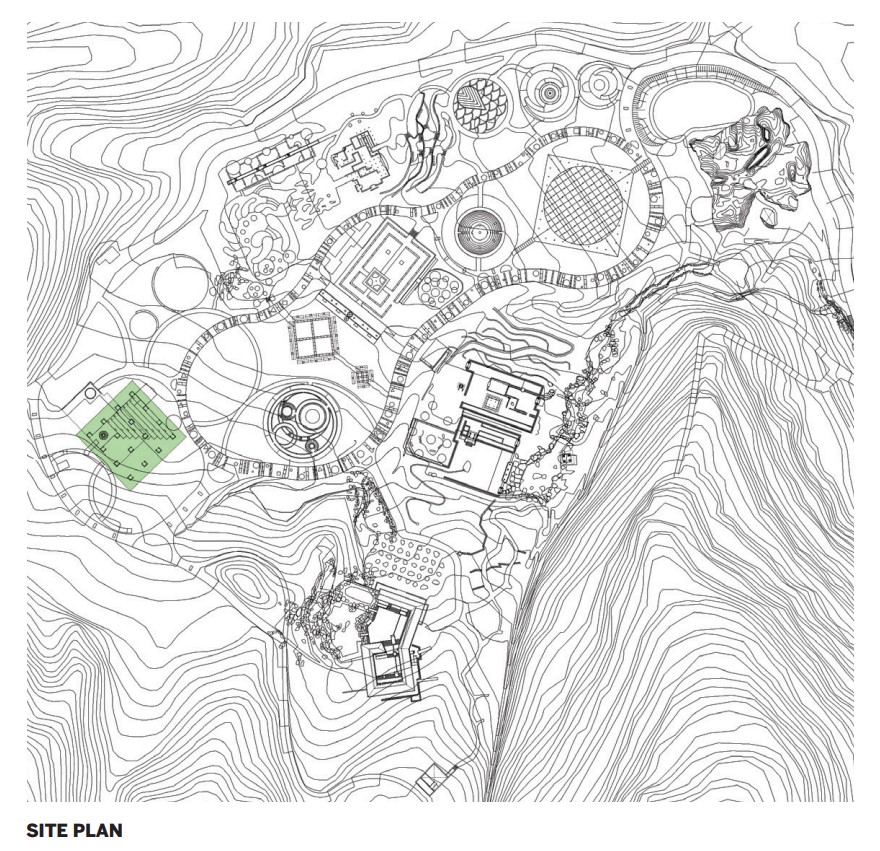
Image courtesy Pezo Von Ellrichshausen

Image courtesy Pezo Von Ellrichshausen
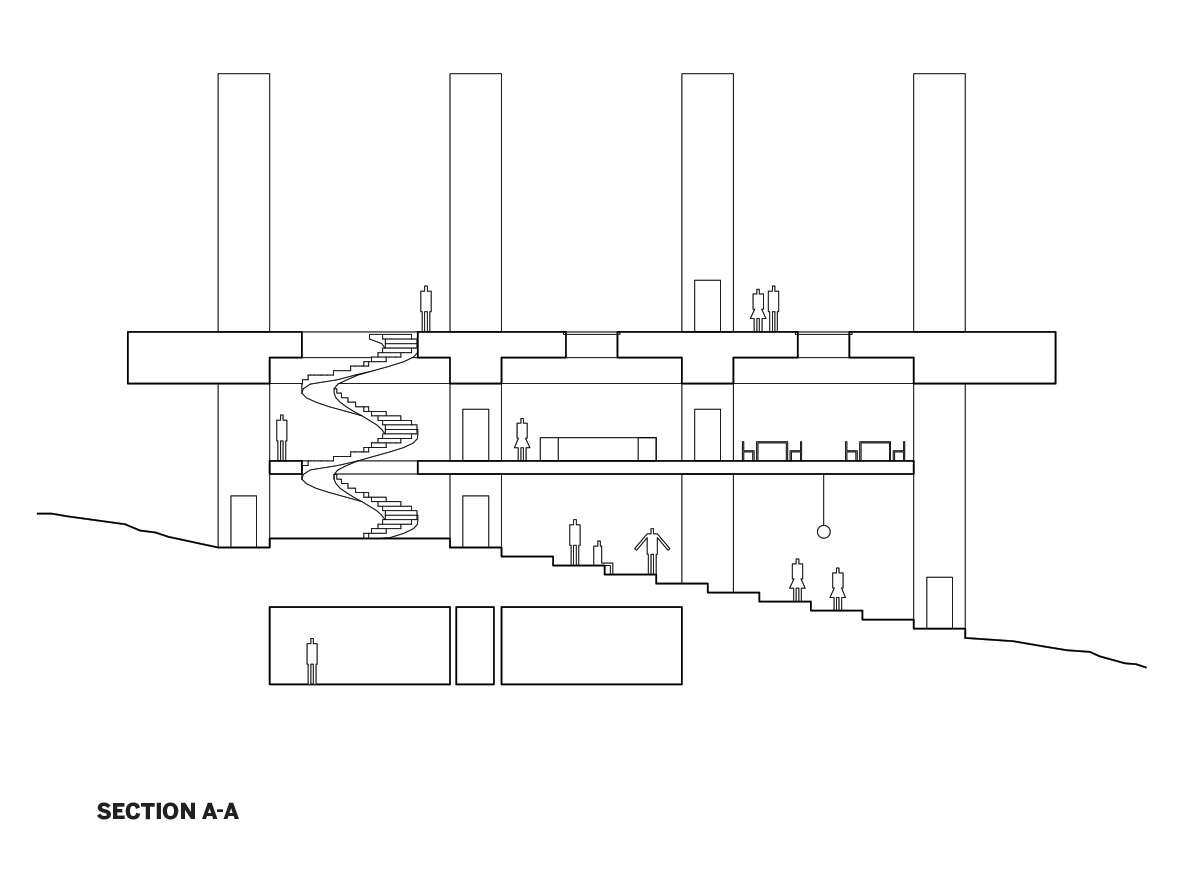
Image courtesy Pezo Von Ellrichshausen
Looking for a reprint of this article?
From high-res PDFs to custom plaques, order your copy today!