RECORD Interviews
Viabizzuno Founder Mario Nanni Is Building an Academy for Lighting Design
.webp?t=1769656663)
The door looked like most others in Bologna—nondescript and hidden inside one of the many porticoes that line the Italian city’s streets, but this one was particularly off the beaten path. “Please come in,” a voice beckoned through the intercom. “The maestro is upstairs.”
.JPG "mario nani")
Mario Nanni works on a fixture. Photo © Biancamaria Nanni, courtesy Marionannischolé Foundation
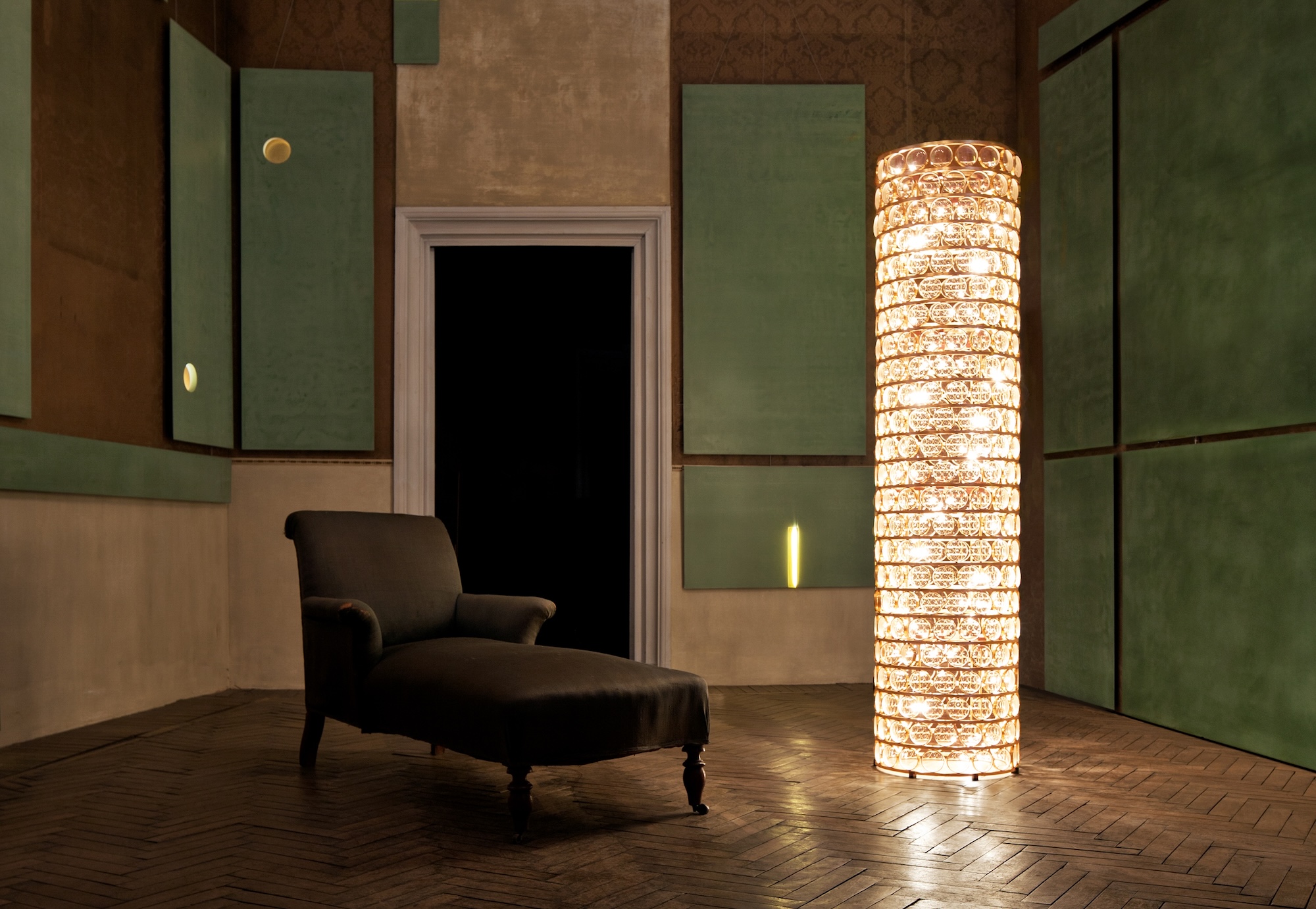
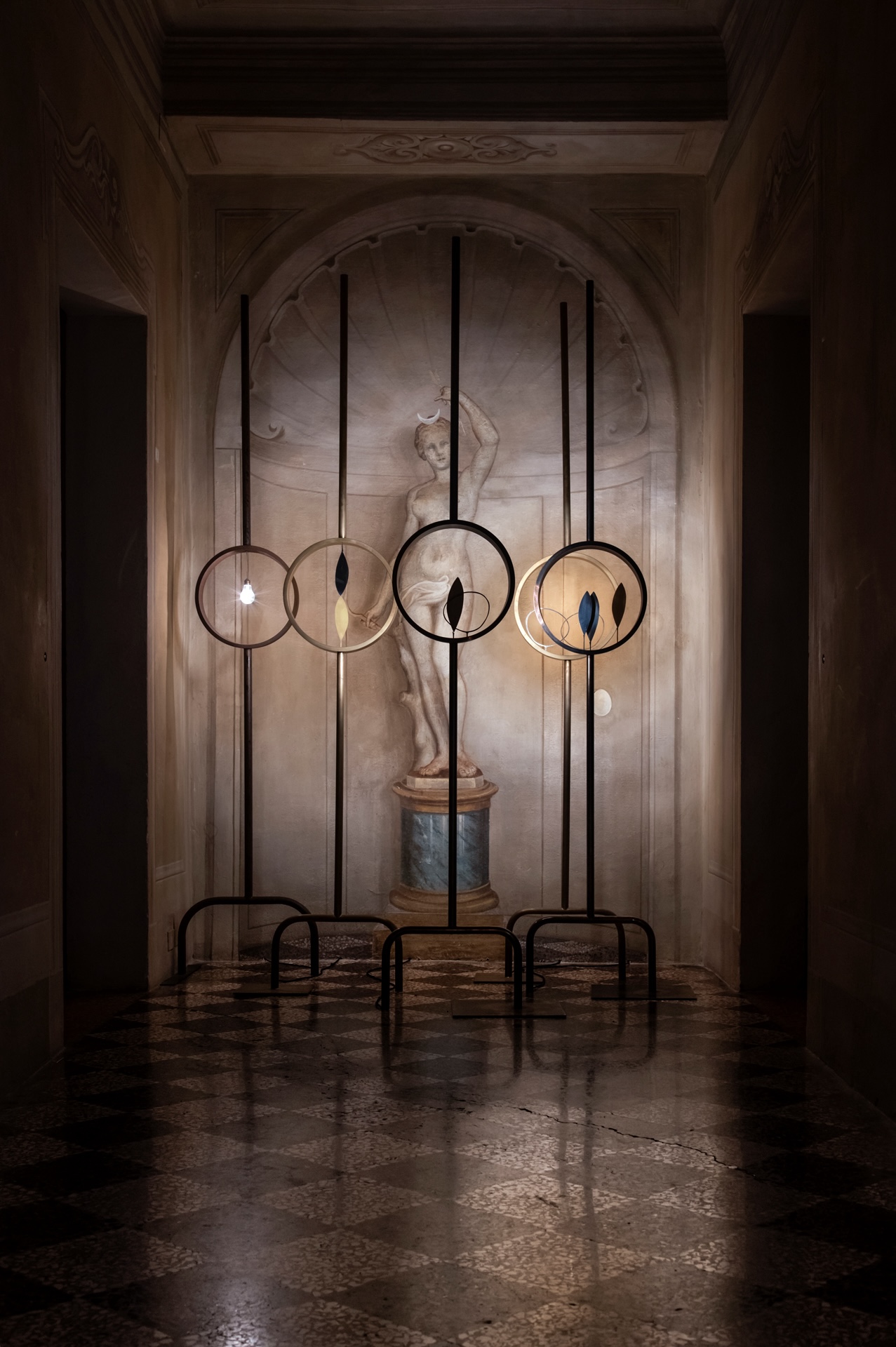
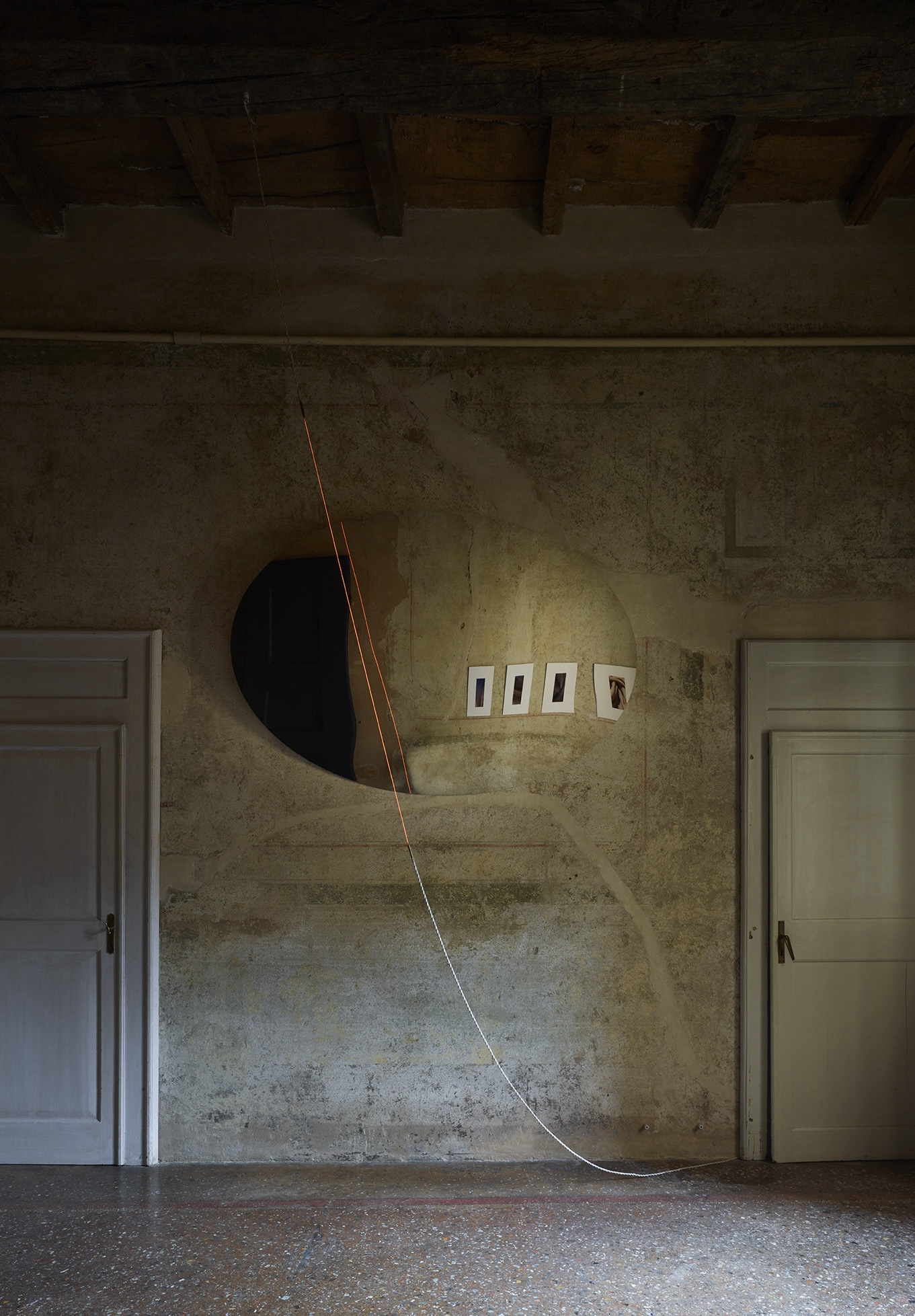
This is the home and studio of Mario Nanni, founder of the lighting company Viabizzuno. The three-story 18th-century residence also functions as the Museo Virgola, the repository of an eclectic collection of Nanni’s electrified sculptures and fixtures. As the 70-year-old designer walks from one intimate room to the next, he points out and tells the story behind each work while soft light catches the pleats of his flowy Issey Miyake pants and the sky-blue velvet of his friulane shoes. In the main staircase, an intriguing weight-driven mechanism, ticking like a clock, slowly turns a luminous linear element between the balustrades. Another piece, prominently situated at the end of a hallway, features a bulb dangling from an exposed live wire—a poetic, if dangerous gesture, he explains, about the pitfalls and beauty of love. Overhead in his office hangs the Figaroqua Figarolà—winner of a 2024 Compasso d’Oro—a fitting that can be effortlessly pulled, as its name suggests, here, there, or wherever the user needs it. During his prolific career, Nanni has collaborated with many architects, among them Álvaro Siza, Eduardo Souto de Moura, Norman Foster, and Peter Zumthor. In 2022, he left Viabizzuno to focus on his foundation.
After meeting in Italy, Nanni and I reconnected virtually. While en route to Granada, Spain, where he is developing a new lighting scheme for the Alhambra, Nanni spoke with me to discuss his career and the academy for lighting design, the Marionannischolé, that he is building near his home.
Light is clearly an artistic medium for you. You’ve even created an Italian expression to describe what you do: scrittore della luce, or writer of light. When did you first discover this interest?
As a child, I built nativity scenes around Christmas. I loved assembling and presenting them, and early on I understood how central light was to the entire experience. I went on to become an electrician, focusing on electrotechnics and everything required to manage and work with energy. Only later, while collaborating with architects, did I gradually move toward architecture. This is when I realized that I could solve problems architects often weren’t equipped to handle on their own.
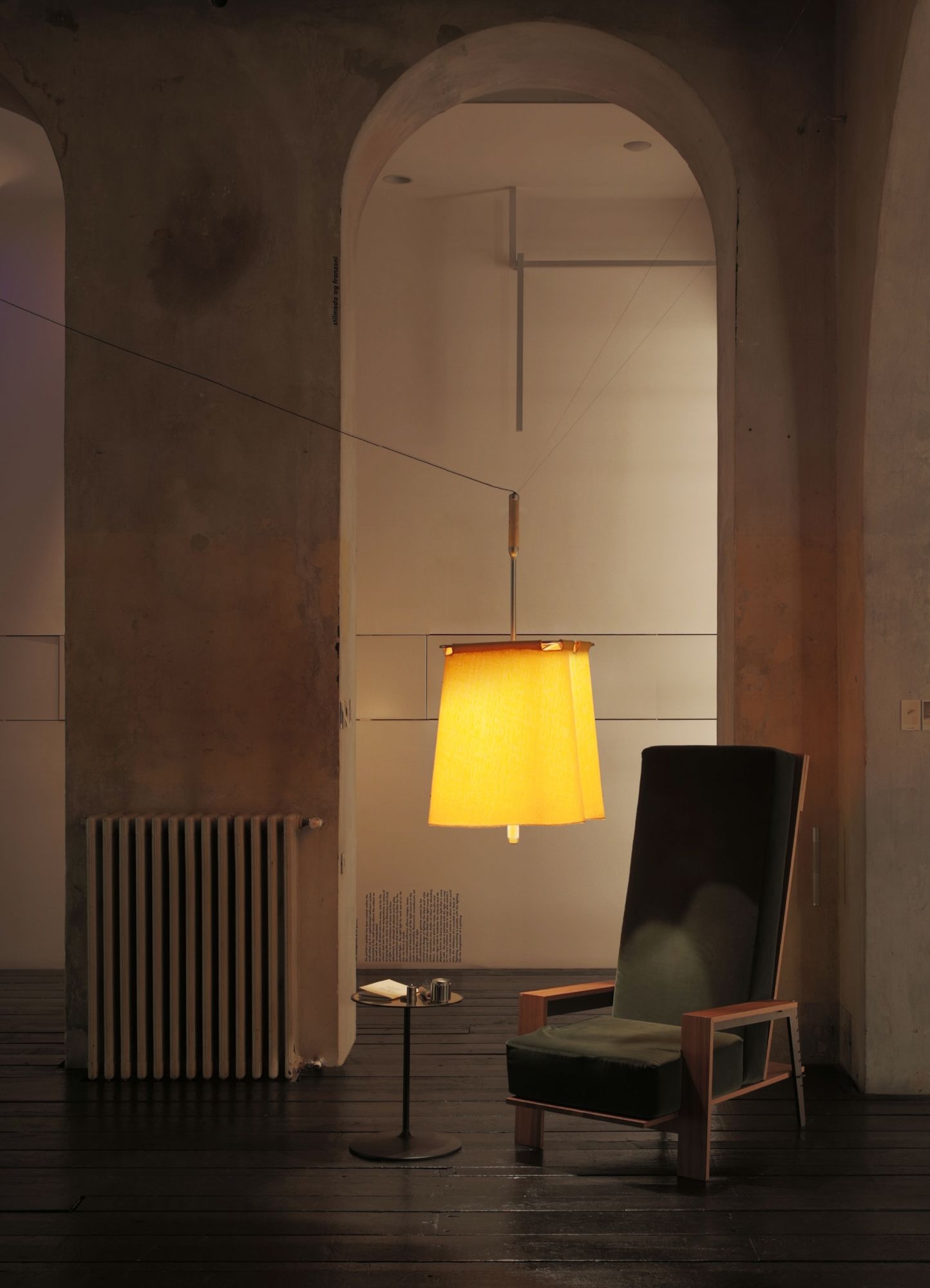
Figaroqua Figarolà is a fixture, suspended from cables, that can be pulled across a room depending on need. Photo courtesy Marionannischolé Foundation
I don’t see myself, strictly speaking, as a lighting designer. To me, the expression scrittore della luce suggests something more appropriate and holistic. That’s also how I envision the school that I am creating, as providing both humanistic education—philosophy, literature, art history, anthropology—and solid technical and practical expertise. Students must know how to design and build any lighting fixture, from concept to object.
Who were some of your early mentors? I imagine they might have shaped how you think about light.
Looking for quick answers on architecture and design topics?
Try Ask RECORD, our new smart AI search tool.
Ask RECORD →
I had the privilege of meeting two people who have deeply influenced me. Gabriele Basilico, the iconic Italian photographer of the 1960s and ’70s, taught me light in photography—and through that, to see light in life.
The second was A.G. Fronzoni, the radical graphic designer, who helped me understand the essence of a project. He showed me that it was something that goes beyond the act of making and touches every part of life—relationships, emotions, space, and human interaction.
Some architects really understand how to work with light—both natural and artificial. Others do not, or are simply uninterested. What do you think is missing from architects’ understanding of the medium?
There are some whom I consider to be true masters—Peter Zumthor, Kengo Kuma, Marco Costanzi, Winy Maas, and David Chipperfield. Each has a clear and deeply rooted vision of light. When I work with them, my role is to turn thought into reality, to translate their ideas into technical and tangible solutions.
But there are other architects who have little sensitivity to light, as you suggest. And they are often convinced that they know enough. With them, I try—sometimes firmly—to show where there is room to improve, to impart what I know. Occasionally it works. Other times, I simply choose not to work with them again.
If there’s no cultural and deep understanding of what light can do, there’s nothing to build upon.
1
2
3
The Museo Virgola functions as Nanni’s home and studio, but also serves as the repository for several of his sculptures and lighting designs. Photos © Luca Piovesan (1); Fabio Gambina (2); Savorelli (3), courtesy Marionannischolé Foundation
I remember from my visit to your studio that storytelling plays an important role in your work. Was that always your instinct? Or was it a way of thinking that you developed after founding Viabizzuno in 1994?
Many years ago, before he died, the writer and historian Philippe Daverio looked at my work and said, “Mario, the most important moment for an artist or a designer is when they change the way things are seen.” That phrase has really stuck with me.
When I founded Viabizzuno, no brand—not even Flos or Artemide—was interested in developing objects where light was the true protagonist. They were focused on product, on form. Instead, I wanted to start with effect and with emotion; the object came later.
Each of my projects is tied to the time and place in which it was created—but if I had to sum it up, I would say that I hope to be remembered as someone who changed the rules of design.
Tell me about the school that you are building. How did the idea start and who is it for?
The school is a dream that I’ve been nurturing for five or six years now. It was born from my desire to pass on my experience to younger generations, to offer something that, to this day, still doesn’t exist in the educational landscape. Young people are always searching for something real, something different. This school is my answer to that.
There will be two main tracks: a one-year master’s program, open to students and professionals, with rotating sessions in various Italian cities including Turin, Milan, Venice, Vicenza, Rome, and Naples. There will also be a three-year program, organized into semesters. But we are also planning smaller workshops for young people, ages 12 to 18, to foster curiosity and creativity.
In my mission to offer a curriculum that merges humanistic and technical training, I’ve invited philosophers from the Sorbonne, art historians from London, and masters from around the world to teach. Students will work with wood, paper, metals, and 3D printers. We are even developing a partnership with a Murano glass factory. The entire approach is rooted in the spirit of a Renaissance workshop.
.jpg "mario nani")
.jpg "mario nani")
The Nanni-designed Marionannischolé in Bentivoglio, Italy, will open later this year and offer classes in lighting design. Images courtesy Marionannischolé Foundation
You’ve designed the Marionannischolé yourself. What will it be like?
The 5,000-square-meter [53,800-square-foot] building is meant to make the most of natural light and is located outside Bologna, in a town called Bentivoglio. All the spaces will be open and shared, encouraging exchange and cross-pollination of knowledge.
It will include what I am calling a “light archive,” which will house drawings, photographs, scale models, physical studies, and writings—a place to explore how the great masters, from Vitruvius to Gaudí, worked with light. There will also be a laboratory and hands-on model-making area, a room for reflection and discussion, and a theater for talks, lectures, and collective gatherings.
The school embodies four fundamental concepts: to transmit knowledge, to unhinge or break patterns; to experiment with new languages and materials; and to innovate.
When do you plan to open the school?
We’re expecting to launch our educational programs this year, in 2026, alongside an international exhibition titled lalucechenonconosci [the light that you don’t know].
Looking for a reprint of this article?
From high-res PDFs to custom plaques, order your copy today!