Civic Architecture 2026
A Museum in Chile Celebrates a Desert Region’s History
March 2, 2026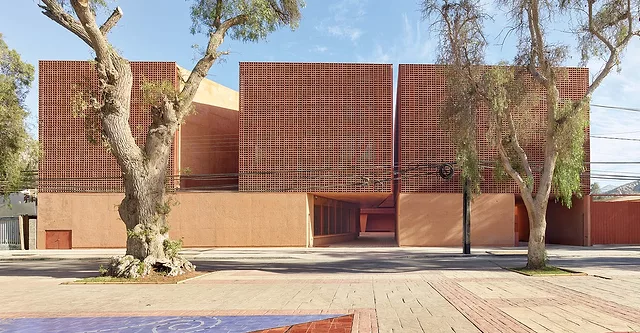
Civic Architecture 2026
A Museum in Chile Celebrates a Desert Region’s History
March 2, 2026Museo Regional de Atacama

Deserts appear empty at first. But if you know where to look, they teem with life.
Northern Chile’s Atacama is no different. The vast expanse of 49,000 square miles stretches from the Pacific coast to the Andes. Scant precipitation—only a few millimeters of rainfall each year, plus the camanchaca, a hazy fog that occasionally barrels in from the ocean—makes it the driest nonpolar desert on the planet. Yet, astonishingly, more than 50 species of cactus alone dot this hostile landscape. Critters find ways to survive in pockets of shade or by burrowing belowground. And even deeper underfoot, rich mineral deposits have fueled many Indigenous craft traditions and, more recently, a robust mining industry. (Chile is the world’s largest exporter of copper.)
In Copiapó, the administrative capital of the Atacama region, a newly inaugurated state-funded museum, designed by Chilean architect Max Núñez, celebrates the desert’s history, both natural and manmade. The opening in January also marked an important moment for the isolated and undercapitalized community, numbering some 168,000 residents. “From here to the northern frontier with Peru, there are several cities but few places for us to think about our culture and past,” says Romina Figueroa Berríos, who was appointed museum director last September. “This is a first step in changing that. It’s a space for the public.”
The museum stands out in its low-scale context. Photo © Roland Halbe, click to enlarge.
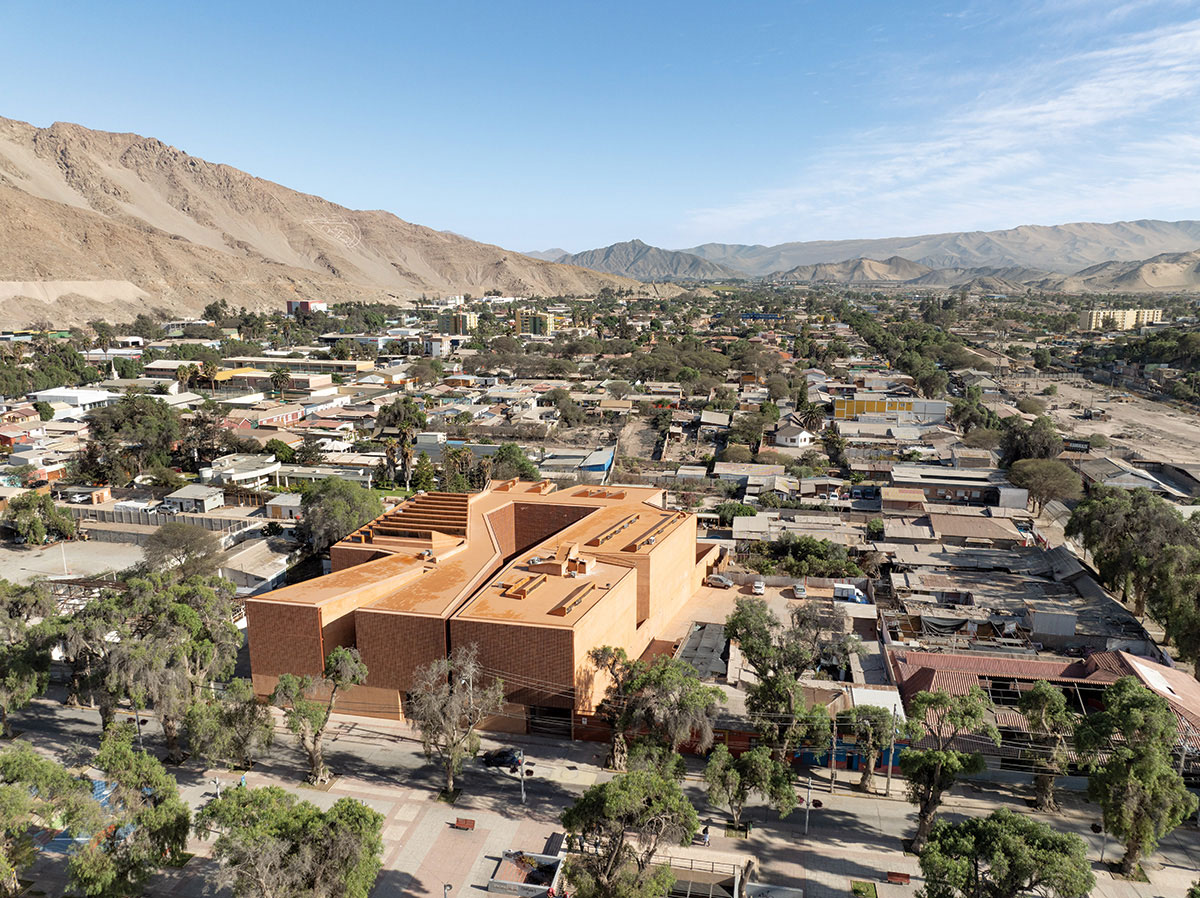
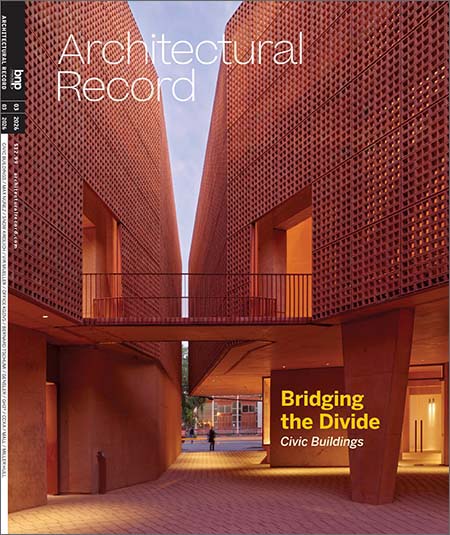
A prime site within a low-scale context along Alameda Manuel Antonio Matta, a promenade at the edge of historic Copiapó lined with mature pepper trees and statuary, amplifies the museum’s civic presence. Rendered in tinted concrete and a lattice of extruded-clay brick, the three-story monochrome structure is unlike anything nearby—monumental, even. It also draws distinct lessons from the Atacama itself.
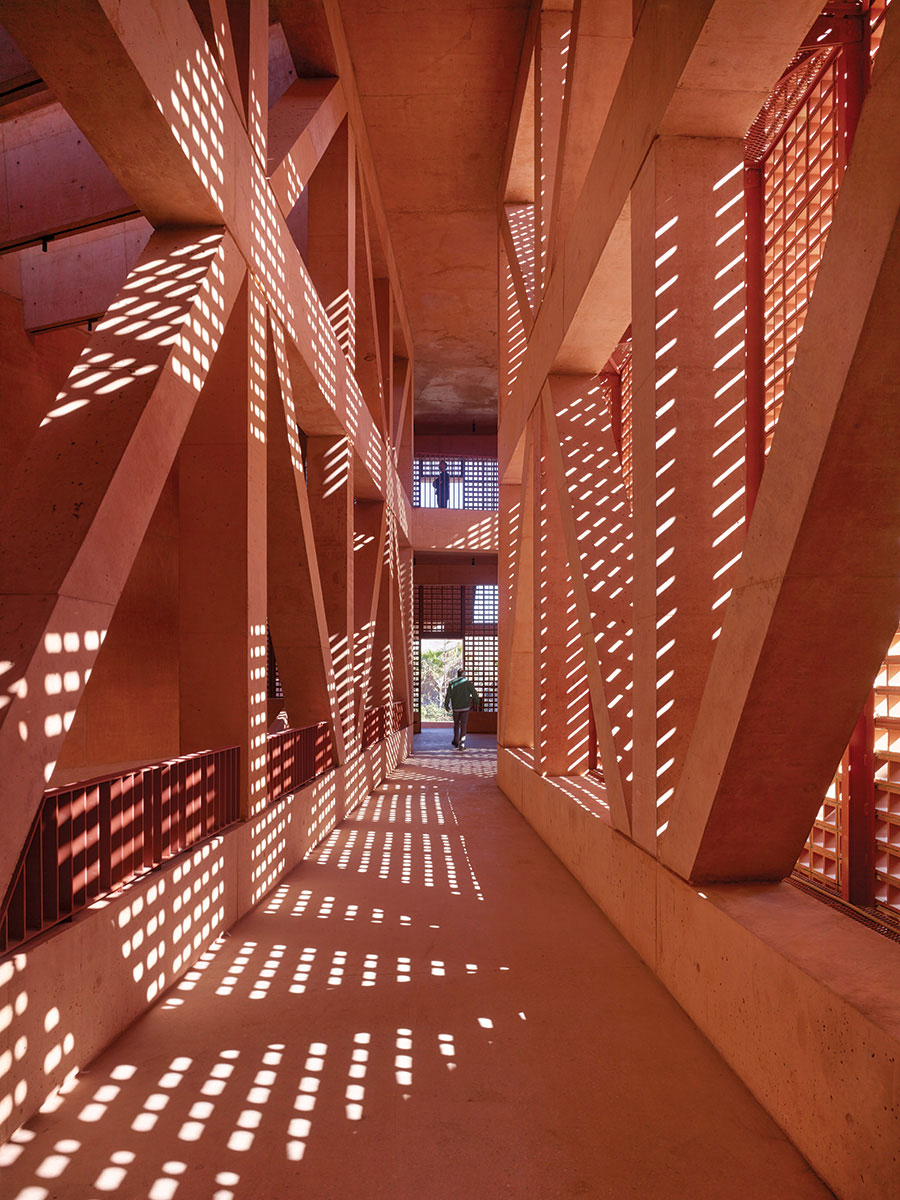
An open-air lattice screen of extruded-clay bricks (top of page) filters light, and keeps visitors cool (above). Photo © Roland Halbe
“One of the first ideas was that the building should reckon with the region as a whole,” says Núñez. “We thought internal spaces could even resemble the crevices and ravines in the desert that provide cooler temperatures.” Accordingly, the 2017 Design Vanguard and his Santiago-based team appear to have artfully eroded a solid mass, creating fissures and shadow that serve a practical purpose but also balance the museum’s overall composition.
In one such moment, a passageway has been hollowed out of the building’s base. Above it, two discrete volumes, positioned just 15 inches apart in a state of seemingly precarious proximity, form a striking canyon-like slit. This thrilling architectural alchemy, wherein building becomes abstracted landform, draws the eye toward the courtyard at the heart of the museum. The 6,350-square-foot plaza, recently planted with a tree, serves as a welcome reminder that life can thrive here—Copiapó, after all, translates to “green valley,” in a language now lost to time.
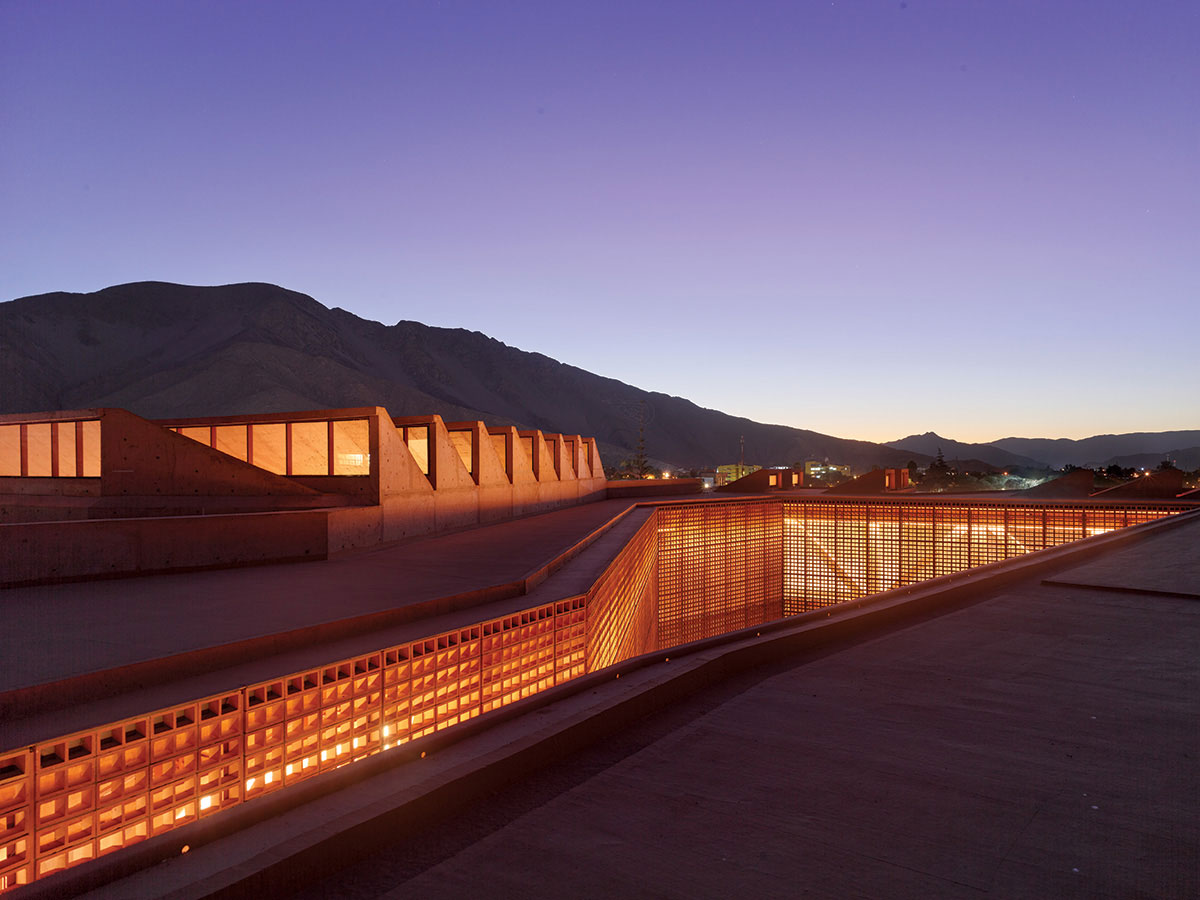
1
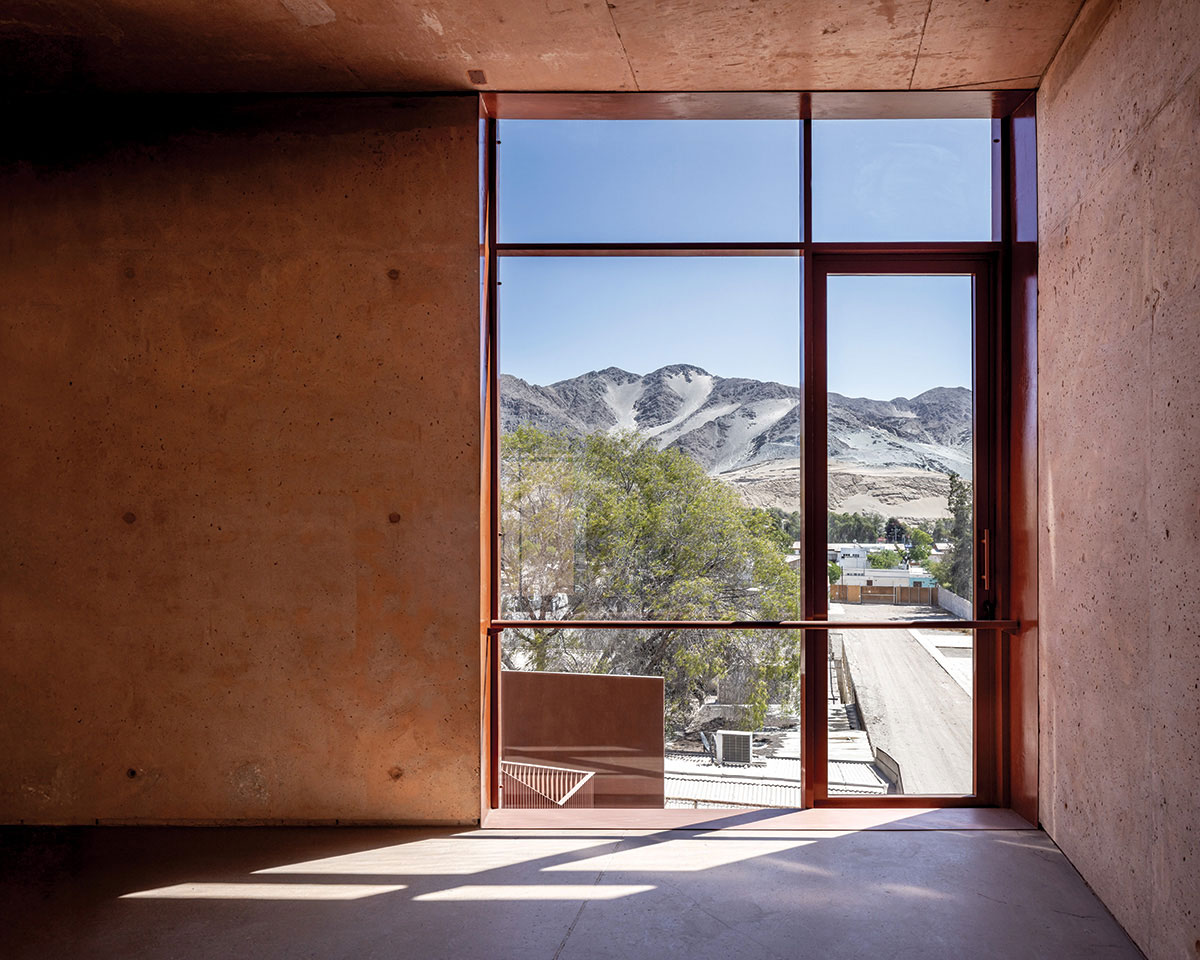
2
Sawtooth roofs (1) introduce light into some spaces, while others look out directly to the surrounding landscape (2). Photos © Roland Halbe (1), Aryeh Kornfeld (2)
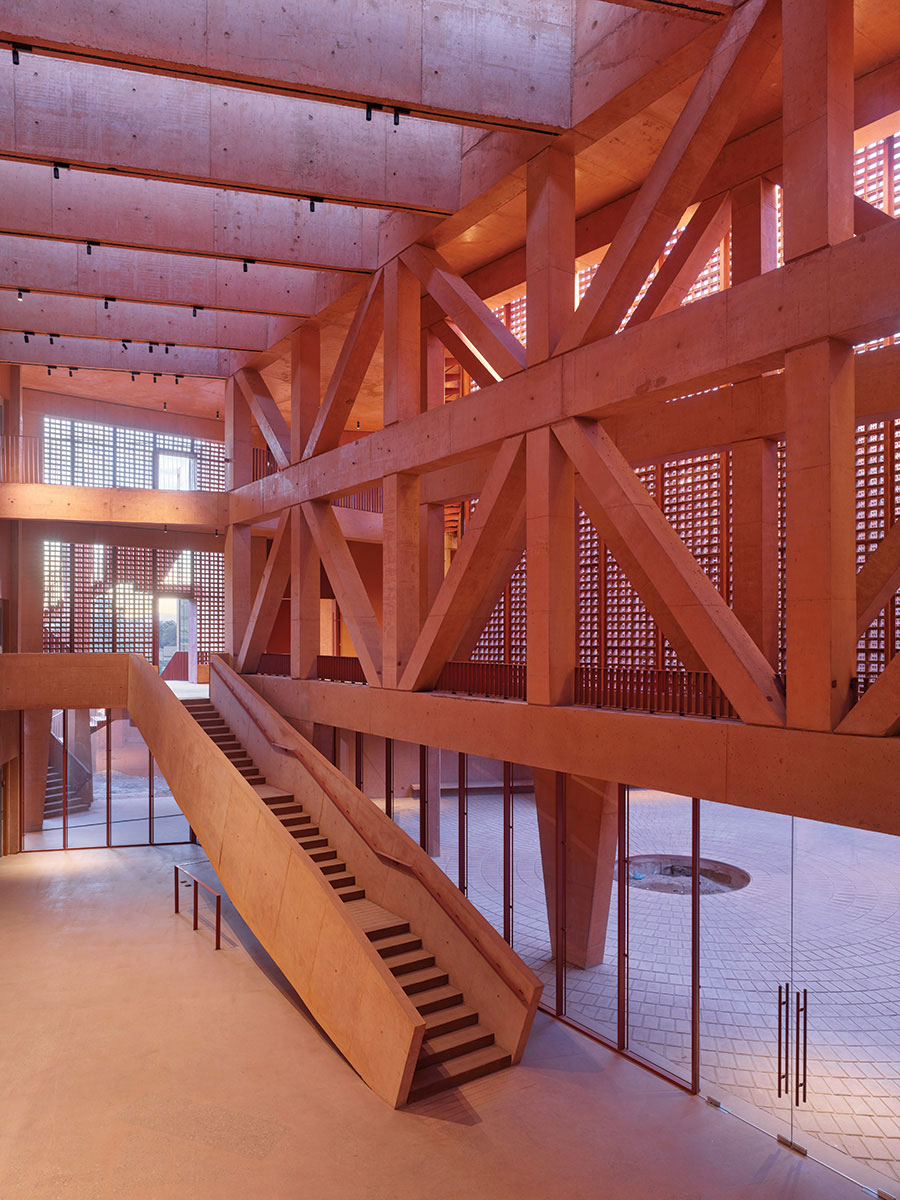
Most public programming is situated on the first two levels. The café, 80-person multipurpose hall, and temporary-exhibition gallery encircle the courtyard at grade. The permanent-collection galleries, on the other hand, are located on the second floor, reached through a soaring 40-foot-high lobby capped by a sawtooth roof. Staff offices, the conservation laboratory, and a research library are reserved for the uppermost floor.
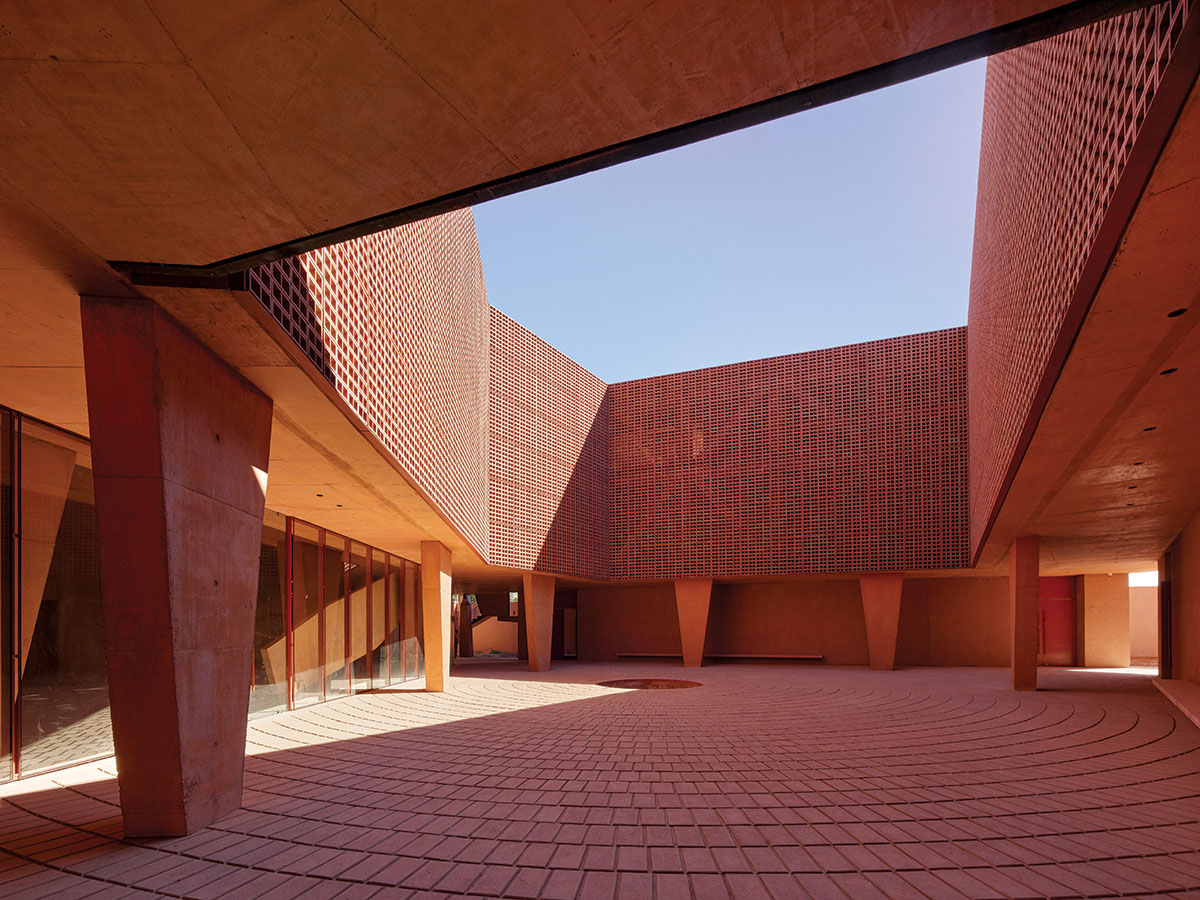
3
The triple-height lobby (4) is entered off an angular courtyard (3). Photos © Roland Halbe
4
Inside, the building’s structural system—a spectacularly heavy frame of columns, beams, and cross bracing, all executed in standard reinforced concrete—is left exposed. Chile is prone to earthquakes, forcing architects to contend with seismic conditions, often to dramatic effect. Even the lattice screen, an assembly of extruded-clay bricks set by hand within a gridded steel frame painted reddish brown, was rigorously tested at a university in Chile’s capital to meet strict standards.
Looking for quick answers on architecture and design topics?
Try Ask RECORD, our new smart AI search tool.
Ask RECORD →
Looking for a reprint of this article?
From high-res PDFs to custom plaques, order your copy today!
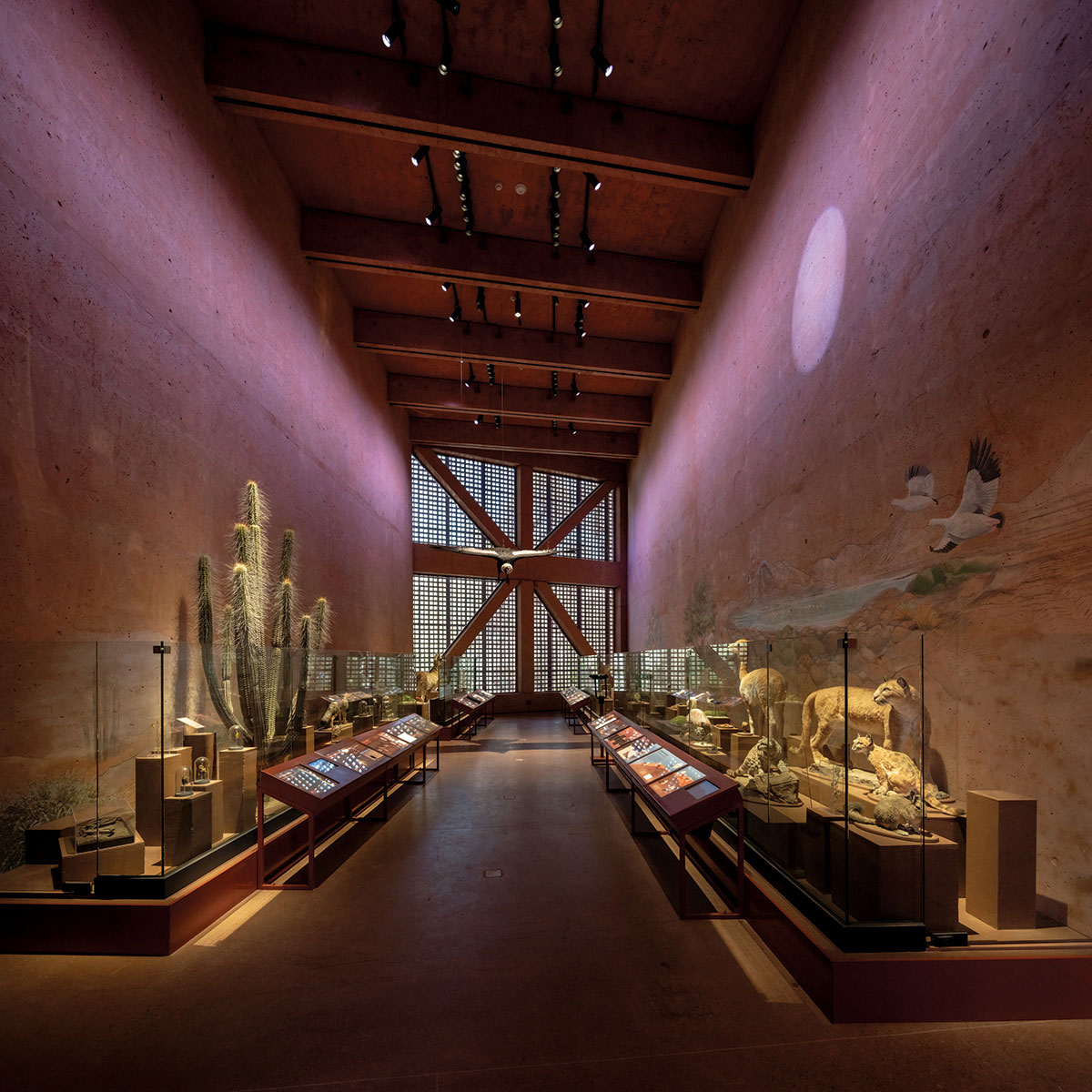
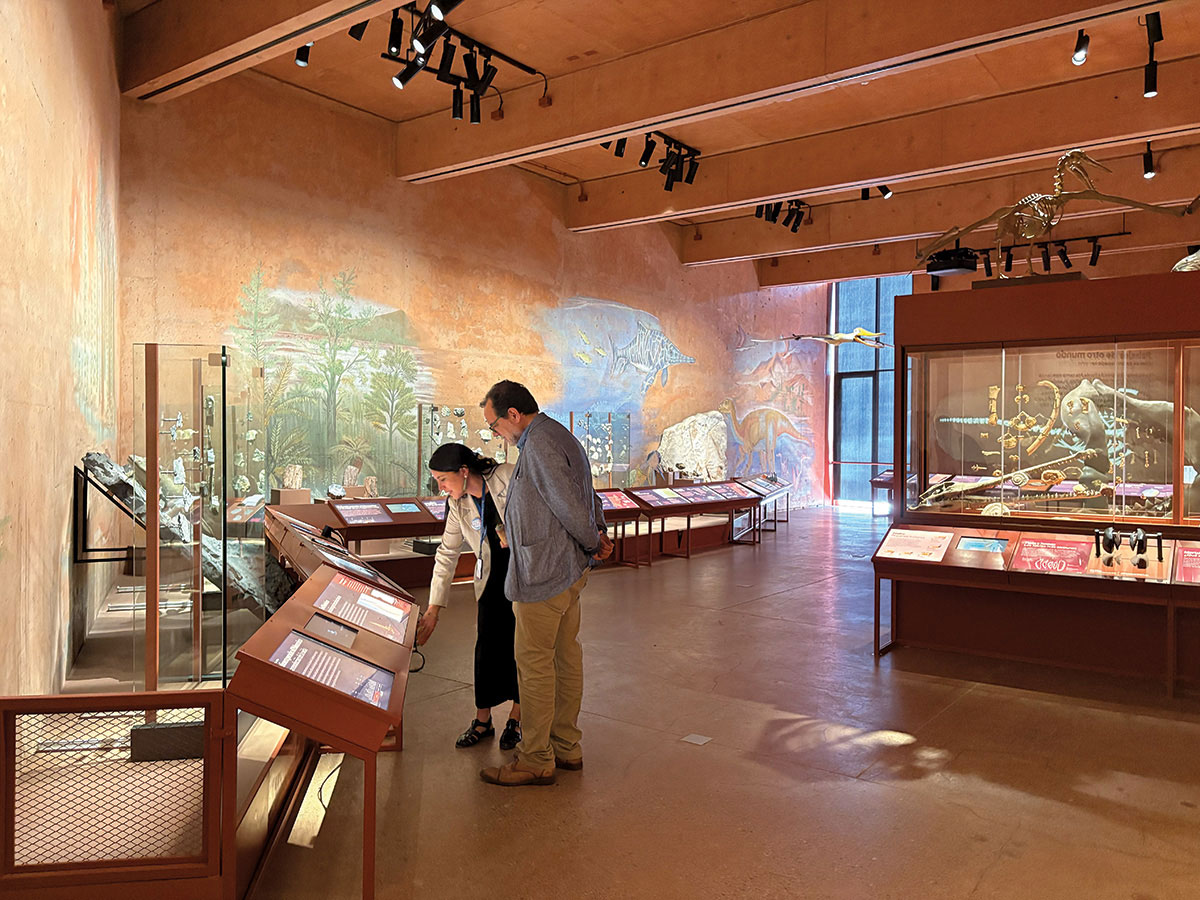
The Museo Regional de Atacama was built to preserve, study, and showcase the natural and cultural heritage of the area. But in the early days of the project, what this mission would look like remained unclear. “We didn’t know exactly what was going to be on display,” says Núñez. “We were just given a certain number of rooms of various sizes.” At first this posed a challenge, he explains, until the team reconceptualized the problem. “In the end, what we designed was more of a sequence.” It should come as no surprise, then, that the architecture, when considered sans display object, holds up on its own as a collection of intricately connected spaces, each with its own qualities. Some rooms are more intimate and frame views of nearby parched mountains; others are double height, illuminated only by whatever sunlight filters through the lattice screen, or from above.
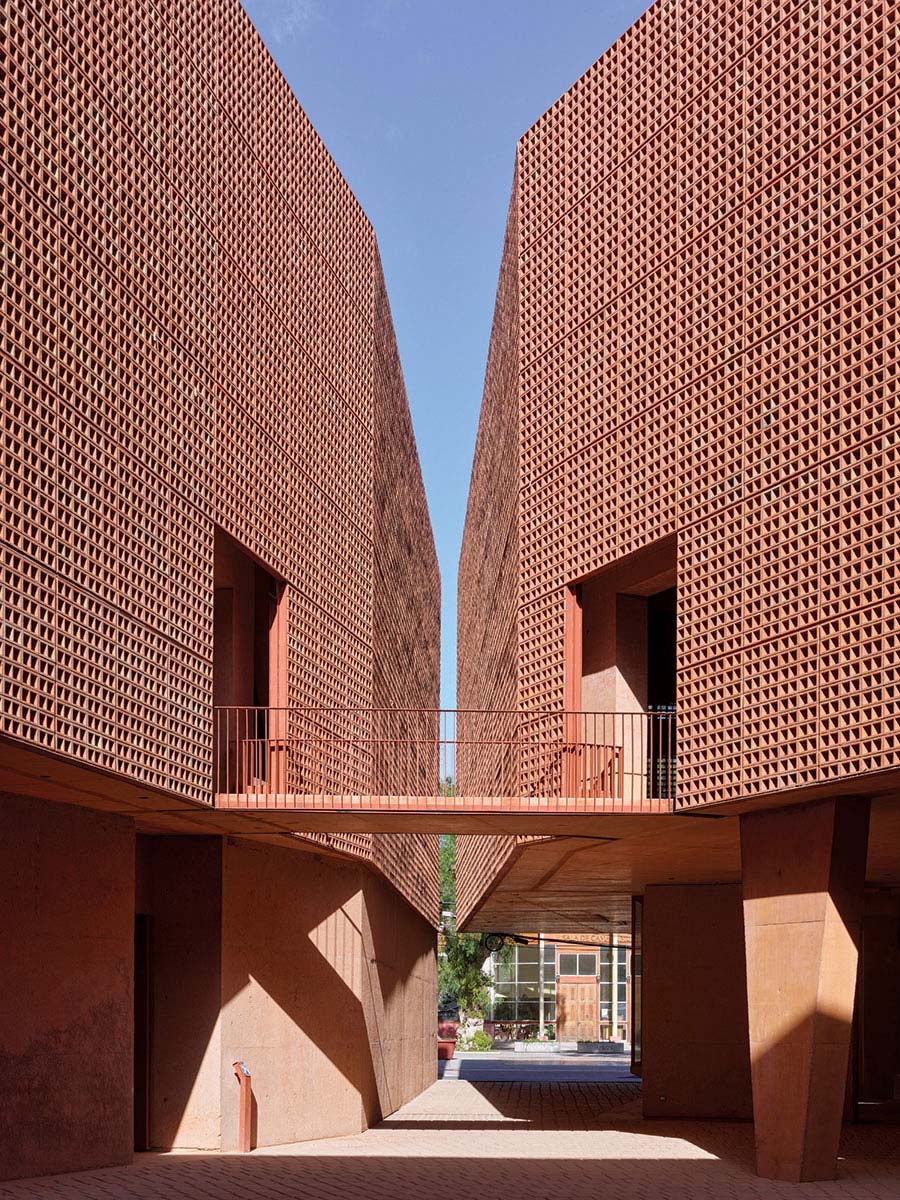
An open-air bridge closes the circulation loop. Photo © Roland Halbe
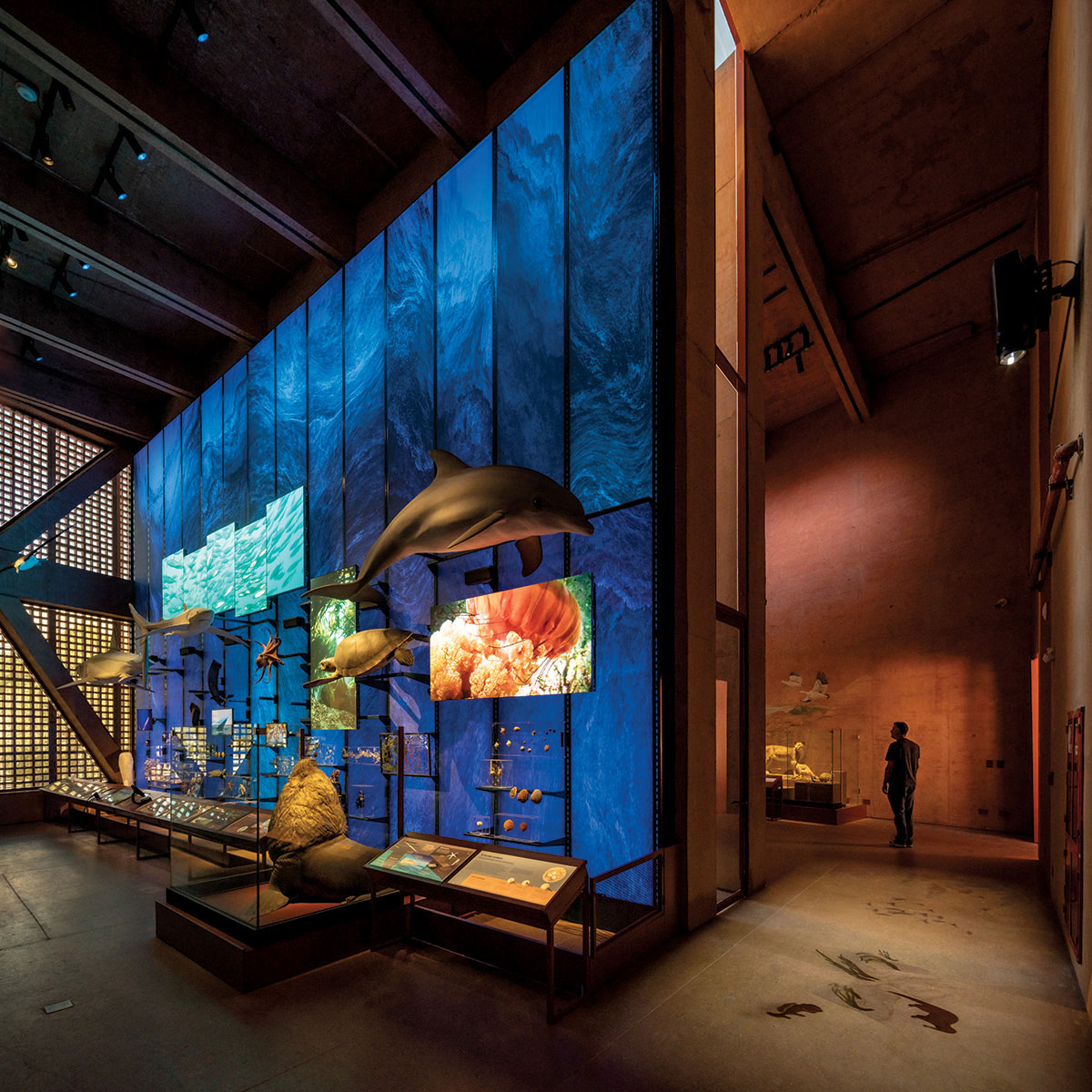
But competent exhibition design by Chilean office No Ordinary Things does not detract from the architecture either. The standard route takes visitors first through the region’s geological and paleontological history. They move on to galleries highlighting pre-Columbian artifacts and the Spanish conquest. Then, modern history, with a particular focus on the mining so central to the local economy (including an exhibit detailing the 2010 rescue of 33 miners, trapped for nearly 10 weeks, after a cave-in near Copiapó). To reach the galleries concerning Atacama’s biodiversity, visitors cross the courtyard by way of an open-air bridge. In fact, the museum has no air-conditioning; self-shading and natural-ventilation strategies maintain a pleasant temperature throughout, even during my visit in the height of summer.
5
6
The galleries have different qualities—biodiversity is exhibited in a double-height space (5 & 6); paleontology gets a more intimate one (7). Photo © Aryeh Kornfeld (5 & 6), Architectural Record (7)
7
Although art is not a large component of the museum’s collection, the temporary-exhibition gallery affords the opportunity for staff to experiment. Figueroa Berríos says that the first exhibition there will spotlight Chilean mixed-media artist Cecilia Vicuña, now based in New York City, who coined the term arte precario to describe works of hers that combine found debris and Indigenous techniques.
While the museum’s abundance of circulation might draw criticism, the plan’s many precise inflections beckon exploration, rewarding museumgoers who wander. Moreover, as the sun crosses the sky or when clouds lift, the dance of shadows—particularly through the lattice—truly mesmerizes, while the hue of the concrete oscillates from a rosy pink to a deep terra-cotta.
“What we ultimately built is not that different from what we initially proposed,” Núñez says of the scheme that won the competition 13 years ago. For any young architect, realizing a project conceived so far in the past might prompt second-guesses, and perhaps more so for Núñez, who has recently taken to building nimbly in steel and glass. After all, the Museo Regional de Atacama is decidedly grounded and weighty. But, he insists, it isn’t indicative of an evolution or fleeting interests; rather, it represents an ethos of site specificity that undergirds his work. “We don’t react the same way in the desert that we would in Patagonia or along the coast. Every project requires its own approach.” If anything, the museum confirms that his instinct was right from the start.
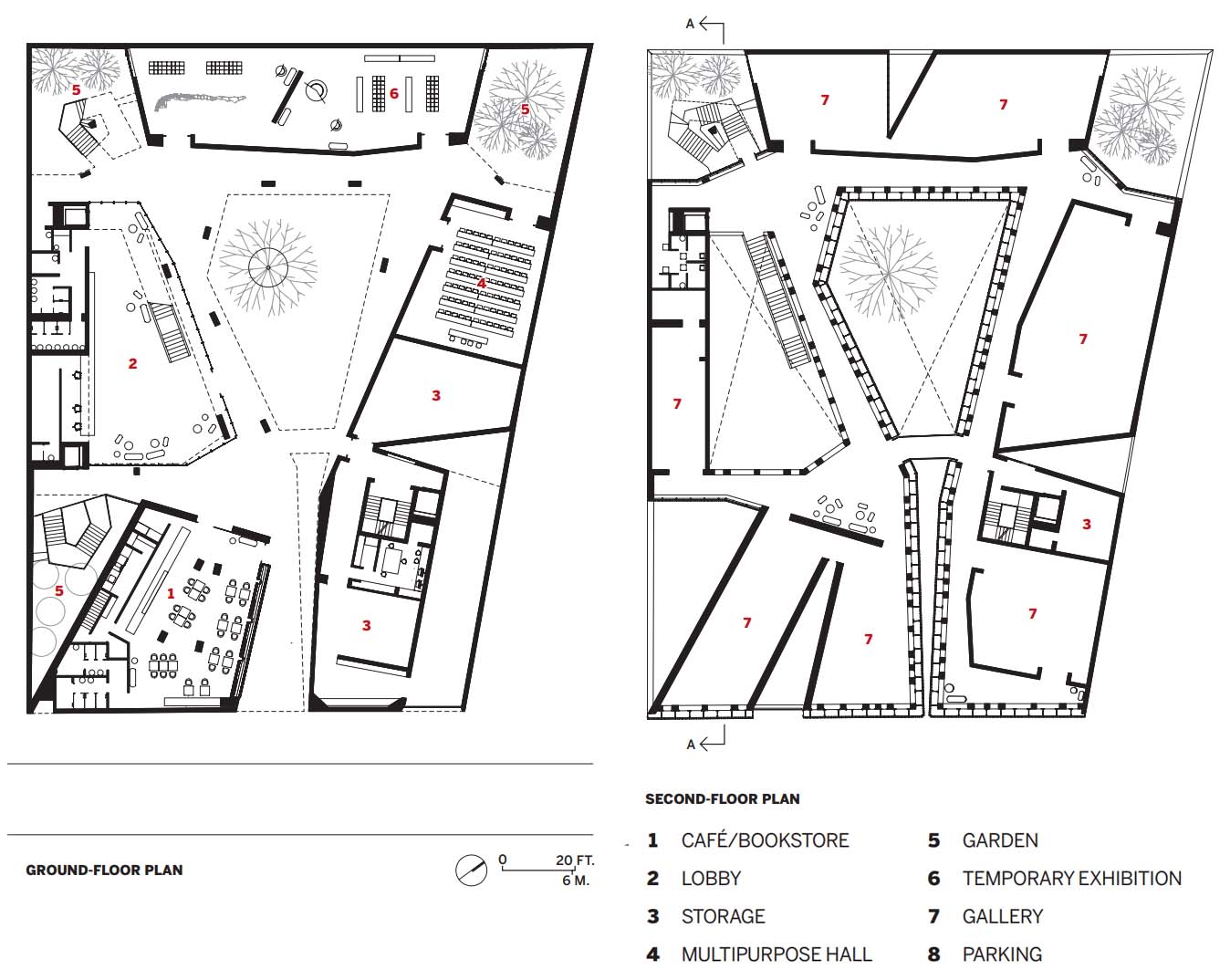
Image courtesy Max Núñez Arquitectos
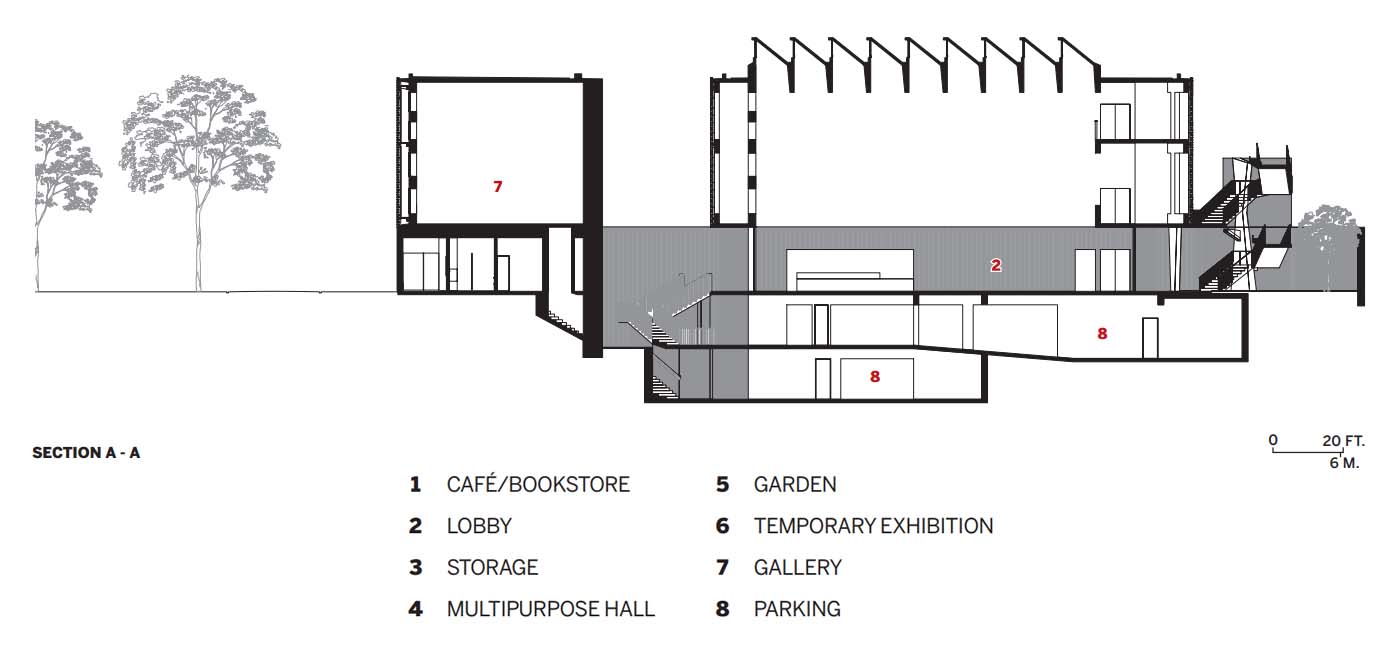
Image courtesy Max Núñez Arquitectos
Credits
Architect:
Max Núñez Arquitectos — Max Núñez, Stefano Rolla, architects in charge; Nicolás Stutzin, associated architect; Anna de Putti, Justus Menten, Tomás Tironi, Santiago Valdivieso, Solene Veysseyre, Enrique Iriso, competition team
Engineers:
Mauricio Ahumada, Jorge Tobar (structural)
Consultants:
No Ordinary Things (exhibit design); Subdirección Nacional de Museos (curatorial direction); Limari (exhibit lighting); Interdesign (museum lighting)
General Contractor:
De Vicente Constructora
Client:
Ministerio de Cultura, Servicio Nacional del Patrimonio
Size:
69,360 square feet
Cost:
Withheld
Completion:
January 2026
Sources
Bricks:
Ceramicas Santiago
Concrete:
Cementos Bio Bio (pigment)
Furniture:
Quebrada