Architectural Record
search
cart
facebook twitter linkedin youtube
  • Sign In
  • Subscribe
  • Sign Out
  • My Account
Architectural Record
  • NEWS
    • Latest News
    • Awards
    • Interviews
    • Obituaries
    • Podcasts
      • Design:Ed Podcast
      • Sponsored Podcasts
  • OPINION
    • Book Reviews / Excerpts
    • Exhibition Reviews
    • Forum
  • EXCLUSIVES
    • Videos
    • Design Vanguard
    • Top 300 Firms
    • Sponsored Content
    • Sponsored eBooks
    • From the Archives
  • CONTINUING ED
    • Editorial Continuing Ed
    • CE Center
    • CE Academies
  • PROJECTS
    • Buildings By Type
    • Reuse & Renovation
    • Museums & Arts Centers
    • Colleges & Universities
    • Multifamily Housing
    • Interiors
    • Lighting
    • Kitchen & Bath
  • HOUSES
    • Record Houses
    • House of the Month
    • Featured Houses
  • PRODUCTS
    • Products by Category
    • Record Products of the Year
    • Latest Products
  • EVENTS
    • Dates & Events
    • Record on the Road
    • Innovation Conference
    • Sustainability in Practice
    • Women In Architecture
    • Webinars
    • Ad Excellence Awards
    • Submit an Event
  • CONNECT
    • Ask RECORD AI
    • Newsletters
    • Contact
    • Advertise
    • Editorial Calendar
    • Store
    • Customer Service
  • SUBMIT
    • Submission Guidelines
    • RECORD Competitions
  • MAGAZINE
    • Subscribe
    • My Account
    • Digital Edition
    • Current Issue
    • Firm Pass
    • Historic Archive
Architecture News

Kengo Kuma Chosen for V&A Museum in Scotland

High Hopes in Hong Kong
 
Foster + Partner's scheme arranges most of the cultural and commercial facilities in a central axis running east-west and linking the waterfront to older parts of the city. Direct and straightforward, it features orthogonal blocks of development along the axis, which terminates at two iconic oval cultural buildings: an opera house and an exhibition center. Foster kept almost the entire 2.2-kilometer-long waterfront free of buildings and vehicles, creating an urban forest spotted with tea pavilions, public art, amphitheaters, outdoor mahjong tables, and shaded promenades. Much like Hong Kong itself, the design alternates compact, generic developments with large areas of green space.
 
Image courtesy Foster + Partners
High Hopes in Hong Kong
 
Foster + Partner's scheme arranges most of the cultural and commercial facilities in a central axis running east-west and linking the waterfront to older parts of the city. Direct and straightforward, it features orthogonal blocks of development along the axis, which terminates at two iconic oval cultural buildings: an opera house and an exhibition center. Foster kept almost the entire 2.2-kilometer-long waterfront free of buildings and vehicles, creating an urban forest spotted with tea pavilions, public art, amphitheaters, outdoor mahjong tables, and shaded promenades. Much like Hong Kong itself, the design alternates compact, generic developments with large areas of green space.
 
Image courtesy Foster + Partners
High Hopes in Hong Kong
 
Foster + Partner's scheme arranges most of the cultural and commercial facilities in a central axis running east-west and linking the waterfront to older parts of the city. Direct and straightforward, it features orthogonal blocks of development along the axis, which terminates at two iconic oval cultural buildings: an opera house and an exhibition center. Foster kept almost the entire 2.2-kilometer-long waterfront free of buildings and vehicles, creating an urban forest spotted with tea pavilions, public art, amphitheaters, outdoor mahjong tables, and shaded promenades. Much like Hong Kong itself, the design alternates compact, generic developments with large areas of green space.
 
Image courtesy Foster + Partners
High Hopes in Hong Kong
 
Foster + Partner's scheme arranges most of the cultural and commercial facilities in a central axis running east-west and linking the waterfront to older parts of the city. Direct and straightforward, it features orthogonal blocks of development along the axis, which terminates at two iconic oval cultural buildings: an opera house and an exhibition center. Foster kept almost the entire 2.2-kilometer-long waterfront free of buildings and vehicles, creating an urban forest spotted with tea pavilions, public art, amphitheaters, outdoor mahjong tables, and shaded promenades. Much like Hong Kong itself, the design alternates compact, generic developments with large areas of green space.
 
Image courtesy Foster + Partners
High Hopes in Hong Kong
 
Foster + Partner's scheme arranges most of the cultural and commercial facilities in a central axis running east-west and linking the waterfront to older parts of the city. Direct and straightforward, it features orthogonal blocks of development along the axis, which terminates at two iconic oval cultural buildings: an opera house and an exhibition center. Foster kept almost the entire 2.2-kilometer-long waterfront free of buildings and vehicles, creating an urban forest spotted with tea pavilions, public art, amphitheaters, outdoor mahjong tables, and shaded promenades. Much like Hong Kong itself, the design alternates compact, generic developments with large areas of green space.
 
Image courtesy Foster + Partners
High Hopes in Hong Kong
 
In its plan titled 'Project for a new Dimension,' OMA draws on its recent research into preservation and regional development patterns, then reconfigures local-global elements. Three key ideas distilled from Hong Kong underpin the master plan'the village, agricultural field patterns, and urban streetscapes. Koolhaas and his team argue that it is the combination of these programmatic types that makes Hong Kong sustainable as a city and a culture. They hope to moderate the complexity of urban life with differentiated landscapes ranging from multi-use parks to dense urban grids. An Art Village, a Middle Village, and a Theatre Village occupy key locations in the plan and define distinct zones.
 
Image courtesy OMA
High Hopes in Hong Kong
 
In its plan titled 'Project for a new Dimension,' OMA draws on its recent research into preservation and regional development patterns, then reconfigures local-global elements. Three key ideas distilled from Hong Kong underpin the master plan'the village, agricultural field patterns, and urban streetscapes. Koolhaas and his team argue that it is the combination of these programmatic types that makes Hong Kong sustainable as a city and a culture. They hope to moderate the complexity of urban life with differentiated landscapes ranging from multi-use parks to dense urban grids. An Art Village, a Middle Village, and a Theatre Village occupy key locations in the plan and define distinct zones.
 
Image courtesy OMA
High Hopes in Hong Kong
 
In its plan titled 'Project for a new Dimension,' OMA draws on its recent research into preservation and regional development patterns, then reconfigures local-global elements. Three key ideas distilled from Hong Kong underpin the master plan'the village, agricultural field patterns, and urban streetscapes. Koolhaas and his team argue that it is the combination of these programmatic types that makes Hong Kong sustainable as a city and a culture. They hope to moderate the complexity of urban life with differentiated landscapes ranging from multi-use parks to dense urban grids. An Art Village, a Middle Village, and a Theatre Village occupy key locations in the plan and define distinct zones.
 
Image courtesy OMA
High Hopes in Hong Kong
 
In its plan titled 'Project for a new Dimension,' OMA draws on its recent research into preservation and regional development patterns, then reconfigures local-global elements. Three key ideas distilled from Hong Kong underpin the master plan'the village, agricultural field patterns, and urban streetscapes. Koolhaas and his team argue that it is the combination of these programmatic types that makes Hong Kong sustainable as a city and a culture. They hope to moderate the complexity of urban life with differentiated landscapes ranging from multi-use parks to dense urban grids. An Art Village, a Middle Village, and a Theatre Village occupy key locations in the plan and define distinct zones.
 
Image courtesy OMA
High Hopes in Hong Kong
 
In its plan titled 'Project for a new Dimension,' OMA draws on its recent research into preservation and regional development patterns, then reconfigures local-global elements. Three key ideas distilled from Hong Kong underpin the master plan'the village, agricultural field patterns, and urban streetscapes. Koolhaas and his team argue that it is the combination of these programmatic types that makes Hong Kong sustainable as a city and a culture. They hope to moderate the complexity of urban life with differentiated landscapes ranging from multi-use parks to dense urban grids. An Art Village, a Middle Village, and a Theatre Village occupy key locations in the plan and define distinct zones.
 
Image courtesy OMA
High Hopes in Hong Kong
 
Rocco's master plan stitches together public space and local culture. A strategy of connective landscape creates three linear bands characterized as 'city,' 'culture,' and 'green terrain.' The idea is to weave together urbanity and nature. New cross streets connect with the existing city grid, framing views of the harbor and connecting people to the water. In elements such as shop-lined alleys laced with cultural institutions, the design captures Hong Kong's dense urban character, while its waterfront areas recall the famous 12th-century Chinese scroll painting Qingming Riverside.
 
Image courtesy Rocco Design Architects
High Hopes in Hong Kong
 
Rocco's master plan stitches together public space and local culture. A strategy of connective landscape creates three linear bands characterized as 'city,' 'culture,' and 'green terrain.' The idea is to weave together urbanity and nature. New cross streets connect with the existing city grid, framing views of the harbor and connecting people to the water. In elements such as shop-lined alleys laced with cultural institutions, the design captures Hong Kong's dense urban character, while its waterfront areas recall the famous 12th-century Chinese scroll painting Qingming Riverside.
 
Image courtesy Rocco Design Architects
High Hopes in Hong Kong
 
Rocco's master plan stitches together public space and local culture. A strategy of connective landscape creates three linear bands characterized as 'city,' 'culture,' and 'green terrain.' The idea is to weave together urbanity and nature. New cross streets connect with the existing city grid, framing views of the harbor and connecting people to the water. In elements such as shop-lined alleys laced with cultural institutions, the design captures Hong Kong's dense urban character, while its waterfront areas recall the famous 12th-century Chinese scroll painting Qingming Riverside.
 
Image courtesy Rocco Design Architects
High Hopes in Hong Kong
 
Rocco's master plan stitches together public space and local culture. A strategy of connective landscape creates three linear bands characterized as 'city,' 'culture,' and 'green terrain.' The idea is to weave together urbanity and nature. New cross streets connect with the existing city grid, framing views of the harbor and connecting people to the water. In elements such as shop-lined alleys laced with cultural institutions, the design captures Hong Kong's dense urban character, while its waterfront areas recall the famous 12th-century Chinese scroll painting Qingming Riverside.
 
Image courtesy Rocco Design Architects
High Hopes in Hong Kong
 
Rocco's master plan stitches together public space and local culture. A strategy of connective landscape creates three linear bands characterized as 'city,' 'culture,' and 'green terrain.' The idea is to weave together urbanity and nature. New cross streets connect with the existing city grid, framing views of the harbor and connecting people to the water. In elements such as shop-lined alleys laced with cultural institutions, the design captures Hong Kong's dense urban character, while its waterfront areas recall the famous 12th-century Chinese scroll painting Qingming Riverside.
 
Image courtesy Rocco Design Architects
High Hopes in Hong Kong
November 4, 2010

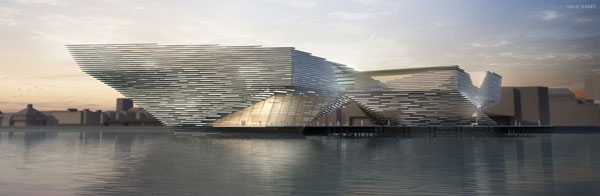
Victoria & Albert Museum in Dundee, Scotland
Image courtesy V&A
Kengo Kuma has won the competition to design a new Victoria & Albert Museum in Dundee, Scotland

This is the incredible ship-like building that will dominate Dundee' s waterfront from 2014.

Japanese architect Kengo Kuma beat worldwide competition to win the honour of designing the city's £47 million Victoria & Albert Museum.

Work on the amazing structure will begin in 2012 and the museum—the V&A's new international centre for design—is scheduled to open in 2014.

It's hoped the project at Discovery Point will transform Dundee's fortunes in the same way the Guggenheim changed the Spanish port of Bilbao.

Lesley Knox, head of the judging panel, said last night: "We were delighted by the quality of all the designs.

"Kengo Kuma's proposal was the unanimous choice by the panel and is a worthy winner."

The architect said his selection was "a great honour." He added: "I am thrilled to be able to work with those at V&A Dundee in order to give shape to their vision, to contribute meaningfully to the cultural richness of the city."

The centre will house touring exhibitions from the V&A as well as artefacts from other major museums and galleries.

V&A director Sir Mark Jones said: "I think this will become a major destination and will give us an internationally recognised building. It will reward repeat visits and attract attention from around the world."

(c) 2010 Daily Record; Glasgow (UK). Provided by ProQuest LLC. All rights Reserved.

A service of YellowBrix, Inc.

By utilizing the content on this page, you agree to the legal terms.

Share This Story

Looking for a reprint of this article?
From high-res PDFs to custom plaques, order your copy today!
Post a comment to this article

Report Abusive Comment

Subscription Center
  • Create an Account
  • Start a Subscription
  • Manage My Account
  • Sign Up for Newsletters
  • Visit Customer Service
  • Update Preferences

More Videos

Sponsored Content

Sponsored Content is a special paid section where industry companies provide high quality, objective, non-commercial content around topics of interest to the Architectural Record audience. All Sponsored Content is supplied by the advertising company and any opinions expressed in this article are those of the author and not necessarily reflect the views of Architectural Record or its parent company, BNP Media. Interested in participating in our Sponsored Content section? Contact your local rep!

close
  • TAMLYN XtremeTrim Exterior Trim
    Sponsored byTamlyn

    Designing Cleaner Panel Facades: Why Exterior Trim Details Matter

  • Building with Vapor Barriers
    Sponsored byReef Industries, Inc.

    Vapor Barriers Help Control Moisture in Tighter Building Designs

  • Duct Interior with Prodeq System
    Sponsored byHenry, a Carlisle Company

    Designing Resilient Water Containment Systems

DESIGN:ED Podcast
Listen to Architectural Record’s DESIGN:ED Podcast

Events

June 10, 2026

Rethinking Stormwater – The Power of Porous Paving

Credits: 1 AIA LU/HSW; 1 AIBD P-CE; 0.1 ICC CEU

Learn how porous paving systems support stormwater management, reduce heat island effects, and enhance sustainable site design performance.

June 11, 2026

Very Early Warning Fire Detection for Mission-Critical Facilities

Credits: 1 AIA LU/HSW; 1 AIBD P-CE; 0.1 ICC CEU

Examine advanced fire detection strategies that support uptime and enhance safety in data centers and other mission-critical facilities.

View All Submit An Event

Products

2026 Architect's Square Foot Costbook

2026 Architect's Square Foot Costbook

See More Products

Popular Stories

Coronado Bridge

The Architect’s Guide to San Diego

Practice Matters illustration

What’s in a (Firm’s) Name? Thinking About Succession and Legacy

Practice Matters illustration

By the Numbers: Counting America's Architects

Inward House

Inward House by VeeV Design Studio

Riverdale House by Studio Lau

Riverdale House by Studio Lau

Broader Sustainability of CMU - Free Webinar - May 21, 2026

Related Articles

  • Scotland_©HuftonCrow_059.jpg

    Kengo Kuma’s V&A Dundee Opens in Scotland

    See More
  • V&A Dundee by Kengo Kuma & Associates

    V&A Dundee by Kengo Kuma & Associates

    See More
  • Brandywine Museum of Art new building rendering

    Kengo Kuma Will Design a New Gallery Building at Pennsylvania’s Brandywine Museum of Art

    See More

Related Products

See More Products
  • book3.jpg

    If Architecture is a Language, Then a Building is a Story

  • image7.jpg

    Contemporary Architecture in China Towards A Critical Pragmatism

See More Products
×

The latest news and information

#1 Source for Architectural Design, News and Products

SUBSCRIBE
  • RESOURCES
    • Advertise
    • Contact Us
    • Submit
    • Store
  • ACCOUNT CENTER
    • Create an Account
    • Start a Subscription
    • Manage My Account
    • Sign Up for Newsletters
    • Visit Customer Service
    • Update Preferences
  • PRIVACY
    • PRIVACY POLICY
    • TERMS & CONDITIONS
    • DO NOT SELL MY PERSONAL INFORMATION
    • PRIVACY REQUEST
    • ACCESSIBILITY
  • SERVICES
    • Marketing Services
    • Reprints
    • Market Research
    • List Rental
    • Survey/Respondent Access
  • STAY CONNECTED
    • Linkedin
    • Facebook
    • Instagram
    • YouTube
    • X (Twitter)

Copyright ©2026. All Rights Reserved BNP Media, Inc. and BNP Media II, LLC.

Design, CMS, Hosting & Web Development :: ePublishing