The National Building Museum Explores the Impact of Tuskegee University in Parallel Exhibitions

The National Building Museum (NBM) in Washington, D.C., recently opened two concurrent exhibitions linked by their relationship to Alabama’s Tuskegee University: The Tuskegee Chapel: Paul Rudolph x Fry & Welch and A Better Life for Their Children: Julius Rosenwald, Booker T. Washington, and the 4,978 Schools that Changed America. These exhibitions combine to trace the growth of Tuskegee across the first half of the 20th century, when it became a hub for some of the most innovative architectural thinking of the era.
The two shows are set within four vaulted galleries on NBM’s second level. Organized chronologically, A Better Life for Their Children takes the first gallery while The Tuskegee Chapel populates the third and fourth, with the second gallery serving as the spatial and narrative link between them.
.jpg "rosenwald school")
Quilt celebrating the restoration of the Pine Grove School. Photo © Andrew Feiler
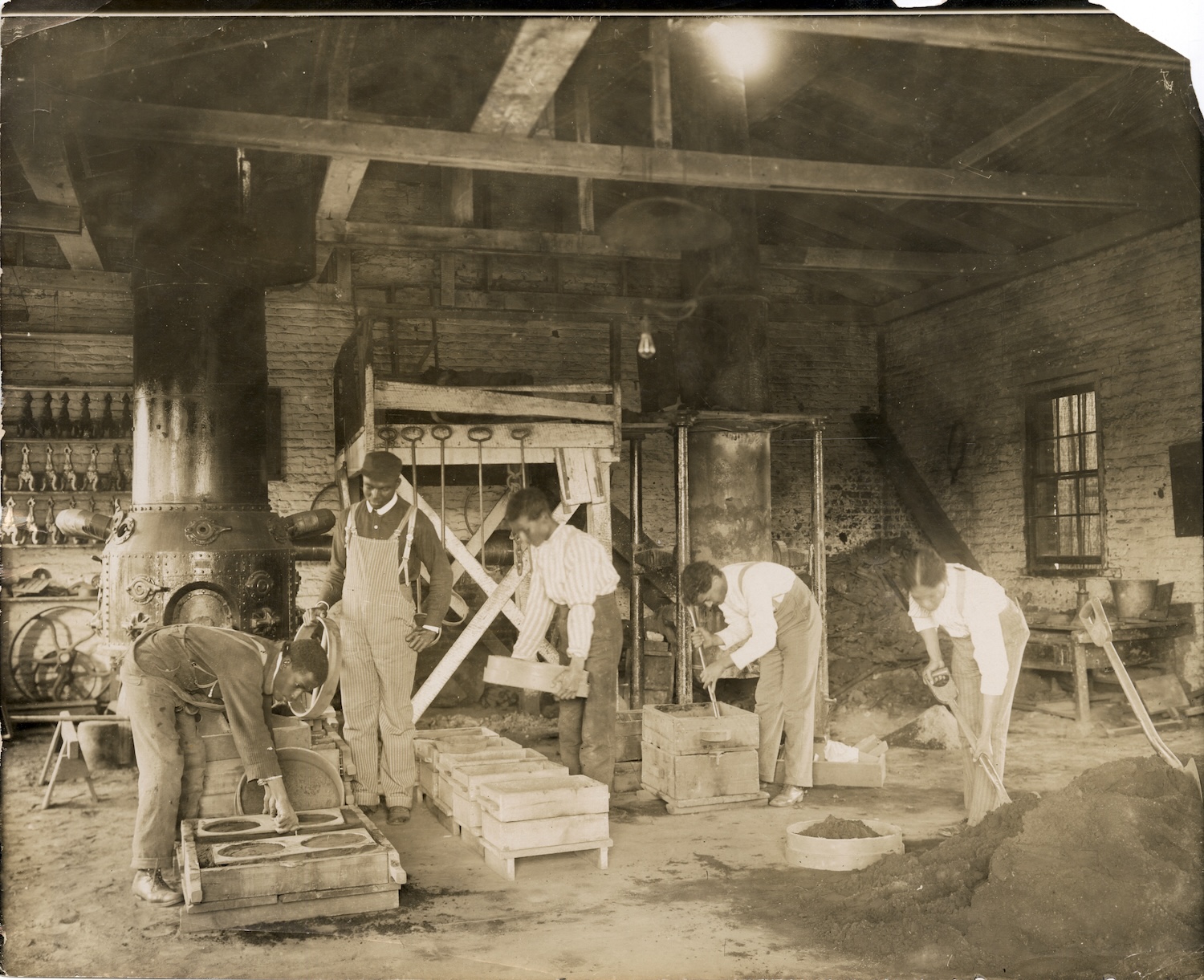
Tuskegee students mold bricks used to construct new buildings on campus. Photo courtesy Tuskegee Archives
Long before Paul Rudolph developed his designs for the breathtaking Tuskegee Chapel at the historically Black university, the school had already established itself as a hub of construction and design. From its founding in 1891 as the Tuskegee Normal and Industrial Institute, students produced their own bricks on campus, giving the university both the literal building blocks with which to produce its structures and a moderate income stream through sales of the material beyond its campus borders. While Tuskegee’s founder, the orator and educator Booker T. Washington, sought to provide African American students with higher learning, he also devoted some of his substantial energy to ensuring Black communities in the segregated postbellum South had adequate educational facilities, as the Reconstruction era had produced vastly unequal conditions.
.jpg)
1
.jpg)
2
Emory School in Hale County, Alabama (1) and Pleasant Plains School in Hertford County, North Carolina (2). Photos © Andrew Feiler
A Better Life for Their Children chronicles the efforts of Washington and Julius Rosenwald, a president of Sears Roebuck and philanthropist, from a 1911 invitation to Tuskegee University through the forging of a partnership that would yield 4,978 schools built between 1912 and 1937. As Rosenwald put it in 1918: “It is a crime to pile up money after one has accumulated all that he needs for himself and his family. There is a stage where acquisition becomes a vice.”
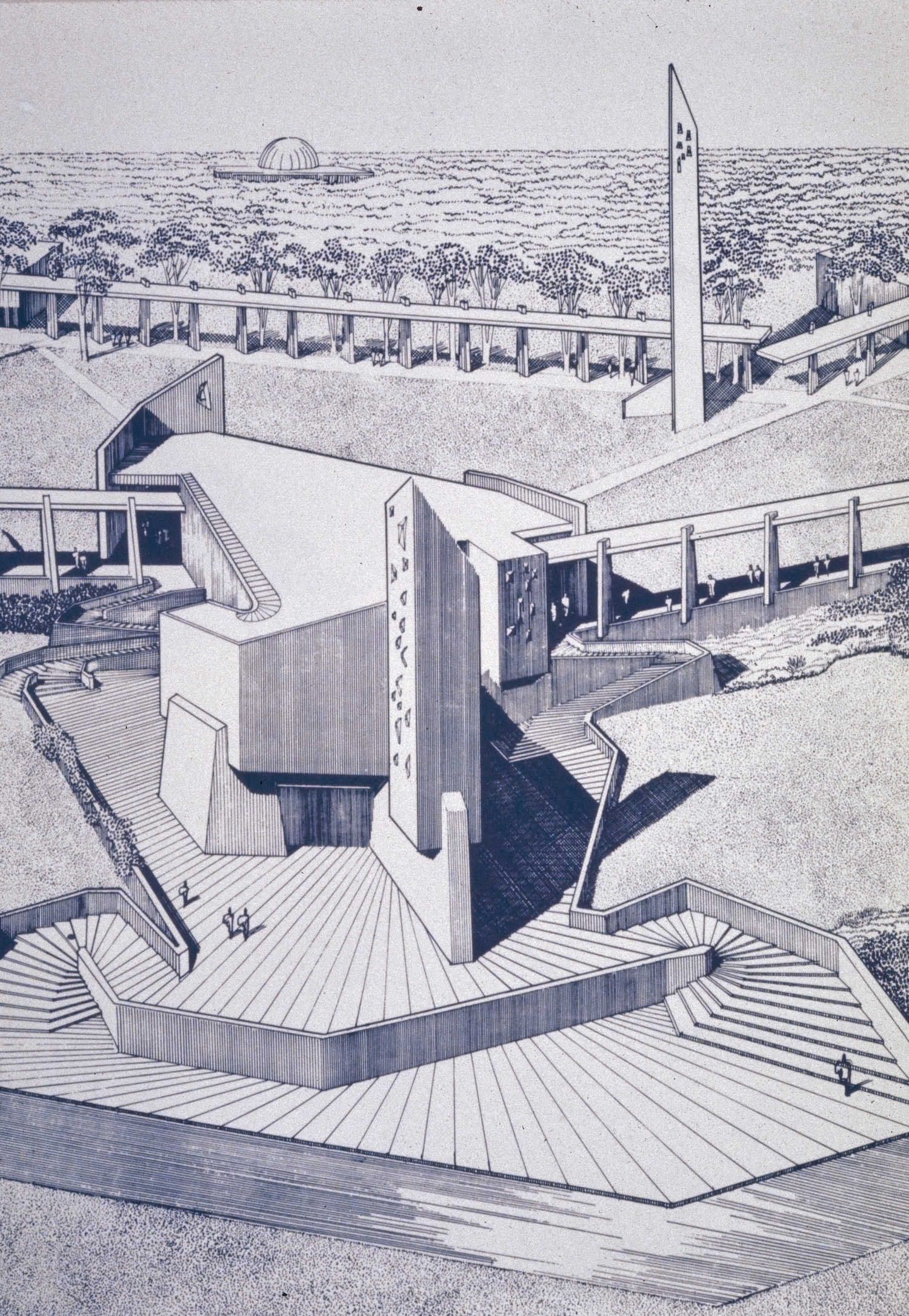
Exterior perspective drawing of Tuskegee Chapel by Paul Rudolph, circa 1960. Image courtesy Library of Congress, Prints & Photographs Division. LC-DIG-ds-14633
This sentiment would spur a truly impressive commitment to building what became the Rosenwald Schools: academic infrastructure propelling young Black students on their scholarly journeys. The exhibition features the photography and stories of Andrew Feiler, who documented 105 of the remaining Rosenwald schools, as well as scale models of some of the school buildings and a life-sized mock-up of a wood-lined classroom. Reproductions of school plans, many of which had been drawn and compiled into a pattern book of standardized building plans by Tuskegee instructors Robert Robinson Taylor and William Augustus Hazel, also accompany Feiler’s images.
Architecture enthusiasts will recall that Tuskegee Chapel has been in the spotlight before. Architectural Record featured the Tuskegee Chapel on the cover of its November 1969 issue, with Mildred F. Schmertz noting its “power to evoke a universal response, rather than one limited to the aesthetically trained.” The Tuskegee show, which was curated by Helen Brown Bechtel in partnership with Dr. Kwesi Daniels and Roderick Fluker at Tuskegee University, and Timothy Hyde and Carrie Norman at the Massachusetts Institute of Technology, was first exhibited last year within another of Rudolph’s works, his Art & Architecture Building at Yale, timed to overlap with the Metropolitan Museum of Art’s exhibition, Materialized Space: The Architecture of Paul Rudolph.
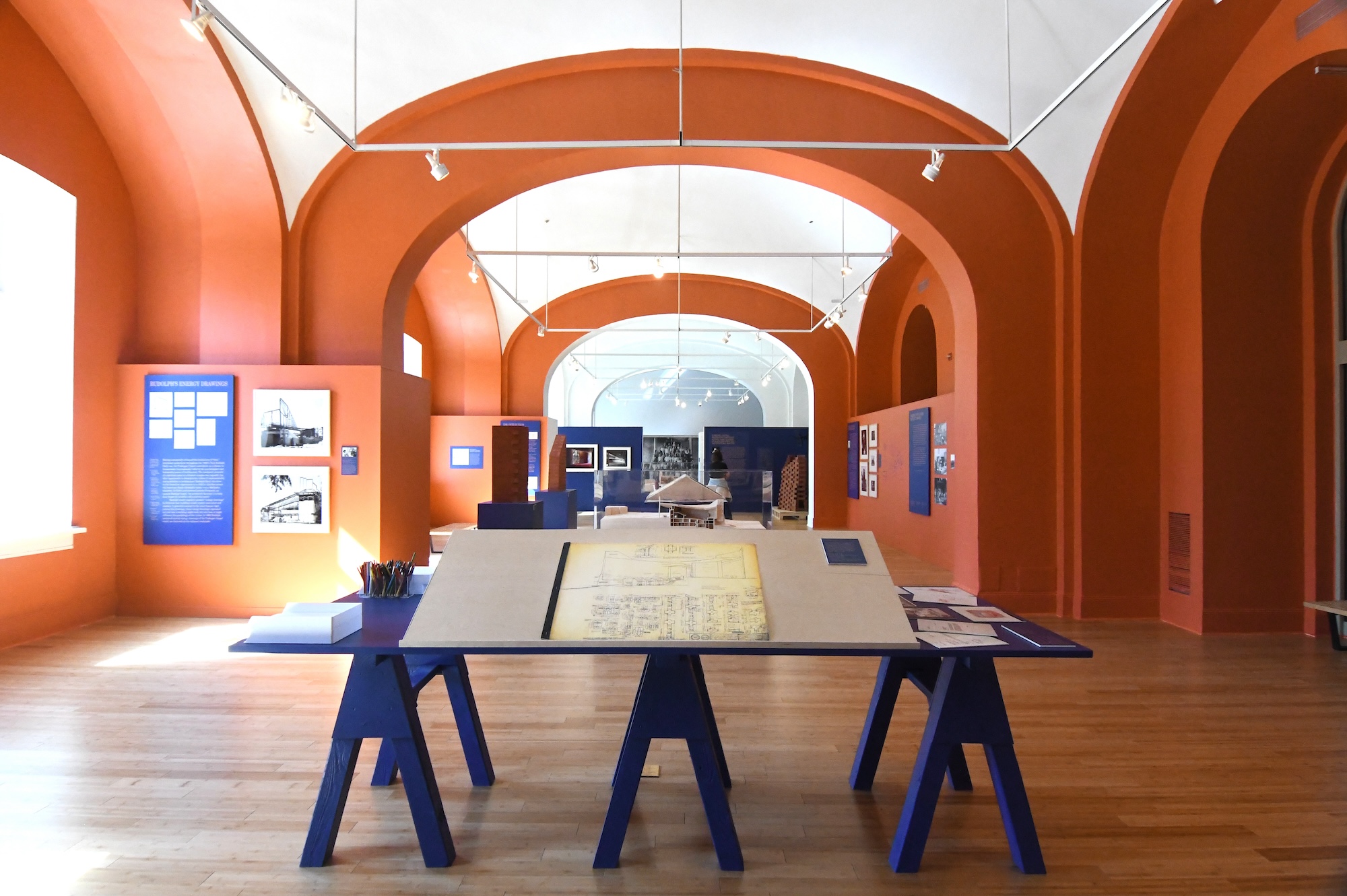
Installation view. Photo courtesy Deane Madsen
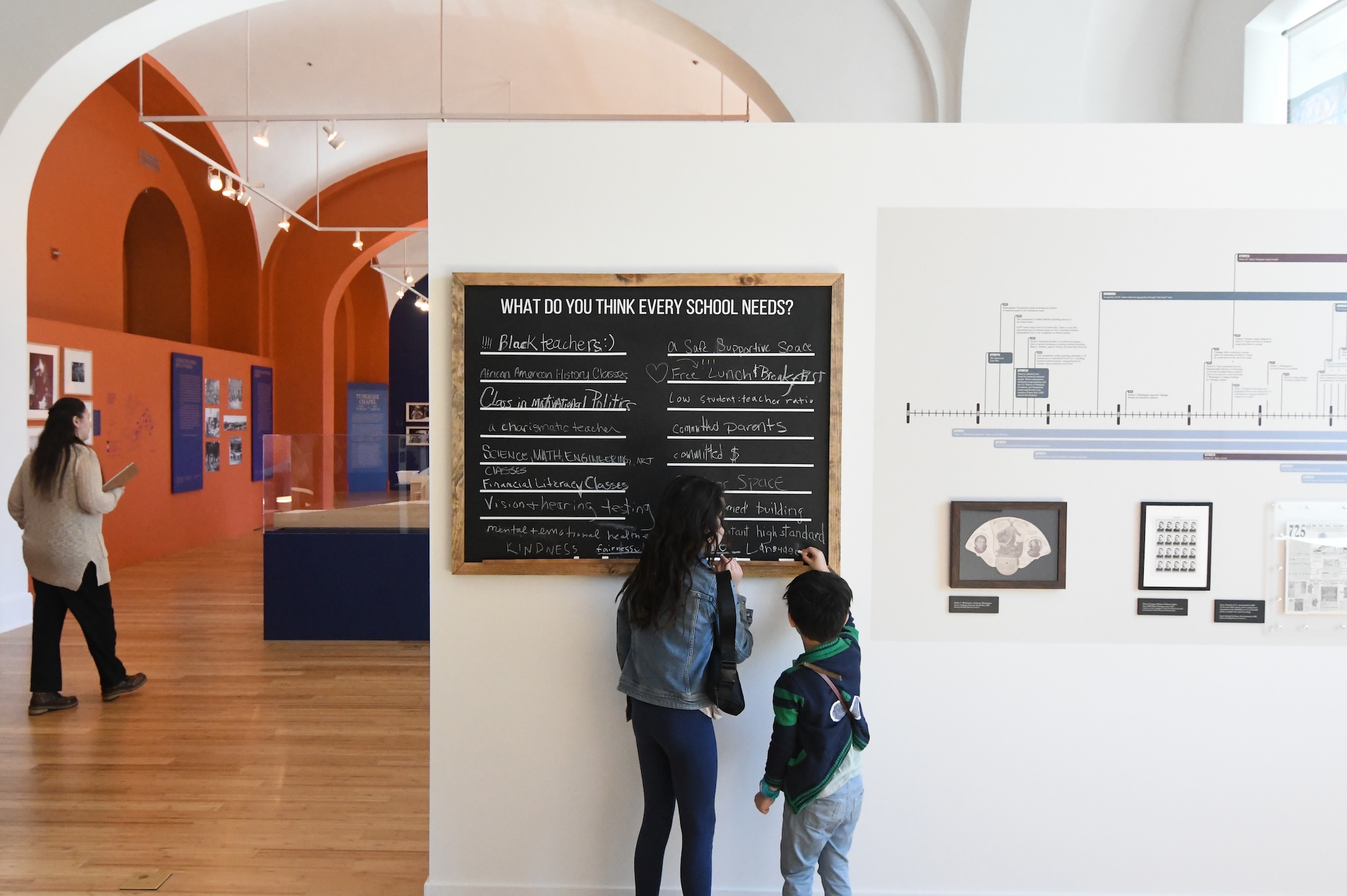
Installation view. Photo courtesy Deane Madsen
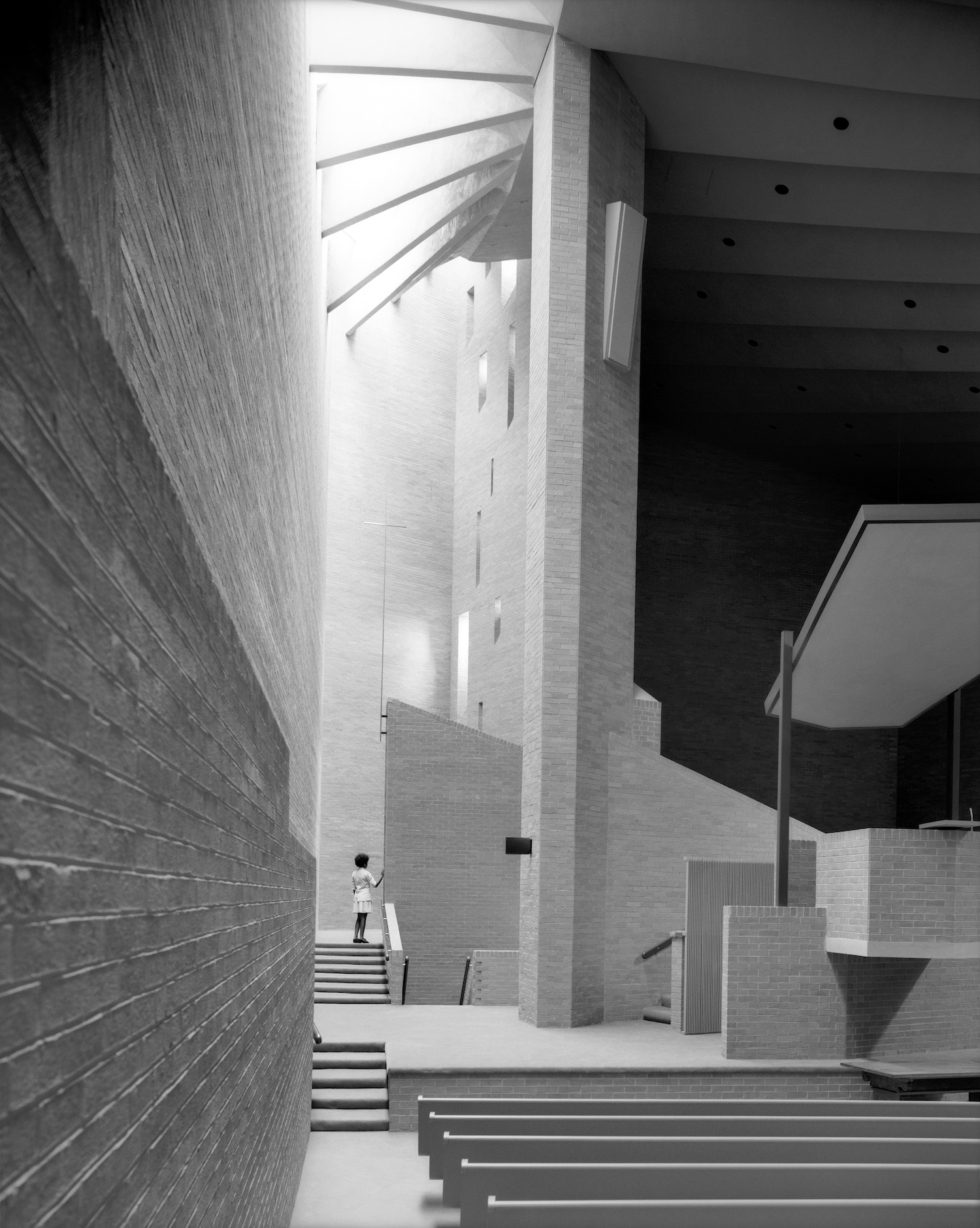
An image of the meditation chapel was featured in RECORD’s November 1969 cover story on the Tuskegee Chapel. Photo © Ezra Stoller/Esto, Yossi Milo Gallery
One of the centerpieces of The Tuskegee Chapel: Paul Rudolph x Fry & Welch is Rudolph’s hand-rendered drawing of the interior, which serves as the cover image for the Met’s exhibition catalogue. At NBM, a facsimile of the drawing enlarged to about eight feet tall allows visitors to feel as if they are standing on the balcony looking into the space created by a seemingly endless array of diagonal lines of colored pencil. Visitors can try their hand at drawing to recreate Rudolph’s sketches or at bricklaying to explore the techniques Fry & Welch used in the Tuskegee Chapel. Mock-ups of some of the brick details incorporated into the chapel’s design show how architects of record Louis Fry, Sr., and John Welch translated Rudolph’s 1960 concrete design into a brick rendition matching the rest of the Tuskegee campus.
The two exhibitions merge in the second gallery, where wall panels and photographs tease out the connections from Tuskegee Chapel through the thousands of Rosenwald Schools; to Howard University, whose architectural program follows in Tuskegee’s footsteps; and farther afield with graduates from the HBCU becoming notable practitioners throughout the United States. Taken together, these shows document how pronounced an influence Tuskegee was in the field of architecture, far beyond the bounds of its campus.
The Tuskegee Chapel: Paul Rudolph x Fry & Welch and A Better Life for Their Children: Julius Rosenwald, Booker T. Washington, and the 4,978 Schools that Changed America are both on view at the National Building Museum through January 2027.
Looking for quick answers on architecture and design topics?
Try Ask RECORD, our new smart AI search tool.
Ask RECORD →
Looking for a reprint of this article?
From high-res PDFs to custom plaques, order your copy today!