Record Interiors 2026
ArchitectureFirm Fits Out the Common Spaces of a New Residential High-rise in Raleigh’s Booming Downtown
Raleigh, North Carolina
Architects & Firms
Once rare in Raleigh, North Carolina, apartment towers are becoming an increasingly vital building type here as the city undergoes tremendous change and growth. A multibillion-dollar overhaul is transforming the predominantly low-rise, modest-density state capital and university-research town into a more urban, dynamic, and livable metropolis. With ambitions that include greater walkability and neighborhood connectivity, the city is poised for dramatic evolution in its mixed uses, attractions, and entire skyline.
A notable newcomer is Maeve, a residential high-rise completed a year ago on a downtown corner, near the convention center and a major performance amphitheater. With 20 stories and 300 market-rate rental units, Maeve stands at a nexus of multi-neighborhood redevelopment. Though the 508,400-square-foot building was designed by ISG, Capital Square, the developer owners, engaged (as it typically does) a separate practice—in this case, ArchitectureFirm, based in Brooklyn, New York, and Richmond, Virginia—to focus exclusively on the interiors, bringing finer-tuned experiential qualities and its own design cachet. “In this increasingly competitive market, it’s essential to stand out,” says Capital Square Executive Vice President Natalie Mason, who also knew that design need not be flamboyant to successfully set itself apart.
“We imagined a serene respite within a vibrant urban setting,” she explains, “a building with proximity to the excitement of downtown restaurants and entertainment, yet a calm place to come home to—an antidote to the hustle and bustle.” Capital Square had worked with ArchitectureFirm elsewhere, and Mason was impressed by the cleanly detailed, warm natural materials; the deftly integrated curves, and the balance between soaring openness and intimate carve-outs within large spaces. “ArchitectureFirm,” she recalls, “seemed exactly right for Maeve—for its shared areas, as well as the finishes, fixtures, and overall aesthetic of the units themselves.”
The scope and character of communal amenities would be key to attracting tenants, many of them relatively young professionals desiring the spatial variety and generosity of a house or townhome, with social, exercise, and remote-work areas. So about 34,000 square feet (18,000 indoors and 16,000 outdoors) at Maeve are dedicated to amenities, among them coworking spaces—with comfortable furniture, a coffee bar, enclosed carrels, and meeting/reading rooms—on a mezzanine overlooking the lobby; a seventh-floor gym, plus an open-air pool above the parking-garage structure; and social and relaxation areas, with private dining and entertaining potential, on the top floor. But a key challenge was how to connect the different spaces fluidly across mostly noncontiguous levels.
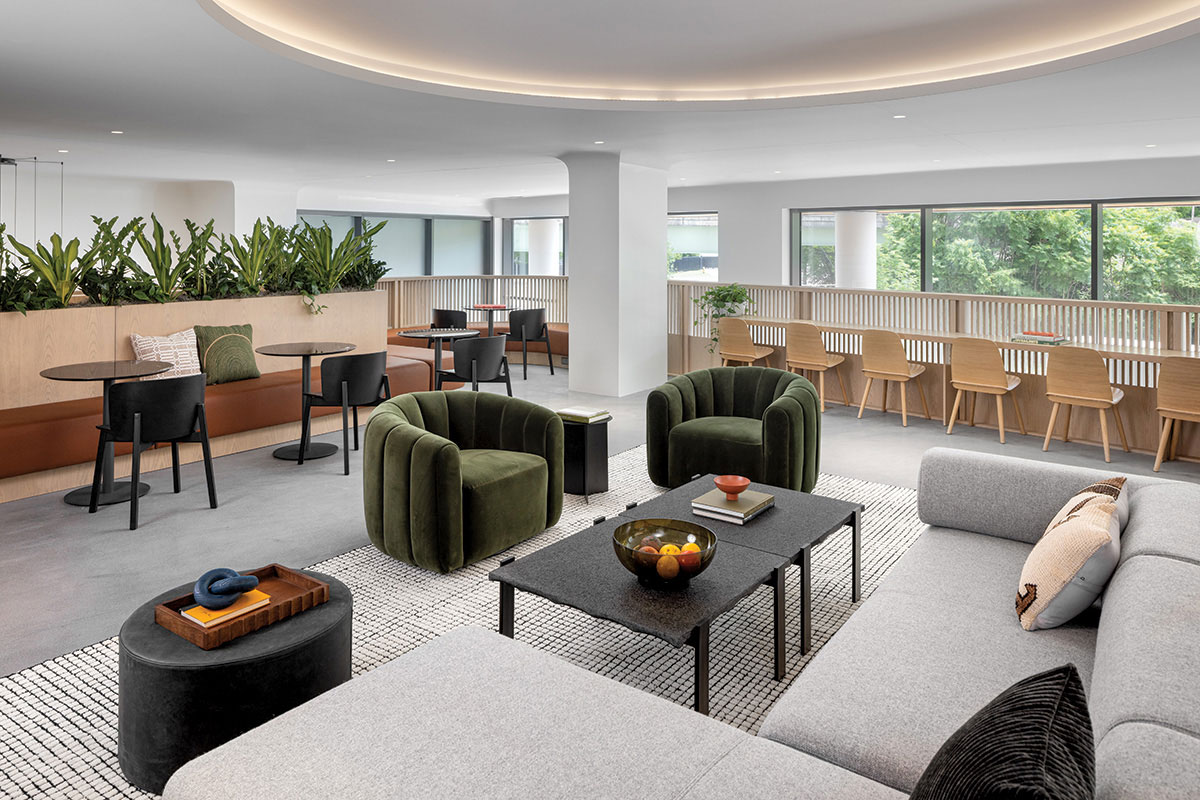
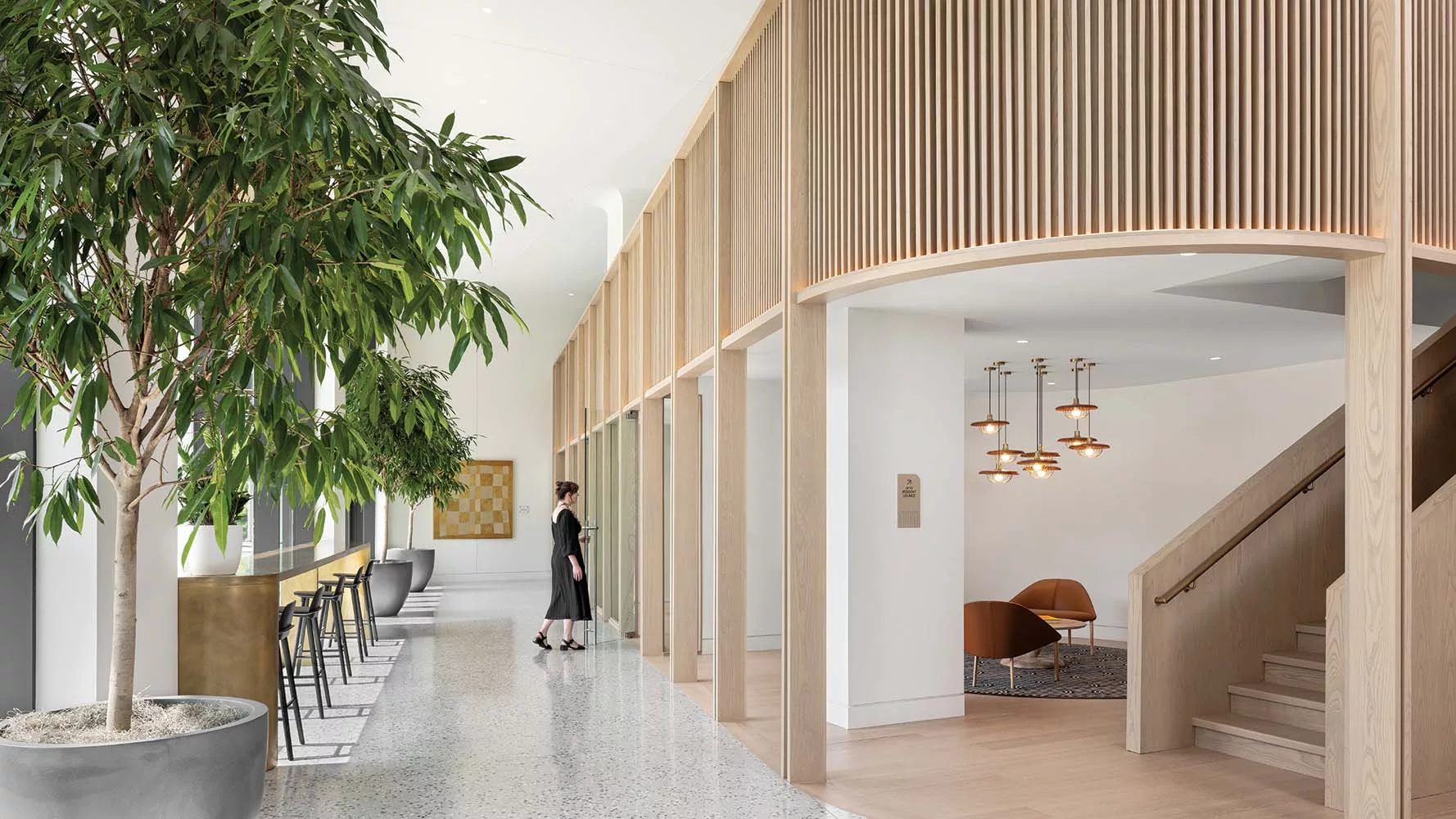
Potted plants, seating, and a wood-slat screen wrapping the mezzanine continue the streetscape into the lobby (above and top of page). Photo © Sterling E. Stevens, click to enlarge.
To achieve that, ArchitectureFirm developed implicit themes of earth, water, and sky that rise through the tower. The concept relies on nuances of material and form to give the lobby level an earthy groundedness; to infuse the seventh floor, beyond its pool deck, with a flowing, aqueous sensibility; and to accentuate the 20th floor’s ethereal loftiness.
Rooted in the city, the lobby—rising from a gray terrazzo floor to a two-story-high ceiling—connects with the street visually through a glass curtain wall. Farther inside, a wood-slat “facade,” echoing the streetscape, wraps the lobby’s mezzanine, while large potted ficus trees border the window wall, recalling a leafy urban promenade. The plantings also lend the balcony level a playful treehouse feel.
Given the floor-plate depth—accommodating, at grade, a concierge desk, lounge, mailbox corridor, golf-simulator room, elevator core, and leasing offices—the architects took measures to bring daylight and other luminous qualities throughout. So, along with silvery ash millwork, they introduced subtle lighting, gently reflective surfaces (including the reception counter’s bronze front), clear glass enclosures, and quasi-transparent “veils,” as in the slatted wrapper.
Looking for quick answers on architecture and design topics?
Try Ask RECORD, our new smart AI search tool.
Ask RECORD →
The recurrence of pale ash surfaces and gray floor planes helps link the amenity levels visually. Also reinforcing vertical continuity, gray marble—rising like a stone monolith—surrounds the fire stair (opposite the elevators) on lobby and mezzanine levels.
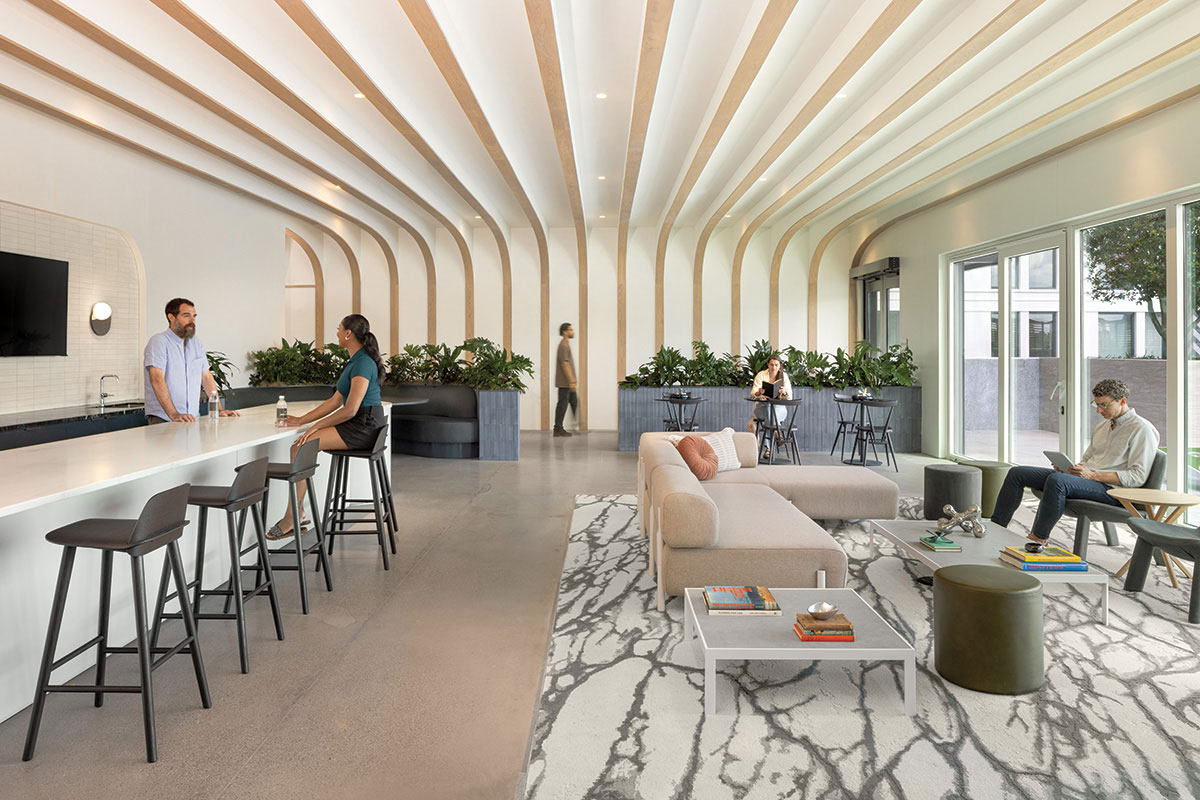
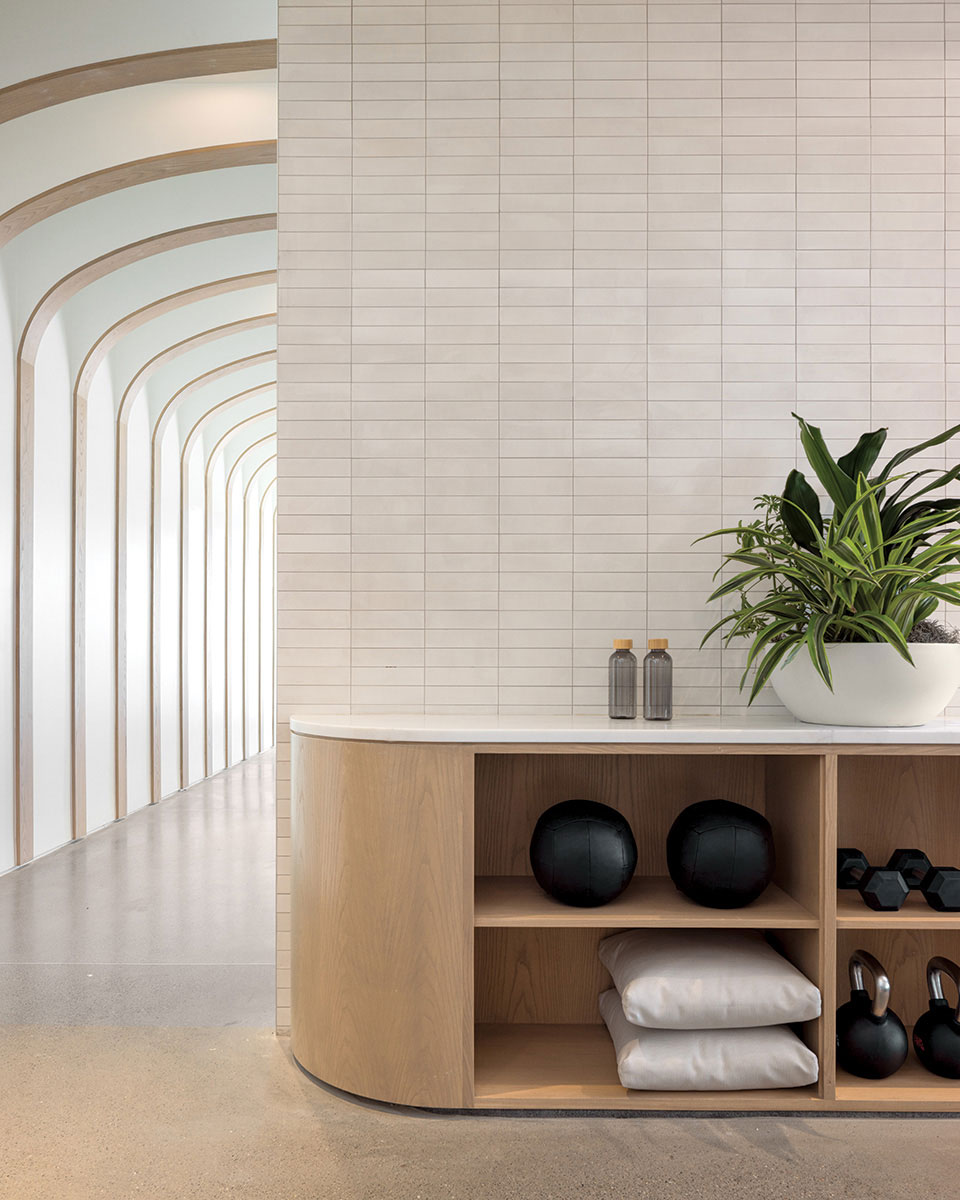
Although ArchitectureFirm did not design Maeve’s outdoor spaces, its interiors are in dialogue with them. The seventh-floor lounge, for example, opening to the pool area, conveys a watery feel through blue-toned furnishings and tiles. “With softly rounded banquettes and a ribbed ceiling that curves into the walls,” says ArchitectureFirm partner Adam Ruffin, “the plan and sections embody ideas of fluidity.” The wood ribbing also recalls boat hulls. And the wall along the aquatic zone is mostly glazed with sliding doors that allow the lounge to spill onto the pool deck.
1
Ribs like a ship hull’s hint at a water theme on the pool level (1 & 2). Photos © Sterling E. Stevens
2
In the tower’s crowning spaces, on the 20th floor, panoramic city views reign. “It’s a huge ‘wow’ factor,” says Mason, “and then, from the deck there, you see even more.” ArchitectureFirm designed this lofty perch—with lounge areas, plus a reservable dinner-party-scaled dining room and kitchen—“with plushness,” as Ruffin puts it: “lots of grays, and soft, billowy edges, evoking sky and clouds.” It invites unwinding with a glass of wine, connecting with neighbors, or entertaining guests.
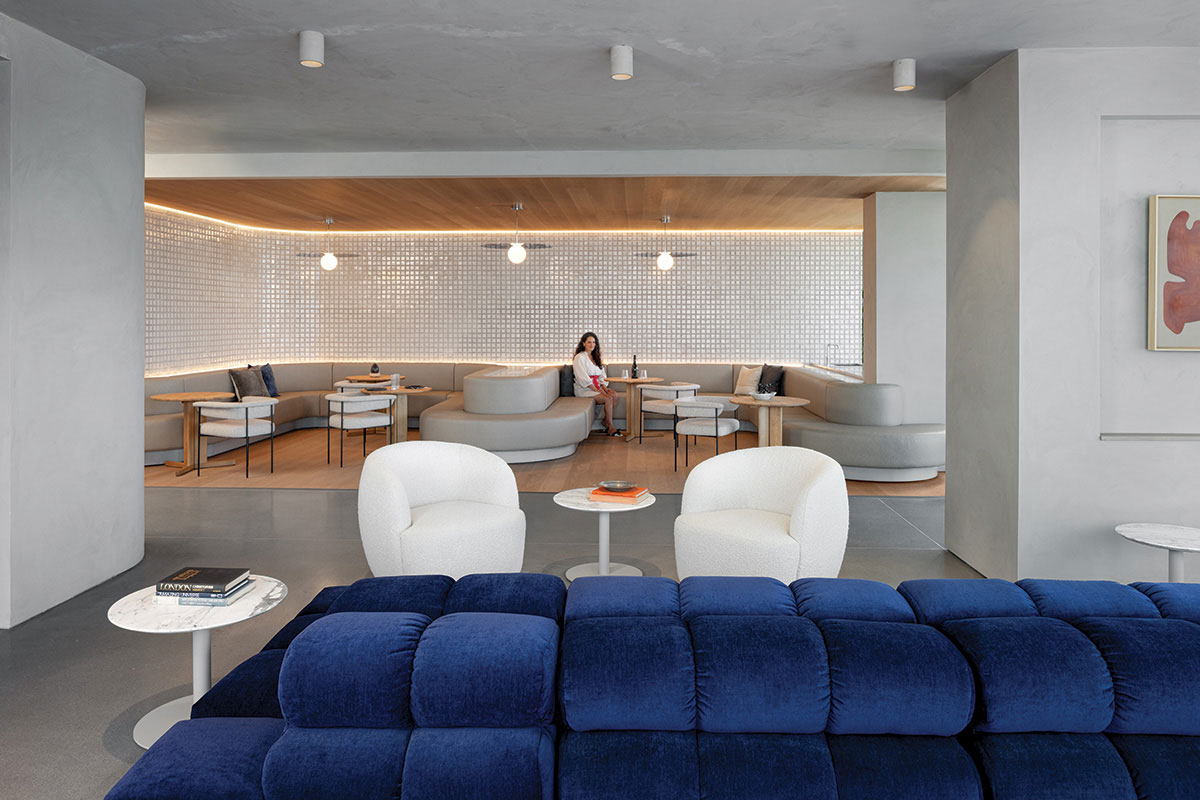
Gray finishes on the top floor feel cloudlike. Photo © Sterling E. Stevens
“We envisioned Maeve for play, work, and sleep—not just a place to lay your head at night but one to fully inhabit,” says Capital Square Vice President Hunter Wilson. And when the architects returned to photograph the interiors, “tenants were using every communal space, and many people told us they loved it all,” says Ruffin, adding, “A quiet, thoughtful project can be remarkably alluring and engaging. It can make its own kind of splash—without flashiness, or even a hint of chartreuse!”
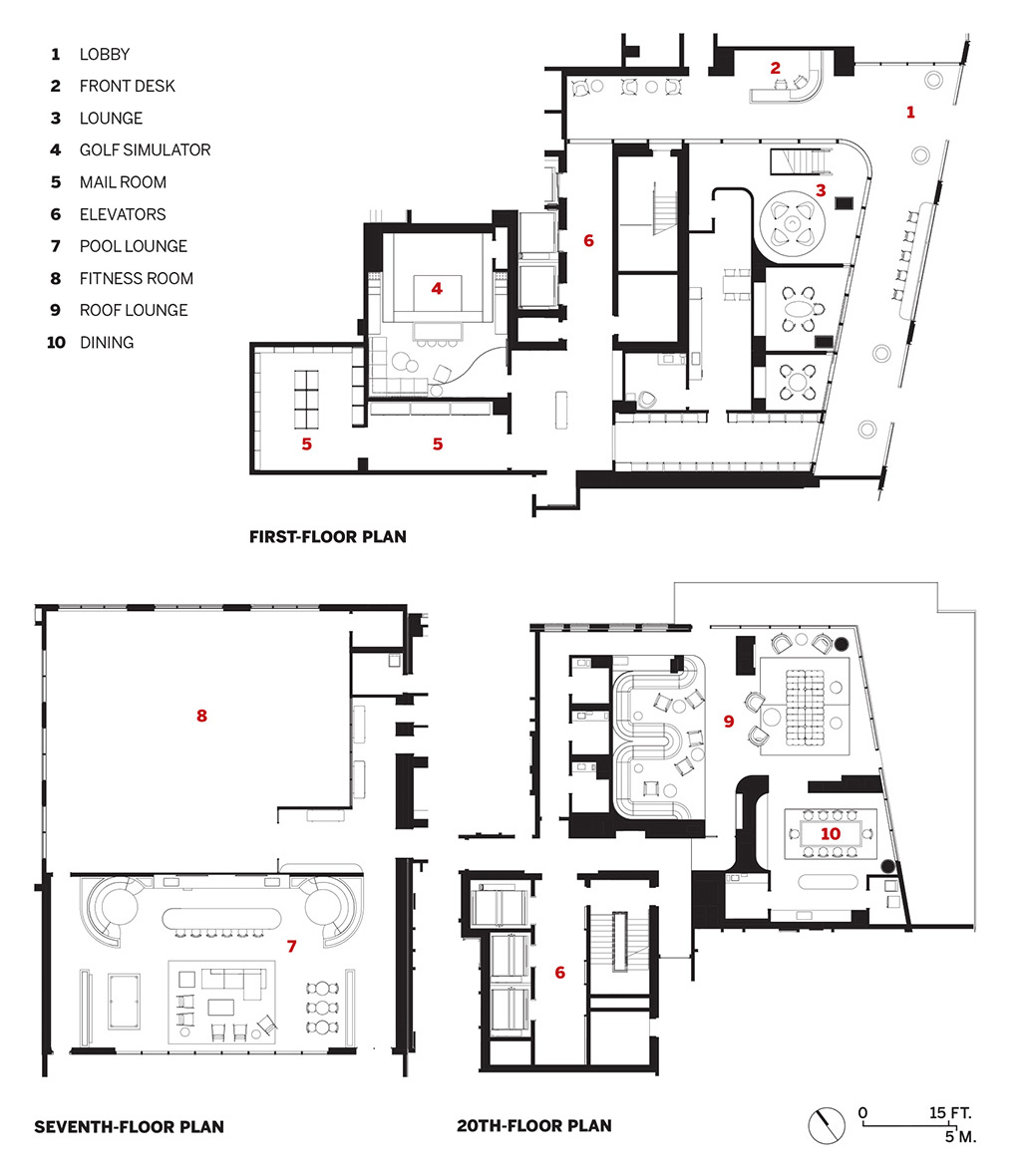
Image courtesy Architecturefirm
Credits
Interior Architect:
Architecturefirm — Adam Ruffin, Danny MacNelly, Chloe Rice, Ashleigh Walker, Alex Davis, Haley Maguire
Consultants:
Campostella Builders (millwork); Patricia Hord (signage); Ambius (interior planting)
General Contractor:
W.M. Jordan
Client:
Capital Square
Size:
18,000 square feet
Cost:
$2.3 million (amenities)
Completion:
April 2025
Sources
Interior Finishes:
Sherwin-Williams, Benjamin Moore, Portola Paints (paints); ABC Stone (marble slabs); Architessa, Interface Nora (resilient flooring)
Hardware:
Falcon
Lighting:
Estiluz, Luke Lamp, Integris Lighting, Olev Lighting, West Elm, MintBliss, Bola, Eurofase, Vibia, RBW (ambient) WAC Lighting (downlights); Lutron (dimmers)
Plumbing:
Kohler, The Splash Lab, Brizo, Vivreau, TOTO
Acoustical Ceilings:
CSI
Looking for a reprint of this article?
From high-res PDFs to custom plaques, order your copy today!