The International Mass Timber Building Conference Holds 10th-Annual Gathering in Portland

The International Mass Timber Conference celebrated its 10th edition this year, with special presenters that included Kengo Kuma and leaders from Amazon and Meta.
Jeff Bezos and Mark Zuckerberg may be cozying up to a president busy dismantling a generation of American climate policy. But inside Portland’s Oregon Convention Center, their lieutenants were telling a different story.
At the International Mass Timber Conference (IMTC), held March 31–April 2, Amazon and Meta struck a tone that bordered on evangelical: net-zero carbon by 2040, no hedging, while again and again positioning mass timber as both means and message.
On the keynote stage’s “Big Tech, Big Timber: The Next Decade of Sustainable Innovation,” the showcased projects were predictably enormous. Amazon’s Project Maverick is a 1.7-million-square-foot logistics hub in Texas while Meta’s Project Tropical is just one node in a constellation of 14 data centers spread across 11 sites. Together, the companies are already consuming an estimated 10 percent of the domestic mass timber market, according to moderator Dylan Kruse of Sustainable Northwest.
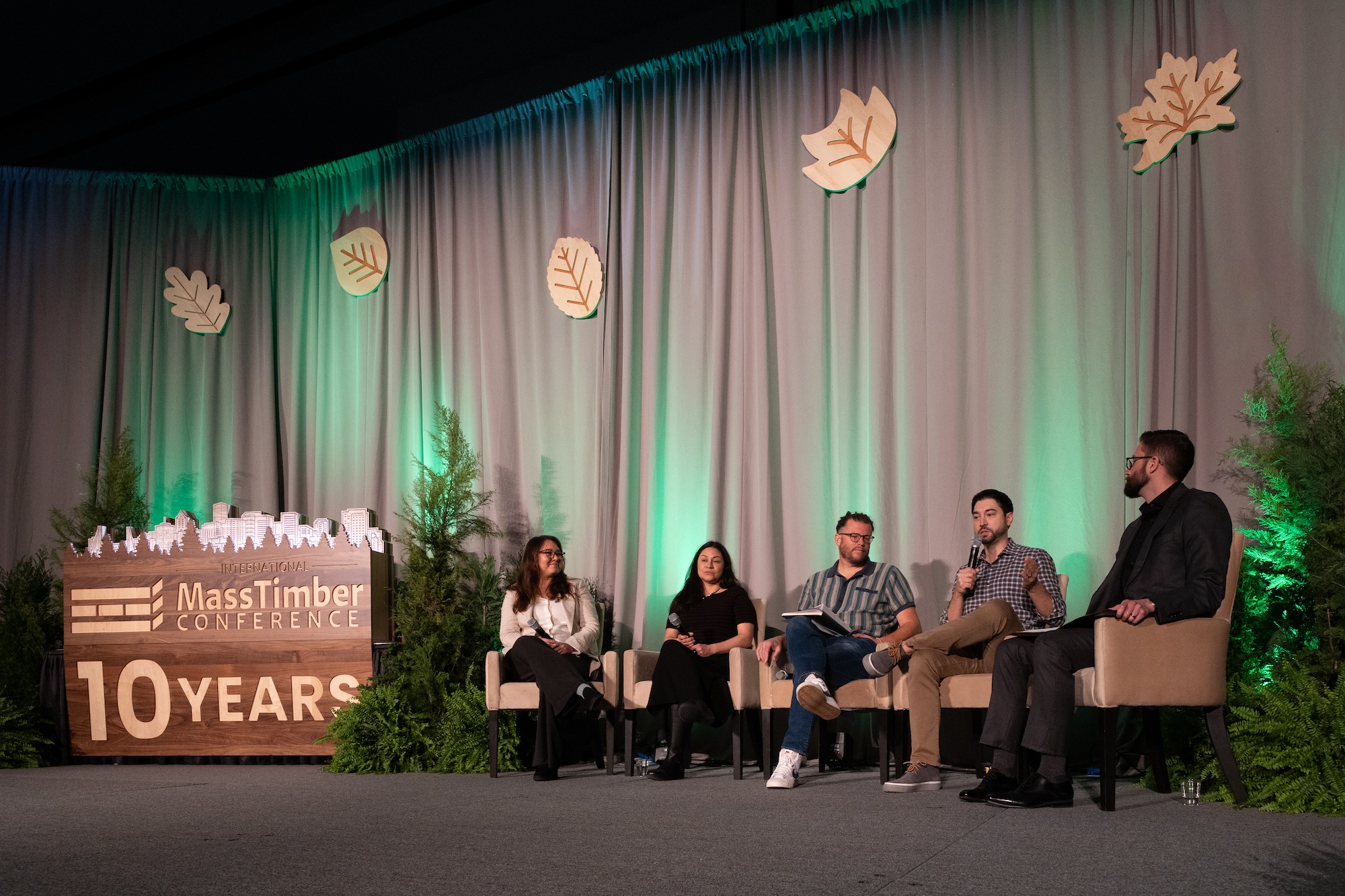
The keynote panel "Big Tech, Big Timber: The Next Decade of Sustainable Innovation" featured leaders from Meta and Amazon. Photo courtesy IMTC/Marcus Kauffman
“It’s renewable. It’s biophilic. It has a great impact on the communities where it’s being developed,” said Lena Ohta, Meta’s global sustainability program manager. “Mass timber ends up being a really good fit for us.”
This is because the scale is staggering—and so is the speed. The subtext—rarely stated outright—is that Big Tech’s building binge may end up reshaping not just skylines, but forests, mills, and supply chains across North America.
That looming inflection point hung over IMTC’s 10th anniversary gathering. A decade ago, it was a curiosity: 500 people in a Marriott ballroom, many just kicking the tires. This year, more than 3,000 attendees from 28 countries and 200 exhibitors sprawled across the convention center, hawking everything from cross-laminated panels to robotic fabrication systems to glue.
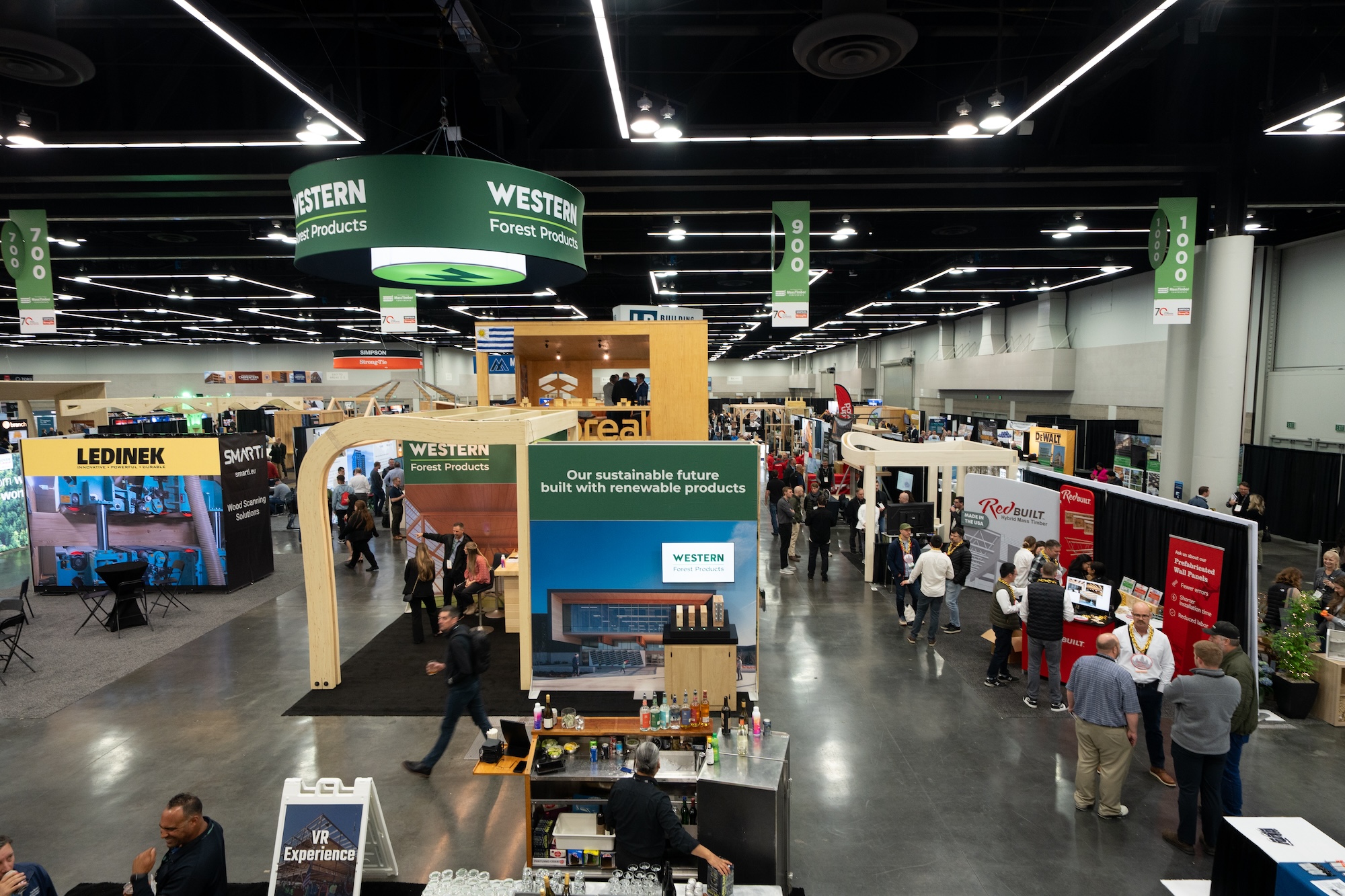

Scenes from the expo floor. Photos courtesy IMTC/Marcus Kauffman
And yet the vibe hasn’t entirely corporate-ized. IMTC still feels a little like a revival meeting—equal parts trade show, activist convening, and, perhaps, group therapy for people who really, really believe in wood. An early, first-time “keynote” talk featured designers and developers pitching projects to investors. The “Women in Timber Power Hour” packed the room. There was a lingering sense that everyone is in on the same improbable mission.
Looking for quick answers on architecture and design topics?
Try Ask RECORD, our new smart AI search tool.
Ask RECORD →
“We would not be implementing mass timber in all of our data centers without this conference,” said Meta architect Matthew Smith. “Having all the people in the room has been instrumental.”
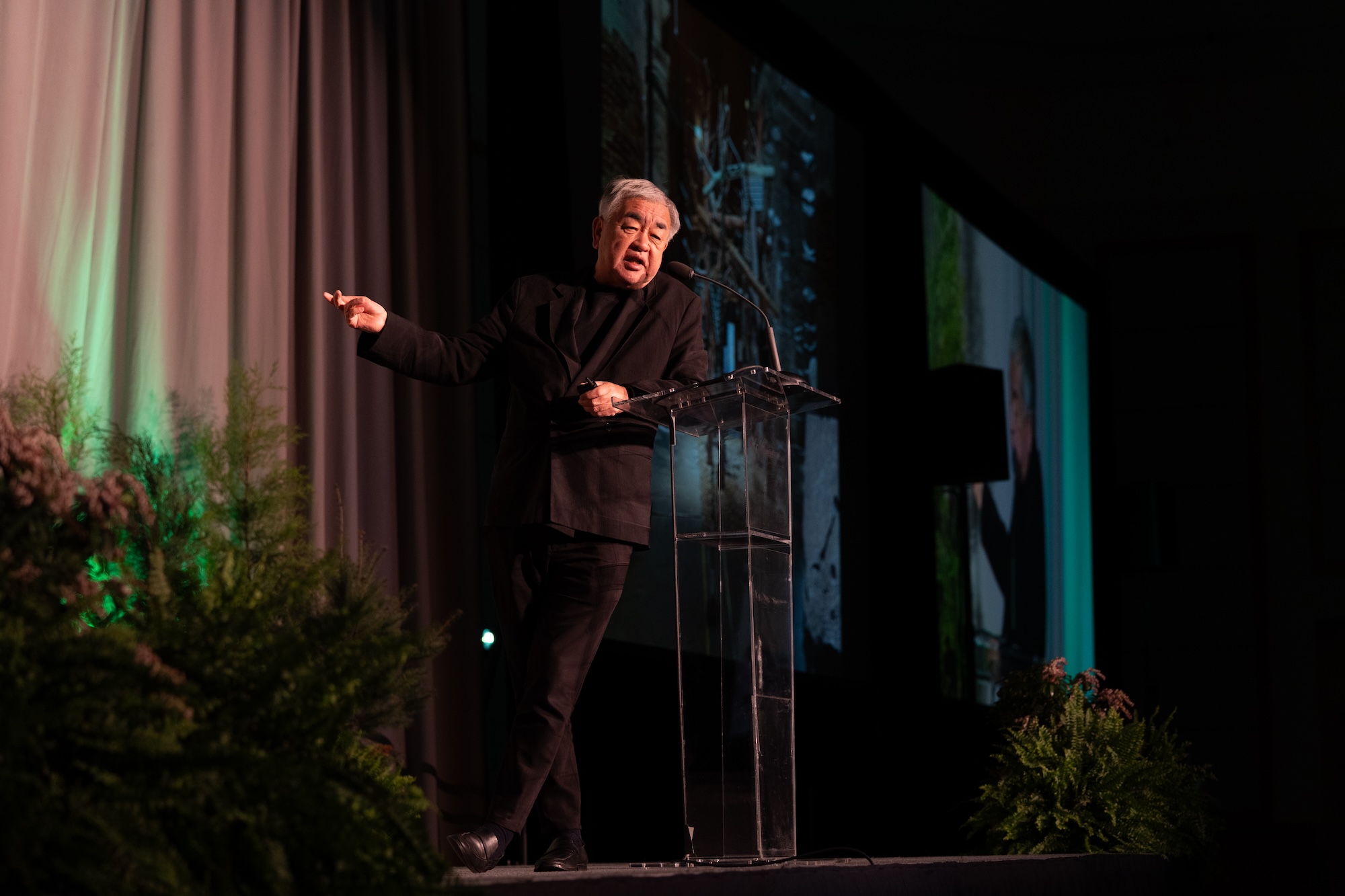
Kengo Kuma presents at IMTC 2026. Photos courtesy IMTC/Marcus Kauffman

The conference opened, fittingly, on a more lyrical note. Japanese architect Kengo Kuma’s talk, “Buildings that Breathe,” drifted between poetry and engineering: “wood is warm,” “wood is intimate,” “wood is light,” “wood is community.” The lines felt gnomic—until aphorism gained gravity. Each project shared by Kuma grounded the rhetoric in place: forests, craft traditions, cultural memory. The $1.5 billion Tokyo Olympic Stadium drew timber from all 42 of Japan’s prefectures. In Paris’s Saint-Denis Metro station, wood softens the descent underground. In Turkey, the Odunpazarı Modern Museum reassembles a lost vernacular into something both familiar and new.
Back on the conference floor, the conversation snapped back to metrics.
In the United States, mass timber is still a rounding error that amounts to less than 1 percent of construction, even with annual growth above 10 percent. But speaker after speaker returned to the same selling point: speed.
Material costs? Higher. Often significantly. But time, in construction, is money’s more volatile cousin.
Meta’s Ohta ticked through the numbers: 1.5 million board feet of glulam and CLT in Project Tropical. A premium, no question. “But we’re completing million-plus-square-foot facilities in the time you’d normally build a custom single-family home,” she said.
Others echoed the math. Holst Architecture’s 12-story Julia West House—90 units on a tight 50-by-100-foot lot in downtown Portland—rose in just 20 months. Vancouver, B.C.-based Integra Architecture is using hybrid timber systems and prefabrication to replace 1,100 aging apartments with 2,699 units across 15 mid-rise buildings. The extra upfront cost, both firms argue, tends to wash out especially once escalating construction insurance comes into play.
The usual anxieties of mass-timber construction—fire, code, lender skepticism—are starting to recede. The harder problems are upstream.
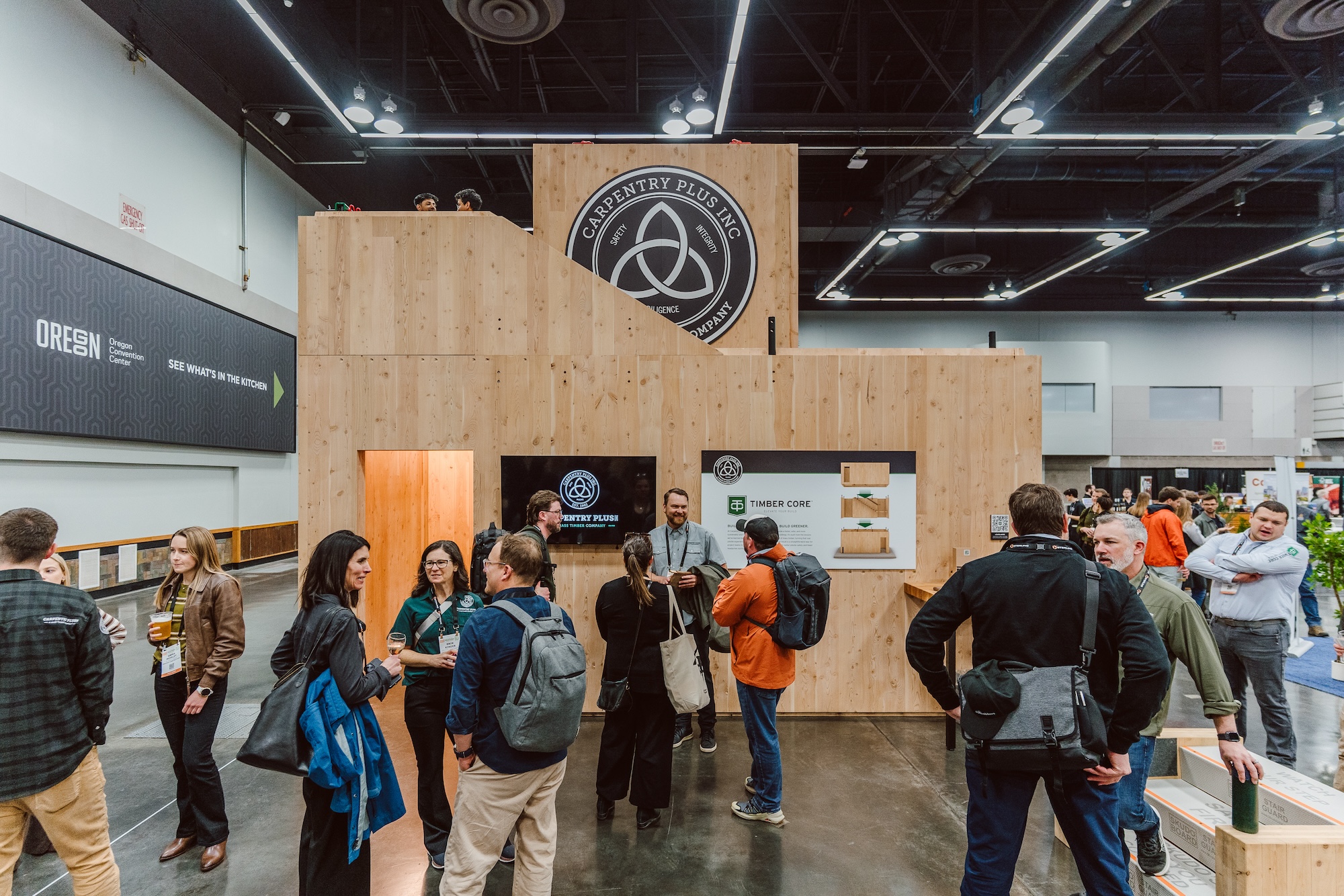
Photo courtesy IMTC/Marcus Kauffman
At a session on supply chains, Roy Anderson of The Beck Group laid it out bluntly: the industry isn’t built for this. Decades of mill closures, consolidation, and reduced logging on public lands have left a system optimized for standardized lumber, not the bespoke demands of mass timber. Even drying times are a bottleneck—hitting the required 12 percent moisture content takes roughly twice as long as conventional wood’s 19 percent.
“There’s a basic mismatch between the way the system is set up and what the mass timber industry needs,” Anderson said.
In theory, he suggested, the fix is straightforward: smaller, more nimble mills and more vertical integration. In practice, that means capital, coordination, and time—three things the industry doesn’t always have in sync.
Still, if there was anxiety in the room, it wasn’t about running out of trees. Quite the opposite. A 2021 study suggested that even with 30 percent annual growth, supply would outpace demand through 2035.
“Deforestation isn’t driven by timber harvest,” said USDA Forest Service official Brian Brashaw. “It’s driven by land conversion, wildfire, and insects.” Coloradan panelist Keegan Raleigh of ZGF Architects noted that in her state, disease, drought, and wildfires have left the forests emitting more carbon than they are sequestering.
At least within IMTC, that matches mass timber evangelism with market: a booming industry built on the promise that cutting more wood might actually be part of the climate solution.
Looking for a reprint of this article?
From high-res PDFs to custom plaques, order your copy today!