Political Headwinds Cloud Living Future’s Annual Gathering in Portland
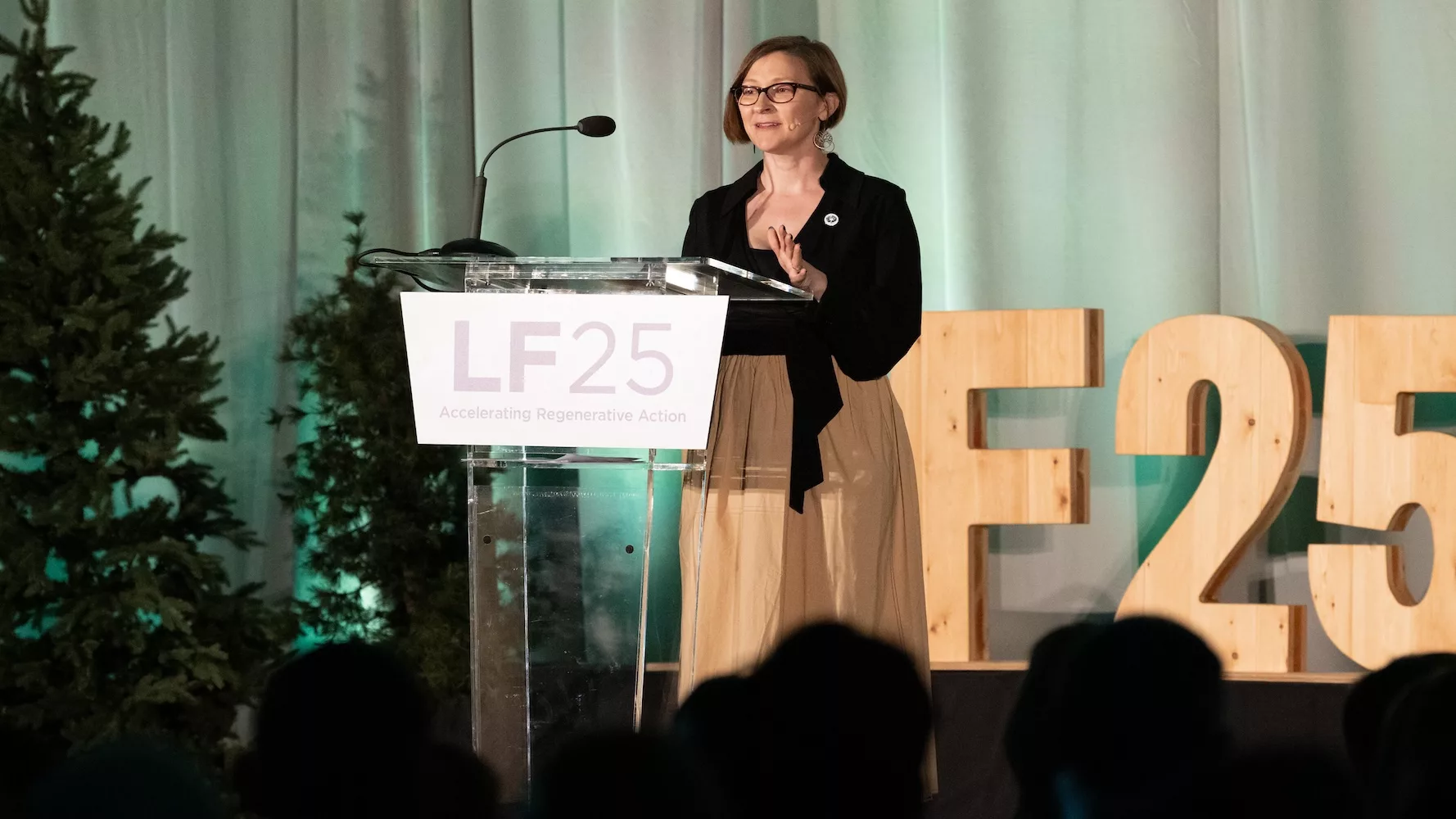
Living Future CEO Lindsay Baker addresses attendees at the organization's 2025 conference. Photo courtesy Living Future
For the Living Future Conference’s annual May gathering, the storm of shifting federal policies clouded much of the event’s normally sunny idealism. Co-founded by architect and activist Jason McLennan 19 years ago, the conference and its parent organization, the Portland, Oregon–based International Living Future Institute (Living Future), has helped to unite once-scattered and largely regional green-building efforts through initiatives like the Living Building Challenge, handbooks and certifications for zero-energy and zero-carbon building, the Red List, and Declare (pertaining to unhealthy and healthy materials, respectively). Living Future’s efforts have helped spawn technical innovations, products, degree programs, policies, and jobs reaching into every corner of building design and construction. But with the Trump administration’s tariffs pausing building projects across the country and its snuffing of virtually any grant combatting climate change or advancing equity, the conference rekindled the field’s green optimism with an added a sense of malaise.

Photo courtesy Living Future
“Are we a movement, or are we an industry?” asked Lindsay Baker, Living Future’s CEO in the opening plenary. “Not everyone remembers that our industry was born out of a movement—of people wanting to see changes in how buildings were built.” Calling for collective action, Baker said, “This year requires more of us, because some of the fundamentals and tactics of our movement have been pulled out from under us.”
The movement-versus-industry synergies and tensions ran throughout the three-day conference in Portland, titled “Accelerating Regenerative Action.” In an expletive-peppered speech, McLennan thundered “the green building movement is dead—or mostly dead.” The peak, he declared, was 2010–2015 with the launch of the Living Building Challenge and Architecture 2030. “But let’s face it, we’ve lost every battle since.” The movement “now must become the nurse log” for new thinking to find “reconciliation with people who hold different truths.”
“I actually don’t know how we do this,” McLennan said. But he invited attendees to a 100-person September seminar “to figure it out”—a fundraiser for the School of Regenerative Design, a non-profit wing of McLennan Design.

1
.webp)
2
Keynote speakers included architects Jason McLennan of McLennan Design (1) and Christian Benimana of MASS Design Group (2). Photos courtesy Living Future
In an interview, Baker said the conference’s programs were developed last summer, in the afterglow of the Inflation Reduction Act and before the 2024 election. Living Future’s own five-year, $5 million EPA capacity-building grant “that would have been transformational for us,” she said recently showed up on an administration kill list. (Formal cancelation had yet to arrive.) Additional headwinds include the Gates Foundation scrapping its climate policy teams, a decade-long effort to find carbon-reduction collaborations with government.
Living Future, Baker said, will need to shift from its emphasis on certification to broader education and storytelling. “We're actually pretty dang good at creating good jobs in this industry,” she said. “So we need to make sure that our rhetoric, and the tactics themselves, are about creating good jobs, about partnering with communities and colleges to train people.”

3

4
Featured speakers included Anyeley Hallová, founder of Portland real estate development company Adre (3), and Danny Desjarlais, hemp construction project manager for Lower Sioux Hemp in Minnesota (4). Photos courtesy Living Future
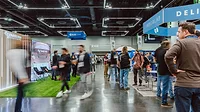
Overall, the 800 attendees partook in the conference’s mix of idealism and technical exploration. This included a “bio-based petting zoo” of straw- and hemp–based construction materials along with sessions ranging from “Nature-Positive Strategies at Every Project Scale” to “Maori Knowledge and Sustainable Architecture.”
Looking for quick answers on architecture and design topics?
Try Ask RECORD, our new smart AI search tool.
Ask RECORD →
Most sessions, in the sheer scale or specificity of their focus, signaled green building’s solid pulse. In “Nature’s Genius Unleashed: Biomimcry in the Built Environment,” Microsoft’s Daphne Fecheyr-Lippens showcased a data center in the Netherlands the size of 75 football fields that has reduced water use, incorporated critical habitat, and partnered with schools in environmental education. In “Decarbonizing Building Materials Through Collective Action,” Amazon’s Julia Raish outlined the steady progress the company has made. Highlighted by Raish was the achievement of Amazon’s 100 percent renewable energy goal (seven years earlier than its 2030 pledge), its January completion of the largest zero-carbon-certified logistics building in the world, and its work with Rocky Mountain Institute developing “book and claim” certifications for low-carbon concrete.


Scenes from the conference’s Material Petting Zoo. Photos courtesy Living Future
Though Baker, McLennan, and other keynote speakers doubled down on social justice and green building, initiatives combining them showed vulnerabilities. The Portland-based Albina Vision Trust’s effort to reconceive a once-Black neighborhood routed by midcentury urban renewal—often described as the largest restorative justice project in the country—voiced a continued hope that the initiative will still receive an $450 million Reconnecting Communities grant from the Federal Transit Administration to cap the Interstate-5 freeway that bifurcates the neighborhood. But Albina’s representatives focused their session, “Climate-Positive Zip Code,” on land they currently control.
“How Can We Leverage $20 million for Climate Justice,” outlined projects funded by EPA Community Change Grants, a now-frozen $2 billion program for climate resiliency initiatives in 110 communities that have faced legacies of exclusion and persistent disinvestment. “The visioning and the capacity building that we did isn't somehow undone by a change in policy,” said Alina Tompert of Farr Associates, who worked on an expansion of the Hope Center, a resiliency hub in Roanoke, Virginia. “The design solutions are still embedded in these communities.”
Looking for a reprint of this article?
From high-res PDFs to custom plaques, order your copy today!