Manhattan’s Latest Power Couple: OMA Extends the New Museum’s Original SANAA Building with an Addition
New York City
Architects & Firms
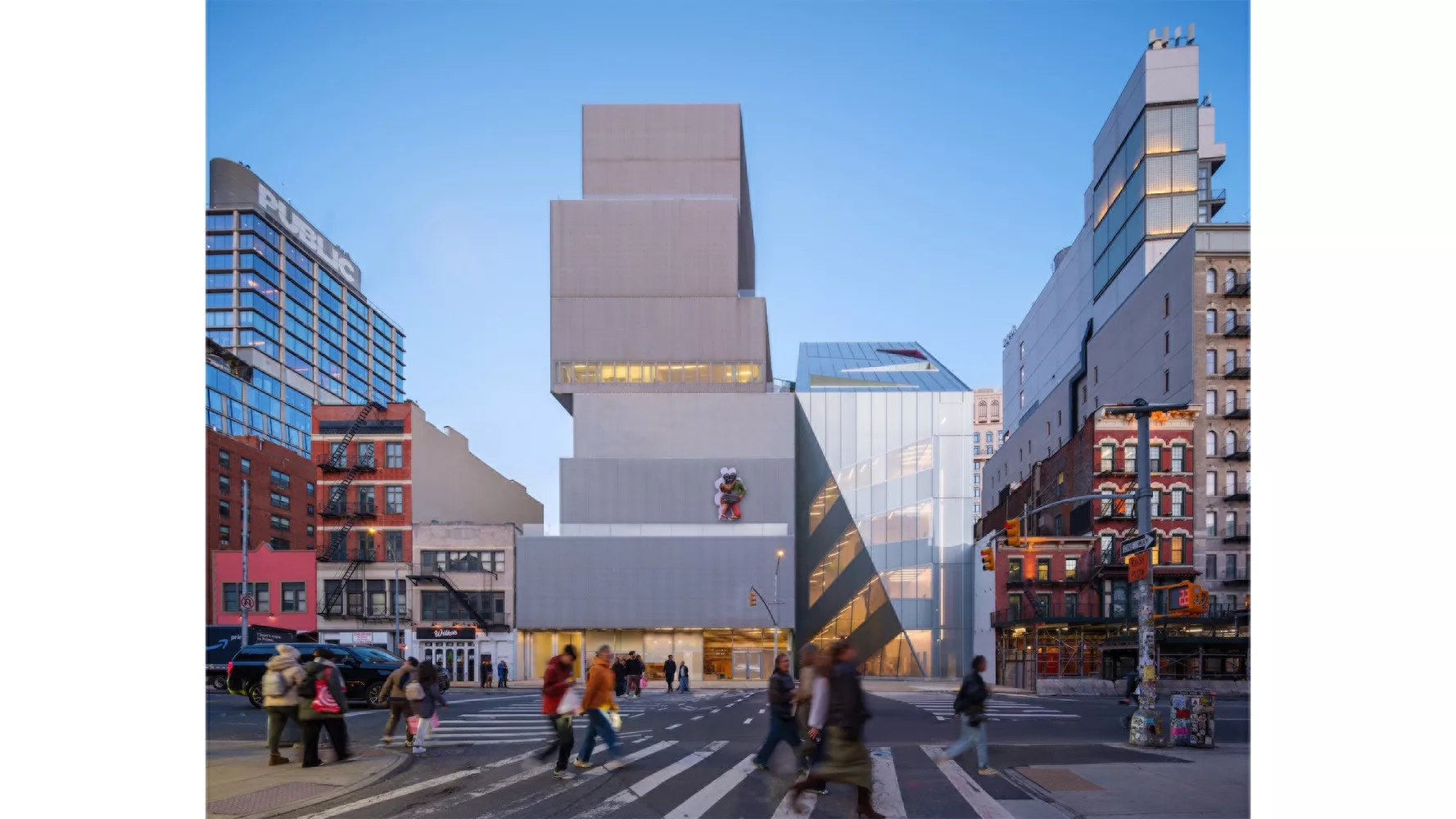
Since no major cultural project can debut in Manhattan unaccompanied by a full-dress public relations fife and drum corps, the New Museum unveiled its just completed expansion last month amid maximum pageantry: not one but three parties, along with a morning press conference, an afternoon DJ set, and an all-day make-your-own-button community event. Under the leadership of longtime director Lisa Phillips and curator Massimiliano Gioni, the contemporary Kunsthalle on the Lower East Side has spent the two decades since the opening of its first major home—a mesh-wrapped, off-kilter ziggurat from Tokyo-based firm SANAA—shoring up its standing as the flagship venue of the downtown art world. The opening of the nearly 62,000-square-foot addition next door was meant as an apotheosis, the moment when the scrappy avant-garde stalwart would come into its inheritance as a global force.
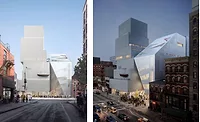
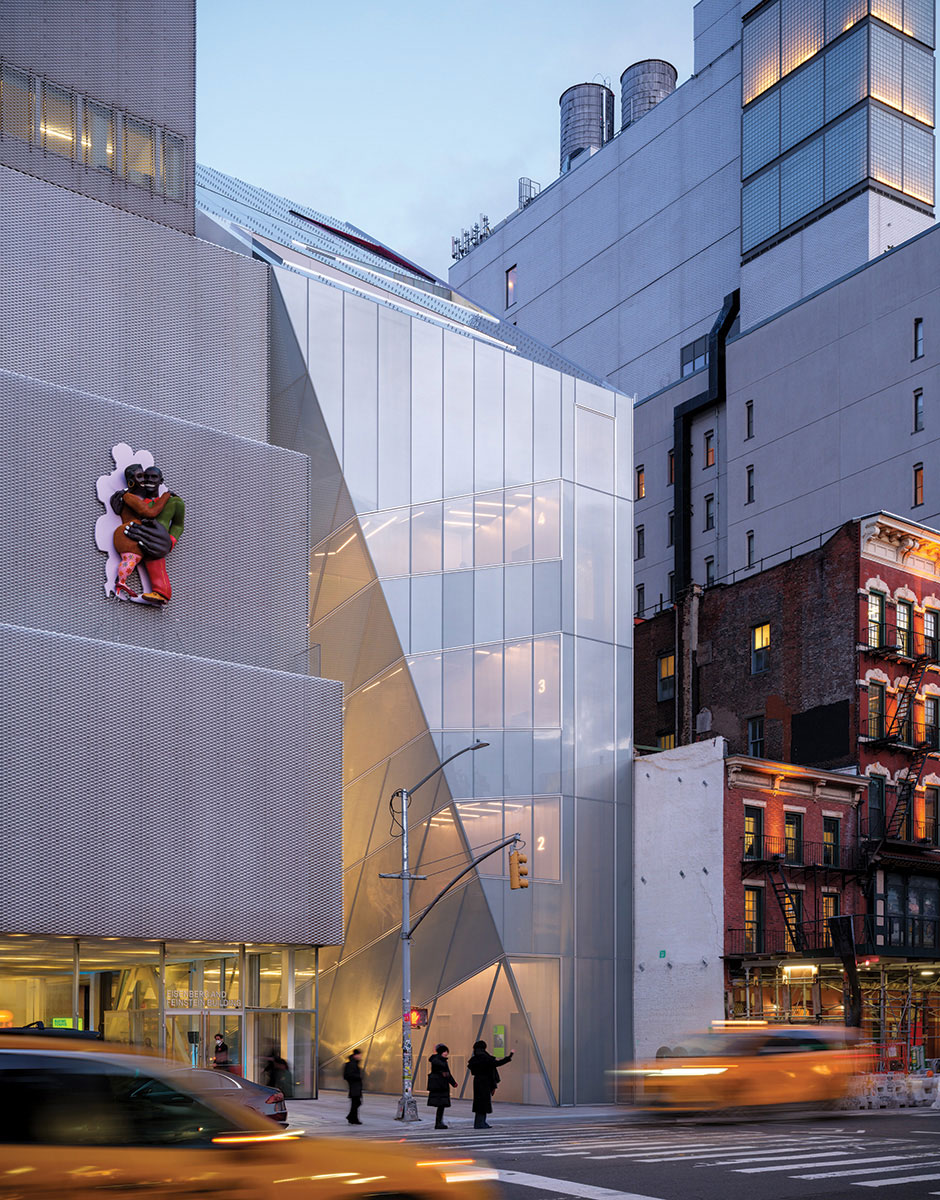
It might well represent that, one day. The building’s primary designer, Shohei Shigematsu of international firm OMA, understood the assignment: “It’s not just about contrasting with the SANAA wing,” as he put it, “but about complementing it, providing a sense of openness.” If anything, his scheme may be too deferential to the adjacent structure, less the swinging “dance partner” the architect says he intended than a kneeling suitor, arms outstretched toward his haughty inamorata. Barely visible from Houston Street, its uppermost stories only coming into view a block to the west, the building can hardly offend lovers of the SANAA tower and has much that should propitiate the original museum’s critics—namely, actual light and circulation, both of which were conspicuously absent before. The OMA project may be “a staircase in search of a building,” as one wag called it on opening night; still, it is a very attractive staircase, attached to a building that really needed one.
1
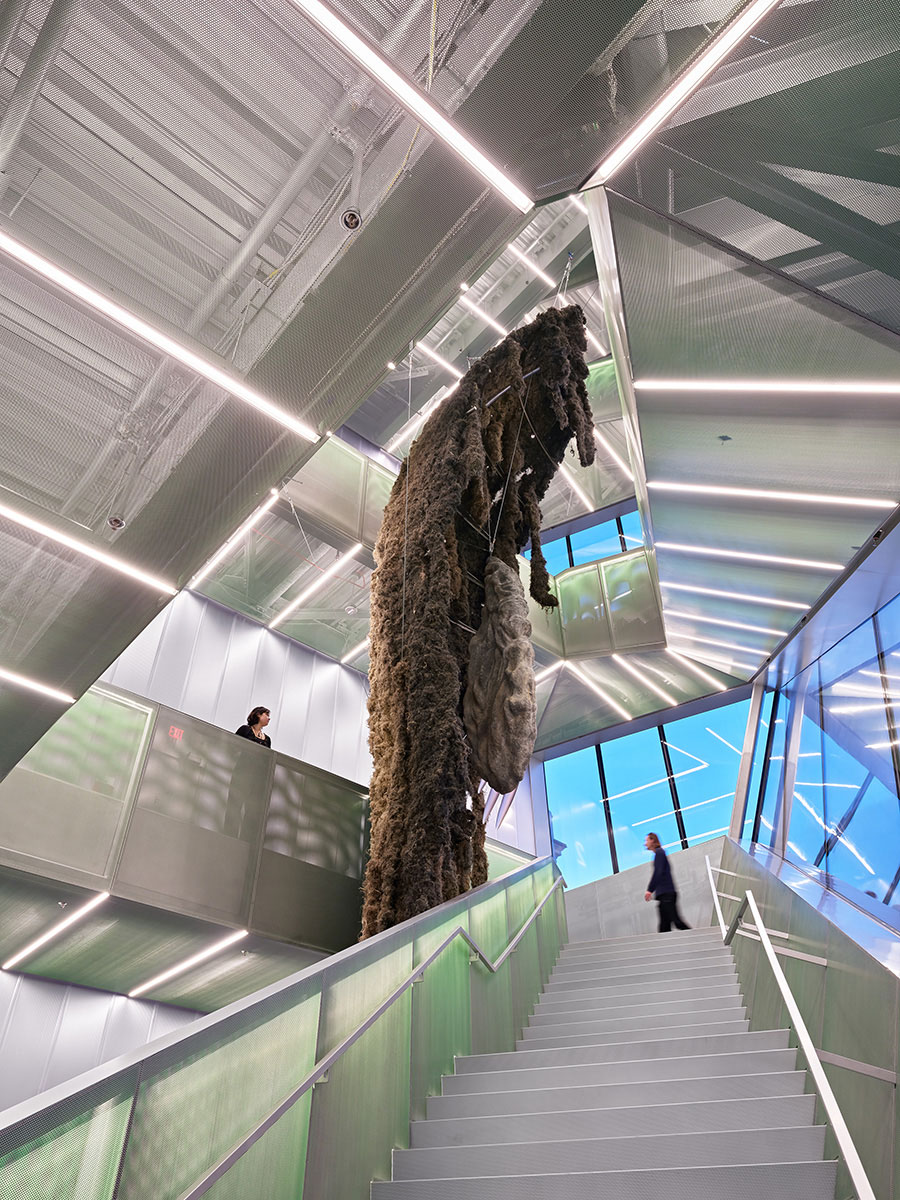
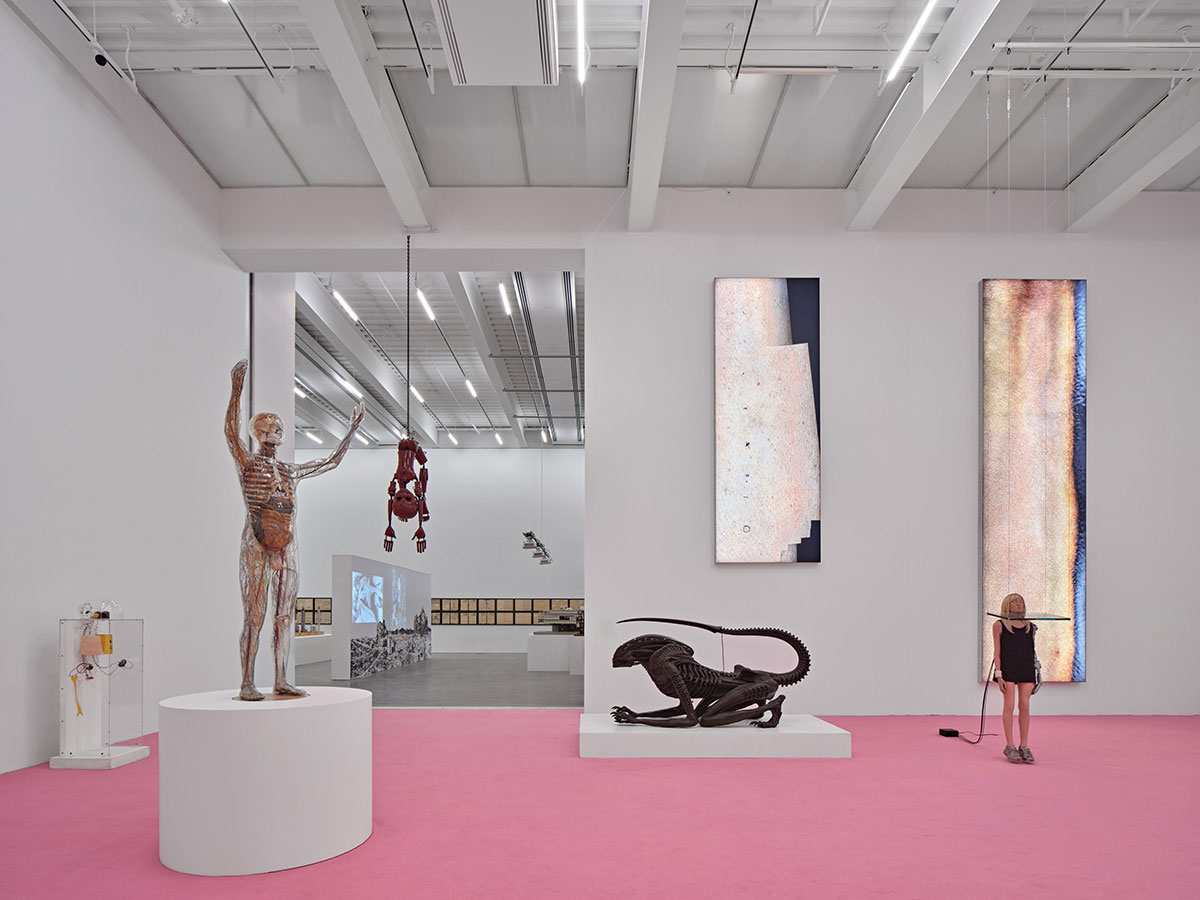
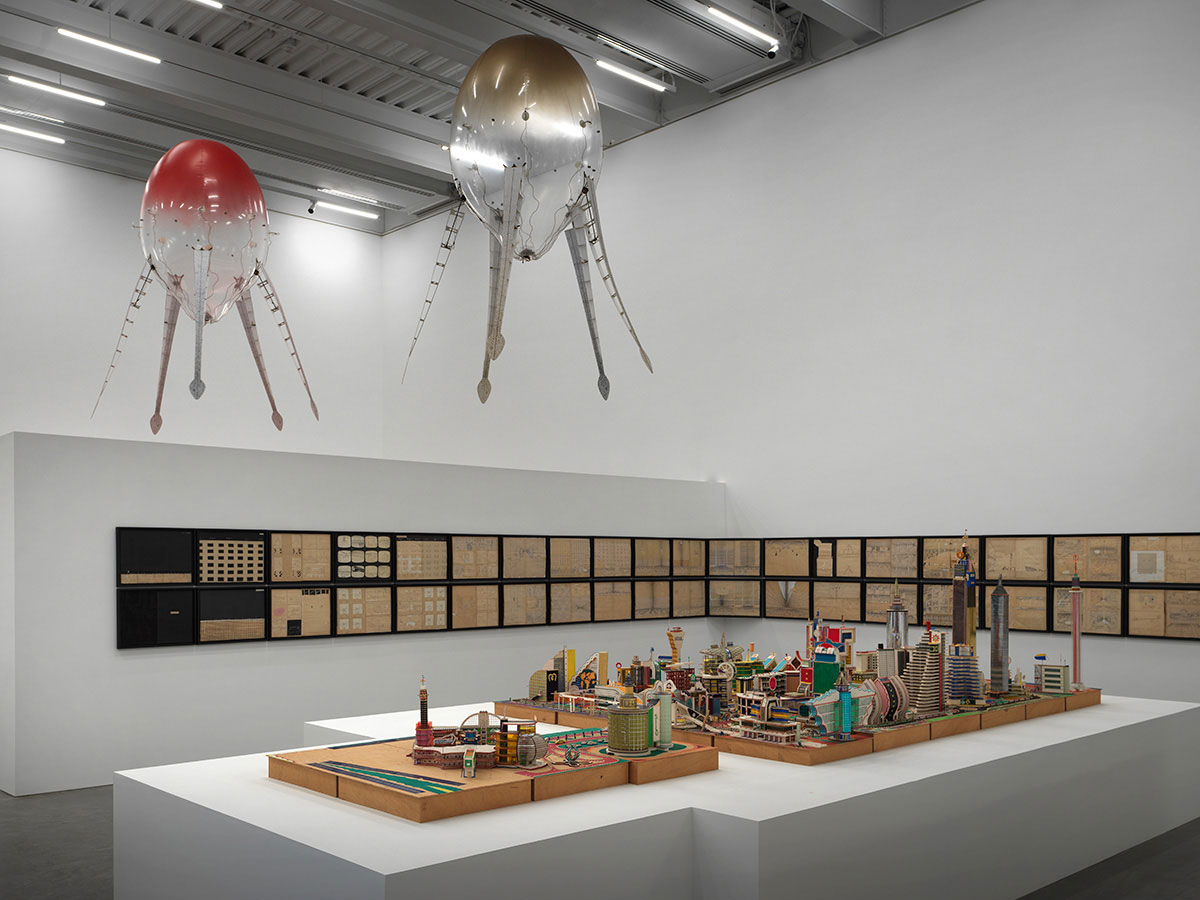
A stair in the addition (1) leads visitors to galleries that span from one building to the other (2 & 3). Photos © Jason Keen (1 & 2), Dario Lasagni (3), click to enlarge.
2
3
Something, however, is amiss. Every work of great architecture needs a shakedown cruise, a grace period of a couple of months to iron out any postconstruction wrinkles. There have been instances in living memory of other high-profile exhibition spaces that didn’t seem quite ready for prime time: in a preinstallation viewing this past spring, Peter Zumthor’s impressive all-concrete LACMA building in Los Angeles revealed such appalling acoustics that the tour guide could not be heard over the squeaking of tennis shoes. These things happen, and they are the reason that clients hire not just architects but acoustical engineers and exterminators and other crack troubleshooters. Hopefully, the New Museum will find its stride in time—yet the flaws on display during its big opening weekend were distinctly troubling, in a way that bears perhaps less on the design than on the institution and its mission.
A quick refresher: the New Museum began life as a rather different outfit, in service of a rather different city. Launched in 1977, the fledgling program bounced between a number of different sites, intent upon being a “living, breathing experiment,” as founder Marcia Tucker put it, one that could provide a conduit between a popular audience and the magmatic substratum that was then New York City’s creative underground. In its first shows, the works of local heavies like Neil Jenney, Joan Jonas, and Félix González-Torres served ample proof that, notwithstanding the fiscal crisis of the museum’s first decade and the social upheavals of its second and third, New York was still the place where art was happening. As the city evolved, so too did the experiment: in 2003, the museum received a $20 million donation from then mayor Michael Bloomberg; big money and big power were now the order of the day in Lower Manhattan, and they called for big architects. SANAA, whose founders would go on to win the Pritzker Prize in 2010, was certainly big—though for all its ungainly bulk, the firm’s building was somewhat austere, with no natural illumination and a concrete fire stair as the only alternative to the elevators. Just the same, the space worked, its deadpan abstraction a perfect foil for Gioni’s sprawling, puckish curatorship.
4
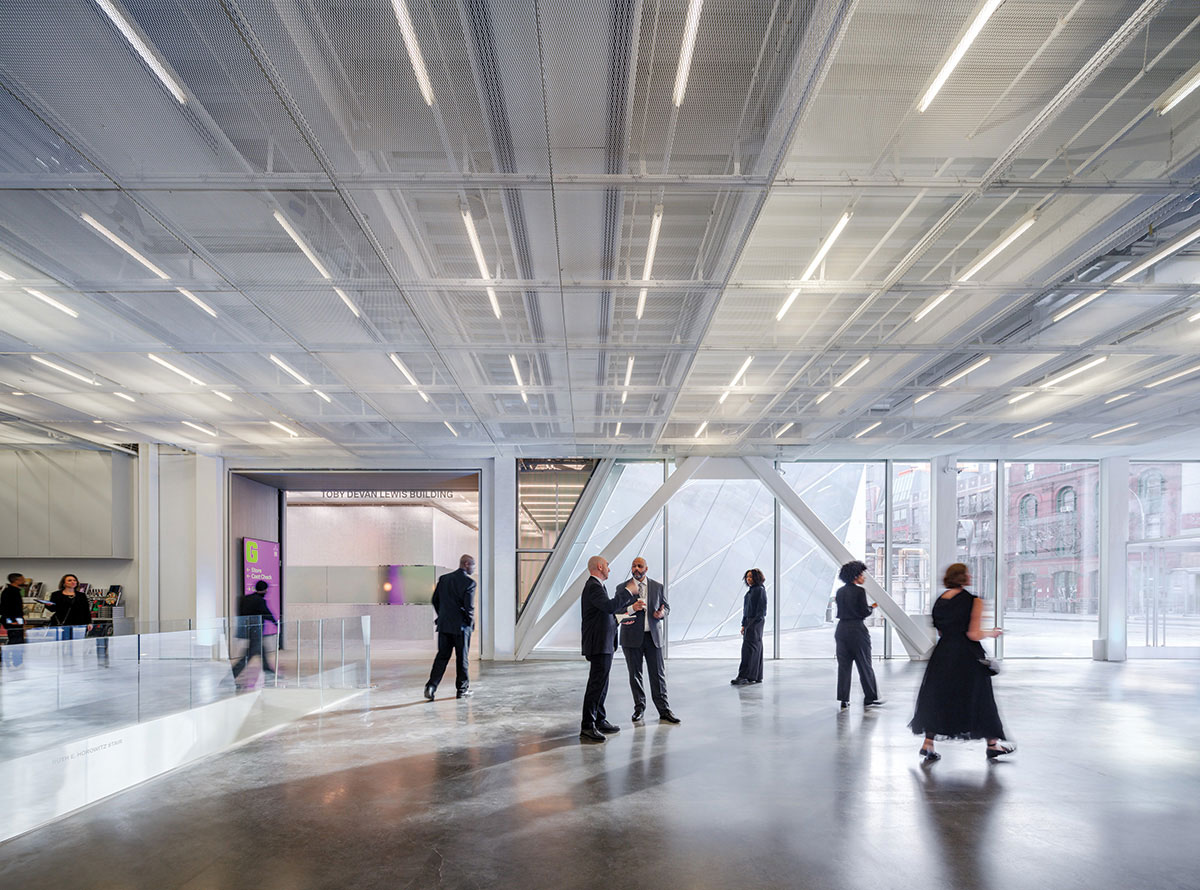
Visitors enter the original lobby (4) and circulate upward in the addition (5). Photos © Jason O’Rear (4), Jason O’Rear (5)
5
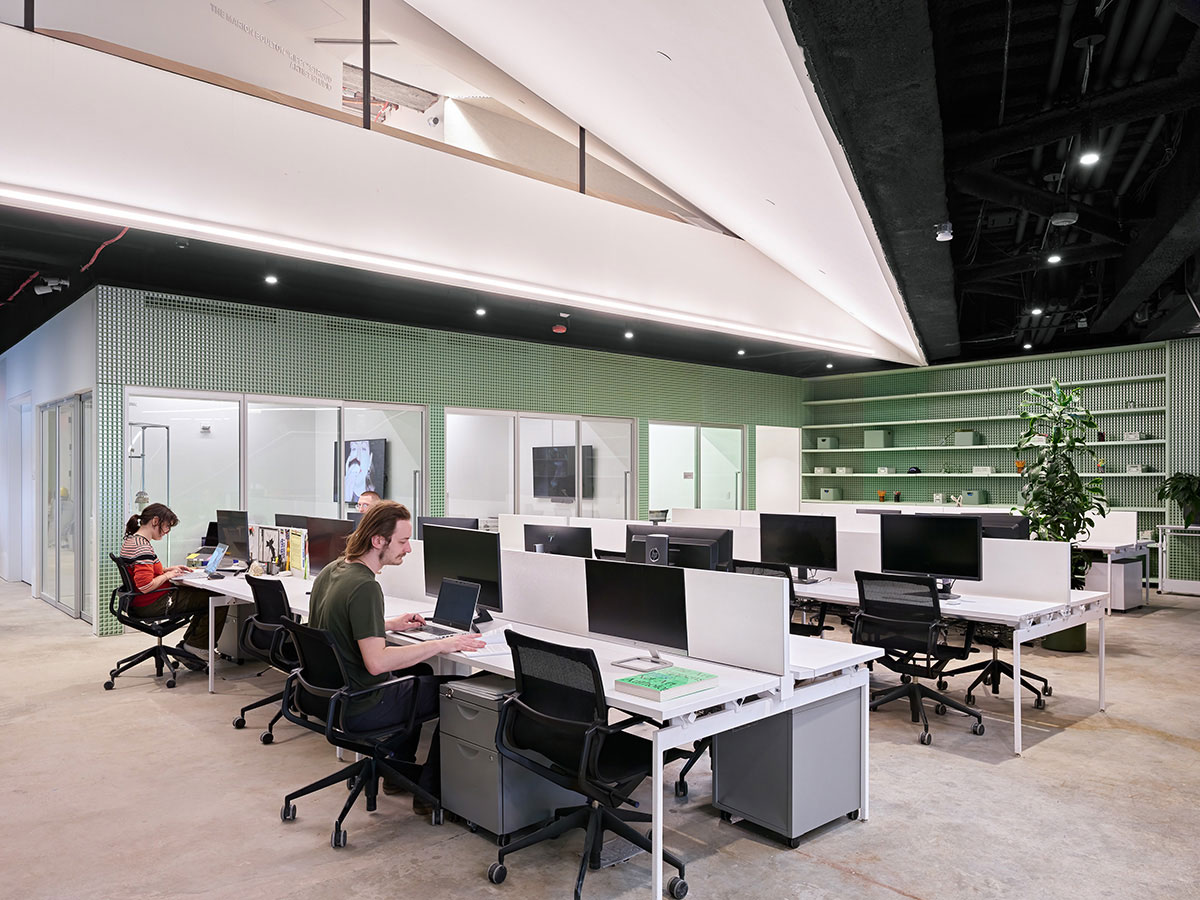
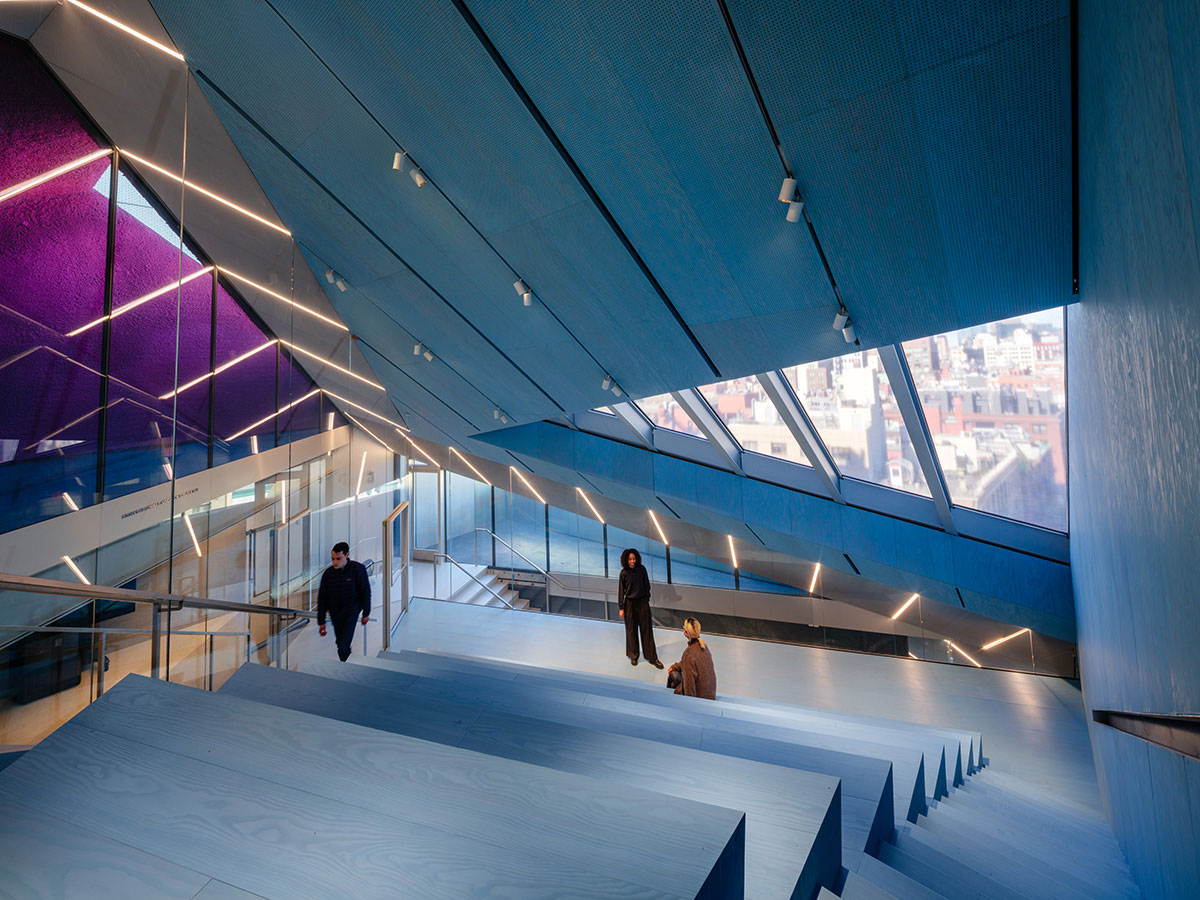
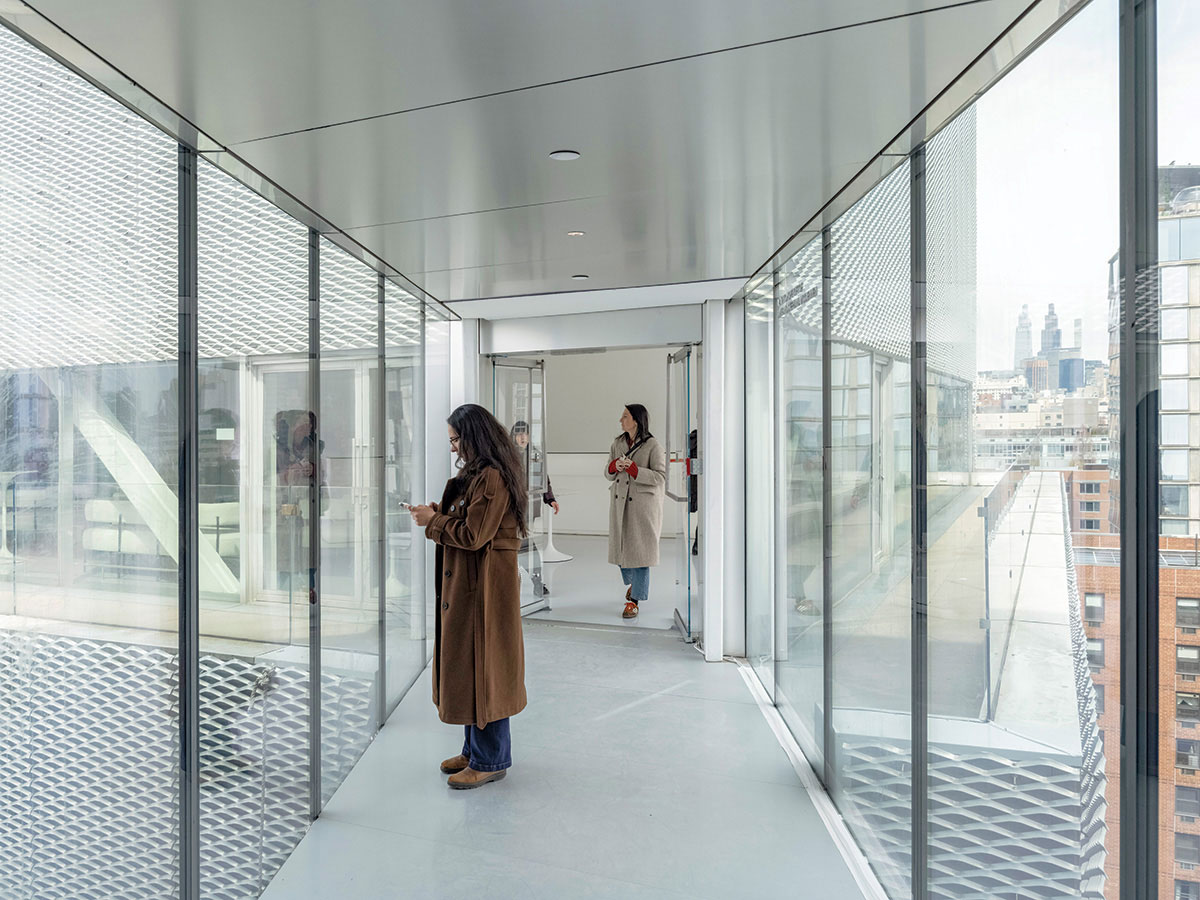
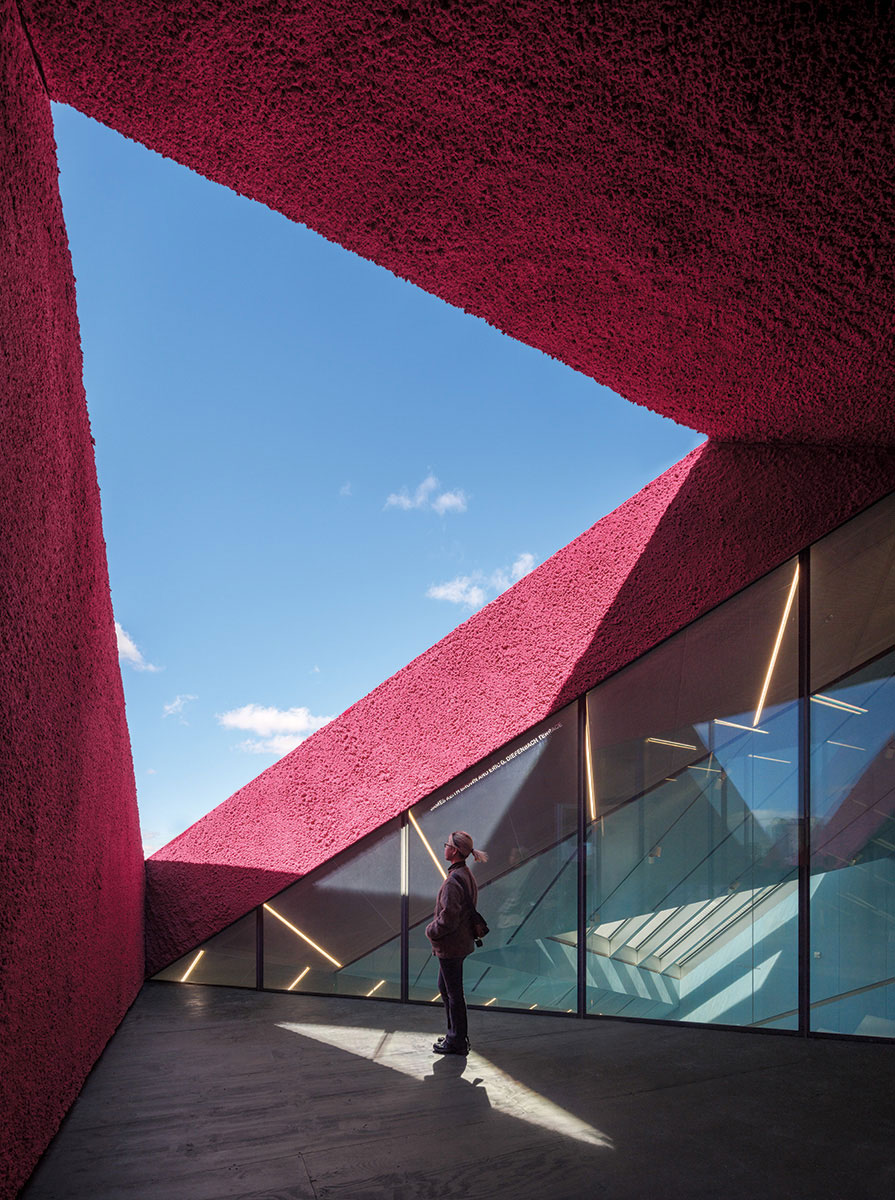
Aimed straight between the sensibilities of the prim old building and the oddball artwork it frequently housed, Shigematsu’s design lines up a conceptual strike that simultaneously knocks off the museum’s most persistent logistical failings. Entering via the same lobby as in the past—now less cluttered and with additional glazing on one side—visitors pivot south toward a new foyer, home to an as-yet unopened restaurant, also designed by OMA, and connected to Freeman Alley at the rear. Dead ahead, jigging and jagging, the staircase ascends through a narrow atrium, its perforated-metal half walls a textural complement to the latticed facade of the SANAA building, visible through the fritted-glass front. At the landings, new gallery spaces connect almost undetectably to the existing ones; only the now exposed concrete blocks of the neighboring tower mark where the two structures meet, along with a trio of glassed-in bridges at the uppermost levels. There, meeting rooms, offices, and event spaces (including new studios and facilities for New Inc., the museum’s artist incubator) are fronted by angular outdoor terraces, their walls colored in fluorescent shades of purple and green, a little flair that announces, along with the zigzag procession and clanky-chic materials, the addition’s well-tempered zaniness—its yin to SANAA’s sober yang.
6
7
The addition hosts space for New Inc., the museum’s incubator program (6), and a forum with raked seating (7). Photos © Jason Keen (6), Jason O’Rear (7)
If the building’s slick envelope does resemble some of OMA’s retail projects—notably the Harajuku Quest complex in Tokyo—that only speaks to the practice’s decades-long commitment to blurring the line between commerce and culture. (As firm founder Rem Koolhaas once put it, “In the end, there will be nothing left for us to do but shop.”) At the same time, the relatively familiar vocabulary of the design makes the problems with its execution all the more glaring.
8
Upper-level terraces (8) and breezeways (9) offer city views. Photos © Alex Fradkin (8); Jason O’Rear (9)
9
The number of (presumably) temporary construction issues on display during the opening festivities—the shims wedged into walls, the slippery-when-dry floors, the immediately scuffed finishes on handrails and doorframes—present the journalist with a conundrum. Book critics, for example, generally do not dwell on spelling mistakes: they are expressly discouraged from doing so by the paper band or sticker that often appears on the review copy with the words uncorrected proof. Gioni attempted such a wrapping of his own during the early morning press function at the New Museum. “Please forgive us,” he said, referring to the “Scotch tape” to be found holding the place together. But in view of the fact that the museum had already deferred the ribbon-cutting by several months, the decision to barrel forth undaunted and open in March seems peculiar. Why take the risk?
In more ways than one, the museum appears to have gotten ahead of itself, neglecting to consider not only how to undertake such an endeavor but why. The inaugural exhibition New Humans: Memories of the Future is entertaining enough (in particular a large architectural section, featuring work by Constant Nieuwenhuys and Iakov Chernikhov, among others) but did not necessitate the twofold increase in space that the $82 million staircase has brought with it. The board may be betting that the improved visitor experience will bring a jump in attendance, comparable to the nearly 600 percent surge that followed the SANAA opening; this would seem a long shot, given the many galleries and art centers and performance venues that now dot Manhattan, many of which have followed a similar logic in expanding their own footprint—because that’s what New York institutions do now. In a recent stem-winder of an essay for the magazine October, critic and artist Josh Kline bemoans a local artistic ecosystem so distorted by cash and clout-chasing that its museums regularly “fund the construction of new buildings and new wings” yet “still struggle to cover day-to-day operations.” The failure of follow-through on the OMA project looks to be part of the same dynamic—a case of leaping without looking, though not one that need turn into a headlong tumble down the steps. The New Museum remains a vital part of the city’s cultural life, and a critical node in the international art scene. It can afford now to slow its roll, to consolidate its gains, and mind the details.
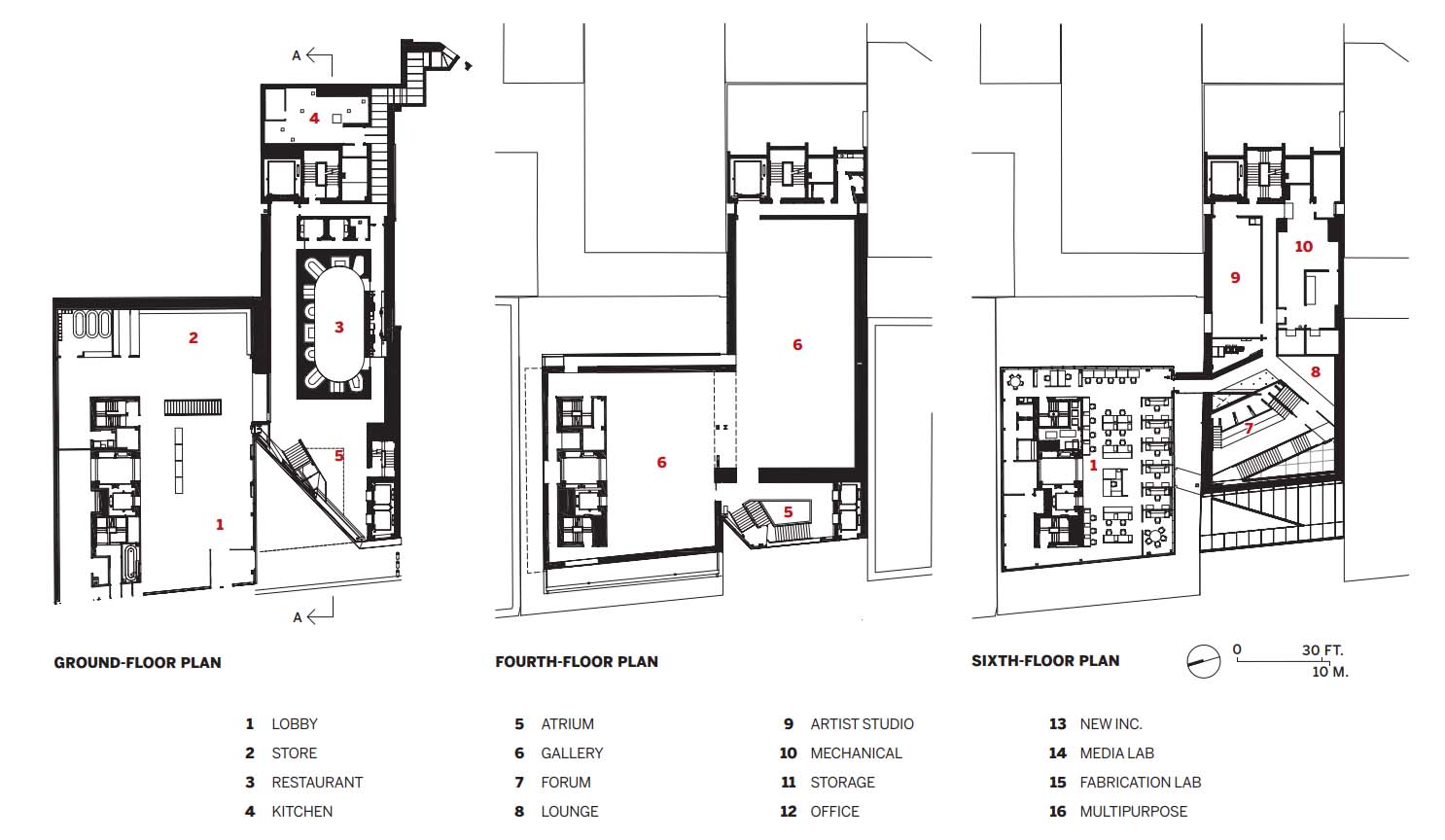
Image courtesy OMA
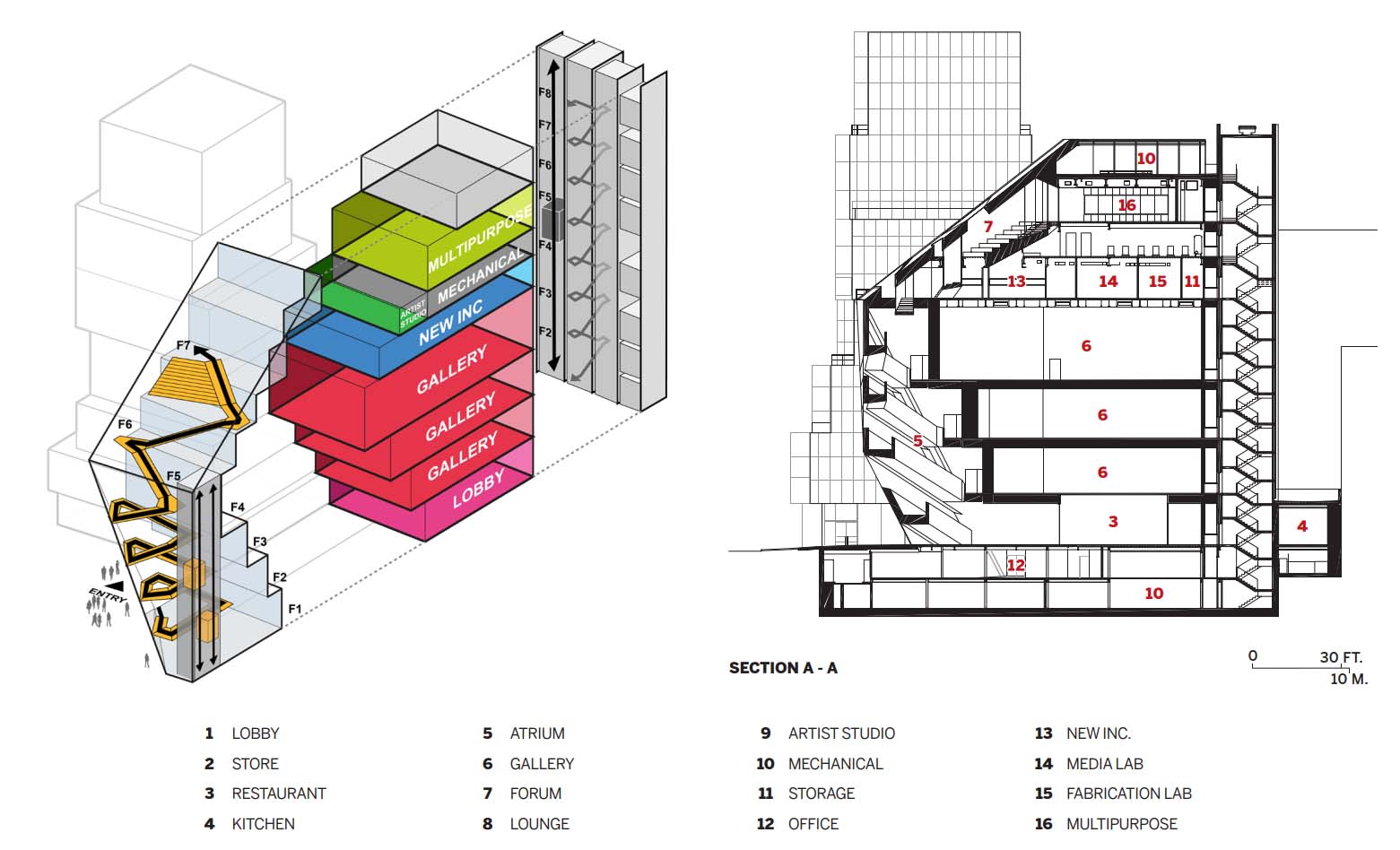
Image courtesy OMA
Credits
Architect:
OMA — Shohei Shigematsu, partner in charge; Rem Koolhaas, collaborating partner; Jake Forster, project architect; Jackie Woon Bae, Ninoslav Krgovic, senior architects
Architect of Record:
Cooper Robertson (now Corgan)
Engineers:
Arup (structural, mechanical); Langan (geotechnical); AKRF (civil)
Consultants:
Front (facade); 2x4 (signage); Dot Dash (lighting); Longman Lindsey (acoustics)
General Contractor:
Sciame Construction
Client:
New Museum
Size:
119,700 square feet (total); 61,930 square feet (new building)
Cost:
$82 million
Completion:
March 2026
Sources
Curtain Wall/Skylights:
Cimolai
Cladding:
Kemper (elastomeric); Carlisle (PVC, TPO); PGNY (rainscreen); JJ Matthews (masonry)
Windows:
Secco Sistemi, Schüco
Doors:
Total Door, JayTee Doors, Hawa, McKeon
Interior Finishes:
Renz+Oei (stair cladding); Duoguard (polycarbonate); FSB, LCN, Forma (hardware); 3Form (solid surfacing); Lindner, Nelson, Certainteed (ceilings); Patella (millwork); Extravega (ornamental metals)
Lighting:
Lutron, Litelab, Bartco, Lumenpulse
Looking for quick answers on architecture and design topics?
Try Ask RECORD, our new smart AI search tool.
Ask RECORD →
Looking for a reprint of this article?
From high-res PDFs to custom plaques, order your copy today!