Lake Flato Architects Designs an Art Gallery in a Small Texas Town

Architects & Firms
Mickey Klein has lived what could be called the “Texas Dream.” Born to a family of modest means, Klein graduated with an engineering degree in 1958, and then went on to also study law. This education allowed him to quickly climb the ranks at the Continental Oil Company. In 1969, he broke out as an independent operator based in Midland, Texas, in the heart of the Permian Basin, and over the next 50 years, he amassed a remarkable fortune. Like Dominique and John de Menil before them, Klein and his wife Jeanne would turn their oil-prospecting wealth toward patronage, assembling a large private collection of modern and contemporary artworks and donating generously to museums. Their latest cultural endeavor is a Lake Flato Architects–designed 4,100-square-foot gallery named Arthouse in Marble Falls, Texas, population 9,413.
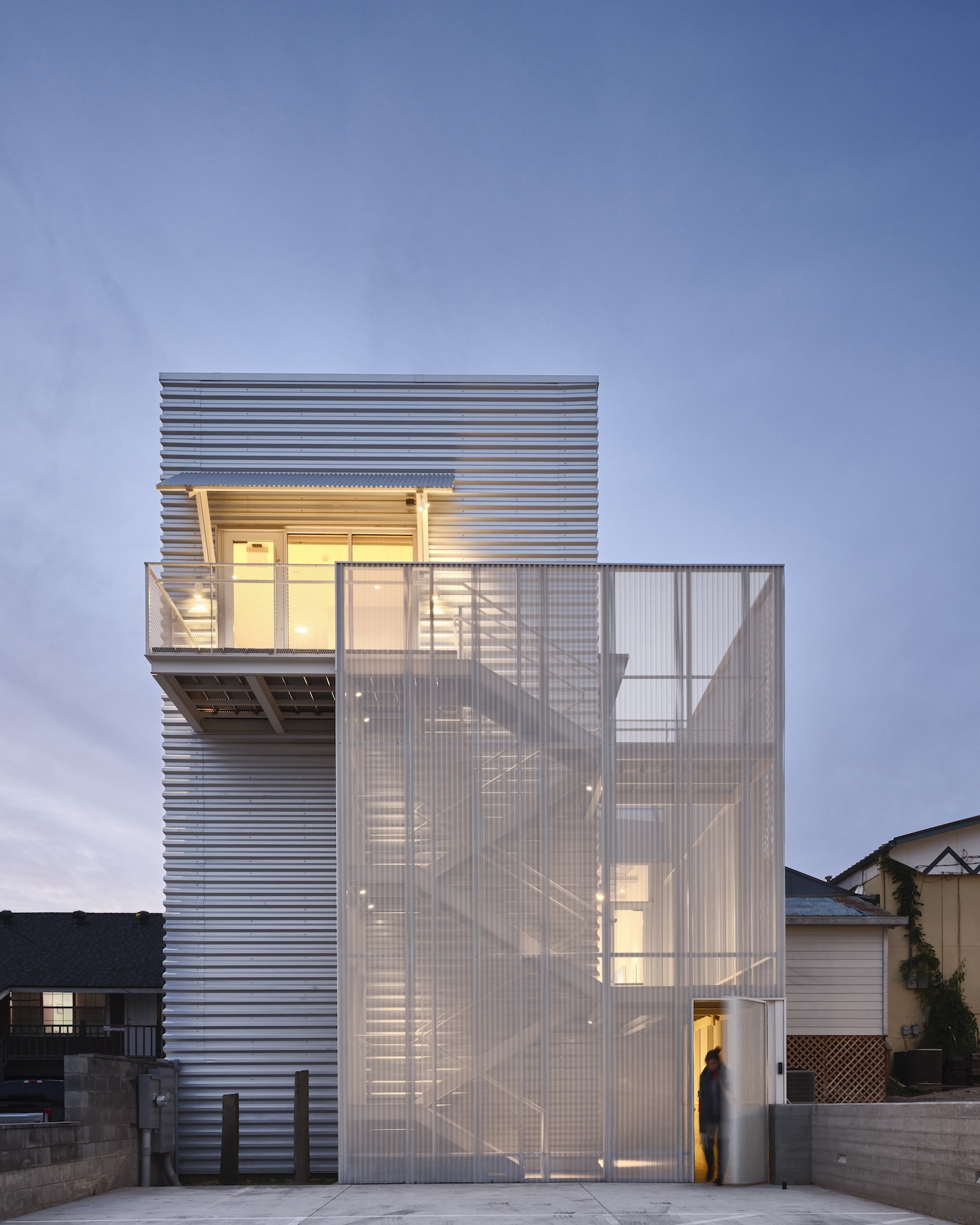
Photo © Andrea Calo
The story of this unlikely small-town art space designed by AIA Gold Medal–winning architects is a testament to the Kleins’ philanthropic disposition and the trust they place in those who work with them. It started when two longtime employees, tired of the dusty scrub of Midland, wanted to relocate to the greenery and lakes of Texas’s Hill Country. In 2022, the Kleins reached out to San Antonio– and Austin–based Lake Flato, which had designed their Austin residence—itself a kind of gallery—originally to construct a small suburban office building. But rather than an isolated structure just to accommodate two people, the architects pitched “doing something that would make Marble Falls better,” says Ted Flato, cofounder of Lake Flato.
They proposed a gallery downtown, with business offices upstairs, that might serve as a cultural anchor for the small but growing town. The Kleins loved the idea and gave the architects free rein to determine the program and pick out the site. “We became Marble Falls’ urban planners slash realtors slash everything,” recalls Flato. They found a roughly 30-foot-wide undeveloped plot of land on Main Street, next to a historic post office building dating from 1910.
The overall form of the building is shaped by considerations for how to mitigate the harsh Texas sun, which might harm the artworks on display, and to avoid solar heat gain while allowing plenty of bright diffused light. The south exposure is completely opaque. The offices on the upper level are offset and crowned with an asymmetrical metal canopy, allowing for a continuous skylight along the north edge of the gallery below. The materials are all inexpensive and industrial—sheet metal, mesh, and block—but deployed with a clarity and precision that sets them apart from everyday usage. “We needed materials that would be familiar to a town like this,” says Flato, “but we also wanted to elevate the whole experience.”
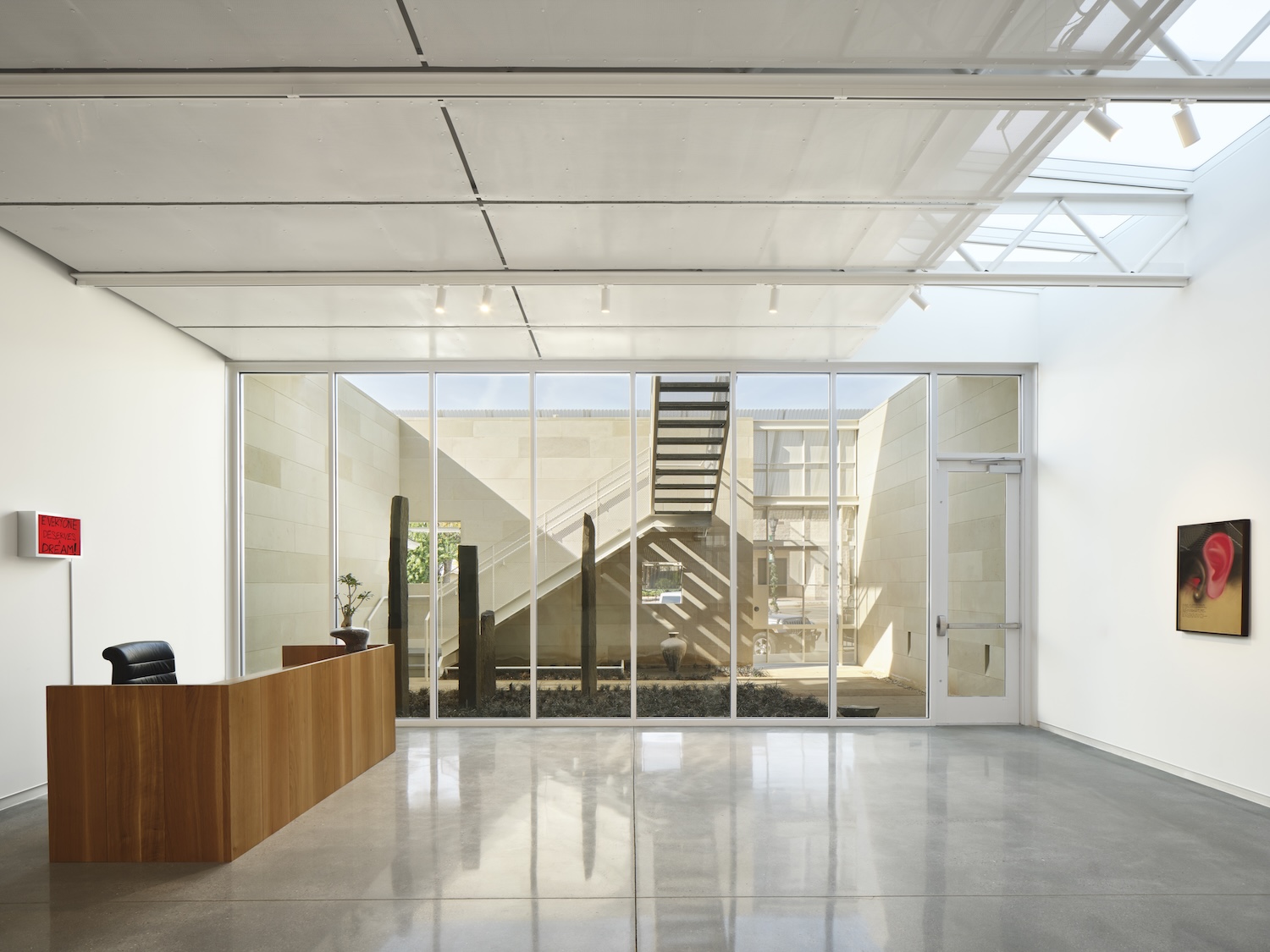
Photo © Andrea Calo
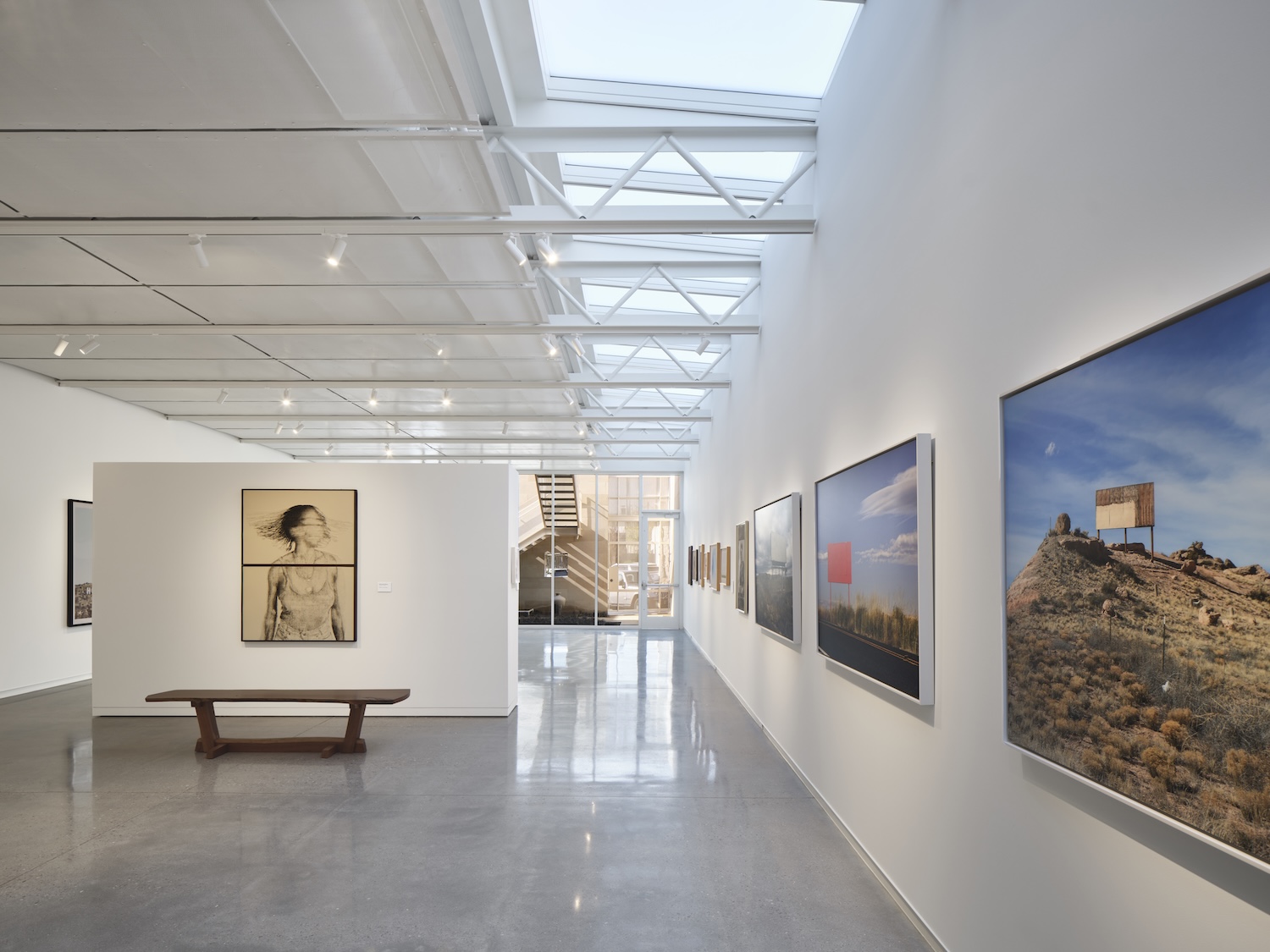
Photo © Andrea Calo
The building fronts Main Street with a largely blank west facade of limestone blocks that not only echo the masonry construction around it but also tap into the “material that Central Texas is made of,” explains Flato. A corrugated metal awning mimics that of the post office building beside it. Through a perforated metal gate in the left side of this stone wall, gallerygoers enter a Japanese garden, designed by Sada Uchiyama and populated with basalt stele as well as a steel staircase leading to the offices on the second story. Beyond the garden is the single-room 2,000-square-foot exhibition space, where the Kleins’ artworks will be displayed in thematic shows that will rotate four times per year.
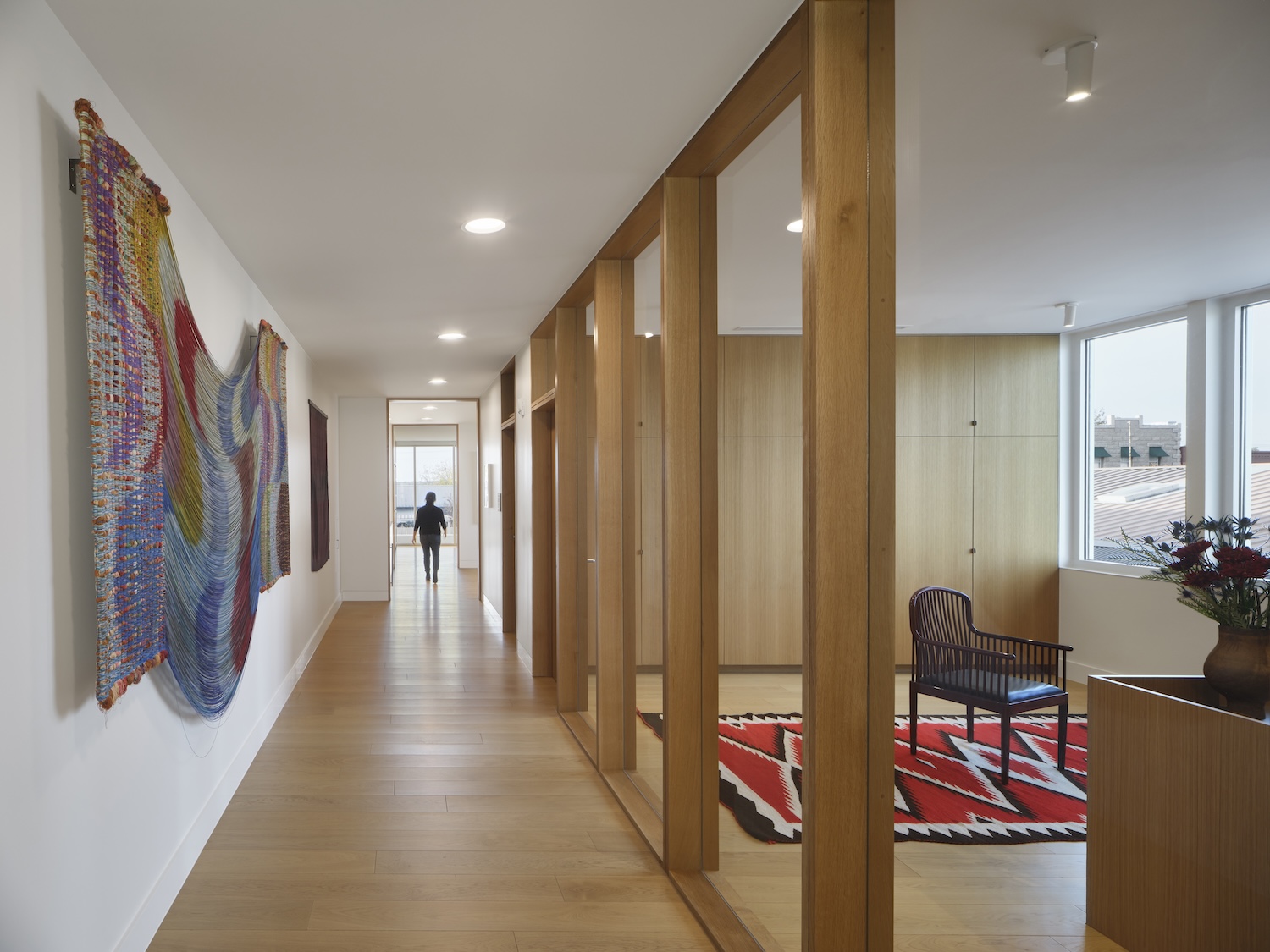
Photo © Andrea Calo
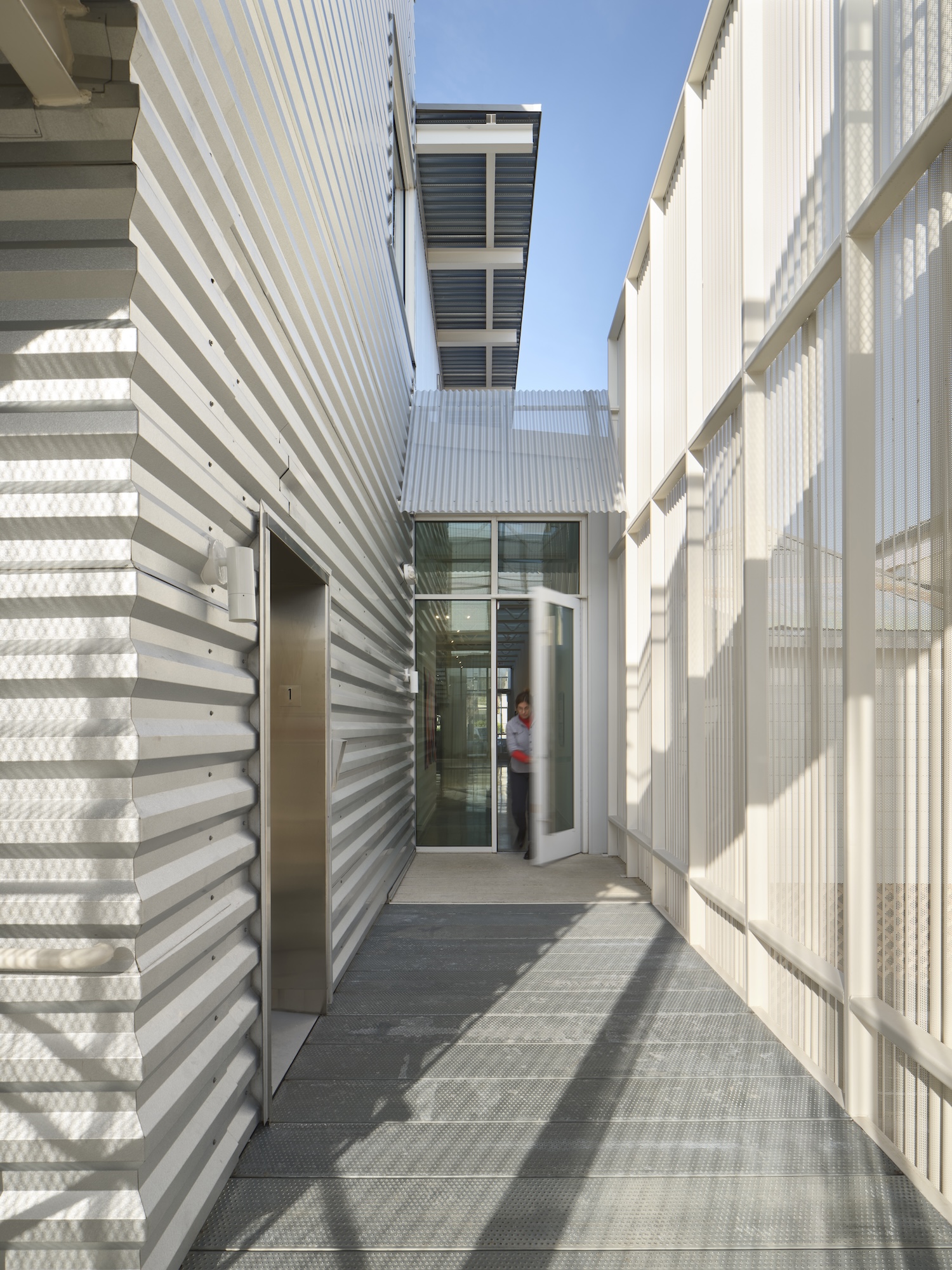
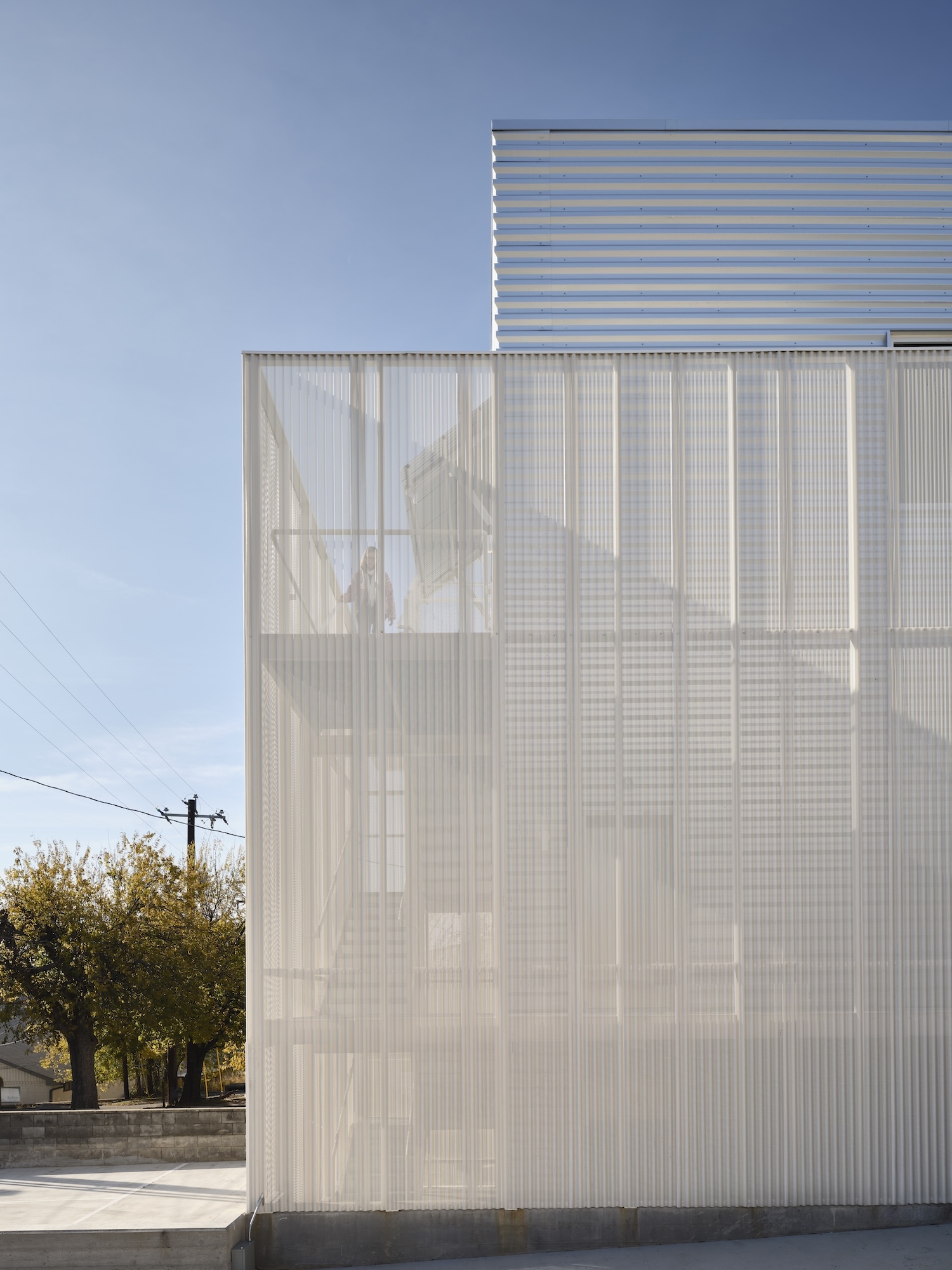
Unlike the white cube gallery below, the second floor is lined in warm book-matched oak millwork. The level includes business offices for the two employees, one for Mickey Klein, and a kitchenette. The alley side is for back-of-house needs, such as storage and an art elevator. It is finished in corrugated galvanized aluminum and wrapped in a stair, itself encased in metal mesh, that leads to a balcony.
Photos © Andrea Calo
In his 2014 commencement speech at the University of Texas at Austin School of Architecture, Mickey Klein spoke of the “power of the built environment” and of “how the comfort or challenge a structure, a garden, or a public art space can elicit requires great skill in reading the souls of the people who inhabit them.” This recognition might be why he trusted Lake Flato with so much leeway in the early planning and design of Arthouse. “From the beginning, our goal was to create a building that feels both welcoming and deeply connected to downtown Marble Falls,” says architect Grace Boudewyns, the project’s lead designer.
Arthouse opens on Saturday, April 25, as part of the 2026 Paint the Town Art Festival, with the inaugural show Words Matter.
Looking for quick answers on architecture and design topics?
Try Ask RECORD, our new smart AI search tool.
Ask RECORD →
Looking for a reprint of this article?
From high-res PDFs to custom plaques, order your copy today!