Lake Flato Architects Serves Up a Classic Tennis Clubhouse in Dallas
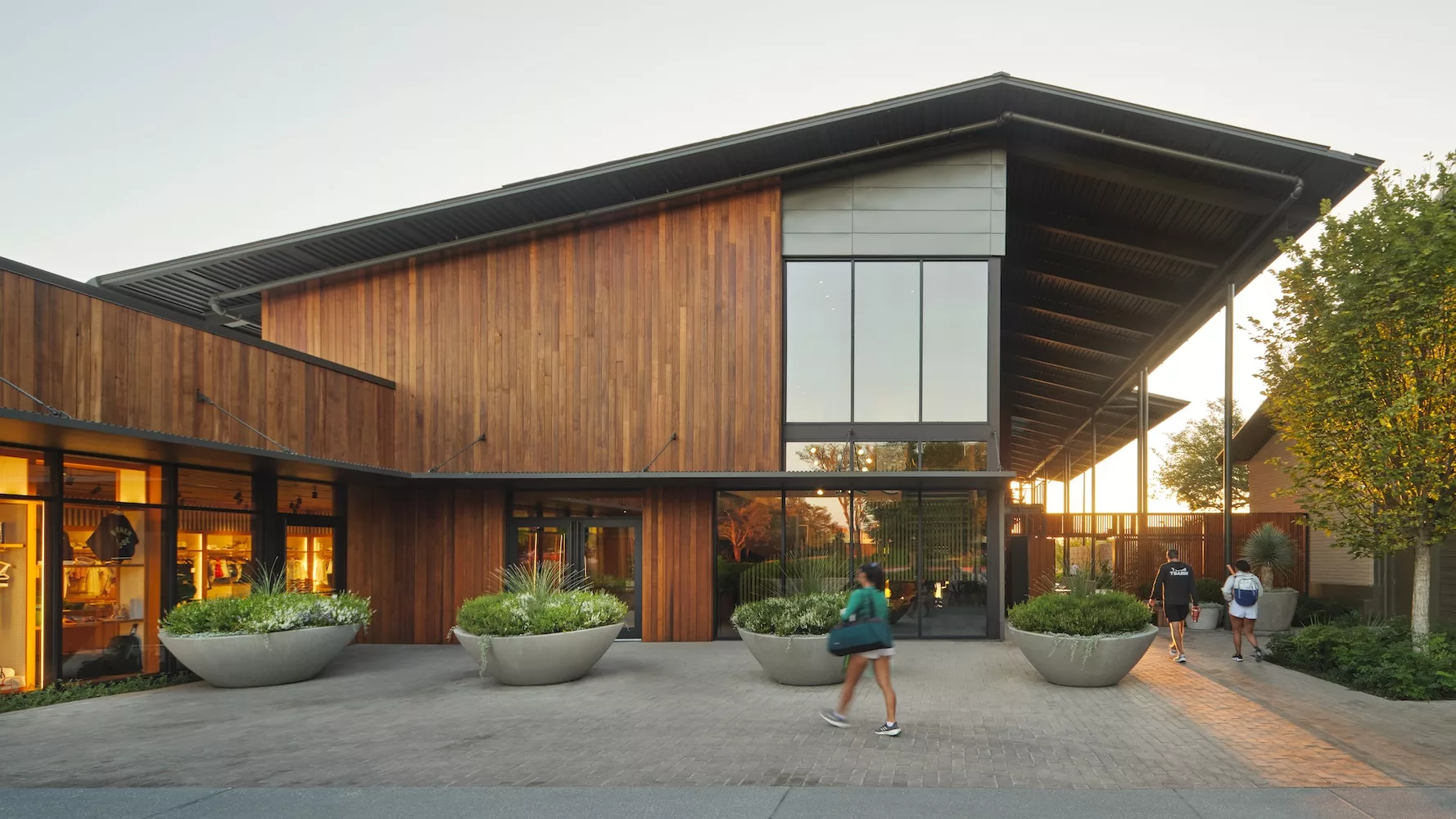
T Bar M Racquet Club, Dallas.
Architects & Firms
Since 1972, the T Bar M Racquet Club has hosted tennis pros such as John McEnroe, Stan Smith, and Anna Kournikova, earning something of legendary status in north Dallas. Named after its founders, famed Lone Star racketers Jack Turpin, Tut Bartzen, and Clarence Mabry, T Bar M’s 13-acre campus, however, never quite lived up to its stellar reputation. The club and its youth academy operated out of two nondescript sheds, clad in tan brick and metal siding with tin roofs, that also housed the enclosed courts. The 23 outdoor courts, on the back half of the lot, baked in the harsh Texas sun with too little shade, and a small swimming pool offered scant relief from the heat.
Dallas-based hospitality operator and developer WoodHouse acquired T Bar M in 2022 with the intention of preserving its athletic prestige while building on the club’s reputation to establish Banner House, the latest addition to its portfolio of health-and-wellness-focused social clubs around the country. On the recommendation of another developer, WoodHouse reached out to San Antonio– and Austin-based Lake Flato Architects for master planning and concept design for the site, and to spearhead a $70 million renovation of the facilities.
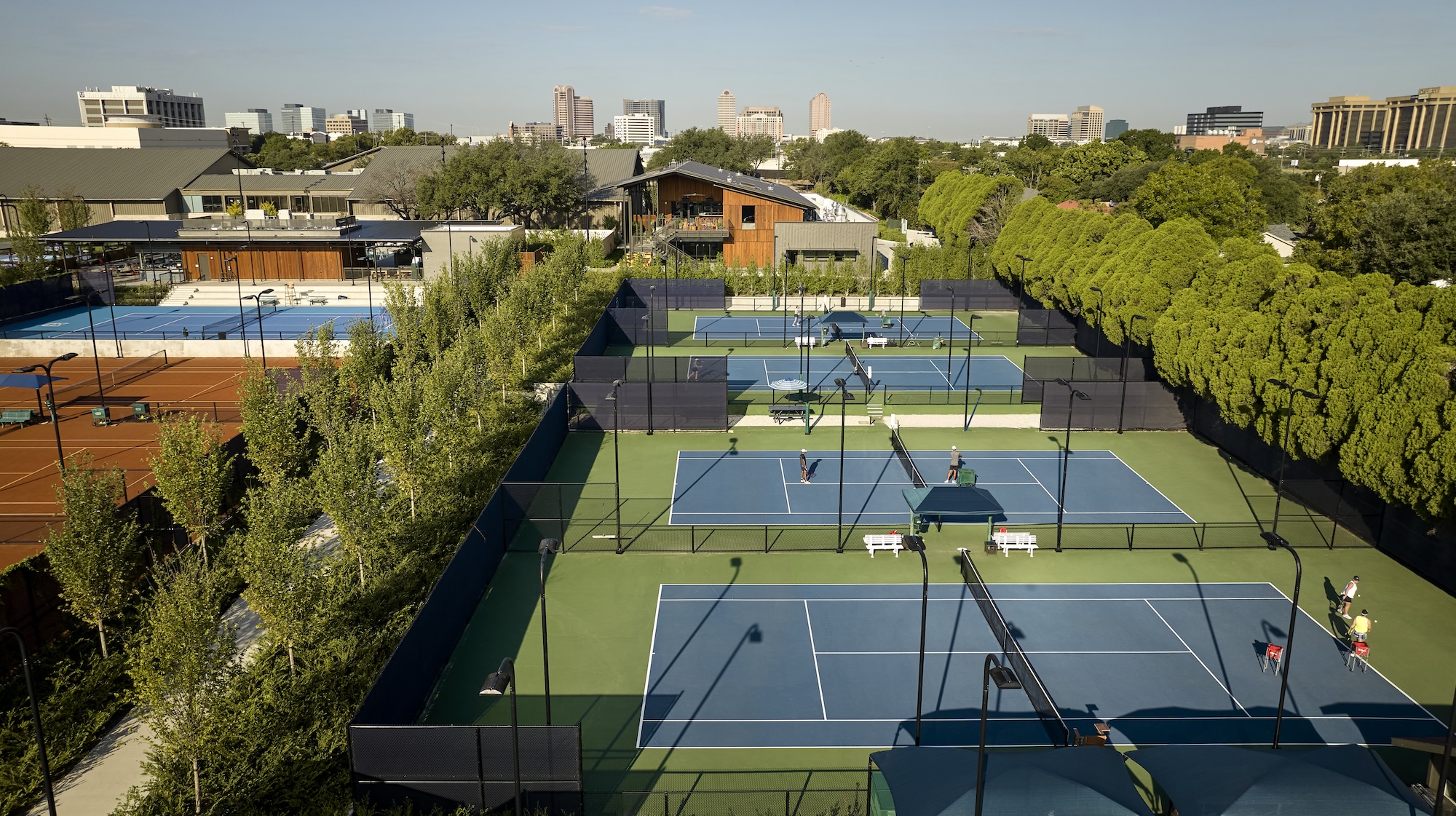
Photo © Robert G Gomez
While the existing structures were uninspiring, the first thing the architects noticed was the incredible grove of mature oaks, magnolias, and cypresses that surround the entrance to the campus and its two tennis sheds. “The facilities had a lot of room for improvement,” says Lake Flato senior associate Rebecca Sibley, “but there was this wonderful canopy of 50-year-old oaks.” Preserving these trees while revitalizing the tennis club and adding amenities became a primary design driver.
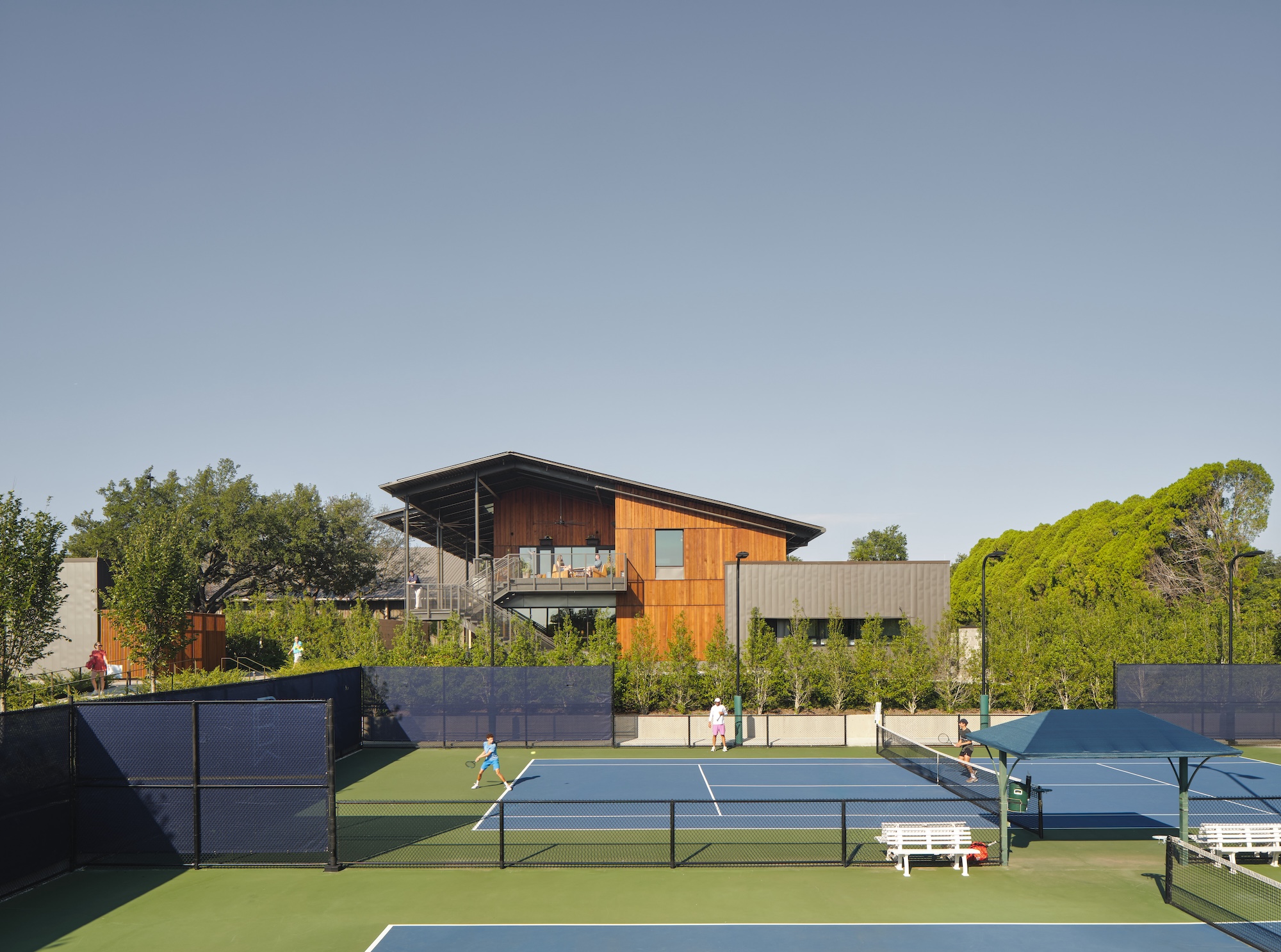
Photo © Robert G Gomez
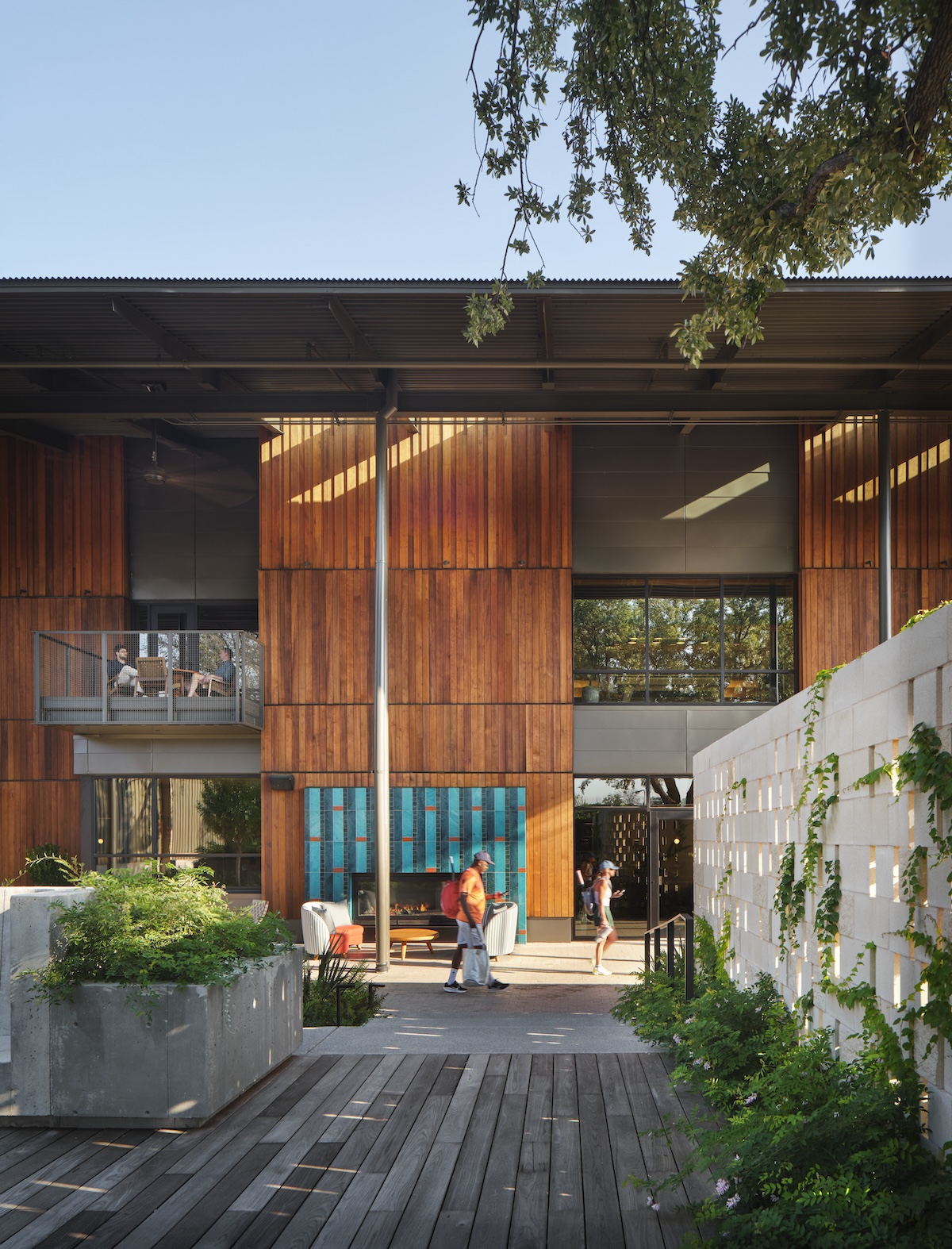
Photo © Robert G Gomez
Lake Flato proposed renovating the existing buildings while adding three pavilions around a new short-course swimming pool to form a central courtyard and hub for social activity. The proposed structures were placed to retain the existing grove. Improved landscaping, by local landscape architecture firm Hocker Design Group, would add a total of 441 trees, primarily around and along new allées running between the reconfigured courts. During construction, remarkably, only two trees were lost: one from root damage, and the other because of an error in the site survey.
The first phase, which was completed in March 2025, includes a two-story 19,450-square-foot clubhouse and a pool pavilion. The second and third phases will include a shaded, open-air pickleball pavilion as well as renovations of the existing buildings to accommodate health-and-wellness-related programming, such as a spa and fitness center.
The clubhouse is sited where the old pool was located, and it establishes a new point of entry to the social areas around the relocated pool and the tennis courts beyond. The two-story volume features a visually prominent asymmetrical gabled roof that evokes the midcentury houses of the surrounding leafy neighborhood. The structure is clad in thermally modified hemlock, which is sealed with a coating that accentuates its mottling and color variation. “The goal was always to have the wood not seem perfect but for it to feel more natural,” explains Greg Papay, Lake Flato partner. While the boards are laid vertically to accentuate the building’s height, horizontal divisions between the planks pick up on lines from the windows and the plenum, creating bands across the facades. Adding subtle depth, the boards on the top band are layered to create shadow lines. On the social side, facing the pool, this almost crenellated effect is enhanced by narrow, linear skylights cut into the roof overhang, running right against the wall, allowing sunlight to wash over the wood.
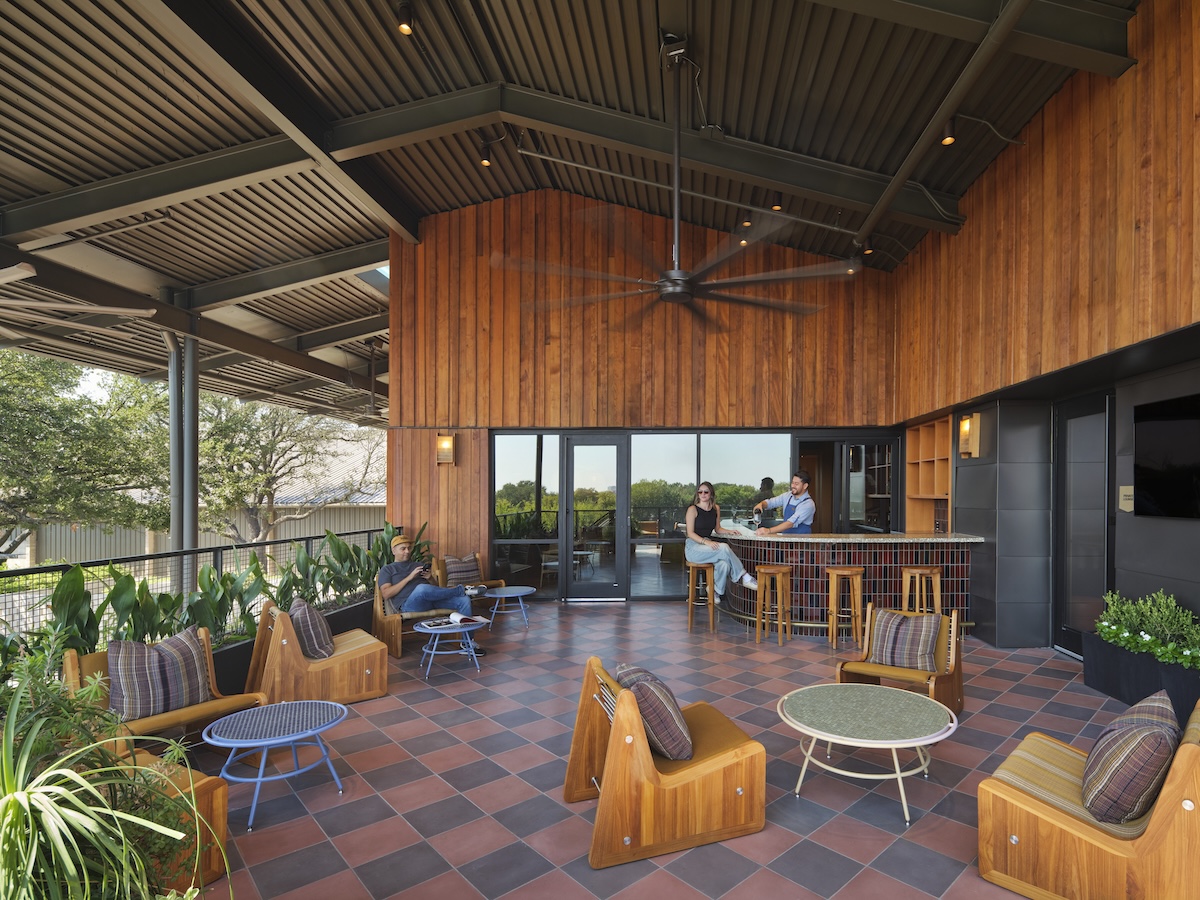
Photos © Robert G Gomez
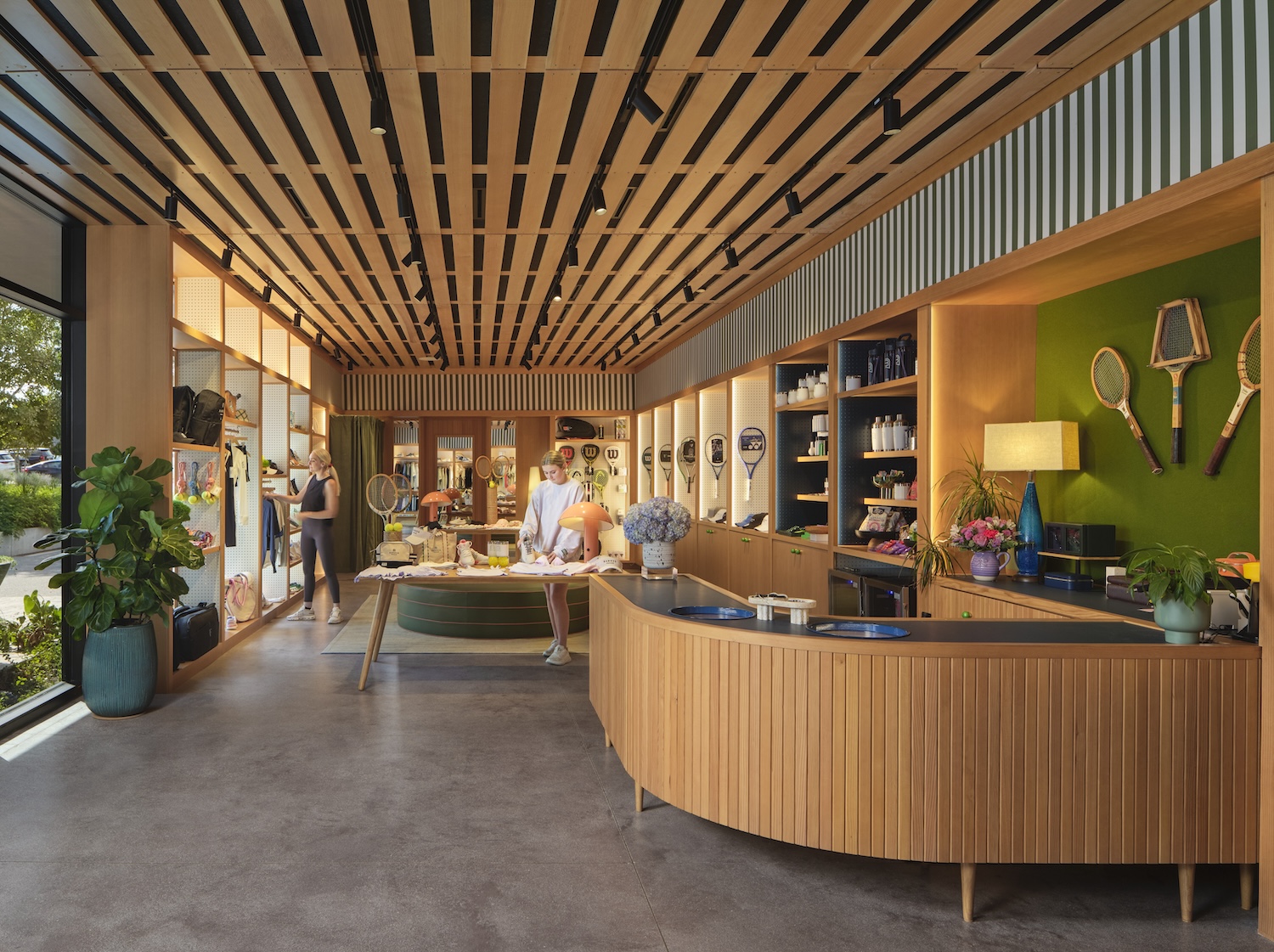
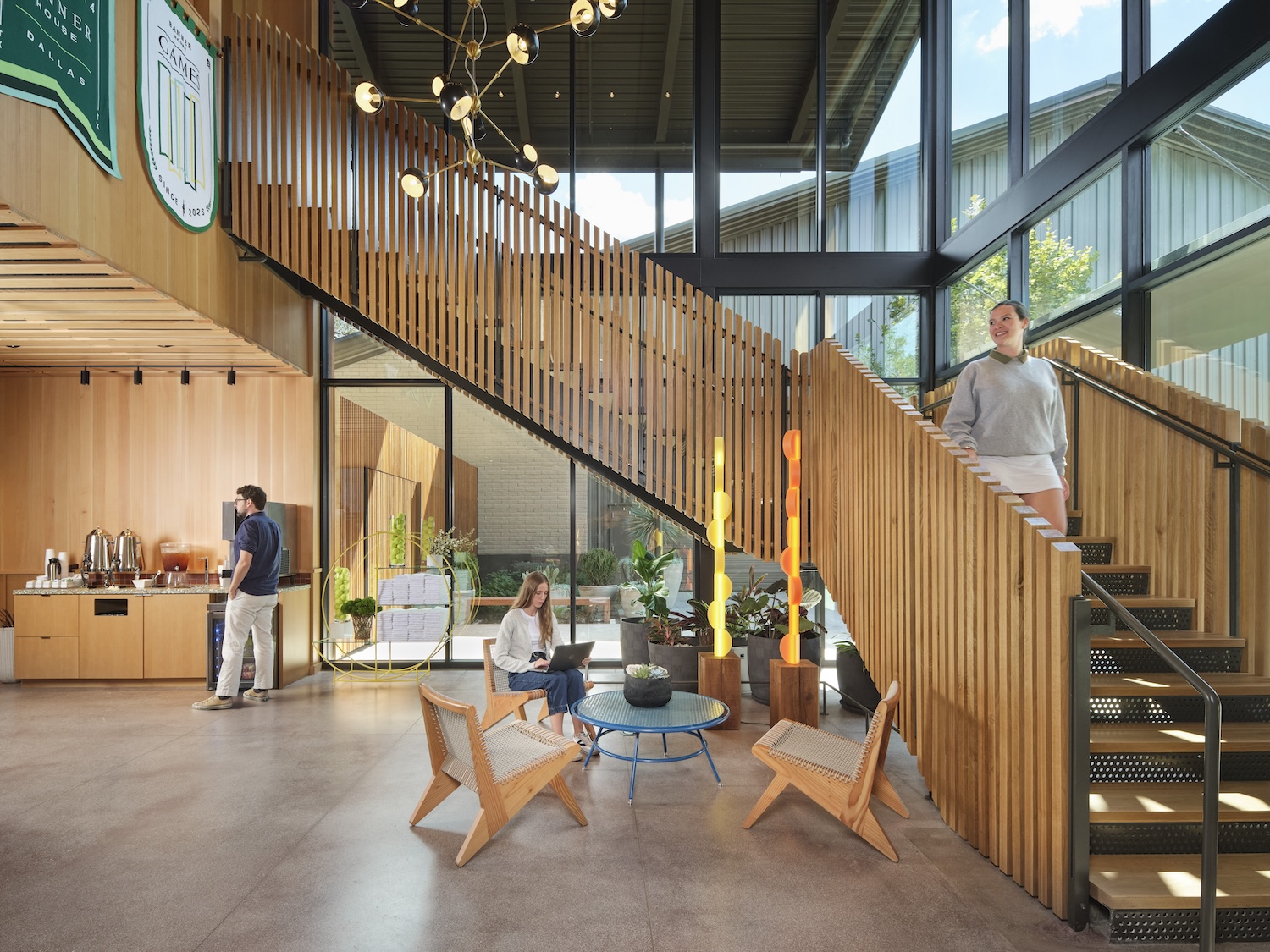
On the ground floor, the clubhouse program is a mix of retail and dining. Banner House hosts dinner club events and features a menu organized by a Michelin-starred chef. Upstairs is more intimate, with lounges, a studio, and a study. A porch, with an outdoor bar, offers views of the tennis matches taking place below. The interiors, designed by Los Angeles–based Commune Design, are dominated by white oak and Douglas fir paneling, millwork, and furniture. From hanging vintage rackets on the walls to screens with circular perforations the size of tennis balls, there are “little nods to classic tennis from the ’60s and ’70s without being over the top,” says Papay.
Looking for quick answers on architecture and design topics?
Try Ask RECORD, our new smart AI search tool.
Ask RECORD →
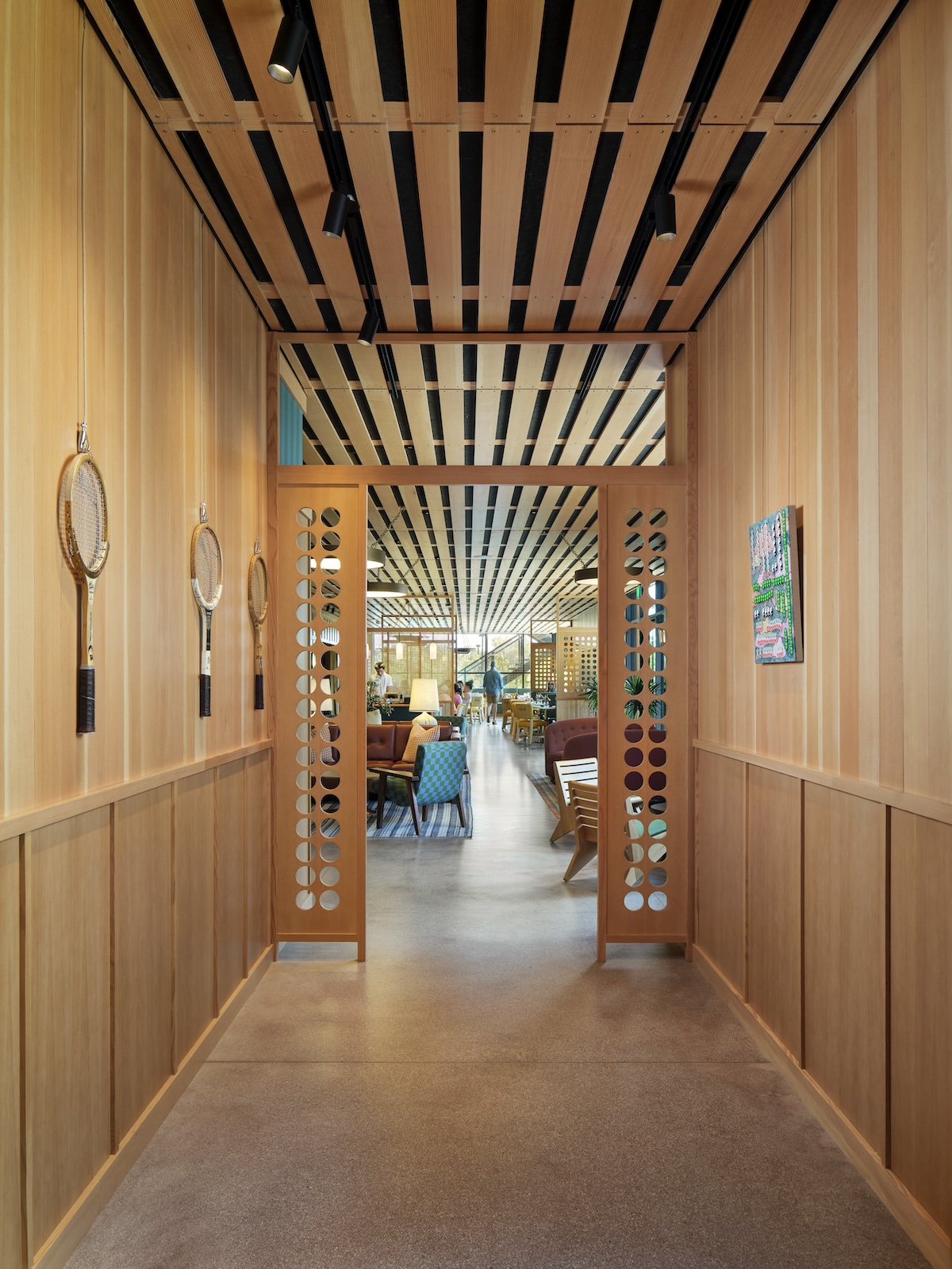
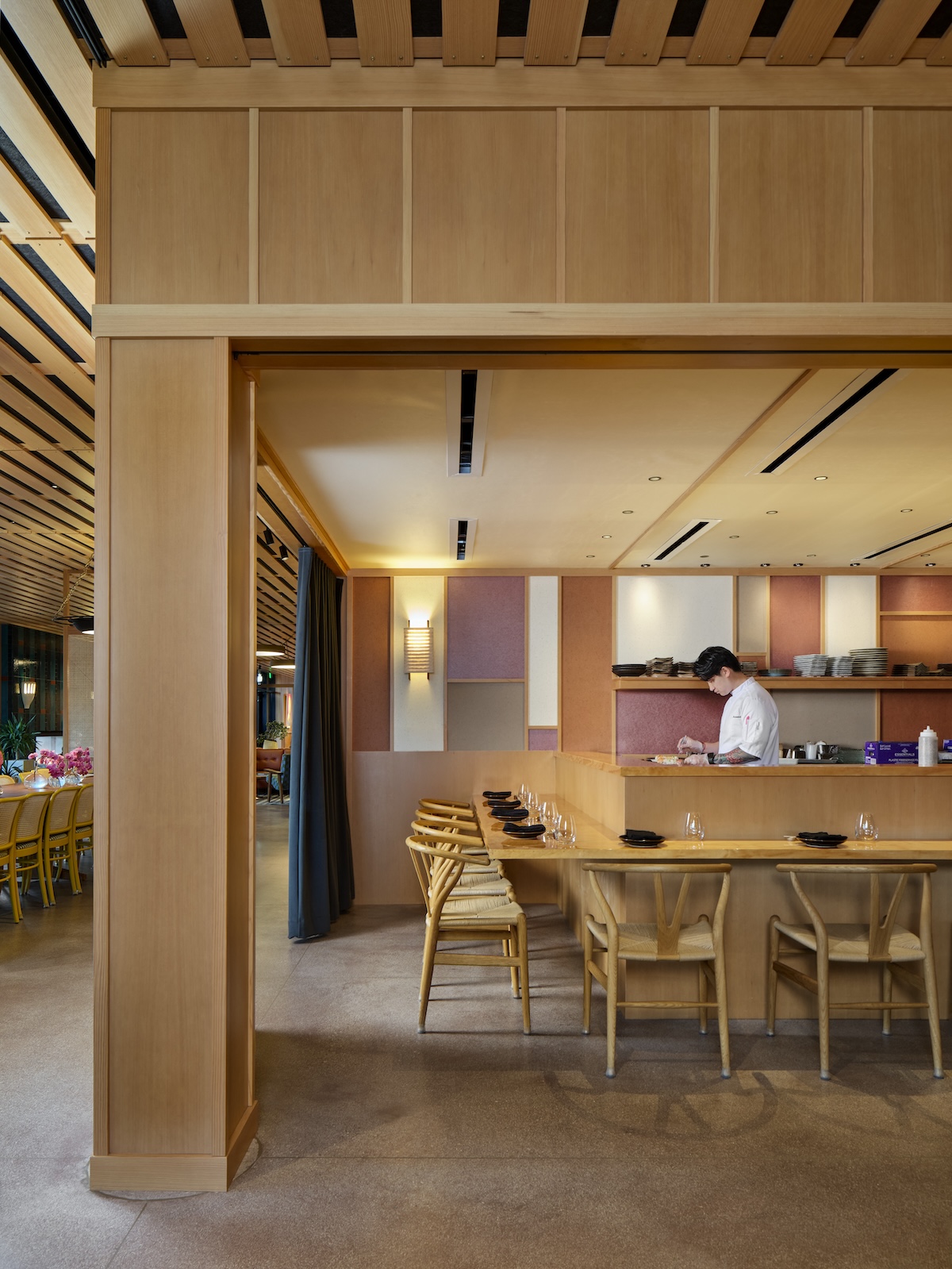
Photos © Robert G Gomez
The pool pavilion features a sweeping flat roof covering an open-air taqueria, seating areas, and two enclosed volumes that house a kitchen and bathrooms, with a breezeway between them. Here, the architects deployed the same skylight strategy: “Really deep overhangs are great when you have huge downpours, like you get in Texas,” explains Papay, “but when the sun is intense, it can be very dark underneath. So, the facade skylights help balance so that your eyes can see deeper into those spaces.”
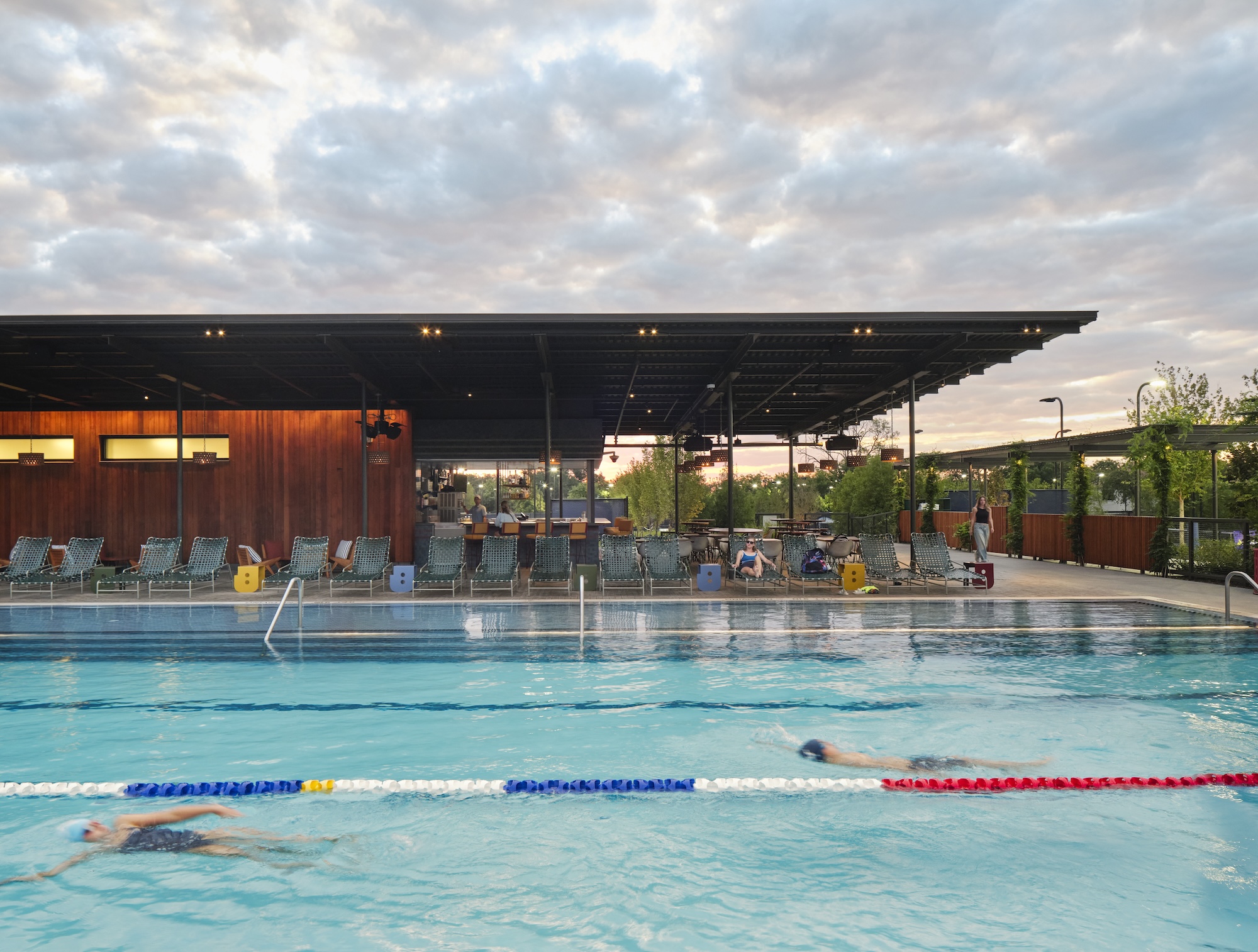
Photo © Robert G Gomez
“When you look at the existing tree canopy and at the pool overhang, they’re both about lightness and extending out,” says Papay. “We had to counteract the bluntness of the existing buildings by teeing off with nature.” Lake Flato built on the qualities it found on-site, accentuating some while minimizing others. The result matches T Bar M’s storied history and sets it up for its new life.
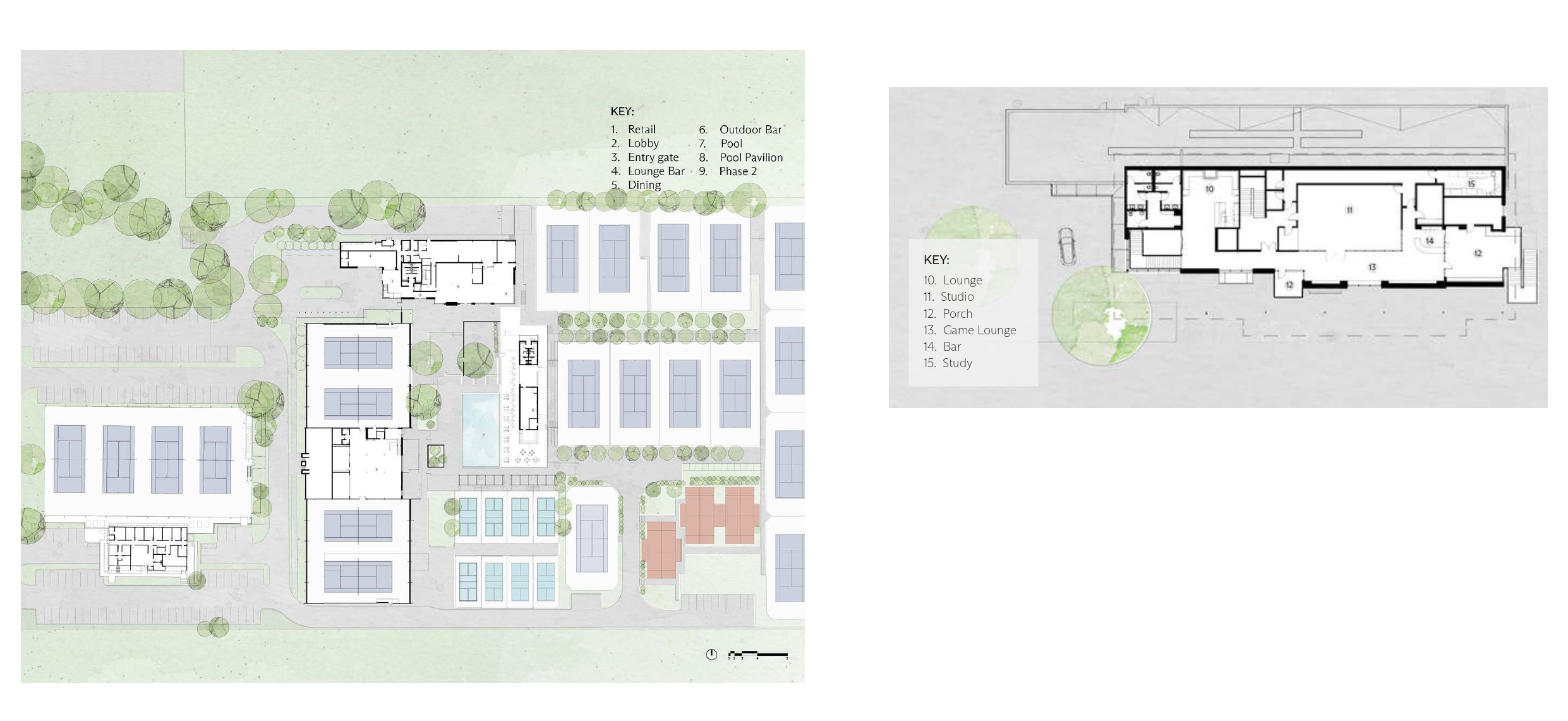
Images courtesy Lake Flato Architects, click to enlarge
Looking for a reprint of this article?
From high-res PDFs to custom plaques, order your copy today!