Books
‘Lunch on a Beam’ Explores the History of a Legendary 1932 Photo Captured Atop a Classic New York Skyscraper
‘Lunch on a Beam: The Making of an American Photograph’ by Christine Roussel
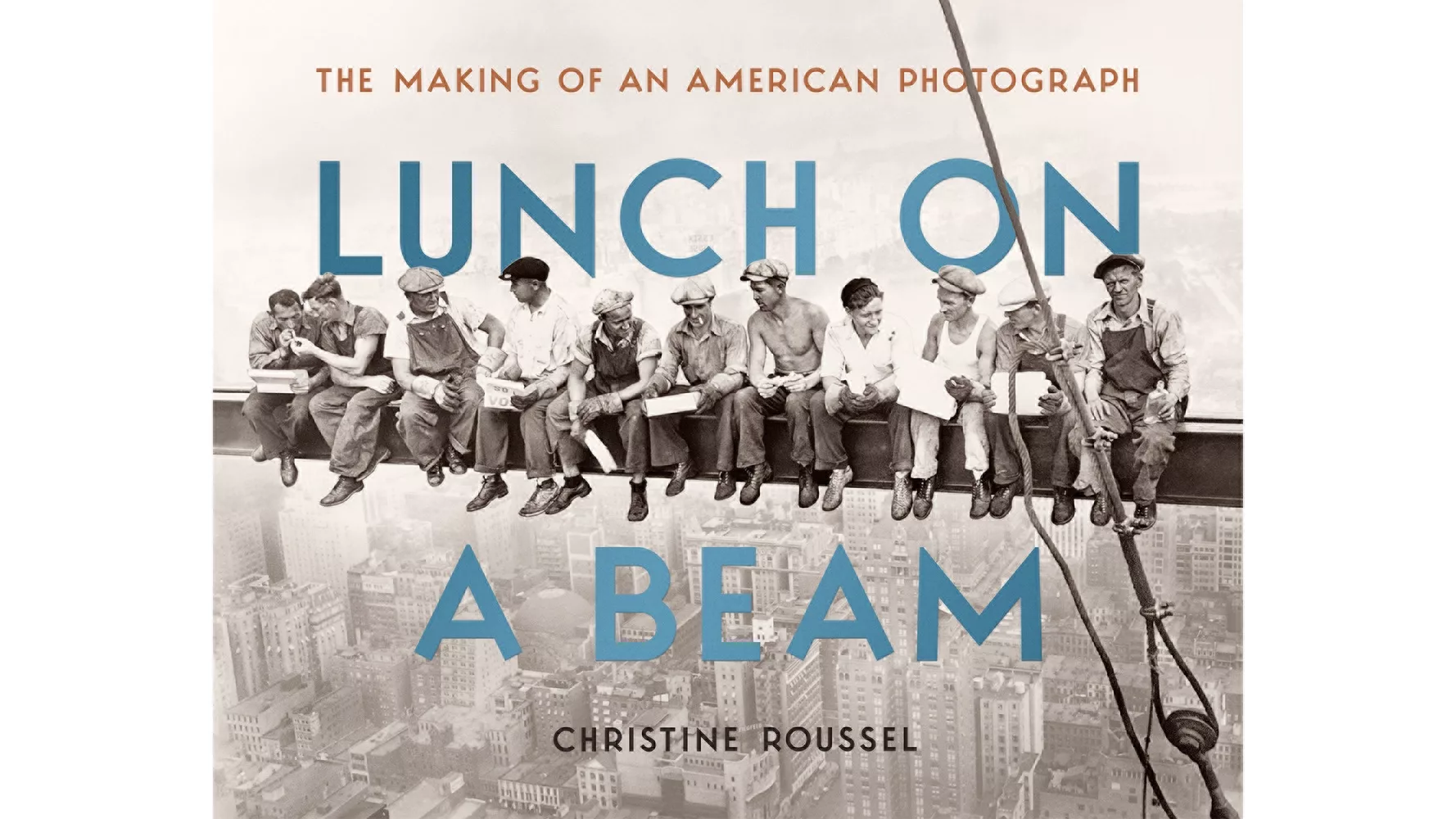
Lunch on a Beam: The Making of an American Photograph, by Christine Roussel, Brandeis University Press, 222 pages, $35.
How many pictures are so famous that they have their own amusement ride? Rising from the Top of the Rock, thrill seekers can sit down and strap onto a steel section to be lifted 12 feet and spun around 180 degrees, recreating the experience of Lunch on a Beam. The photo, which was snapped in 1932, during the construction of the Rockefeller Center in New York City, shows 11 ironworkers sitting in a line, smoking and chatting, with lunchboxes on their laps, and legs dangling some 840 feet above the city. While the heroic scene may look spontaneous, it was orchestrated to promote the new skyscraper. Separating fact from fiction is the aim of Rockefeller Center archivist Christine Roussel’s new book, which brings together art, architecture, and social history to delve into the story behind this famous photograph. Following is an excerpt from chapter three, titled “Making the Image.”
As the 70-story R.C.A. Building neared completion in 1932, the world’s largest office building needed tenants. The recently completed Empire State Building was nearing bankruptcy with a vacancy rate of 77 percent. (New Yorkers had nicknamed it the “Empty State Building.”) Rockefeller had to fill 2,200,000 square feet of empty office and retail space. Merle Crowell, the project’s irrepressible director of public relations, regularly contacted news agencies, which dispatched freelance photographers, known as “stringers.” In the course of a few weeks, Crowell engaged a platoon of photographers “to climb skeleton stairways to the 60th story and mount ladders 10 more stories to the top.”
Those efforts culminated at three in the afternoon on Monday, September 26, 1932, when ironworkers riveted the final beam in a “topping out” ceremony.
Topping-out ceremonies remain an important rite among ironworkers. On major jobs, the honor of completing the topmost attachment goes to the senior gang, or to another crew singled out for recognition. Other trades mark their own construction milestones. Two months after the ironworkers’ topping-out ceremony, masons worked into place the last piece of the R.C.A. Building’s limestone facade. Once again, Rockefeller Center’s publicity team was there. A photo from the masons’ ceremony identifies the man riding the last block of limestone as James Grindrod, a stone derrickman.

Lunch on a Beam. Rockefeller Group photo 110
“Lunch on a Beam” was among a number of photographs taken the week of September 26 by three intrepid photographers working with Rockefeller Center’s public relations department and photo agencies, including Acme-Newspictures, Hamilton Wright, and Newspictures Inc., that sold or freely distributed news photos to magazines and newspapers. Whether Crowell choreographed the photo shoot is unknown, but it bore all the hallmarks of the man. His office even released photographs of the photographers—made either with a timer or the help of a second photographer. “Taking risks to get pictures is an everyday affair with the crack news photographers in New York,” read each release. “Here is [Crowell would name the photographer] perched on a six-inch beam, 69 stories above the ground at ROCKEFELLER CENTER, shooting pictures for the newspapers.”
.jpeg "Charles Ebbets")
Photographer Thomas Kelley. Rockefeller Group photo 140A
Until now, the photographer who took that iconic picture has remained as much a mystery as the names of the workers in the image. The original work orders for that photo assignment have never been found in Rockefeller Center Archives, the now-defunct photography agencies, or the photographers’ studios. Most of the images cannot be attributed to an individual. Still, we know who some of the photographers were, because pictures taken that day include mind-blowing shots of the photographers themselves.
Since 1932, three photographers from that day have been identified in the archives of Rockefeller Center: Charles Ebbets, Thomas Kelley, and William Leftwich. Until now, no claim has been made, nor has evidence been produced that either William Leftwich or Thomas Kelley took the iconic image, “Lunch on a Beam.” Only Ebbets’s family has claimed he took the famous picture. Their evidence includes a handwritten note from Charlie’s wife, Joyce, attesting to his creation of “Lunch on a Beam.”
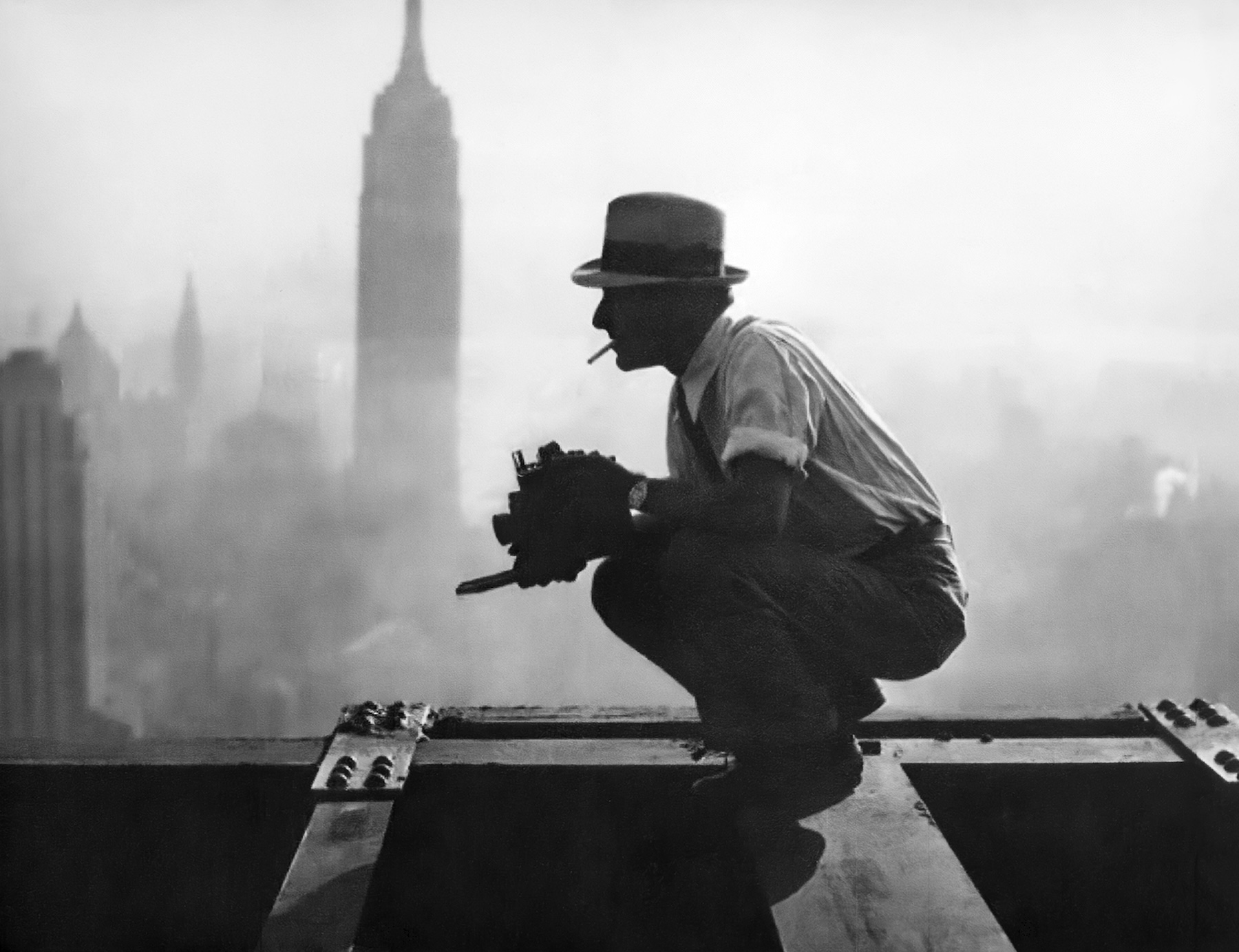
Photographer Charles Ebbets. Rockefeller Group photo
Ebbets was present at the R.C.A. Building that day, as documented in a photo of him crouching atop the steel skeleton with a camera in hand. Ebbets would often photograph himself on the job, he told an interviewer in a 1938 article for Popular Photography magazine. “In order to obviate any opportunity for critics to claim that he fakes his pictures, Charlie Ebbets carries an automatic timer in his equipment and makes a picture of himself in every setting,” the article reported. “Thus he is the most photographed camera operator ever. The timer is set for one minute, which affords the photographer ample opportunity to pose in the picture after he has focused and set the camera.”
Looking for quick answers on architecture and design topics?
Try Ask RECORD, our new smart AI search tool.
Ask RECORD →
Looking for a reprint of this article?
From high-res PDFs to custom plaques, order your copy today!