Architectural Record
search
cart
facebook twitter linkedin youtube
  • Sign In
  • Subscribe
  • Sign Out
  • My Account
Architectural Record
  • NEWS
    • Latest News
    • Awards
    • Interviews
    • Obituaries
    • Podcasts
      • Design:Ed Podcast
      • Sponsored Podcasts
  • OPINION
    • Book Reviews / Excerpts
    • Exhibition Reviews
    • Forum
  • EXCLUSIVES
    • Videos
    • Design Vanguard
    • Top 300 Firms
    • Sponsored Content
    • Sponsored eBooks
    • From the Archives
  • CONTINUING ED
    • Editorial Continuing Ed
    • CE Center
    • CE Academies
  • PROJECTS
    • Buildings By Type
    • Reuse & Renovation
    • Museums & Arts Centers
    • Colleges & Universities
    • Multifamily Housing
    • Interiors
    • Lighting
    • Kitchen & Bath
  • HOUSES
    • Record Houses
    • House of the Month
    • Featured Houses
  • PRODUCTS
    • Products by Category
    • Record Products of the Year
    • Latest Products
  • EVENTS
    • Dates & Events
    • Record on the Road
    • Innovation Conference
    • Sustainability in Practice
    • Women In Architecture
    • Webinars
    • Ad Excellence Awards
    • Submit an Event
  • CONNECT
    • Ask RECORD AI
    • Newsletters
    • Contact
    • Advertise
    • Editorial Calendar
    • Store
    • Customer Service
  • SUBMIT
    • Submission Guidelines
    • RECORD Competitions
  • MAGAZINE
    • Subscribe
    • My Account
    • Digital Edition
    • Current Issue
    • Firm Pass
    • Historic Archive
Architecture News

Design for Troubled Waters
By Jerry Adler
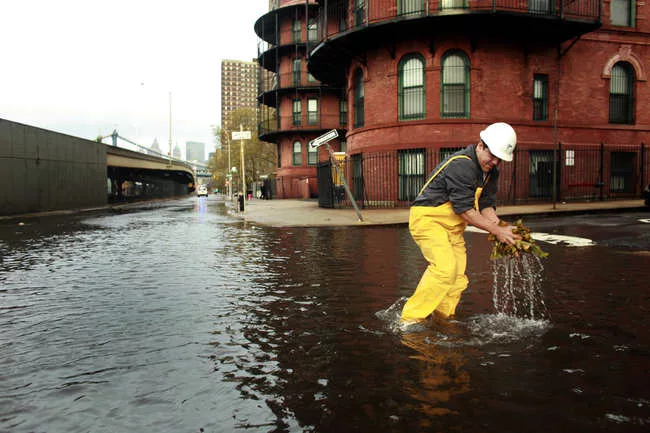
<p>A New York City worker clears a sewer drain in Lower Manhattan after Superstorm Sandy.</p>
Design for Troubled Waters

A New York City worker clears a sewer drain in Lower Manhattan after Superstorm Sandy.
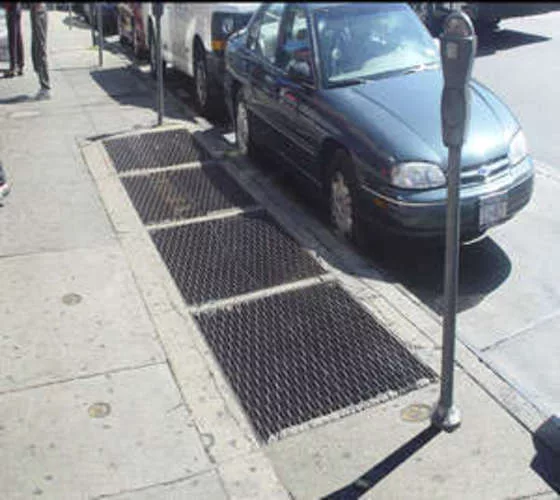
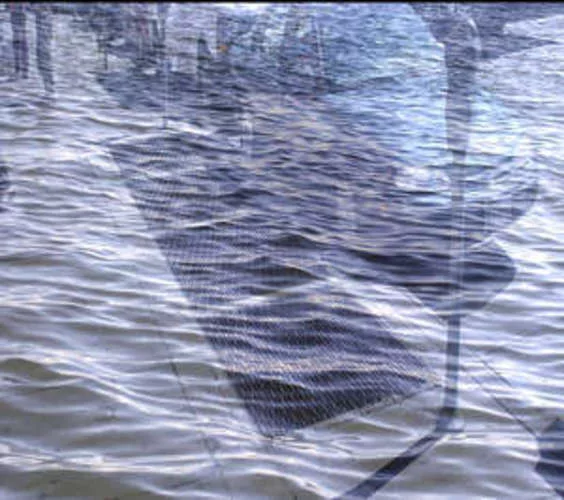
Photo © Allison Joyce/Getty Images
A downpour in August 2007 caused flooding in many New York City neighborhoods and subway tunnels&#8212;major transit lines were shut down for most of a day. Rogers Marvel Architects&#8217; solution, c
Design for Troubled Waters
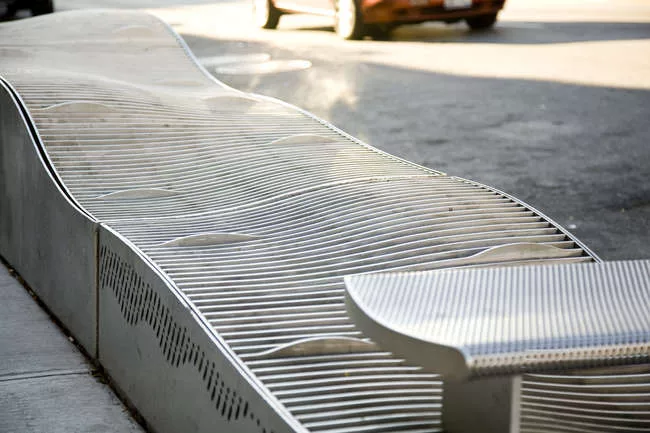
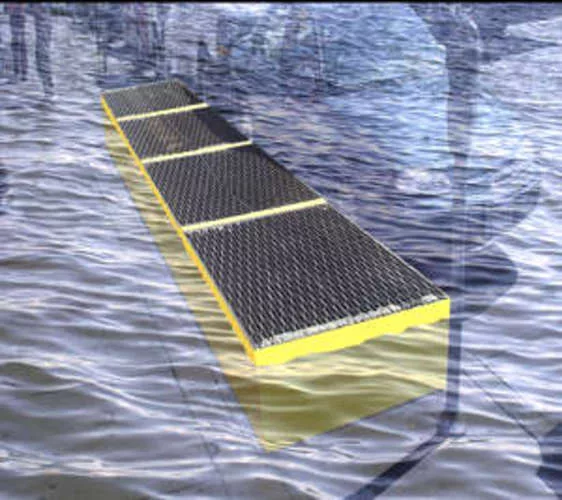
A downpour in August 2007 caused flooding in many New York City neighborhoods and subway tunnels—major transit lines were shut down for most of a day. Rogers Marvel Architects’ solution, commissioned by the Metropolitan Transportation Authority, was to raise sidewalk ventilation grates off the ground six to 18 inches. The architects developed a raised-grate concept to arrive at their final design—hammered-metal grates with a wavy profile, some of them with benches. The first were installed in 2008.
Courtesy Rogers Marvel Architects
A downpour in August 2007 caused flooding in many New York City neighborhoods and subway tunnels&#8212;major transit lines were shut down for most of a day. Rogers Marvel Architects&#8217; solution, c
Design for Troubled Waters
A downpour in August 2007 caused flooding in many New York City neighborhoods and subway tunnels—major transit lines were shut down for most of a day. Rogers Marvel Architects’ solution, commissioned by the Metropolitan Transportation Authority, was to raise sidewalk ventilation grates off the ground six to 18 inches. The architects developed a raised-grate concept to arrive at their final design—hammered-metal grates with a wavy profile, some of them with benches. The first were installed in 2008.
Courtesy Rogers Marvel Architects
A downpour in August 2007 caused flooding in many New York City  neighborhoods and subway tunnels&#8212;major transit lines were shut down for  most of a day. Rogers Marvel Architects&#8217; solution,
Design for Troubled Waters
A downpour in August 2007 caused flooding in many New York City neighborhoods and subway tunnels—major transit lines were shut down for most of a day. Rogers Marvel Architects’ solution, commissioned by the Metropolitan Transportation Authority, was to raise sidewalk ventilation grates off the ground six to 18 inches. The architects developed a raised-grate concept to arrive at their final design—hammered-metal grates with a wavy profile, some of them with benches. The first were installed in 2008.
Courtesy Rogers Marvel Architects
A downpour in August 2007 caused flooding in many New York City  neighborhoods and subway tunnels&#8212;major transit lines were shut down for  most of a day. Rogers Marvel Architects&#8217; solution,
Design for Troubled Waters
A downpour in August 2007 caused flooding in many New York City neighborhoods and subway tunnels—major transit lines were shut down for most of a day. Rogers Marvel Architects’ solution, commissioned by the Metropolitan Transportation Authority, was to raise sidewalk ventilation grates off the ground six to 18 inches. The architects developed a raised-grate concept to arrive at their final design—hammered-metal grates with a wavy profile, some of them with benches. The first were installed in 2008.
Courtesy Rogers Marvel Architects
<p>A New York City worker clears a sewer drain in Lower Manhattan after Superstorm Sandy.</p>
A downpour in August 2007 caused flooding in many New York City neighborhoods and subway tunnels&#8212;major transit lines were shut down for most of a day. Rogers Marvel Architects&#8217; solution, c
A downpour in August 2007 caused flooding in many New York City  neighborhoods and subway tunnels&#8212;major transit lines were shut down for  most of a day. Rogers Marvel Architects&#8217; solution,
December 17, 2012

A New York City worker clears a sewer drain in Lower Manhattan after Superstorm Sandy.
Two large buildings stand about a quarter mile apart in Red Hook, on the Brooklyn waterfront. One is a 19th-century brick warehouse handsomely renovated to house apartments and Fairway Market, a much-beloved gourmet grocery; the other is the local outpost of IKEA in a sprawling yellow-and-blue shed whose ground floor is mostly parking. The storm surge from Superstorm Sandy wrecked Fairway, which will take months to rebuild. IKEA, by contrast, with its merchandise mostly off the ground floor, was scarcely damaged and reopened a few days later; FEMA even housed a temporary office there.

There’s a lesson to be learned there, but Stephen Cassell, a principal in New York’s Architecture Research Office, thinks we’re in danger of learning the wrong one. “The one surefire way to deal with flooding is to raise buildings off the ground,” says Cassell, who spoke at a symposium November 16 on post-Sandy urban design organized by the American Institute of Architects’ New York Chapter (AIANY). “But that doesn’t make for good urbanism.” Every disaster leaves its mark on the built environment, not necessarily for the better, as the rows of bollards and concrete planters lining the sidewalks of New York and Washington testify. The challenge will be to design buildings, public space, and infrastructure that can resist flooding without compromising other values, such as aesthetics, urbanism, and accessibility. Or inadvertently making things worse in other ways. Building owners in Lower Manhattan are drawing up plans to relocate backup generators from flooded basements to roofs—from which some were moved down as a security measure after 9/11.

Even before Sandy, the prospect of bigger storms and the certainty of rising sea levels were influencing architects and planners, even in a city like New York, whose civic motto might well be “We make our own reality.” In the wake of a summer deluge that shut parts of the subway system in 2007, the Metropolitan Transportation Authority had begun a project to replace flush ventilation grates with undulating stainless-steel louvers-cum-benches, in an award-winning design by the New York firm Rogers Marvel Architects. The city’s design guidelines for the development of Willets Point, 62 low-lying acres just east of the Mets’ baseball stadium, call for raising the entire site to 14 feet above mean sea level, incorporating a terraced public space at the water’s edge on the model of Hamburg’s HafenCity on the banks of the Elbe. If planners had been thinking that way in the 1970s, when Battery Park City was being designed on Hudson River landfill, it would have saved a lot of trouble last fall.

Building by building, the architectural and engineering solutions to flood resistance aren’t necessarily esoteric or even expensive. But they have been applied inconsistently at best, says structural engineer Guy Nordenson (see page 48). Building codes have been slow to catch up to the increased risk, lagging several decades behind, say, seismic protection. “The general attitude for a long time was, you build a levee and forget about it. They found out in New Orleans that wasn’t the case,” says Nordenson. Now the areas of New Orleans that flooded in 2005 during Hurricane Katrina are being recolonized by houses raised on pilings above the flood line, many of them built under the auspices of the Make It Right foundation. The flood line varies from place to place, obviously, and calls for different approaches. There’s a perfectly good Southern vernacular for bungalows or shotgun houses raised a few feet above the ground, but to build a house in midair demands a certain structural imagination, and some of the best examples have a touch of futuristic whimsy. The less successful examples are where the architect has plopped a turreted, gabled Spanish provincial atop a slab and then lifted it straight up off the ground. And, of course, almost none of them are accessible to the disabled, nor do they lend themselves to what Brandon Welling of Morphosis Architects describes as the porch-sitting, street-oriented working-class culture of the Lower Ninth Ward.

In its submission to Make It Right, Mor­pho­sis designed a house that sits at ground level on a base of concrete-encased foam but can rise as much as 12 feet in high water, sliding on two anchored posts that keep it from floating away. “It’s not meant to be habitable while it’s floating,” Welling clarifies, “but if it does float, you can come back to it and live in it once it’s settled.” It was built, and is occupied, but so far no one else has opted for that particular solution.

But flood resistance can’t be achieved one building at a time, says Donald Watson, former chair of the Environmental Design program at the Yale School of Architecture; it’s a zoning and planning problem as well as an architectural one. Zoning in residential areas often imposes height restrictions; raising a building above grade might mean sacrificing a floor, says architect Mark Ginsberg of Curtis + Ginsberg, a prominent advocate for better urban housing. If Manhattan office buildings are built out to their full allowable floor area, locating mechanical rooms above the basement (where they don’t count against the floor-area ratio) will reduce rentable space. These issues can be addressed by local zoning, but putting a building entrance above street level requires a ramp for wheelchair access, which not many development sites in crowded downtown neighborhoods can accommodate—and changing that requires, as they say, an act of Congress.

In the long run, planners argue, we need a new way to think about flooding. “We’ve approached this as a binary question until now—either you’re too low and you get flooded, or you’re high enough and you don’t,” says Cassell. “We’re going to have to build in resiliency. Probably 20 percent of Manhattan is landfill, and that’s always going to be vulnerable.” That might mean, for instance, designing streets for water management, rather than letting rain and storm surges drain into the same sewers that handle waste. At the AIANY symposium, Cassell presented a plan for streets paved with pervious materials above a deep base of synthetic, water-absorbent soil, with embedded discharge channels isolated from sanitary sewers. It might also mean accepting that certain places and buildings will flood, but minimizing the resultant damage by a careful selection of materials (stone, concrete block, water-resistant drywall, and foam insulation instead of fiberglass) and uses (an occasional flood might be an acceptable risk for a newsstand or a sandwich kiosk, but not a jeweler or a BMW showroom). The goal, says Rob Rogers of Rogers Marvel, is “to make it more like a bad snowstorm than an atomic bomb—you shut down for a day, you clean it up, and life goes on.”

Jonathan Rose, the developer, avoids building in areas subject to flooding but recognizes that it’s going to happen anyway, and identifies some strategies to minimize the dangers. We have to design for the possibility that buildings could be without power for extended periods, he says. Thermal insulation should be treated not just as an environmental benefit but as a life-safety issue; residential buildings should be designed to maintain a minimum temperature of 45 degrees for extended periods without heat. Similarly, apartments should allow cross-ventilation, in case power goes out in the summer, and stairwells should have access to daylight.

Rose, as it happens, is a member of the New York State 2100 Commission, which is concerned with infrastructure resilience. It’s sobering, if not downright scary, to hear him contemplate a future in which large numbers of citizens will be relying on sunlight to keep from freezing or falling to their deaths—a return to an era not just before electricity but even before fire. It’s worth remembering, as we confront an uncertain and increasingly dangerous future, that even the most advanced civilization on earth cannot escape the fate of the planet it inhabits.

Jerry Adler is a former senior editor of Newsweek and author of High Rise (Harper Perennial, 1993).

Share This Story

Looking for a reprint of this article?
From high-res PDFs to custom plaques, order your copy today!

Jerry Adler is a former senior editor of Newsweek who writes about architecture and other subjects.

Post a comment to this article

Report Abusive Comment

Subscription Center
  • Create an Account
  • Start a Subscription
  • Manage My Account
  • Sign Up for Newsletters
  • Visit Customer Service
  • Update Preferences

More Videos

Sponsored Content

Sponsored Content is a special paid section where industry companies provide high quality, objective, non-commercial content around topics of interest to the Architectural Record audience. All Sponsored Content is supplied by the advertising company and any opinions expressed in this article are those of the author and not necessarily reflect the views of Architectural Record or its parent company, BNP Media. Interested in participating in our Sponsored Content section? Contact your local rep!

close
  • TAMLYN XtremeTrim Exterior Trim
    Sponsored byTamlyn

    Designing Cleaner Panel Facades: Why Exterior Trim Details Matter

  • Building with Vapor Barriers
    Sponsored byReef Industries, Inc.

    Vapor Barriers Help Control Moisture in Tighter Building Designs

  • Duct Interior with Prodeq System
    Sponsored byHenry, a Carlisle Company

    Designing Resilient Water Containment Systems

DESIGN:ED Podcast
Listen to Architectural Record’s DESIGN:ED Podcast

Events

June 10, 2026

Rethinking Stormwater – The Power of Porous Paving

Credits: 1 AIA LU/HSW; 1 AIBD P-CE; 0.1 ICC CEU

Learn how porous paving systems support stormwater management, reduce heat island effects, and enhance sustainable site design performance.

June 11, 2026

Very Early Warning Fire Detection for Mission-Critical Facilities

Credits: 1 AIA LU/HSW; 1 AIBD P-CE; 0.1 ICC CEU

Examine advanced fire detection strategies that support uptime and enhance safety in data centers and other mission-critical facilities.

View All Submit An Event

Products

2026 Architect's Square Foot Costbook

2026 Architect's Square Foot Costbook

See More Products

Popular Stories

Coronado Bridge

The Architect’s Guide to San Diego

Practice Matters illustration

What’s in a (Firm’s) Name? Thinking About Succession and Legacy

Practice Matters illustration

By the Numbers: Counting America's Architects

Inward House

Inward House by VeeV Design Studio

Riverdale House by Studio Lau

Riverdale House by Studio Lau

Broader Sustainability of CMU - Free Webinar - May 21, 2026

Related Articles

  • Hudson Yards

    Bridge Over Troubled Waters

    See More
  • New Chapter for Troubled Theater Project In Russia

    See More
  • Grace Farms Design for freedom.jpg

    Architects Convene at Grace Farms for Second Annual Design for Freedom Summit

    See More

Related Products

See More Products
  • 0470126736.gif

    Modern Sustainable Residential Design: A Guide for Design Professionals

  • superlux.jpg

    SuperLux: Smart Light Art, Design & Architecture for Cities

  • facade.jpg

    Sustainable Facades: Design Methods for High-Performance Building Envelopes

See More Products
×

The latest news and information

#1 Source for Architectural Design, News and Products

SUBSCRIBE
  • RESOURCES
    • Advertise
    • Contact Us
    • Submit
    • Store
  • ACCOUNT CENTER
    • Create an Account
    • Start a Subscription
    • Manage My Account
    • Sign Up for Newsletters
    • Visit Customer Service
    • Update Preferences
  • PRIVACY
    • PRIVACY POLICY
    • TERMS & CONDITIONS
    • DO NOT SELL MY PERSONAL INFORMATION
    • PRIVACY REQUEST
    • ACCESSIBILITY
  • SERVICES
    • Marketing Services
    • Reprints
    • Market Research
    • List Rental
    • Survey/Respondent Access
  • STAY CONNECTED
    • Linkedin
    • Facebook
    • Instagram
    • YouTube
    • X (Twitter)

Copyright ©2026. All Rights Reserved BNP Media, Inc. and BNP Media II, LLC.

Design, CMS, Hosting & Web Development :: ePublishing