Architectural Record
search
cart
facebook twitter linkedin youtube
  • Sign In
  • Subscribe
  • Sign Out
  • My Account
Architectural Record
  • NEWS
    • Latest News
    • Awards
    • Interviews
    • Obituaries
    • Podcasts
      • Design:Ed Podcast
      • Sponsored Podcasts
  • OPINION
    • Book Reviews / Excerpts
    • Exhibition Reviews
    • Forum
  • EXCLUSIVES
    • Videos
    • Design Vanguard
    • Top 300 Firms
    • Sponsored Content
    • Sponsored eBooks
    • From the Archives
  • CONTINUING ED
    • Editorial Continuing Ed
    • CE Center
    • CE Academies
  • PROJECTS
    • Buildings By Type
    • Reuse & Renovation
    • Museums & Arts Centers
    • Colleges & Universities
    • Multifamily Housing
    • Interiors
    • Lighting
    • Kitchen & Bath
  • HOUSES
    • Record Houses
    • House of the Month
    • Featured Houses
  • PRODUCTS
    • Products by Category
    • Record Products of the Year
    • Latest Products
  • EVENTS
    • Dates & Events
    • Record on the Road
    • Innovation Conference
    • Sustainability in Practice
    • Women In Architecture
    • Webinars
    • Ad Excellence Awards
    • Submit an Event
  • CONNECT
    • Ask RECORD AI
    • Newsletters
    • Contact
    • Advertise
    • Editorial Calendar
    • Store
    • Customer Service
  • SUBMIT
    • Submission Guidelines
    • RECORD Competitions
  • MAGAZINE
    • Subscribe
    • My Account
    • Digital Edition
    • Current Issue
    • Firm Pass
    • Historic Archive
Architecture News

Architecture on Stage: Metropolitan Opera's Werther
By Suzanne Stephens
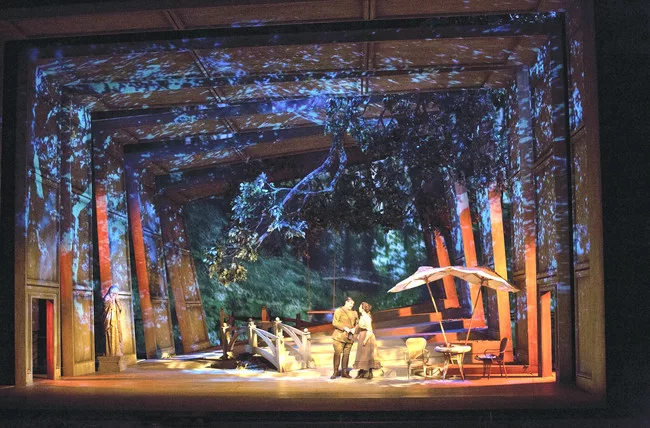
Act Two: The Linden Trees, from Massenet&#8217;s <em>Werther</em>, Metropolitan Opera. <br />
Architecture on Stage: Metropolitan Opera’s Werther
Act Two: The Linden Trees, from Massenet’s Werther, Metropolitan Opera.
Photo © Ken Howard/Metropolitan Opera
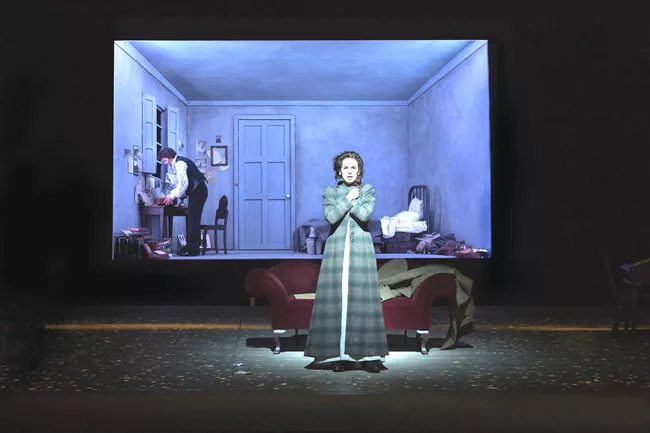
Act Four: Werther&#8217;s Room, from Massenet&#8217;s <em>Werther</em>, Metropolitan Opera.
Architecture on Stage: Metropolitan Opera’s Werther
Act Four: Werther’s Room, from Massenet’s Werther, Metropolitan Opera.
Photo © Ken Howard/Metropolitan Opera
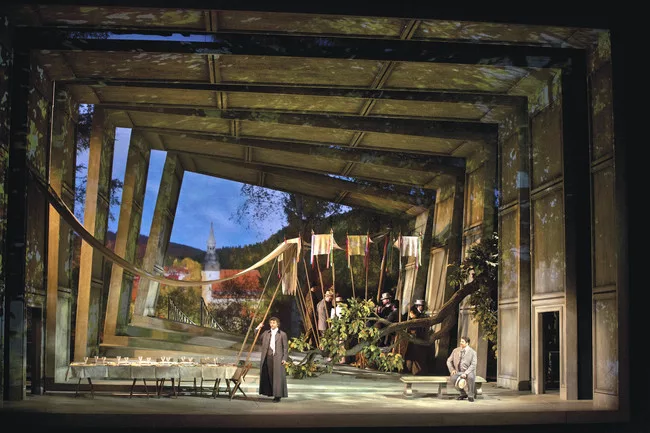
Act One: The Home of the Bailiff, from Massenet&#8217;s <em>Werther</em>, Metropolitan Opera.<br />
Architecture on Stage: Metropolitan Opera’s Werther
Act One: The Home of the Bailiff, from Massenet’s Werther, Metropolitan Opera.
Photo © Ken Howard/Metropolitan Opera
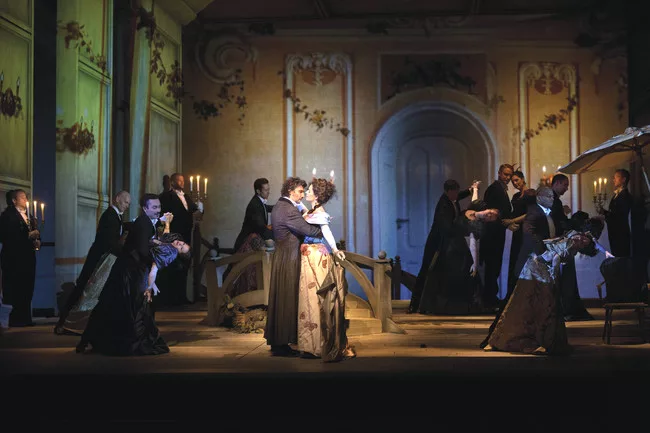
The Ballroom Scene from Massenet&#8217;s <em>Werther</em>, Metropolitan Opera.<br />
Architecture on Stage: Metropolitan Opera’s Werther
The Ballroom Scene from Massenet’s Werther, Metropolitan Opera.
Photo © Ken Howard/Metropolitan Opera
Act Two: The Linden Trees, from Massenet&#8217;s <em>Werther</em>, Metropolitan Opera. <br />
Act Four: Werther&#8217;s Room, from Massenet&#8217;s <em>Werther</em>, Metropolitan Opera.
Act One: The Home of the Bailiff, from Massenet&#8217;s <em>Werther</em>, Metropolitan Opera.<br />
The Ballroom Scene from Massenet&#8217;s <em>Werther</em>, Metropolitan Opera.<br />
March 11, 2014

Act Two: The Linden Trees, from Massenet’s Werther, Metropolitan Opera.

Most of those thronging to the Metropolitan Opera’s new production of Massenet’s Werther this winter have gone to hear tenor Jonas Kaufmann’s mellifluous singing as the protagonist and the plush sounds of mezzo-soprano Sophie Koch as Charlotte. But some operagoers might also have appreciated the choreographic performance and efficiency of the set, which mechanically slides and shifts in different directions within the shallow space of the three-dimensional stage.

In recent years the Met has frequently explored the spatial dynamic of on-stage architectural elements to heighten dramatic action, most notably (and controversially) with Robert Lepage’s production of Wagner’s Ring Cycle in 2011 with its 90,000-pound rotating machinery (RECORD, March 2011, page 35). Such creative explorations show that the intricate play of two-dimensional and three-dimensional space based on static and active elements–even if confined by the proscenium–might make an uninitiated audience more susceptible to architectonic notions developed in the outside world.

Werther, directed by Richard Eyre with sets designed by Rob Howell, exploits the mobility of the stage design with fewer (and less scary) challenges than the Ring’s gigantic contraption. In developing the overall concept for Werther, Howell had his own motive: he had to create convincing surroundings where the romantic plot could unfold within the voluminous dimensions of the Met’s stage. “I was looking for a way to provide a picture but reduce the space so that the interaction between two human beings could occur,” he says.

The basic architectural device Howell developed is a series of large, rectangular frames of painted aluminum, diminishing in perspective as they retreat upstage. The rectilinear elements tilt up stage left in the first act and angle in the other direction in the second act. All the while they are separated from each other so that leafy tree branches pop through pergola-like openings for scenes at the Bailiff’s home and in the town square of the German village where the opera takes place. During a ballroom scene between the two acts, the floor plane is leveled. The thick rectangular frames come together to form tall paneled walls of a grand interior, where images of interior décor by video designer Wendell Harrington evanescently waft over the walls.

The third and fourth acts more dramatically emphasize the dimensional possibilities of the moving rectangles. In Charlotte’s drawing room, the frames become bookshelves receding enfilade; then at the end of the scene they quickly retreat laterally to signal a sudden shift in the mood of the drama. “Werther’s world starts exploding: we wanted to convey this with bookshelves that fly up and off stage at the same time,” says Howell, adding, “The scenery underpins that emotion.” By the fourth act, you see Werther at the end of his rope in his messy study—a small bright box seeming to levitate in the darkness upstage. Then it catapults forward, floating about four feet above the floor to skim over the furniture of the previous act. Guided by tracks, the mysteriously looming mise-en-scene again heightens the drama for the gloomy ending.

Since Eyre placed the period of the opera in the late 19th century, when Massenet lived, instead of the late 18th century of Goethe’s novel on which the opera is based, The Sorrows of Young Werther, the production’s costumes and furnishings had to be moved up a hundred years. Howell was inspired by the paintings of the Danish artist Vilhelm Hammershoi (1864-1916), whose spare, linear furniture and austere, monochromatic interiors have a haunting quality. If there is one disappointment in the set design, however, it would be that the actual furnishings don’t look austere and haunting enough: swag-like canopies and garden parasols in the first two acts do seem a bit too light and gemütlich, in a Pottery Barn sort of way, to fully complement the overall architecture of the framing elements. Nevertheless, the mobility of the architectural sets and the spatial dynamic created suggest a direction that should be pursued.

Share This Story

Looking for a reprint of this article?
From high-res PDFs to custom plaques, order your copy today!

Stephens

Suzanne Stephens, a former deputy editor of Architectural Record, has been a writer, editor, and critic in the field of architecture for several decades. She has a Ph.D. in architectural history from Cornell University, and teaches a seminar in the history of architectural criticism in the architecture program of Barnard and Columbia colleges.

Post a comment to this article

Report Abusive Comment

Subscription Center
  • Create an Account
  • Start a Subscription
  • Manage My Account
  • Sign Up for Newsletters
  • Visit Customer Service
  • Update Preferences

More Videos

Sponsored Content

Sponsored Content is a special paid section where industry companies provide high quality, objective, non-commercial content around topics of interest to the Architectural Record audience. All Sponsored Content is supplied by the advertising company and any opinions expressed in this article are those of the author and not necessarily reflect the views of Architectural Record or its parent company, BNP Media. Interested in participating in our Sponsored Content section? Contact your local rep!

close
  • cold storage facility
    Sponsored byCarlisle SynTec Systems

    How Architects Can Design More Continuous Cold Storage Envelopes

  • TAMLYN XtremeTrim Exterior Trim
    Sponsored byTamlyn

    Designing Cleaner Panel Facades: Why Exterior Trim Details Matter

  • Building with Vapor Barriers
    Sponsored byReef Industries, Inc.

    Vapor Barriers Help Control Moisture in Tighter Building Designs

DESIGN:ED Podcast
Listen to Architectural Record’s DESIGN:ED Podcast

Events

June 23, 2026

Enhancing Fire Resistance with Advanced PVC Solutions

Credits: 1 AIA LU/HSW; 1 AIBD P-CE; 0.1 ICC CEU; 1 IIBEC CEH

Evaluate advanced PVC solutions that improve fire resistance, support WUI compliance, and enhance resilience in residential and commercial building design.

June 25, 2026

Designing Glass Railing Systems that Enhance Aesthetics and Meet Code

Credits: 1 AIA LU/HSW; 1 AIBD P-CE; 0.1 ICC CEU

Upon course completion, participants will possess a deeper understanding of glass railings to help ensure that safety, aesthetic, and performance objectives are achieved.

View All Submit An Event

Products

2026 Architect's Square Foot Costbook

2026 Architect's Square Foot Costbook

See More Products

Popular Stories

SanDiegoAirport

Top 300 Architecture Firms of 2026

Lorcan O' Herilhy

California Architect Lorcan O’Herlihy Has Died, Age 66

Coronado Bridge

The Architect’s Guide to San Diego

CCA, Studio Gang

The Winners of the AIA’s 2026 Architecture Award Range from Collegiate Rowing Hubs to Housing for the Homeless

Spoonbill Ranch

Johnsen Schmaling Architects Integrates Spoonbill Ranch into a Pristine Landscape

Enhancing Fire Resistance with Advanced PVC Solutions - Free Webinar - June 23, 2026

Related Articles

  • William Kentridge’s Haunting Staging of ‘Wozzeck’ at the Metropolitan Opera

    William Kentridge’s Haunting Staging of ‘Wozzeck’ at the Metropolitan Opera

    See More
  • FSC Lead-2.jpg

    Florida Southern College To Launch a School of Architecture on Its Frank Lloyd Wright–designed Campus

    See More
  • AIA Hosts "Virtual National Architecture Week" on Facebook

    See More

Related Products

See More Products
  • ribbonarch.jpg

    Ribbon Architecture: Light, Shadow, and Reflection in Architecture

  • freeing arch.jpg

    Freeing Architecture

See More Products
×

The latest news and information

#1 Source for Architectural Design, News and Products

SUBSCRIBE
  • RESOURCES
    • Advertise
    • Contact Us
    • Submit
    • Store
  • ACCOUNT CENTER
    • Create an Account
    • Start a Subscription
    • Manage My Account
    • Sign Up for Newsletters
    • Visit Customer Service
    • Update Preferences
  • PRIVACY
    • PRIVACY POLICY
    • TERMS & CONDITIONS
    • DO NOT SELL MY PERSONAL INFORMATION
    • PRIVACY REQUEST
    • ACCESSIBILITY
  • SERVICES
    • Marketing Services
    • Reprints
    • Market Research
    • List Rental
    • Survey/Respondent Access
  • STAY CONNECTED
    • Linkedin
    • Facebook
    • Instagram
    • YouTube
    • X (Twitter)

Copyright ©2026. All Rights Reserved BNP Media, Inc. and BNP Media II, LLC.

Design, CMS, Hosting & Web Development :: ePublishing