Architectural Record
search
cart
facebook twitter linkedin youtube
  • Sign In
  • Subscribe
  • Sign Out
  • My Account
Architectural Record
  • NEWS
    • Latest News
    • Awards
    • Interviews
    • Obituaries
    • Podcasts
      • Design:Ed Podcast
      • Sponsored Podcasts
  • OPINION
    • Book Reviews / Excerpts
    • Exhibition Reviews
    • Forum
  • EXCLUSIVES
    • Videos
    • Design Vanguard
    • Top 300 Firms
    • Sponsored Content
    • Sponsored eBooks
    • From the Archives
  • CONTINUING ED
    • Editorial Continuing Ed
    • CE Center
    • CE Academies
  • PROJECTS
    • Buildings By Type
    • Reuse & Renovation
    • Museums & Arts Centers
    • Colleges & Universities
    • Multifamily Housing
    • Interiors
    • Lighting
    • Kitchen & Bath
  • HOUSES
    • Record Houses
    • House of the Month
    • Featured Houses
  • PRODUCTS
    • Products by Category
    • Record Products of the Year
    • Latest Products
  • EVENTS
    • Dates & Events
    • Record on the Road
    • Innovation Conference
    • Sustainability in Practice
    • Women In Architecture
    • Webinars
    • Ad Excellence Awards
    • Submit an Event
  • CONNECT
    • Ask RECORD AI
    • Newsletters
    • Contact
    • Advertise
    • Editorial Calendar
    • Store
    • Customer Service
  • SUBMIT
    • Submission Guidelines
    • RECORD Competitions
  • MAGAZINE
    • Subscribe
    • My Account
    • Digital Edition
    • Current Issue
    • Firm Pass
    • Historic Archive
Architecture News

Digging for The Past and Future
By Esther Hecht
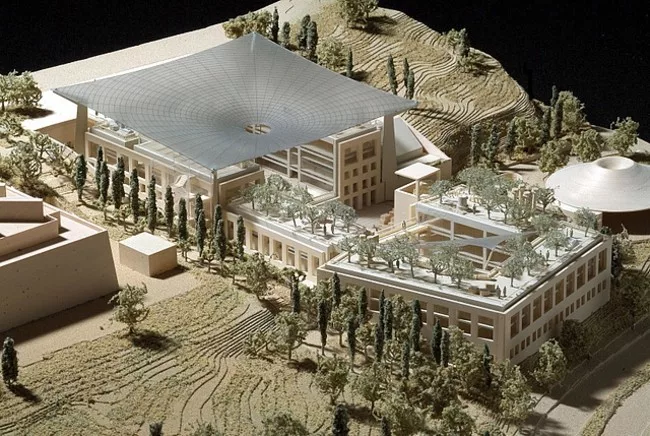
The most striking feature of the National Campus for Archaeology is a giant, concave canopy,  held in place by cables and made of woven  fiberglass-and-polymer fabric.<br /><div id='_mcePaste'>&#65279
Digging for The Past and Future
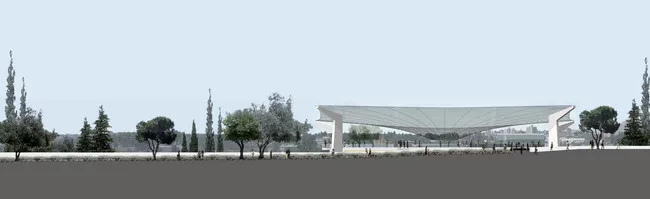
The most striking feature of the National Campus for Archaeology is a giant, concave canopy, held in place by cables and made of woven fiberglass-and-polymer fabric.

Image courtesy Safdie Architects/Courtesy the Israel Antiquities Authority
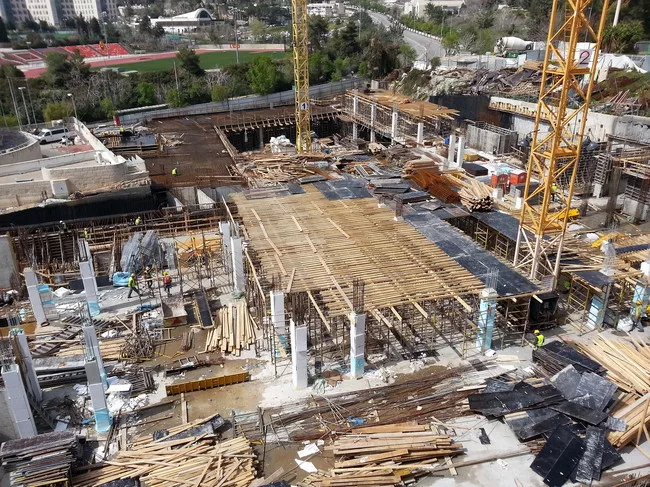
The campus under construction in March 2014.
Digging for The Past and Future
The campus under construction in March 2014.
Photo courtesy Safdie Architects/Courtesy the Israel Antiquities Authority
Digging for The Past and Future
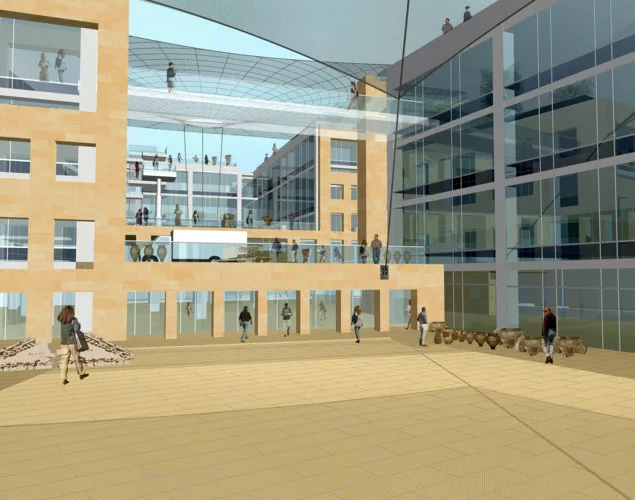
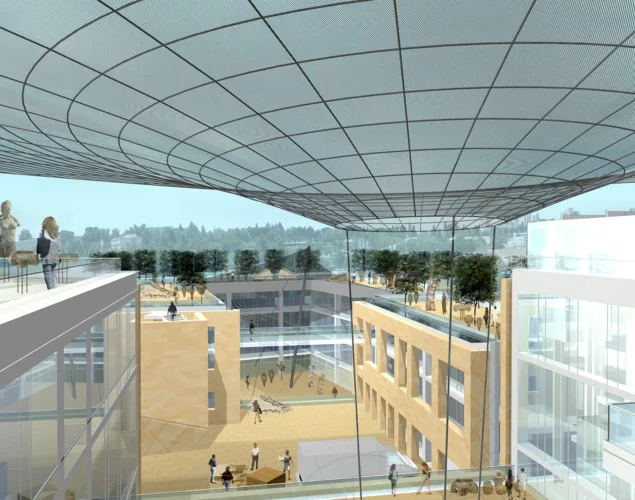
Image courtesy Safdie Architects/Courtesy the Israel Antiquities Authority
Digging for The Past and Future
Image courtesy Safdie Architects/Courtesy the Israel Antiquities Authority
Digging for The Past and Future
Image courtesy Safdie Architects/Courtesy the Israel Antiquities Authority
Digging for The Past and Future
Image courtesy Safdie Architects/Courtesy the Israel Antiquities Authority
The most striking feature of the National Campus for Archaeology is a giant, concave canopy,  held in place by cables and made of woven  fiberglass-and-polymer fabric.<br /><div id='_mcePaste'>&#65279
The campus under construction in March 2014.
Digging for The Past and Future
June 9, 2014

The most striking feature of the National Campus for Archaeology is a giant, concave canopy, held in place by cables and made of woven fiberglass-and-polymer fabric.


In Jerusalem, the capital of a modern country enthralled by its past, a unique national archaeology campus is being built. The project—commissioned by the Israel Antiquities Authority (IAA) and officially named The Jay and Jeanie Schottenstein National Campus for the Archaeology of Israel—combines three major components: storage of the national archaeological treasures (some two million items); restoration labs for objects made of various materials, including the Dead Sea Scrolls, mosaics, and glass, textile, and clay finds; and a national archaeology library and archive.

Even more unusual, said architect Moshe Safdie in a phone interview from his Boston office, “was the decision to enable the public to move through it…to experience what is going on operationally without disturbing the work.” This decision reflects what Safdie called Israelis’ “passion and interest in the people and the history of the country.” The main vehicle for that passion is archaeology, “which constantly unveils new information,” he said. His firm won the competition to design the campus in 2002, beating out Israeli architects Ada Karmi-Melamede, Dina Amar, and Nachum Meltzer.

Besides planned excavations throughout the country, many construction projects, particularly in Jerusalem, uncover archaeological finds. Safdie himself has experienced this in the past; he has worked “with all the big names who dug in the Old City [and] excavated sites that I was building on.” He has also changed the design of some of his Jerusalem projects to incorporate such finds.

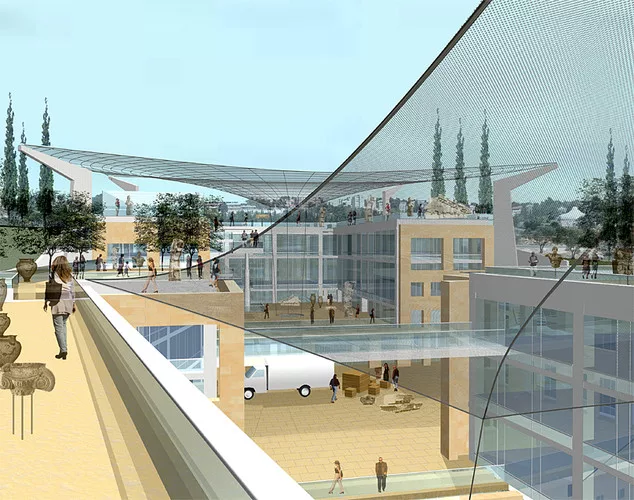
The guiding principle in the design of the new complex, which Safdie proposed during the competition phase, was that the project be a metaphor for an archaeological excavation. The floors will be numbered from the top down, like the numbering of strata in an excavation. And some mosaic preservation work will take place in the courtyards, which will be shaded by a canopy much like the tent-like canopies used in actual digs. The most striking design feature is this giant, square, concave canopy, held in place by cables and made of a brown, woven fiberglass-and-polymer fabric that allows 40 percent light transmission while keeping rain out. “Because of the shape, [water] drains toward the center, forming a kind of fountain into a pool,” Safdie said. The canopy also makes it possible to use clear glass in the windows around the courtyards. The perimeter walls are stone, in keeping with a municipal ordinance and also chosen because the architect believes Jerusalem buildings should be made of the local material.

The program includes exhibition galleries, an auditorium, offices, and a restaurant, and many of the labs are double height with catwalks so people can look down at the work. “The same is true of the storage vault, [which has] a bridge floated in the center,” Safdie said. The Mandel National Library and Mandel National Archaeological Archives, housed at the new campus, are the largest of their kind in the Middle East and will serve as a research center open to the public.

According to Shuka Dorfman, the director-general of the IAA, “The campus is the largest and most important project to be established in Jerusalem this decade.” Construction of the 350,000-square-foot project, which was funded mainly by private donations, began in 2012 and is to conclude in April 2016. (Irit Kohavi Architects is the project manager.)

The steep slope of the site was a major constraint. “If you look at it from the direction of the entrance…there is no site, because we didn’t build above street level,” Safdie said. The entrance is on the roof, and the building is “a series of stepping, sunken courtyards.”
The National Campus is sited near two major museums, the Israel Museum and the Bible Lands Museum, both of which have been expanded and upgraded in recent years. The Israel Museum displays some of the Dead Sea Scrolls and has a major archaeology department. The Bible Lands Museum comprises archaeological finds from the region. The new campus might be seen as competing with these two major sites, and the issue arose in the planning stage. “[But] they’re completely complementary,” Safdie said. The new campus “is not a museum,” although there will be displays of finds from recent excavations before they are shown permanently elsewhere. Most important, it will give people a chance to see the process of archaeology and have “a glimpse of the accumulation by allowing [them] into the vaults and to see 1,000 mosaics, 10,000 pots,” Safdie said. “It will have more meaning, that you can [come here] and then see … displays in the other museums.”

Share This Story

Looking for a reprint of this article?
From high-res PDFs to custom plaques, order your copy today!

Post a comment to this article

Report Abusive Comment

Subscription Center
  • Create an Account
  • Start a Subscription
  • Manage My Account
  • Sign Up for Newsletters
  • Visit Customer Service
  • Update Preferences

More Videos

Sponsored Content

Sponsored Content is a special paid section where industry companies provide high quality, objective, non-commercial content around topics of interest to the Architectural Record audience. All Sponsored Content is supplied by the advertising company and any opinions expressed in this article are those of the author and not necessarily reflect the views of Architectural Record or its parent company, BNP Media. Interested in participating in our Sponsored Content section? Contact your local rep!

close
  • TAMLYN XtremeTrim Exterior Trim
    Sponsored byTamlyn

    Designing Cleaner Panel Facades: Why Exterior Trim Details Matter

  • Building with Vapor Barriers
    Sponsored byReef Industries, Inc.

    Vapor Barriers Help Control Moisture in Tighter Building Designs

  • Duct Interior with Prodeq System
    Sponsored byHenry, a Carlisle Company

    Designing Resilient Water Containment Systems

DESIGN:ED Podcast
Listen to Architectural Record’s DESIGN:ED Podcast

Events

June 10, 2026

Rethinking Stormwater – The Power of Porous Paving

Credits: 1 AIA LU/HSW; 1 AIBD P-CE; 0.1 ICC CEU

Learn how porous paving systems support stormwater management, reduce heat island effects, and enhance sustainable site design performance.

June 11, 2026

Very Early Warning Fire Detection for Mission-Critical Facilities

Credits: 1 AIA LU/HSW; 1 AIBD P-CE; 0.1 ICC CEU

Examine advanced fire detection strategies that support uptime and enhance safety in data centers and other mission-critical facilities.

View All Submit An Event

Products

2026 Architect's Square Foot Costbook

2026 Architect's Square Foot Costbook

See More Products

Popular Stories

Coronado Bridge

The Architect’s Guide to San Diego

Practice Matters illustration

What’s in a (Firm’s) Name? Thinking About Succession and Legacy

Practice Matters illustration

By the Numbers: Counting America's Architects

Inward House

Inward House by VeeV Design Studio

Riverdale House by Studio Lau

Riverdale House by Studio Lau

Broader Sustainability of CMU - Free Webinar - May 21, 2026

Related Articles

  • The Past and Future City

    The Past and Future City: How Historic Preservation is Reviving America’s Communities

    See More
  • rabble rousers film still

    ‘Rabble Rousers’ Champions Community Activist Frances Goldin and Grapples with the Past, Present, and Future of Urban Development

    See More
  • Aviva Studios

    OMA's Cultural Center in Manchester Accommodates the City's Industrial Past and Burgeoning Future

    See More

Related Products

See More Products
  • 3dthinking.jpg

    3D Thinking in Design and Architecture: From Antiquity to the Future

  • 1118522532.gif

    Future Details of Architecture

See More Products
×

The latest news and information

#1 Source for Architectural Design, News and Products

SUBSCRIBE
  • RESOURCES
    • Advertise
    • Contact Us
    • Submit
    • Store
  • ACCOUNT CENTER
    • Create an Account
    • Start a Subscription
    • Manage My Account
    • Sign Up for Newsletters
    • Visit Customer Service
    • Update Preferences
  • PRIVACY
    • PRIVACY POLICY
    • TERMS & CONDITIONS
    • DO NOT SELL MY PERSONAL INFORMATION
    • PRIVACY REQUEST
    • ACCESSIBILITY
  • SERVICES
    • Marketing Services
    • Reprints
    • Market Research
    • List Rental
    • Survey/Respondent Access
  • STAY CONNECTED
    • Linkedin
    • Facebook
    • Instagram
    • YouTube
    • X (Twitter)

Copyright ©2026. All Rights Reserved BNP Media, Inc. and BNP Media II, LLC.

Design, CMS, Hosting & Web Development :: ePublishing