Architectural Record
search
cart
facebook twitter linkedin youtube
  • Sign In
  • Subscribe
  • Sign Out
  • My Account
Architectural Record
  • NEWS
    • Latest News
    • Awards
    • Interviews
    • Obituaries
    • Podcasts
      • Design:Ed Podcast
      • Sponsored Podcasts
  • OPINION
    • Book Reviews / Excerpts
    • Exhibition Reviews
    • Forum
  • EXCLUSIVES
    • Videos
    • Design Vanguard
    • Top 300 Firms
    • Sponsored Content
    • Sponsored eBooks
    • From the Archives
  • CONTINUING ED
    • Editorial Continuing Ed
    • CE Center
    • CE Academies
  • PROJECTS
    • Buildings By Type
    • Reuse & Renovation
    • Museums & Arts Centers
    • Colleges & Universities
    • Multifamily Housing
    • Interiors
    • Lighting
    • Kitchen & Bath
  • HOUSES
    • Record Houses
    • House of the Month
    • Featured Houses
  • PRODUCTS
    • Products by Category
    • Record Products of the Year
    • Latest Products
  • EVENTS
    • Dates & Events
    • Record on the Road
    • Innovation Conference
    • Sustainability in Practice
    • Women In Architecture
    • Webinars
    • Ad Excellence Awards
    • Submit an Event
  • CONNECT
    • Ask RECORD AI
    • Newsletters
    • Contact
    • Advertise
    • Editorial Calendar
    • Store
    • Customer Service
  • SUBMIT
    • Submission Guidelines
    • RECORD Competitions
  • MAGAZINE
    • Subscribe
    • My Account
    • Digital Edition
    • Current Issue
    • Firm Pass
    • Historic Archive
Architecture News

Landscape Architects Play Central Role in Green Design
By Nadine M. Post
Landscape Architects Play Central Role in Green Design

Landscape Architects Play Central Role in Green Design

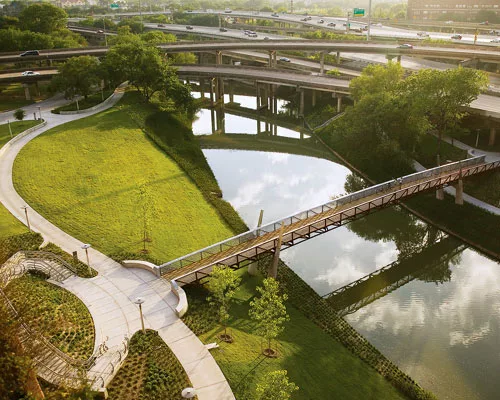
Houston’s buffalo bayou transformation turns derelict channel into urban paradise.

Photo: SWA Group
Landscape Architects Play Central Role in Green Design

Landscape Architects Play Central Role in Green Design

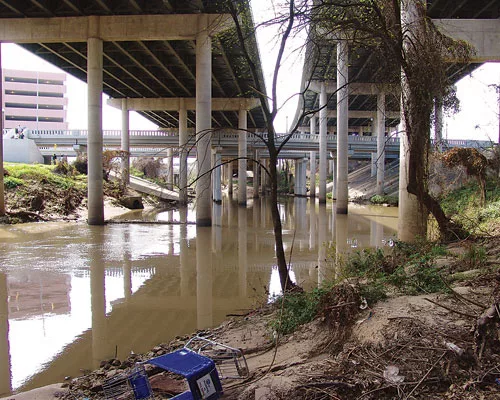
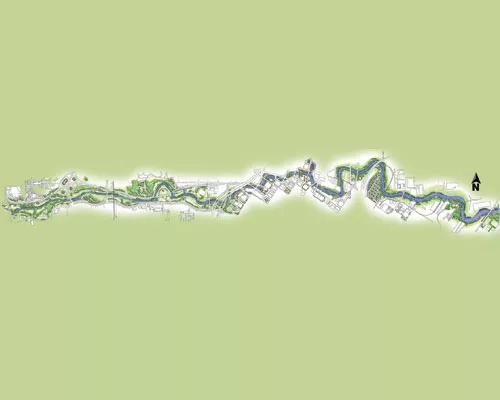
The city’s Buffalo Bayou project involves re-engineering banks, stabilizing soil, anchoring rock and more. The park is designed to withstand natural periodic flooding.

Photo: SWA Group
Landscape Architects Play Central Role in Green Design

Landscape Architects Play Central Role in Green Design

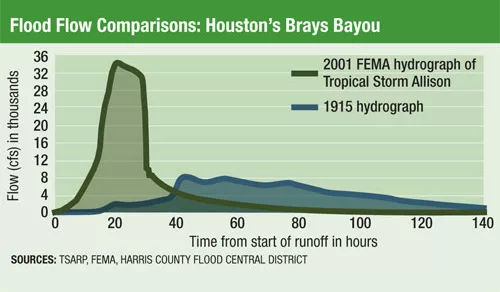
Development is blamed for urban flooding problems. The situation is exemplified by storm water flow rates in Houston in 1915 and 2001.
Landscape Architects Play Central Role in Green Design

Landscape Architects Play Central Role in Green Design

Landscape Architects Play Central Role in Green Design

Landscape Architects Play Central Role in Green Design

Image: Mithun
Landscape Architects Play Central Role in Green Design

Landscape Architects Play Central Role in Green Design

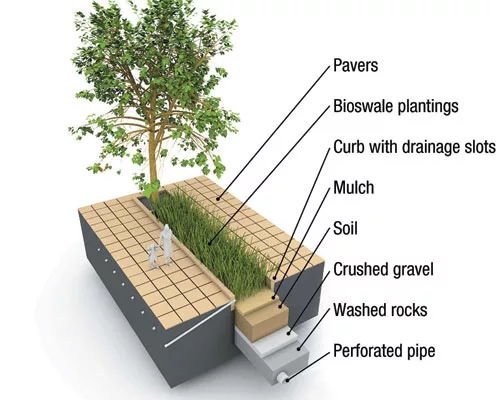
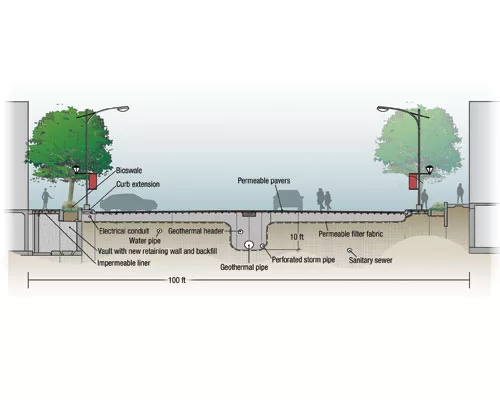
Urban green-street retrofits offer challenges because of limited space for storm water planters, known as bioswales, and due to the need to minimize conflicts with other streetscape elements, such as parking, trees, lighting and signage. But design challenges can often be worked out more easily than others. It took six months to get approval for the first short stretch of green street in Portland, Ore., a city that pioneered the concept. The lengthy duration is attributable simply to doing something new. It takes time for all parties to reach consensus, say designers.
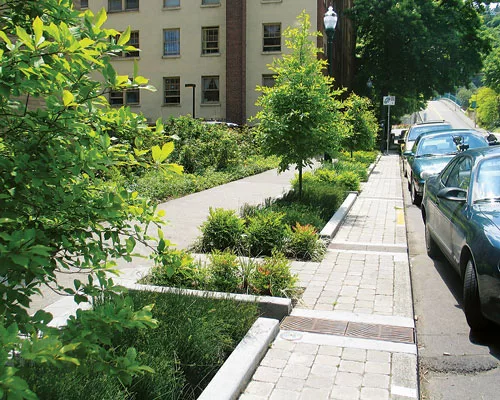
Image: Conservation Design Forum

Landscape Architects Play Central Role in Green Design

Landscape Architects Play Central Role in Green Design

Urban green-street retrofits offer challenges because of limited space for stormwater planters, known as bioswales, and due to the need to minimize conflicts with other streetscape elements, such as parking, trees, lighting and signage. But design challenges can often be worked out more easily than others. It took six months to get approval for the first short stretch of green street in Portland, Ore., a city that pioneered the concept. The lengthy duration is attributable simply to doing something new. It takes time for all parties to reach consensus, say designers.
Landscape Architects Play Central Role in Green Design

Landscape Architects Play Central Role in Green Design

Urban green-street retrofits offer challenges because of limited space for stormwater planters, known as bioswales, and due to the need to minimize conflicts with other streetscape elements, such as parking, trees, lighting and signage. But design challenges can often be worked out more easily than others. It took six months to get approval for the first short stretch of green street in Portland, Ore., a city that pioneered the concept. The lengthy duration is attributable simply to doing something new. It takes time for all parties to reach consensus, say designers.

Landscape Architects Play Central Role in Green Design

Landscape Architects Play Central Role in Green Design

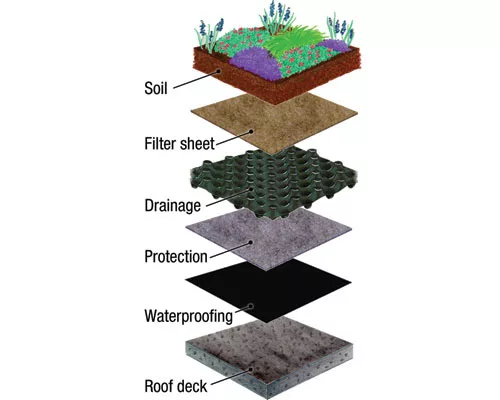
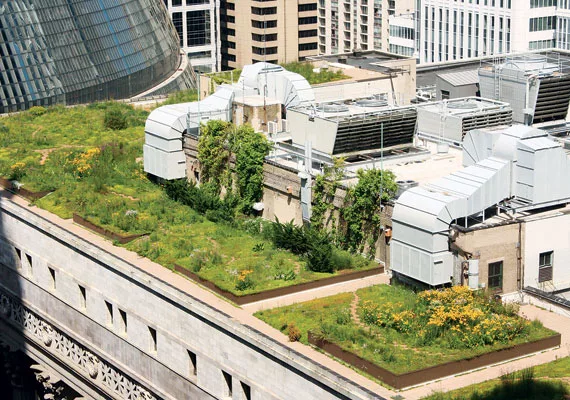
Green roofs provide their buildings with thermal protection and absorb stormwater. They can also be used for urban farming. The thickness of the growing medium varies, depending on use factors. Some roofs double as mini-parks. Others are off limits to building occupants. Research is starting to document the benefits of green roofs, which also mitigate the urban heat-island effect.

Image: Conservation Design Forum
Landscape Architects Play Central Role in Green Design

Landscape Architects Play Central Role in Green Design

Green roofs provide their buildings with thermal protection and absorb storm water. They can also be used for urban farming. The thickness of the growing medium varies, depending on use factors. Some roofs double as mini-parks. Others are off limits to building occupants. Research is starting to document the benefits of green roofs, which also mitigate the urban heat-island effect.

Photo: SWA Group
Landscape Architects Play Central Role in Green Design

Landscape Architects Play Central Role in Green Design

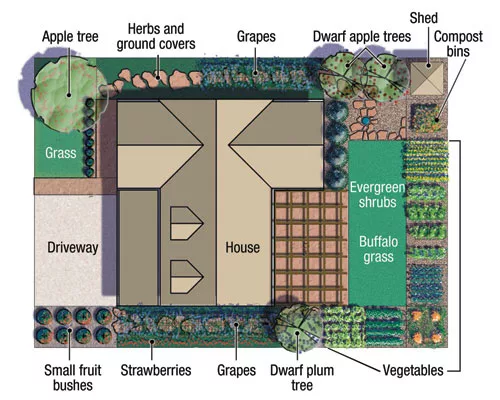
Developers are having a difficult time getting approvals for suburban farm developments, which present a new paradigm for local food production. Several farming communities are on the drawing boards, but none have been built.

Image TSR Group
Landscape Architects Play Central Role in Green Design

Landscape Architects Play Central Role in Green Design

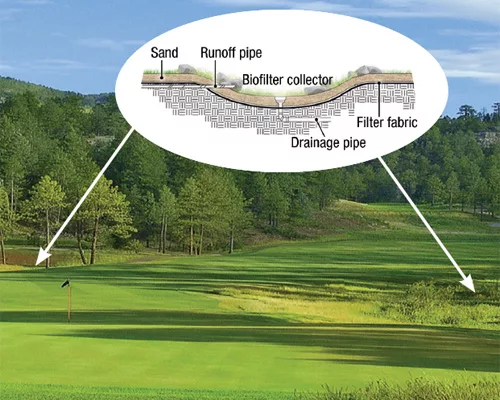
The Glacier Club in Durango, Colo., contains sustainable landscaping, including 60 bio filtration basins and swales. The course is plated with 8 in. of coarse drainage sand, which is also a good growing medium for turf homes.

Image: Design Workshop Inc./D.A. Horchner

Landscape Architects Play Central Role in Green Design
August 6, 2009
Need to stop flooding or reduce stormwater runoff and sewer overflows? Looking to ease demand on treatment plants and avoid the cost of expansion? Seeking cleaner air or water? Interested in recharging an aquifer, rebuilding a shoreline or remediating a brownfield? Trying to stem highway pollution? Need to rebalance a watershed or ecosystem?
 
Houston’s buffalo bayou transformation turns derelict channel into urban paradise(top). The city’s Buffalo Bayou project involves re-engineering banks, stabilizing soil, anchoring rock and more. The park is designed to withstand natural periodic flooding (above).
 
If so, a landscape architect may be in your future. The design professional—until recently derided as little more than a glorified gardener—is on a campaign to reclaim a seat at the environmental cleanup table. Some are even bent on sitting at the head, leading the engineers.
 
The movement is variously called performance-based, ecological, sustainable or green landscape architecture. Some use the terms “landscape infrastructure” or “landscape urbanism”. A rose by any name would smell as sweet, not only to landscape architects, long suffering from low self-esteem, but to localities seeking economical, less invasive and more beautiful ways to deal with the poisons of development.
 
This form of landscape architecture harks back to the profession’s roots. In a decade, it has gone from “obscurity to mainstream,” says David Yocca, a principal in the Elmhurst, Ill., office of Conservation Design Forum, a planner, landscape designer and engineer.
 
This dramatic change signals a comeback for a group that had lost its way in the 1980s and 1990s. During that time, within the profession, there was a “backlash against environmentalism and a view that the environmental movement had shorted esthetic concerns,” says Fritz Steiner, dean of the School of Architecture at the University of Texas, Austin. On the contrary, “environmentalism and esthetics are complementary,” he says.
 
Even geotechnical engineers, who often work with landscape architects, see the discipline’s renaissance. “We were absolutely not doing [ecological landscape architecture] 10 years ago,” says Christopher A. Robertson, a vice president at Shannon & Wilson Inc., a Seattle-based geotechnical and environmental consultant. “It is where stormwater management is headed,” he adds.
 
Landscape architecture, a discipline that combines nature, culture and technology, in no measure eliminates the engineer from the equation. “We have to move forward holistically,” integrating design and engineering, says Bert Gregory, CEO of Mithun, a Seattle-based architect, landscape architect and planner.
 
The landscape profession is growing, numbering about 30,000, including 15,000 who are licensed. Employment of landscape architects through 2014 is expected to increase 18% to 26%, faster than the average of all U.S. occupations, according to the Bureau of Labor Statistics. By contrast, BLS estimates, demand through 2012 for architects, planners, interior designers and environmental scientists will grow an average of 9% to 15%. Demand for civil engineers is expected to grow at a slower-than-average rate of 0% to 8%. Membership in the American Society of Landscape Architects (ASLA) grew from 16,586 in 2005 to 17,236 in 2008. And this year, U.S. News & World Report named landscape architecture as one of its 30 best careers.
 
From green roofs and green streets to waterfronts and watersheds, from exurbs to “urbs,” landscape architects are helping turn eyesores into eyefuls. They are using a combination of natural and engineered systems, including soil biofiltration and carbon sequestering, that manage and clean water and air. Permeable pavements and bioswales—depressed planters that soak up and filter stormwater runoff polluted with oils and metals—are starting to pop up in parking lots and along streets from Portland, Ore., to Philadelphia. Green roofs that absorb stormwater, insulate buildings and reduce the urban heat-island effect, are proliferating across the nation. In Houston, a derelict stormwater channel is becoming a public park. Durango, Colo., has a sustainable golf course.
 
Local food production through urban and suburban farming is on the horizon, much under the stewardship of landscape architects. TSR Group, which has been plowing through zoning obstacles to manage development of 3,000 acres of planned farm towns, even trademarked a word for sustainable suburban farming: Agriburbia.
 
“We believe we will make the suburbs useful in their own right, not just for commuting,” says Quint Redmond, CEO of Golden, Colo.-based TSR
 
Landscape architects are not the only ones tooting their horns. “We recognize we cannot make our sewer and water pipes big enough” to handle loads, says Howard Neukrug, director of Philadelphia’s office of watersheds. “For water issues, it is critical to have the landscape architect involved early in the process. How you site a building—even your first imagination— will help determine how sustainable a building will be,” says Neukrug.

Taking Cover

Philadelphia, which defines green infrastructure as anything that captures the first inch of rainwater, has new street-greening standards. The goal is to remove 50% of impervious cover in 20 years. The inspiration for the program came in 2000 from a landscape architecture professor, Anne Spirn, now at MIT, who was at the University of Pennsylvania in West Philadelphia. Spirn had ideas for the area’s renewal. “We put her in a van with civil engineers, went to a site, and she gave us a vision,” says Neukrug.

Planners also support the landscape architects’ comeback. They bring “very valuable skills to the team,” says Joe MacDonald, a senior associate with the American Planning Association.

Even engineers are warming to the idea of the landscape architect. Neukrug says it is “fun” to watch the marriage of the professions. “They are both so creative in different ways,” he says, adding that it may be a forced marriage at first, but resentment decreases as parties work together. Engineers have “secretly” always wanted to handle things differently, says Neukrug, an engineer.

Landscape architects are getting assertive. A decade ago, “we would accept the engineer’s solution,” says Jeff Zimmermann, a principal in the Denver office of Design Workshop Inc., which designed the sustainable Glacier Club golf course, in Durango, Colo. “Today, we are more critical, knowing there are ways to step more lightly on the land,” he adds.

Kevin Shanley, CEO of landscape architect-planner SWA Group, wants the landscape architect to lead the team, not just be on it. Low-impact development involves living things that landscape architects, not engineers, are trained to consider, says Shanley, in SWA’s Houston office. Landscape architects need to get involved politically to push landscape infrastructure, he says.

One example is Houston’s Buffalo Bayou project, a public-private partnership downtown, planned and designed by SWA. The shores of the derelict stormwater channel are becoming 850 acres of public green space and trails. Fund-raising and initial planning for the second phase is starting. The first 3,000 lineal ft, called Sabine-to-Bagby, was completed in 2002 for $15 million. During last year’s flooding caused by Hurricane Ike, the area performed better than expected, says SWA. There was minimal damage, and the park was back in service in a couple of days. Properly built, storm channels can be parks most of the year, says SWA.

The firm also is involved with reforesting highway corridors to sequester carbon, improve runoff, build habitat and look good. “Infrastructure needs to provide multiple benefits,” says Shanley.

Depending on the project’s details, a sustainable landscape can cost anywhere from $25 to $50 per sq ft on ground to $200 per sq ft on structure. Landscape architects charge from $70 to $120 per hour, or 5% to 15% of the project’s cost.

How did society get into this fix of fractured infrastructure? Sources say the big culprits are development and very strict interpretation of Euclidian zoning, which rigidly segregates land uses. “We have been isolating land uses in favor of an auto-centric development model in the U.S. for almost 80 years,” says Curt Johansen, executive vice president of developer Triad Communities, Vallejo, Calif. “That must end immediately,” he says.

It has taken five years for Triad to get zoning approvals for its 350-unit Angwin Ecovillage, a sustainable farming community in Napa County, Calif., currently under environmental review.

Also over the past 50 years, high-impact building and roadway development have reduced the amount of permeable surface to accept stormwater, increasing flooding and pollution. Stream flow speeds in Houston, for example, have increased from under 5,000 cu ft per second in 1930 to about 27,500 cfs in 2000, says the U.S. Geological Survey. With stream-flow increases come a greater potential for flooding. The actual stream flow from 2001’s Tropical Storm Allison in Houston’s Brays Bayou peaked sharply at about 34,000 cfs, 20 hours from the start of runoff. This compares to a more gradual stream flow in 1915, before development (see graph, p. 87). Allison, which caused $5 billion of damage in Houston, would have been a nonevent even 50 years ago because the natural landscape would have absorbed the water, say sources.

Planting Seeds

Seeds for the landscape infrastructure movement were planted during the environmental movement of the late 1960s. The 1972 Clean Water Act mandated control of point-source water pollution. Stormwater is part of that equation because of combined sewer overflow (CSO) systems in many cities. Years into CWA, it became clear nonpoint-source pollution—stormwater runoff in general—had to be addressed to meet clean-water goals. In the 1990s, cities, under threat of fines as a result of regulations to limit stormwater runoff, started seeking economical ways to handle it.

Another impetus for sustainable landscape has come from the U.S. Green Building Council’s green building-rating system, called Leadership in Energy and Environmental Design (LEED). Introduced in 2000, the tool soon focused attention on sustainability, including site issues. “If it were not for LEED, this would not have happened as fast,” says ASLA CEO Nancy Somerville.

But LEED was too building-centric for landscape architects. So ASLA decided to develop its own rating system, called the Sustainable Sites Initiative (ENR 11/17/08 p. 16). SSI is an interdisciplinary effort of ASLA, the Lady Bird Johnson Wildflower Center and the United States Botanic Garden, with support from USGBC and others. The goal is to create voluntary national guidelines and performance benchmarks for sustainable land design, construction and maintenance practices. Guidelines are expected later this year. The SSI rating system is due out in 2011 and a reference guide in 2012. SSI is designed to be used by itself but will be incorporated into LEED. Information is available at www.sustainablesites.org/.

Zoning is not the only obstacle to sustainable landscape. Initially, there was no proof the systems work. There was concern about maintenance and general resistance to change. “Just trying something new has its obstacles,” says Kevin Perry, a stormwater specialist with Nevue Ngan Associates, Portland, Ore. Perry designed the first green street in 2003 for Portland, a pioneer in this area.

Consequently, most projects have redundancies. Thomas R. Tavella, president of the Hamden, Conn.-based landscape architect that bears his name, does not mind if there is still a catch basin in the corner. “It is OK to have redundancy. It is part of the education process,” he says.

Recent research, such as field work at the University of New Hampshire Stormwater Center, demonstrates green streets and roofs manage and clean stormwater. Consequently, municipalities are becoming strong proponents, say sources.

More significantly, green landscape architecture is causing a fundamental shift in how design occurs. Karen Janosky, a Mithun associate principal, sums it up: “It is an amazing era and an incredible time to go into landscape architecture.”


Share This Story

Looking for a reprint of this article?
From high-res PDFs to custom plaques, order your copy today!


Read more from Nadine Post in Architectural Record's sister publication Engineering News-Record.

Post a comment to this article

Report Abusive Comment

Subscription Center
  • Create an Account
  • Start a Subscription
  • Manage My Account
  • Sign Up for Newsletters
  • Visit Customer Service
  • Update Preferences

More Videos

Sponsored Content

Sponsored Content is a special paid section where industry companies provide high quality, objective, non-commercial content around topics of interest to the Architectural Record audience. All Sponsored Content is supplied by the advertising company and any opinions expressed in this article are those of the author and not necessarily reflect the views of Architectural Record or its parent company, BNP Media. Interested in participating in our Sponsored Content section? Contact your local rep!

close
  • TAMLYN XtremeTrim Exterior Trim
    Sponsored byTamlyn

    Designing Cleaner Panel Facades: Why Exterior Trim Details Matter

  • Building with Vapor Barriers
    Sponsored byReef Industries, Inc.

    Vapor Barriers Help Control Moisture in Tighter Building Designs

  • Duct Interior with Prodeq System
    Sponsored byHenry, a Carlisle Company

    Designing Resilient Water Containment Systems

DESIGN:ED Podcast
Listen to Architectural Record’s DESIGN:ED Podcast

Events

June 16, 2026

Focus on the Façade: Exploring Steel, Timber & Fire-Rated Curtain Walls and Channel Glass Systems

Credits: 1 AIA LU/HSW; 1 AIBD P-CE; 0.1 ICC CEU

Explore modern façade and glazing systems that enhance daylighting, fire safety, and thermal performance while expanding architectural design possibilities.

June 18, 2026

Rebooting the Aging Office Building

Credits: 1 AIA LU/HSW; 1 AIBD P-CE; 0.1 ICC CEU; 1 PDH

Explore façade retrofit strategies and award-winning design concepts that can transform aging office buildings into healthier, higher-performing workplaces for today’s hybrid workforce.

View All Submit An Event

Products

2026 Architect's Square Foot Costbook

2026 Architect's Square Foot Costbook

See More Products

Popular Stories

SanDiegoAirport

Top 300 Architecture Firms of 2026

Coronado Bridge

The Architect’s Guide to San Diego

House A on a Hill

Design Vanguard 2026: Santiago Valdivieso

Dusk House

Design Vanguard 2026: ONO

Crystal Bridges Museum of American Art expansion

Safdie Architects Returns to the Crystal Bridges Museum of American Art for Major Expansion

Focus on the Facade - Free Webinar - June 16, 2026

Related Articles

  • Green Design-Build Model Crafted for Buildings To Achieve Net-Zero Energy Use

    See More
  • Green Design-Build Model Crafted for Buildings To Achieve Net-Zero Energy Use

    See More
  • Green Design Needs a New Narrative, Says USGBC Report

    Green Design Needs a New Narrative, Says USGBC Report

    See More

Related Products

See More Products
  • 0470130628.gif

    Sustainable Design: The Science of Sustainability and Green Engineering

  • 0470126736.gif

    Modern Sustainable Residential Design: A Guide for Design Professionals

  • drawingfrommodel.jpg

    Drawing from the Model: Fundamentals of Digital Drawing, 3D Modeling, and Visual Programming in Architectural Design

See More Products
×

The latest news and information

#1 Source for Architectural Design, News and Products

SUBSCRIBE
  • RESOURCES
    • Advertise
    • Contact Us
    • Submit
    • Store
  • ACCOUNT CENTER
    • Create an Account
    • Start a Subscription
    • Manage My Account
    • Sign Up for Newsletters
    • Visit Customer Service
    • Update Preferences
  • PRIVACY
    • PRIVACY POLICY
    • TERMS & CONDITIONS
    • DO NOT SELL MY PERSONAL INFORMATION
    • PRIVACY REQUEST
    • ACCESSIBILITY
  • SERVICES
    • Marketing Services
    • Reprints
    • Market Research
    • List Rental
    • Survey/Respondent Access
  • STAY CONNECTED
    • Linkedin
    • Facebook
    • Instagram
    • YouTube
    • X (Twitter)

Copyright ©2026. All Rights Reserved BNP Media, Inc. and BNP Media II, LLC.

Design, CMS, Hosting & Web Development :: ePublishing