Architectural Record
search
cart
facebook twitter linkedin youtube
  • Sign In
  • Subscribe
  • Sign Out
  • My Account
Architectural Record
  • NEWS
    • Latest News
    • Awards
    • Interviews
    • Obituaries
    • Podcasts
      • Design:Ed Podcast
      • Sponsored Podcasts
  • OPINION
    • Book Reviews / Excerpts
    • Exhibition Reviews
    • Forum
  • EXCLUSIVES
    • Videos
    • Design Vanguard
    • Top 300 Firms
    • Sponsored Content
    • Sponsored eBooks
    • From the Archives
  • CONTINUING ED
    • Editorial Continuing Ed
    • CE Center
    • CE Academies
  • PROJECTS
    • Buildings By Type
    • Reuse & Renovation
    • Museums & Arts Centers
    • Colleges & Universities
    • Multifamily Housing
    • Interiors
    • Lighting
    • Kitchen & Bath
  • HOUSES
    • Record Houses
    • House of the Month
    • Featured Houses
  • PRODUCTS
    • Products by Category
    • Record Products of the Year
    • Latest Products
  • EVENTS
    • Dates & Events
    • Record on the Road
    • Innovation Conference
    • Sustainability in Practice
    • Women In Architecture
    • Webinars
    • Ad Excellence Awards
    • Submit an Event
  • CONNECT
    • Ask RECORD AI
    • Newsletters
    • Contact
    • Advertise
    • Editorial Calendar
    • Store
    • Customer Service
  • SUBMIT
    • Submission Guidelines
    • RECORD Competitions
  • MAGAZINE
    • Subscribe
    • My Account
    • Digital Edition
    • Current Issue
    • Firm Pass
    • Historic Archive
Architecture News

Reviving a Modest Masterpiece
By Aleksandr Bierig
Reviving a Modest Masterpiece
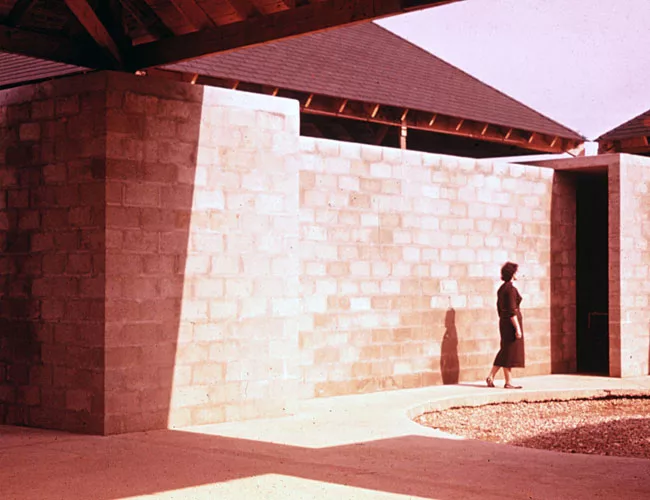
Louis I. Kahn Trenton Bath House
Louis Kahn, restoration by Farewell Mills Gatsch
Ewing, New Jersey
Image courtesy Louis I. Kahn Collection, University of Pennsylvania
Reviving a Modest Masterpiece
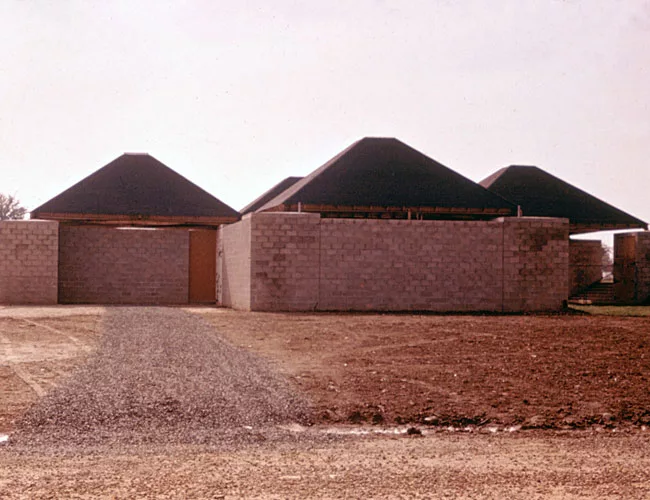
Louis I. Kahn Trenton Bath House
Louis Kahn, restoration by Farewell Mills Gatsch
Ewing, New Jersey
Image courtesy Louis I. Kahn Collection, University of Pennsylvania
Reviving a Modest Masterpiece
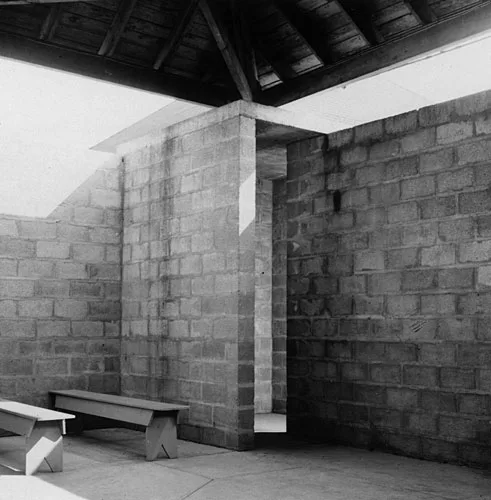
Louis I. Kahn Trenton Bath House
Louis Kahn, restoration by Farewell Mills Gatsch
Ewing, New Jersey
Image courtesy Louis I. Kahn Collection, University of Pennsylvania
Reviving a Modest Masterpiece
Louis I. Kahn Trenton Bath House
Louis Kahn, restoration by Farewell Mills Gatsch
Ewing, New Jersey
Image courtesy Louis I. Kahn Collection, University of Pennsylvania
Reviving a Modest Masterpiece
Louis I. Kahn Trenton Bath House
Louis Kahn, restoration by Farewell Mills Gatsch
Ewing, New Jersey
Image courtesy Louis I. Kahn Collection, University of Pennsylvania
Reviving a Modest Masterpiece
August 25, 2010

The Trenton Bath House, just restored by Farewell Mills Gatsch, respects Louis Kahn’s original design, even if his full vision remains unrealized.

To many architects, Louis Kahn’s 1955 Trenton Bath House in Ewing, New Jersey, just restored by Farewell Mills Gatsch Architects (FMG), exudes everything that worked in 20th-century architecture. This concise design for the Jewish Community Center in a Trenton suburb engages in a thoughtful dialogue with history using modest materials. But the Bath House also is a disappointment. It began crumbling soon after completion, and Kahn’s larger civic vision for the site proved too idealized for the clients to take on.

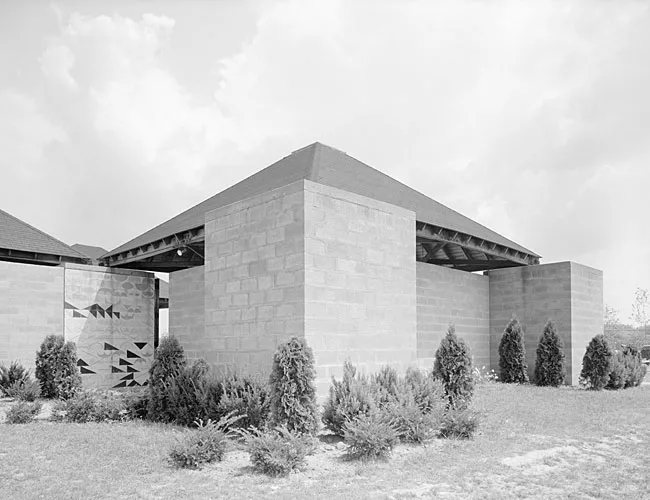
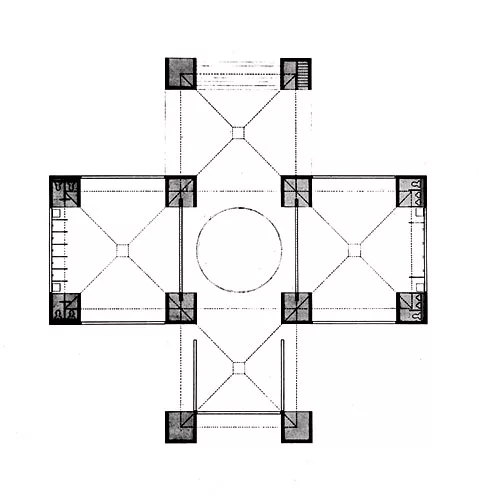
The Louis I. Kahn Trenton Bath House (1955) is famous for the sense of monumentality achieved by its Greek-cross plan, elegant proportions, and cubiform volumes, all executed with the humblest materials — concrete block and asphalt roof shingles. The structure was recently restored by the Princeton firm of Farewell Mills Gatsch Architects.

Related Links:
Kahn Synagogue Expansion Stirs Controversy Louis Kahn House Up for Sale Q&A: Nathaniel Kahn Kahn Project Wins 25-Year Award

Today, encountering the Bath House is an experience that alternates between sublime and banal. From a distance, the windowless, concrete- block boxes resemble forgotten mechanical buildings. Yet, even to the uninitiated viewer, there must be something mesmerizing about the cruciform plan and the four dark pyramids that float just above the bare walls, covering the enclosed volumes and leaving a central courtyard open to the sky. Kahn’s expression flows out of these roofs. They define the building’s oblique historical reference. Structurally, each pyramid rests on four “hollow columns”—supports that serve as mechanical spaces or as circulation for changing rooms—central to Kahn’s notion of “servant” and “served” spaces. The Bath House, now owned by the Ewing Senior and Community Center, is aggressively simple, embracing the initial assignment’s limited program and scarce means.

As in countless cases, the abstract, architectural forms were developed seemingly without regard to their resistance to rain, wind, and normal use. The Trenton Bath House began failing physically almost immediately after construction, even though it is an open-air pavilion with practically no building systems. Some shortcomings might be due to a lack of sophistication in 1950s construction techniques. In certain places, concrete slabs were laid directly on the ground, leaving them vulnerable to the earth shifting underneath. Prior to the recent restoration, the floor inside was buckling in several directions.

However, other technical failures seem almost intentional, perhaps reflecting Kahn’s obsession with ancient ruins. The walls were placed directly beneath the roofline of the pyramids, which have no gutters. According to interviews with Anne Tyng, Kahn’s longtime collaborator, Kahn imagined water “washing over” the rough walls. This meant that water has washed through the walls during the past 50 years, breaking them down drop by drop. The Princeton-based firm FMG, along with restoration contractor Wu and Associates, took on the painstaking effort of re-creating the concrete aggregate for the masonry-block walls using a Delaware River gravel, and even matching the rough mortar smears of the previous masons. The team also added a liquid-applied waterproof elastomeric membrane to the top course of block, allowing water to wash poetically down the wall without ruining it.

The restoration returns the structure to the way it looked in the late 1950s. Yet even then, it was already short of Kahn’s vision, as Susan Solomon’s exacting study, Louis I. Kahn’s Trenton Community Center (2000), reveals. As a result of disagreements among the Jewish Community Center’s board, the Bath House is the only built section of Kahn’s original design. For the restoration, due to restrictions attached to the funding ($750,000 from the Mercer County Open Space fund and a matching grant from the New Jersey Historic Trust), along with lack of community support, the planners and architects were confined to re-creating what Kahn executed, not what he intended. His full plan called for a classic grove of trees, a common public area in front, and a pedestrian-oriented procession to the structure [RECORD, June 2007, page 63].

Kahn imagined a civic space for suburbia, a dignified place for nothing more than people going to the pool. His vision proved unrealistic in the 1950s, when suburbia was in its infancy. Today, in Ewing’s fragmented landscape—where office buildings and parking lots give way to gabled roofs and driveways—Kahn’s vision is even more important and much less possible.

If Kahn’s ideal civic realm only exists within his design, and his forms only speak to those familiar with their references, it is still a monument to the search for a humanist architecture. Its persistence and its failures indicate we are still on that search.  

Aleksandr Bierig, a recent editorial assistant for Architectural Record, is now a graduate student at Princeton University’s School of Architecture.

Share This Story

Looking for a reprint of this article?
From high-res PDFs to custom plaques, order your copy today!

Post a comment to this article

Report Abusive Comment

Subscription Center
  • Create an Account
  • Start a Subscription
  • Manage My Account
  • Sign Up for Newsletters
  • Visit Customer Service
  • Update Preferences

More Videos

Sponsored Content

Sponsored Content is a special paid section where industry companies provide high quality, objective, non-commercial content around topics of interest to the Architectural Record audience. All Sponsored Content is supplied by the advertising company and any opinions expressed in this article are those of the author and not necessarily reflect the views of Architectural Record or its parent company, BNP Media. Interested in participating in our Sponsored Content section? Contact your local rep!

close
  • 3D configurator
    Sponsored byDoorBird

    How DoorBird’s 3D Configurator Is Redefining Customization Across Residential and Commercial Design

  • interior of modern office
    Sponsored byCurrent

    The Downlight's Second Life: Why Below-Ceiling Serviceability Is the Specification Detail That Matters Most

  • cold storage facility
    Sponsored byCarlisle SynTec Systems

    How Architects Can Design More Continuous Cold Storage Envelopes

DESIGN:ED Podcast
Listen to Architectural Record’s DESIGN:ED Podcast

Events

July 14, 2026

Designing Toilet Partitions for User Comfort and Utility

Credits: 1 AIA LU/HSW; 1 AIBD P-CE; 0.1 ICC CEU

Evaluate emerging restroom design strategies, materials, and specification options that enhance functionality, inclusivity, user comfort, and sustainability.

July 16, 2026

Fit, Form, Function: Rethinking Privacy Curtains for Modern Spaces

Credits: 1 AIA LU/HSW; 1 AIBD P-CE; 0.1 ICC CEU

Explore how privacy curtain systems can enhance occupant comfort, operational efficiency, and sustainability across healthcare, education, hospitality, and senior living environments.

View All Submit An Event

Products

2026 Architect's Square Foot Costbook

2026 Architect's Square Foot Costbook

See More Products

Popular Stories

Home Spirit apartment building exterior

Outdoor Access Drives the Design of a French Apartment Building

The Bend in Winnipeg, Canada

Multifamily Housing 2026

Trump's triumphal arch

What Exactly Does Trump’s Triumphal Arch Commemorate?

The Mark and Hive Glenrock, LOHA

Two Student Residences Continue LOHA’s Decades-long Reimagination of the L.A. Lifestyle

The Bend in Winnipeg, Canada

The Bend Wraps an Adapted Winnipeg Warehouse, Adding Apartments and Defining Public Space

Co-Intelligence: The Architect's AI Advantage - Free Webinar - July 8, 2026

Related Articles

  • A Modest Proposal for Luis Barragán’s Estate

    A Modest Proposal for Luis Barragán’s Estate

    See More
  • Cathleen McGuigan

    A Modest Proposal

    See More
  • Dune House

    Waechter Architecture Clads a Modest Getaway on the Oregon Coast Entirely with Eastern White Cedar

    See More

Related Products

See More Products
  • book3.jpg

    If Architecture is a Language, Then a Building is a Story

  • 0470126736.gif

    Modern Sustainable Residential Design: A Guide for Design Professionals

See More Products
×

The latest news and information

#1 Source for Architectural Design, News and Products

SUBSCRIBE
  • RESOURCES
    • Advertise
    • Contact Us
    • Submit
    • Store
  • ACCOUNT CENTER
    • Create an Account
    • Start a Subscription
    • Manage My Account
    • Sign Up for Newsletters
    • Visit Customer Service
    • Update Preferences
  • PRIVACY
    • PRIVACY POLICY
    • TERMS & CONDITIONS
    • DO NOT SELL MY PERSONAL INFORMATION
    • PRIVACY REQUEST
    • ACCESSIBILITY
  • SERVICES
    • Marketing Services
    • Reprints
    • Market Research
    • List Rental
    • Survey/Respondent Access
  • STAY CONNECTED
    • Linkedin
    • Facebook
    • Instagram
    • YouTube
    • X (Twitter)

Copyright ©2026. All Rights Reserved BNP Media, Inc. and BNP Media II, LLC.

Design, CMS, Hosting & Web Development :: ePublishing