Architectural Record
search
cart
facebook twitter linkedin youtube
  • Sign In
  • Subscribe
  • Sign Out
  • My Account
Architectural Record
  • NEWS
    • Latest News
    • Awards
    • Interviews
    • Obituaries
    • Podcasts
      • Design:Ed Podcast
      • Sponsored Podcasts
  • OPINION
    • Book Reviews / Excerpts
    • Exhibition Reviews
    • Forum
  • EXCLUSIVES
    • Videos
    • Design Vanguard
    • Top 300 Firms
    • Sponsored Content
    • Sponsored eBooks
    • From the Archives
  • CONTINUING ED
    • Editorial Continuing Ed
    • CE Center
    • CE Academies
  • PROJECTS
    • Buildings By Type
    • Reuse & Renovation
    • Museums & Arts Centers
    • Colleges & Universities
    • Multifamily Housing
    • Interiors
    • Lighting
    • Kitchen & Bath
  • HOUSES
    • Record Houses
    • House of the Month
    • Featured Houses
  • PRODUCTS
    • Products by Category
    • Record Products of the Year
    • Latest Products
  • EVENTS
    • Dates & Events
    • Record on the Road
    • Innovation Conference
    • Sustainability in Practice
    • Women In Architecture
    • Webinars
    • Ad Excellence Awards
    • Submit an Event
  • CONNECT
    • Ask RECORD AI
    • Newsletters
    • Contact
    • Advertise
    • Editorial Calendar
    • Store
    • Customer Service
  • SUBMIT
    • Submission Guidelines
    • RECORD Competitions
  • MAGAZINE
    • Subscribe
    • My Account
    • Digital Edition
    • Current Issue
    • Firm Pass
    • Historic Archive
Architecture NewsInterviews

Newsmaker: Shigeru Ban

By William Hanley
July 16, 2008

Heidi Zuckerman Jacobson, director of the Aspen Art Museum in Aspen, Colorado, considers space the only thing holding her institution back from an ambitious long-term goal. “We want to become the best non-collecting museum in the world,” she says.
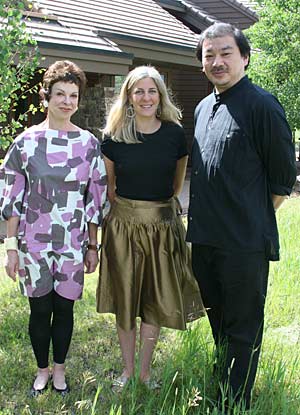
Shigeru Ban
Photo © Karl Wolfgang / Courtesy Aspen Art Museum

Aspen Art Museum board of trustees president Nancy Magoon, museum director Heidi Zuckerman Jacobson, and Shigeru Ban. “The museum is looking for a unique gathering space,” says the architect.

Founded in the late 1970s in a converted hydroelectric plant, the museum currently has 7,000 square feet of exhibition space, which the director says it has long outgrown. But the institution recently came one step closer to realizing its global goal when it announced that Japanese architect Shigeru Ban will design a new home for the museum that will be more than triple the size of its current space.

Born in Japan and educated at Southern California Institute of Architecture and Cooper Union in New York, where he studied under John Hejduk, Ban rose to prominence in the 1990s with an approach that blended traditional Japanese architecture and building materials with a Western perspective on spare forms derived from Modernism.

His best-known projects include the radically open Naked House (2000) and the 2005 Nomadic Museum, a portable gallery made from shipping containers, in addition to a series of structures incorporating paper-tubing systems of his own design, such as the 1995 Takatori Catholic Church (a temporary structure erected in earthquake-ravaged Kobe). The Aspen project will be his first permanent museum building in the United States.

The museum’s selection committee chose Ban after viewing his Paper Art Museum in Shizuoka, Japan, as well as plans for an outpost of the Centre Pompidou currently under construction in Metz, France. “[The Pompidou Metz] has a really innovative approach to architecture from the exterior and definitely pulls you in, but then it has really proper spaces for the presentation of art,” says Zuckerman Jacobson.

With no permanent collection and a wide-ranging curatorial program showing strictly contemporary art, the museum has asked Ban for a versatile space that can accommodate work in a variety media and on a variety of scales. (It has already raised $28 million of the estimated $35 million cost through an ongoing capital campaign.) The new facility will also be a part of a master plan for the redevelopment of downtown Aspen.

In a recent conversation, Ban said that his early concepts for the design play off the natural and cultural landscape of Hollywood’s ski town, and he hopes the project will raise the profile of visual art in the resort known for its annual film festival.

William Hanley: What appealed to you about working in Aspen?

Shigeru Ban: Aspen is, as everybody knows, a very beautiful place, and I was very interested in making a museum that is in harmony with the landscape, so I am very excited. After doing several buildings in cities, this is a very interesting opportunity to work with nature.

Aspen also has very interesting events for music and cinema, so it's natural to have a visual art institution at the same level. And there are so many people with homes or second homes in Aspen who have great art collections that I think it's very natural to have a prominent institution there. I was invited to the houses of some of the board members of the museum, and their houses were just like museums.

WH: Your Centre Pompidou currently being built in Metz really impressed the museum’s selection committee. How will your experience with that project inform design decisions in Aspen?

SB: The site of the Aspen museum is very different, and the purpose of the museum is also very different, so there is no connection in design. But designing a project as complicated as the Centre Pompidou was a great lesson for me in terms of understanding all the functions—both front and back—of a museum.

WH: Where are you in the design process?

SB: We have just been officially selected for the project, and we are waiting for the green light to begin.

WH: Can you tell me a few features that the museum has requested and a few concepts that you will bring to the table?

SB: The galleries won't be very different from others, but the museum is looking for a unique gathering space. The lobby will be not only for people who come into the galleries, but also day skiers using the adjacent public parking lot and people using the central plaza that the museum will face.

I want to connect the main lobby space with the plaza and a semi-outdoor space, so that the museum is totally open to the outside. In the winter, of course, it will have to be climate controlled, but many months out of the year, the museum can be totally open to the outside and inviting people in from everywhere. The museum is looking for a very public gathering space that is not only for the art lovers. For that reason, it's also a great thing that they are keeping admission free.

Share This Story

Looking for a reprint of this article?
From high-res PDFs to custom plaques, order your copy today!

Post a comment to this article

Report Abusive Comment

Subscription Center
  • Create an Account
  • Start a Subscription
  • Manage My Account
  • Sign Up for Newsletters
  • Visit Customer Service
  • Update Preferences

More Videos

Sponsored Content

Sponsored Content is a special paid section where industry companies provide high quality, objective, non-commercial content around topics of interest to the Architectural Record audience. All Sponsored Content is supplied by the advertising company and any opinions expressed in this article are those of the author and not necessarily reflect the views of Architectural Record or its parent company, BNP Media. Interested in participating in our Sponsored Content section? Contact your local rep!

close
  • TAMLYN XtremeTrim Exterior Trim
    Sponsored byTamlyn

    Designing Cleaner Panel Facades: Why Exterior Trim Details Matter

  • Building with Vapor Barriers
    Sponsored byReef Industries, Inc.

    Vapor Barriers Help Control Moisture in Tighter Building Designs

  • Duct Interior with Prodeq System
    Sponsored byHenry, a Carlisle Company

    Designing Resilient Water Containment Systems

DESIGN:ED Podcast
Listen to Architectural Record’s DESIGN:ED Podcast

Events

June 10, 2026

Rethinking Stormwater – The Power of Porous Paving

Credits: 1 AIA LU/HSW; 1 AIBD P-CE; 0.1 ICC CEU

Learn how porous paving systems support stormwater management, reduce heat island effects, and enhance sustainable site design performance.

June 11, 2026

Very Early Warning Fire Detection for Mission-Critical Facilities

Credits: 1 AIA LU/HSW; 1 AIBD P-CE; 0.1 ICC CEU

Examine advanced fire detection strategies that support uptime and enhance safety in data centers and other mission-critical facilities.

View All Submit An Event

Products

2026 Architect's Square Foot Costbook

2026 Architect's Square Foot Costbook

See More Products

Popular Stories

Coronado Bridge

The Architect’s Guide to San Diego

Practice Matters illustration

What’s in a (Firm’s) Name? Thinking About Succession and Legacy

Practice Matters illustration

By the Numbers: Counting America's Architects

Inward House

Inward House by VeeV Design Studio

Riverdale House by Studio Lau

Riverdale House by Studio Lau

Broader Sustainability of CMU - Free Webinar - May 21, 2026

Related Articles

  • For Aspen Museum, Shigeru Ban Takes His Cue from the Snowy Slopes

    See More
  • Shigeru Ban Conceives Simple Solutions for Post-Disaster Zones in New Zealand, Japan

    See More
  • Quick Take: Shigeru Ban's Cardboard Cathedral

    See More
×

The latest news and information

#1 Source for Architectural Design, News and Products

SUBSCRIBE
  • RESOURCES
    • Advertise
    • Contact Us
    • Submit
    • Store
  • ACCOUNT CENTER
    • Create an Account
    • Start a Subscription
    • Manage My Account
    • Sign Up for Newsletters
    • Visit Customer Service
    • Update Preferences
  • PRIVACY
    • PRIVACY POLICY
    • TERMS & CONDITIONS
    • DO NOT SELL MY PERSONAL INFORMATION
    • PRIVACY REQUEST
    • ACCESSIBILITY
  • SERVICES
    • Marketing Services
    • Reprints
    • Market Research
    • List Rental
    • Survey/Respondent Access
  • STAY CONNECTED
    • Linkedin
    • Facebook
    • Instagram
    • YouTube
    • X (Twitter)

Copyright ©2026. All Rights Reserved BNP Media, Inc. and BNP Media II, LLC.

Design, CMS, Hosting & Web Development :: ePublishing