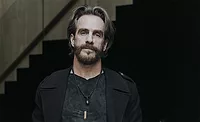
Newsmaker: Michel Abboud
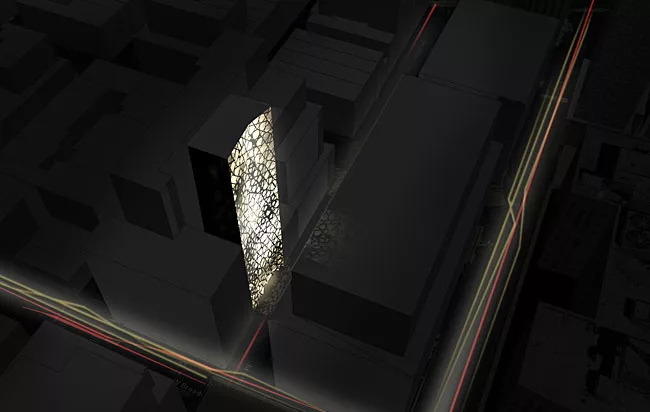
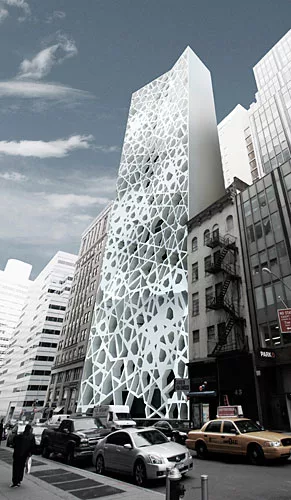
RECORD speaks with the principal of SOMA, the architecture firm behind the controversial Park51 Muslim community center proposed for Lower Manhattan.
Amid the controversy surrounding Park51, the Muslim community center and worship space in Lower Manhattan labeled the “Ground Zero Mosque” by its opponents, the young New York-based firm SOMA Architects last week quietly unveiled designs for the new 15-story building. “I think the location of the center has been overexposed and overrated,” says Michel Abboud, principal at SOMA.
Abboud recently sat down in the firm's new Midtown office to answer questions about Park51, its design, SOMA's history, and the controversy that has been swirling almost since plans for the project were announced.
Alex Padalka: How did this project come to your firm?
Michel Abboud: Originally, the developer wanted to have a competition. First of all, so people could see it. Second, so people could see where we're going. Third, because we had to come up with a program. And we had to respond to at least the basic zoning and building mass problems.
When you go in front of the community, and the project becomes controversial, it's important to release some sort of imagery representing the project. We were retained as the architectural design consultants. We came later in the process, obviously, and I'm sure a lot of people asked, “Why these guys?” Yes, we're young, and, yes, we haven't built as many buildings as Skidmore, Owings and Merrill — but we've been involved with the developer for a long time, so they trust us.
That doesn't mean there isn’t going to be a bigger corporate office with more construction experience in New York that will take over the project for the development phases that we're working with…We have a few candidates in mind.
AP: New York firms?
MA: Definitely. That's the whole point – a firm that's built several different things in the city.
AP: What can you tell me about your firm?
MA: We have offices in New York, Mexico, and Beirut. I'm originally Lebanese, and, especially with the crisis now, we wanted to extend our projects in the Middle East, so the past couple years we've done a lot of work there. Some of these projects are under construction. The Mexico office was working on projects in Costa Rica and Mexico, and they used to be our backup office for New York, as well. We are trying to do this round-the-clock production, because of the time difference. We like to get the best of each world where we can, which is actually a good thing, a very New York thing to do.
AP: And you’re the principal?
MA: I'm the principal, yes. I'm the one who founded all the offices. We have associates, junior partners.
AP: How old are you?
MA: [Laughs] I'm 33. That's the whole point. Even the developer is young. The developer is 37. We have 50-year-old people, and we have 26-year-old people. It's like any other office, we just like to do our projects a little differently, and what better office structure to have to work on such a project? For example, I'm Catholic, so that shows that it's not an Islamic firm, that it's not all Muslims. For us, it's about joining cultural differences into one project. You’ve got a developer who's Egyptian, who's from a Polish Catholic mother, who goes to a Jewish community center, an architect who has citizenships from France, and Mexico—French and Mexican and Lebanese at the same time, so it's a mix of a cultures, isn't that the whole point of this project?
AP: What other New York projects do you have?
MA: We're doing another building in TriBeCa that is almost finished. We've done 93 Crosby in SoHo — mostly condos, and also lots of restaurants. Tartinery in NoLita, Naya in Midtown, restaurants in Washington. We've built in seven different states.
AP: What are you trying to convey with the design for Park51?
MA: From day one we knew this was going to be a complicated project in terms of controversy, how many parties we have to please – starting with the developer – the religious institutions behind the prayer space, the community, and not to mention all the political parties. Some parties required a more traditionalist approach to what Islamic architecture should look like — whatever that means. If you try to define that, it's going to be pretty hard. Other people just expected another building in New York, and from the start we knew that we didn't want that building to look like anything else. We wanted the building to be able find its roots into what makes Islamic architecture culturally recognizable as Islamic, without necessarily being religious — because that's a fine line also: What makes an Islamic cultural element, or religious element?
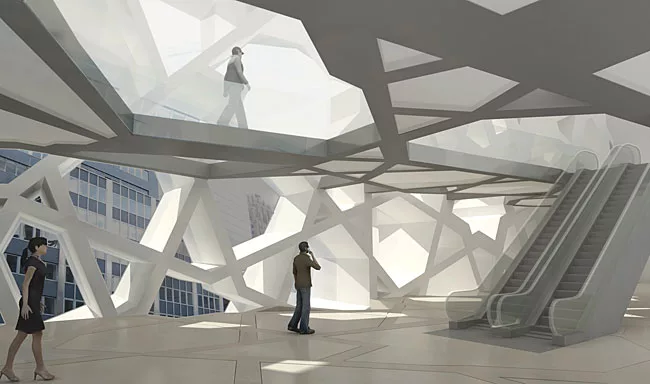
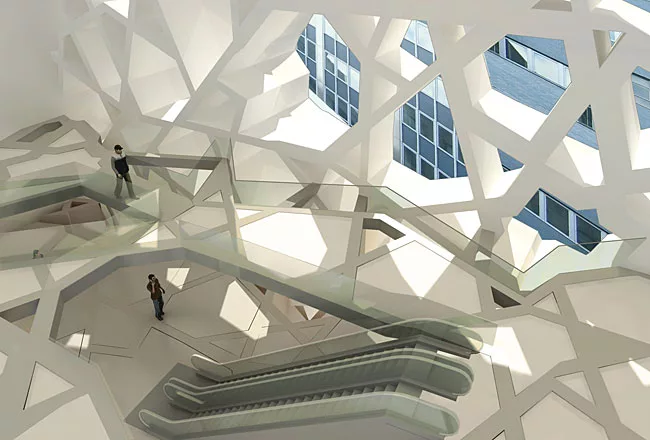
So we went back to really some of the most ancient traditional elements, internationally — even though we're so aware it's been done before, by other architects, namely by Jean Nouvel — taking the Islamic motif and converting it into some sort of facade. In our case it was a little more than that. It was going back to the very essence to what makes Islamic architecture recognizable, and if you go back to history there's a single motif, the Mashrabiya, the sun screen really, using abstract representations, very elaborate arabesques, and turn that motif into some sort of a map to create the facade. A map that would, through several manipulations and articulations, respond to the interior program. It's a map that starts becoming denser in areas that require less openness, and less dense in areas that require more openness. Also in relationship to the site — you’ve got to keep in mind that this is a southern facade that gets hit with direct sunlight, which requires some sort of sunscreen. At the same time this facade is a structural element on its own, so it's actually an exoskeleton that holds itself. A little bit like a curtain wall, but it's truly structural. But not only is it structural, it's projected into the building and starts defining voids inside the building.
AP: Can you tell me about the materials? What is the motivation behind having them so ultra-modern?
MA: Glass reinforced concrete. The whole point is that it's as delicate as lace but structurally as sound as concrete. It's a natural material we use in actual Mashrabiya in any country that has those types of things. You can get extremely thin with that. We haven't done the actual engineering of the facade yet so we don’t know how thin these elements are going to be, because some of them are pretty bulky, but the idea is that some of them will become pretty thin. It's a double skin. You can see in terms of the interior program, you can see we tried to keep it as open as possible
So if you go in terms of program, the only religious component is really the Muslim prayer space — and we’re not calling it a mosque, because it’s really not a mosque. A mosque has very clear typology, with an open plaza, a minaret, and you’re never going to see these things – probably ever – [in New York], but definitely not in this building. It’s called a prayer space, on two lower levels, below the ground floor, so basically the first two basements. Obviously they’re split between female and male. Everything above the ground floor will be secular architecture, for secular programming. You have restaurants, child care facilities, culinary school, sports center with basketball courts, a pool, a media tech library, auditorium, then you have the offices, administration, different types of workshops, even live-work spaces for artists, for guest artists, a little like Villa de Medici. Some sort of relation with what the culture is, the cultures we’re trying to join in this project.
AP: Most of the building is very well lit – is there something about prayer spaces and their design that requires them to be less well-lit?
MA: No, nothing like that. It was a question of, you have a call for prayer on Friday and you have 2,000 people walking into the building at one point. We didn’t want them using the elevators, otherwise we would have five times the number of elevators that we have. So it was a question of circulation and flow of people more than anything else.
AP: 2,000 people – is that the capacity in the basements?
MA: Yes. It needed to be easily accessible from the street with different routes, different security check-ins than the rest of the building, so you don’t go through the main core of the building. Also, to better separate any type of religious program from the rest. You have to keep in mind - I’m saying this from an observer point of view, because I’m not a Muslim – I had to observe the way things worked out for Muslims in New York City who need to pray five times a day. How do you cut off your workday to go five times a day? So you need to be able to go in and out pretty fast, you can’t spend an hour to go in and another hour to go out.
AP: When I stopped by your old offices in SoHo [SOMA recently relocated to its current Midtown location], I noticed that you were listed under the same suite as Park51’s developer, SoHo Properties. Did you share an office?
MA: We shared a floor. Sharif [El-Gamal, owner of SoHo Properties] and I have known each other from a few years back, and that’s how we started—basically, a love of the buildings. We are just, if you want, strategic partners, that’s all.
AP: Is he a partner in your firm?
MA: No, they’re two separate companies, but we like doing business together. I trust him and he trusts me. That’s why on this project there were a lot of architects coming in and out of the office wanting to do the project. It was easier for him to at least start with someone that he trusts and he’s known and he’s going to find the right level to please different people.
AP: How has being involved with this project affected your business? Have you felt any change in relations with your clients?
MA: It’s only been a few days [since the rendering has been released]. Except for the crazy flow of calls and e-mails and people trying to get renderings and interviews, everyone thinks it’s great that we’ve been working with it, but there’s also split opinions about the project actually happening or not, in terms of development. But generally speaking, I have to say it’s been very positive so far. Ask me the question in another week.
Looking for a reprint of this article?
From high-res PDFs to custom plaques, order your copy today!