Architectural Record
search
cart
facebook twitter linkedin youtube
  • Sign In
  • Subscribe
  • Sign Out
  • My Account
Architectural Record
  • NEWS
    • Latest News
    • Awards
    • Interviews
    • Obituaries
    • Podcasts
      • Design:Ed Podcast
      • Sponsored Podcasts
  • OPINION
    • Book Reviews / Excerpts
    • Exhibition Reviews
    • Forum
  • EXCLUSIVES
    • Videos
    • Design Vanguard
    • Top 300 Firms
    • Sponsored Content
    • Sponsored eBooks
    • From the Archives
  • CONTINUING ED
    • Editorial Continuing Ed
    • CE Center
    • CE Academies
  • PROJECTS
    • Buildings By Type
    • Reuse & Renovation
    • Museums & Arts Centers
    • Colleges & Universities
    • Multifamily Housing
    • Interiors
    • Lighting
    • Kitchen & Bath
  • HOUSES
    • Record Houses
    • House of the Month
    • Featured Houses
  • PRODUCTS
    • Products by Category
    • Record Products of the Year
    • Latest Products
  • EVENTS
    • Dates & Events
    • Record on the Road
    • Innovation Conference
    • Sustainability in Practice
    • Women In Architecture
    • Webinars
    • Ad Excellence Awards
    • Submit an Event
  • CONNECT
    • Ask RECORD AI
    • Newsletters
    • Contact
    • Advertise
    • Editorial Calendar
    • Store
    • Customer Service
  • SUBMIT
    • Submission Guidelines
    • RECORD Competitions
  • MAGAZINE
    • Subscribe
    • My Account
    • Digital Edition
    • Current Issue
    • Firm Pass
    • Historic Archive

AIA Honor Award 2010: 25 Year Award - Hajj Terminal
By Aleksandr Bierig
Hajj Terminal

Hajj Terminal

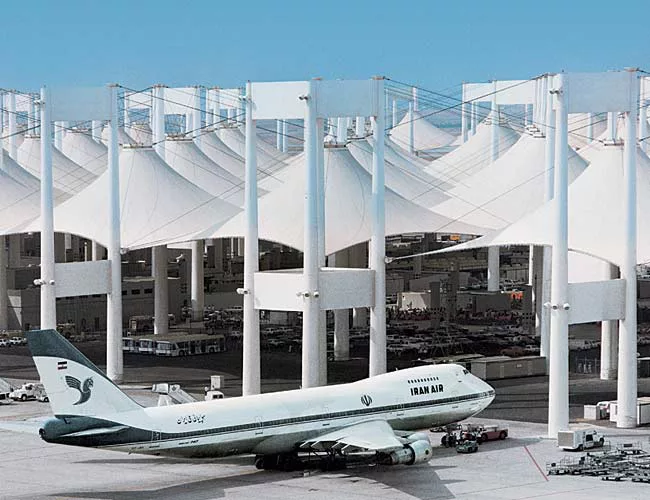
The scale of the massive, 100-acre terminal is indicated by the size of the aircraft in relation to the building. The fiberglass cones are 110 feet high at their peak and are supported through a system of interconnected steel tension cables. The tapered steel pylons are each 150 feet high.

Photo © Jane Smith
Hajj Terminal

Hajj Terminal

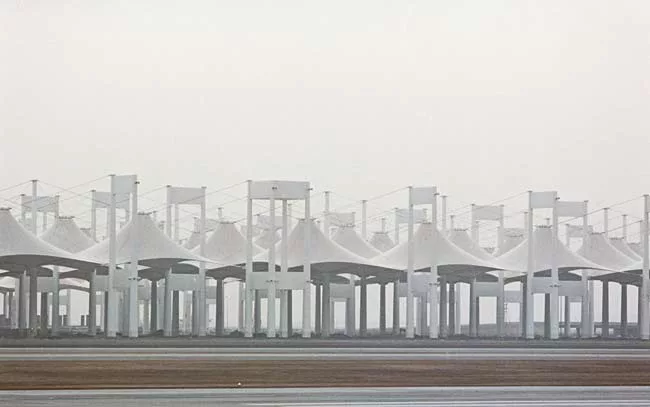
The scale of the massive, 100-acre terminal is indicated by the size of the aircraft in relation to the building. The fiberglass cones are 110 feet high at their peak and are supported through a system of interconnected steel tension cables. The tapered steel pylons are each 150 feet high.

Photo © Jane Smith
Hajj Terminal

Hajj Terminal

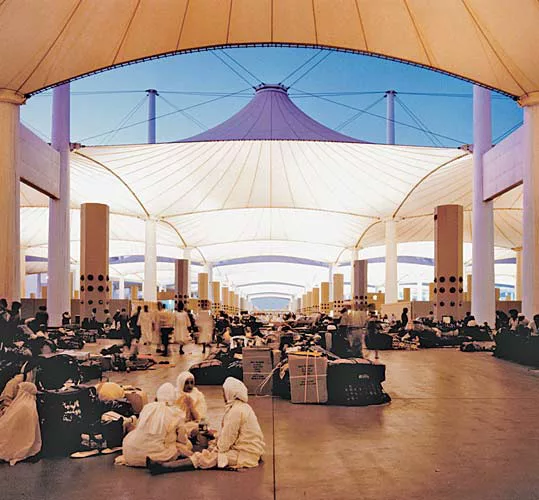
The interior of the structure is characterized by a series of long, open-plan spaces, with customs and administration near the edges.

Photo © Jane Smith
Hajj Terminal

Hajj Terminal

Image courtesy Skidmore, Owings & Merrill

Hajj Terminal
Hajj Terminal
Hajj Terminal
Hajj Terminal
May 16, 2009
In the mid-1970s, Gordon Wildermuth was a young partner at Skidmore, Owings & Merrill, working in Saudi Arabia to build the Hajj Terminal at the King Abdul Aziz International Airport. Today, when he describes that “incredibly stressful time,” the conversation soon turns to the communications infrastructure that existed then. “At the time, a telephone in Jeddah was worth about $15,000. There was no fax at first, though we eventually got one later that was about the size of your mother’s kitchen range in the 1950s. There was no e-mail, of course. When you placed a call, you had no idea when it would go through. You might place a call at 5 o’clock in the afternoon there, and it would come through at 3 o’clock in the morning in the States.”
 
It was Wildermuth’s job to orchestrate 600 people working in three separate offices (New York, Chicago, Jeddah) on this project of immense size and labyrinthine complexity: an airport terminal that would only be used once a year, during the six-week hajj pilgrimage, but that would be the busiest in the world during that time. The project came to SOM through a stroke of geographic luck: SOM’s Washington, D.C., office was close to the Airways Engineering Corporation, which had been retained by the Saudi government to design a terminal for the hajj. That project was started in the 1960s, with Edward Durell Stone as a consultant, but had been put on hold for several years following the 1967 Six Day War. By 1974, Stone had died, and Airways contacted SOM to collaborate on the revived project, which included a large master plan for commercial and military hangars, housing for staff, a hospital, a mosque, administrative buildings, and other infrastructural concerns.
 
Among those buildings, the Hajj Terminal stands out on this large desert plot of land, about 45 miles from Mecca. Wildermuth and his team were able to spend a significant amount of time in Saudi Arabia, observing the mass movement of people during the six-week hajj. There are approximately 1.5 billion Muslims in the world today, and every one who is able to is required to make the pilgrimage at least once in his or her lifetime. With the advent of jet travel, pilgrims — or hajjis — had vastly increased in number: from around 50,000 arriving by air in the 1960s to 500,000 in 1975 (in recent years, the number of registered foreign pilgrims arriving for the hajj has averaged more than 1.5 million).
 
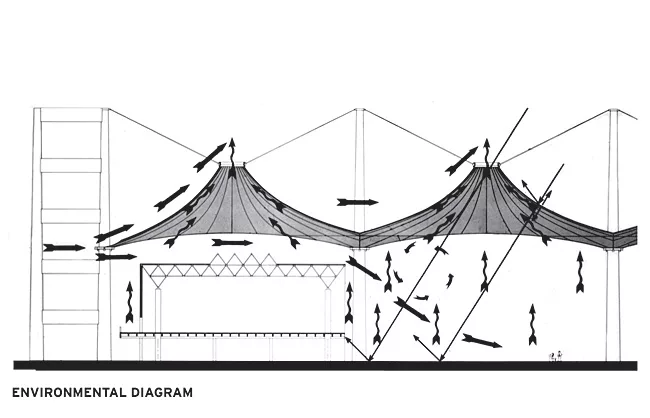
After the 1976 approval of Wildermuth’s master plan, design began on the Hajj Terminal in 1977, led by Gordon Bunshaft and structural engineer Fazlur Kahn. Finished in 1981, it received an AIA National Award and the Aga Khan Award in 1983. John Zils, a structural engineer at SOM who worked alongside Kahn, recalls, “The initial thinking was that this was going to be an enclosed building, but it became clear that a traditional, air-conditioned, high-tech building was not the appropriate solution.” The process led them to explore an open-air structure, with roofs made of long-span Teflon-coated fiberglass, a material that had been used before, but never at this scale. The 210 white tents allow diffuse light into the terminal while reflecting heat away from the building, and their shape — conical with an oculus at the top — created a significant chimney effect that keeps temperatures down without heavy energy use. When the desert reaches 130 degrees Fahrenheit, the tent stays at around 80.
 
The organization of the terminal interior also reflected SOM’s long engagement with the project. Hajjis traveling to Mecca often trade and exchange goods on the way, so a market, or souk, was planned into the building. The architects also provided ample space for hajjis to perform ablutions and change into ritual garments for their trip, as well as to accommodate the long waiting times that sometimes occur when processing so many passengers: About 100 acres are covered underneath the tents, enough to house at least 80,000 people.
 
At the same time, this cultural and environmental sensitivity was bolstered by a peculiarly American brand of confidence. “We had a great team,” recalls Wildermuth. “As managing partner, I was fortunate enough to work with a group of people with whom I felt I could go anywhere in the world and solve any problem.” The 25 Year Award is a testament to this boldness, which, combined with a long engagement with the Saudis, produced a meaningful, cross-cultural exchange.

Share This Story

Looking for a reprint of this article?
From high-res PDFs to custom plaques, order your copy today!
Post a comment to this article

Report Abusive Comment

Subscription Center
  • Create an Account
  • Start a Subscription
  • Manage My Account
  • Sign Up for Newsletters
  • Visit Customer Service
  • Update Preferences

More Videos

Sponsored Content

Sponsored Content is a special paid section where industry companies provide high quality, objective, non-commercial content around topics of interest to the Architectural Record audience. All Sponsored Content is supplied by the advertising company and any opinions expressed in this article are those of the author and not necessarily reflect the views of Architectural Record or its parent company, BNP Media. Interested in participating in our Sponsored Content section? Contact your local rep!

close
  • TAMLYN XtremeTrim Exterior Trim
    Sponsored byTamlyn

    Designing Cleaner Panel Facades: Why Exterior Trim Details Matter

  • Building with Vapor Barriers
    Sponsored byReef Industries, Inc.

    Vapor Barriers Help Control Moisture in Tighter Building Designs

  • Duct Interior with Prodeq System
    Sponsored byHenry, a Carlisle Company

    Designing Resilient Water Containment Systems

DESIGN:ED Podcast
Listen to Architectural Record’s DESIGN:ED Podcast

Events

June 18, 2026

Rebooting the Aging Office Building

Credits: 1 AIA LU/HSW; 1 AIBD P-CE; 0.1 ICC CEU; 1 PDH

Explore façade retrofit strategies and award-winning design concepts that can transform aging office buildings into healthier, higher-performing workplaces for today’s hybrid workforce.

June 23, 2026

Enhancing Fire Resistance with Advanced PVC Solutions

Credits: 1 AIA LU/HSW; 1 AIBD P-CE; 0.1 ICC CEU; 1 IIBEC CEH

Evaluate advanced PVC solutions that improve fire resistance, support WUI compliance, and enhance resilience in residential and commercial building design.

View All Submit An Event

Products

2026 Architect's Square Foot Costbook

2026 Architect's Square Foot Costbook

See More Products

Popular Stories

SanDiegoAirport

Top 300 Architecture Firms of 2026

Coronado Bridge

The Architect’s Guide to San Diego

Lorcan O' Herilhy

California Architect Lorcan O’Herlihy Has Died, Age 66

CCA, Studio Gang

The Winners of the AIA’s 2026 Architecture Award Range from Collegiate Rowing Hubs to Housing for the Homeless

Dusk House

Design Vanguard 2026: ONO

Rebooting the Aging Office Building - Free Webinar - June 18, 2026

Related Articles

  • AIA Honor Award: 25 Year Award Faneuil Hall Marketplace

    See More
  • 25 Year Award: The Atheneum

    See More
  • Phoenix Central Library.

    Phoenix Central Library Receives AIA’s 25-Year Award

    See More

Related Products

See More Products
  • Architectural Record - November 2025

    Architectural Record November 2025 Issue

See More Products
×

The latest news and information

#1 Source for Architectural Design, News and Products

SUBSCRIBE
  • RESOURCES
    • Advertise
    • Contact Us
    • Submit
    • Store
  • ACCOUNT CENTER
    • Create an Account
    • Start a Subscription
    • Manage My Account
    • Sign Up for Newsletters
    • Visit Customer Service
    • Update Preferences
  • PRIVACY
    • PRIVACY POLICY
    • TERMS & CONDITIONS
    • DO NOT SELL MY PERSONAL INFORMATION
    • PRIVACY REQUEST
    • ACCESSIBILITY
  • SERVICES
    • Marketing Services
    • Reprints
    • Market Research
    • List Rental
    • Survey/Respondent Access
  • STAY CONNECTED
    • Linkedin
    • Facebook
    • Instagram
    • YouTube
    • X (Twitter)

Copyright ©2026. All Rights Reserved BNP Media, Inc. and BNP Media II, LLC.

Design, CMS, Hosting & Web Development :: ePublishing