Architectural Record
search
cart
facebook twitter linkedin youtube
  • Sign In
  • Subscribe
  • Sign Out
  • My Account
Architectural Record
  • NEWS
    • Latest News
    • Awards
    • Interviews
    • Obituaries
    • Podcasts
      • Design:Ed Podcast
      • Sponsored Podcasts
  • OPINION
    • Book Reviews / Excerpts
    • Exhibition Reviews
    • Forum
  • EXCLUSIVES
    • Videos
    • Design Vanguard
    • Top 300 Firms
    • Sponsored Content
    • Sponsored eBooks
    • From the Archives
  • CONTINUING ED
    • Editorial Continuing Ed
    • CE Center
    • CE Academies
  • PROJECTS
    • Buildings By Type
    • Reuse & Renovation
    • Museums & Arts Centers
    • Colleges & Universities
    • Multifamily Housing
    • Interiors
    • Lighting
    • Kitchen & Bath
  • HOUSES
    • Record Houses
    • House of the Month
    • Featured Houses
  • PRODUCTS
    • Products by Category
    • Record Products of the Year
    • Latest Products
  • EVENTS
    • Dates & Events
    • Record on the Road
    • Innovation Conference
    • Sustainability in Practice
    • Women In Architecture
    • Webinars
    • Ad Excellence Awards
    • Submit an Event
  • CONNECT
    • Ask RECORD AI
    • Newsletters
    • Contact
    • Advertise
    • Editorial Calendar
    • Store
    • Customer Service
  • SUBMIT
    • Submission Guidelines
    • RECORD Competitions
  • MAGAZINE
    • Subscribe
    • My Account
    • Digital Edition
    • Current Issue
    • Firm Pass
    • Historic Archive
Commentary & CriticismOpinion

Why We Build: Power and Desire in Architecture

By Aleksandr Bierig
November 15, 2013
By Rowan Moore. Harper Design, August 2013, 400 pages, $30.

The View From Across the Pond

As he indicates in the title of his new book, British architecture critic Rowan Moore sets out to joust with Big Questions. What is the relationship between political and economic power and architectural patronage? How does active human desire translate into the latent desires embedded in architectural space? What is the relationship between the longing for home and the urge to wander?
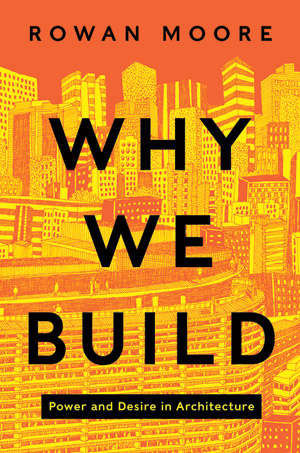
Why We Build: Power and Desire in Architecture

In addressing these concerns, Moore revels in ambiguities, selecting examples to support widely differing interpretations. Drawing mostly from the 20th century, he finds projects that show how architecture can be both permanent and fleeting, how it can restrict and how it can emancipate, how it works for profit and how it finds ways to be charitable. Moore is a fluid writer and skims the surface of history with ease, but his procession of examples can sometimes feel facile, aligning neatly with his arguments instead of adding complexity.

By contrast, the most engaging sections of the book are those in which he tells longer meandering stories about particular designs and their changing popular reception. These speak to his central point—that buildings should be understood as unstable and uncertain presences, subject to adaptation over time and society's changing priorities. One section recounts the history of Amsterdam's 1957 Bijlmermeer social housing complex, whose forbidding Brutalist design was slowly humanized by immigrant populations in ways its planners could never have imagined.

Elsewhere, he turns to projects and places that have seen their fair share of attention, spending considerable time observing the exuberant development (and recent deflation) of Dubai, and the tangled history of the World Trade Center site in Lower Manhattan. These and other well-worn examples figure prominently, and the book feels more like a compilation of scattered stories than the rousing synthesis its title promises.

Moore's underlying dilemma is the role of architectural criticism in a built environment increasingly overwhelmed (and determined) by economic and political calculation. “Power and Desire in Architecture,” as his subtitle puts it, are shaped less by the visions of the architects that he fixates on than by these larger forces. Moore ably fills the conventional role of the architecture critic—that of the taste-maker, essentially, interpreting architects' longings. But today, with growing inequality and a fragile natural environment, there may be a need for a new criticism. To paraphrase the artist Jenny Holzer, the critic may have to protect us from what we want.

Aleksandr Bierig has written for Log and Clog and was a recent editor of Pidgin Magazine.

Share This Story

Looking for a reprint of this article?
From high-res PDFs to custom plaques, order your copy today!

Post a comment to this article

Report Abusive Comment

Subscription Center
  • Create an Account
  • Start a Subscription
  • Manage My Account
  • Sign Up for Newsletters
  • Visit Customer Service
  • Update Preferences

More Videos

Sponsored Content

Sponsored Content is a special paid section where industry companies provide high quality, objective, non-commercial content around topics of interest to the Architectural Record audience. All Sponsored Content is supplied by the advertising company and any opinions expressed in this article are those of the author and not necessarily reflect the views of Architectural Record or its parent company, BNP Media. Interested in participating in our Sponsored Content section? Contact your local rep!

close
  • TAMLYN XtremeTrim Exterior Trim
    Sponsored byTamlyn

    Designing Cleaner Panel Facades: Why Exterior Trim Details Matter

  • Building with Vapor Barriers
    Sponsored byReef Industries, Inc.

    Vapor Barriers Help Control Moisture in Tighter Building Designs

  • Duct Interior with Prodeq System
    Sponsored byHenry, a Carlisle Company

    Designing Resilient Water Containment Systems

DESIGN:ED Podcast
Listen to Architectural Record’s DESIGN:ED Podcast

Events

June 10, 2026

Rethinking Stormwater – The Power of Porous Paving

Credits: 1 AIA LU/HSW; 1 AIBD P-CE; 0.1 ICC CEU

Learn how porous paving systems support stormwater management, reduce heat island effects, and enhance sustainable site design performance.

June 11, 2026

Very Early Warning Fire Detection for Mission-Critical Facilities

Credits: 1 AIA LU/HSW; 1 AIBD P-CE; 0.1 ICC CEU

Examine advanced fire detection strategies that support uptime and enhance safety in data centers and other mission-critical facilities.

View All Submit An Event

Products

2026 Architect's Square Foot Costbook

2026 Architect's Square Foot Costbook

See More Products

Popular Stories

Practice Matters illustration

What’s in a (Firm’s) Name? Thinking About Succession and Legacy

Coronado Bridge

The Architect’s Guide to San Diego

Practice Matters illustration

By the Numbers: Counting America's Architects

House on a Hill

Design Vanguard 2026: Forma

Crane Cove, ONO

Design Vanguard 2026 Winners

Broader Sustainability of CMU - Free Webinar - May 21, 2026

Related Articles

  • Can project alliancing agreements change the way we build?

    See More
  • Can project alliancing agreements change the way we build?

    See More
  • COP27-Takeaways-1.jpg

    COP27: Where Are We Going, and Why Are We in This Climate Handbasket?

    See More

Related Products

See More Products
  • ribbonarch.jpg

    Ribbon Architecture: Light, Shadow, and Reflection in Architecture

  • 3dthinking.jpg

    3D Thinking in Design and Architecture: From Antiquity to the Future

See More Products
×

The latest news and information

#1 Source for Architectural Design, News and Products

SUBSCRIBE
  • RESOURCES
    • Advertise
    • Contact Us
    • Submit
    • Store
  • ACCOUNT CENTER
    • Create an Account
    • Start a Subscription
    • Manage My Account
    • Sign Up for Newsletters
    • Visit Customer Service
    • Update Preferences
  • PRIVACY
    • PRIVACY POLICY
    • TERMS & CONDITIONS
    • DO NOT SELL MY PERSONAL INFORMATION
    • PRIVACY REQUEST
    • ACCESSIBILITY
  • SERVICES
    • Marketing Services
    • Reprints
    • Market Research
    • List Rental
    • Survey/Respondent Access
  • STAY CONNECTED
    • Linkedin
    • Facebook
    • Instagram
    • YouTube
    • X (Twitter)

Copyright ©2026. All Rights Reserved BNP Media, Inc. and BNP Media II, LLC.

Design, CMS, Hosting & Web Development :: ePublishing