Architectural Record
search
cart
facebook twitter linkedin youtube
  • Sign In
  • Subscribe
  • Sign Out
  • My Account
Architectural Record
  • NEWS
    • Latest News
    • Awards
    • Interviews
    • Obituaries
    • Podcasts
      • Design:Ed Podcast
      • Sponsored Podcasts
  • OPINION
    • Book Reviews / Excerpts
    • Exhibition Reviews
    • Forum
  • EXCLUSIVES
    • Videos
    • Design Vanguard
    • Top 300 Firms
    • Sponsored Content
    • Sponsored eBooks
    • From the Archives
  • CONTINUING ED
    • Editorial Continuing Ed
    • CE Center
    • CE Academies
  • PROJECTS
    • Buildings By Type
    • Reuse & Renovation
    • Museums & Arts Centers
    • Colleges & Universities
    • Multifamily Housing
    • Interiors
    • Lighting
    • Kitchen & Bath
  • HOUSES
    • Record Houses
    • House of the Month
    • Featured Houses
  • PRODUCTS
    • Products by Category
    • Record Products of the Year
    • Latest Products
  • EVENTS
    • Dates & Events
    • Record on the Road
    • Innovation Conference
    • Sustainability in Practice
    • Women In Architecture
    • Webinars
    • Ad Excellence Awards
    • Submit an Event
  • CONNECT
    • Ask RECORD AI
    • Newsletters
    • Contact
    • Advertise
    • Editorial Calendar
    • Store
    • Customer Service
  • SUBMIT
    • Submission Guidelines
    • RECORD Competitions
  • MAGAZINE
    • Subscribe
    • My Account
    • Digital Edition
    • Current Issue
    • Firm Pass
    • Historic Archive
Commentary & CriticismOpinion

Kabbalah in Art and Architecture

By Samuel D. Gruber
March 16, 2014
By Alexander Gorlin. Pointed Leaf Press, 2013, 192 pages, $60.

Mystical Thinking

This informative and heavily illustrated book is not so much about places where artists have applied principles of Kabbalah—the Jewish mystical interpretation of the universe—but where Alexander Gorlin takes readers to find them. Gorlin, a New York architect and author, uses Kabbalah as a lens for “re-reading . . . art and architecture,” much as critics might interpret art through the filters of class, race, gender, or the Holocaust. The book stems from his fascination with the Kabbalistic idea of genesis expressed as light, space, and geometry, which he sees in many works of modern architecture, sculpture, and painting.
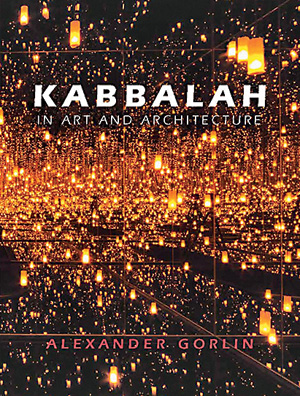
Kabbalah in Art and Architecture

Gorlin clearly describes many of Kabbalah's themes in a manner that speaks to artists and architects. The mystical tradition is concerned with the unseen, but Gorlin focuses mostly on concepts that are expressed in terms of color, light, form, and other visual elements. He uses a language of art and architecture that readers can readily understand—even when we might be surprised to find Kabbalistic references (or echoes) in works we think we know well. Sometimes Gorlin's associations suggest deeper meaning in buildings; at other times his thoughts on buildings clarify Kabbalah obscurities. Many of the works in the book were not intended to be imbued with Jewish mysticism but rely on other mathematical, philosophical, spiritual, aesthetic, and scientific systems. The author maintains, however, that these works embody the essence of Kabbalah, too.

Gorlin immersed himself in Kabbalah when he designed his first synagogue, in Kings Point on Long Island, NY, in 1996. Looking for a structure and narrative to unite function and purpose, he found that Kabbalah “is not only a mystical system of the cosmos, but is a metaphor for the psychology of architectural creation.” Gorlin's recent addition to Louis Kahn's Temple Beth El in Chappaqua, New York, includes explicit Kabbalistic references. Gorlin believes that Kahn's work—with its pure forms and voids and sharp contrasts of light and dark—often refers to ancient Jewish sources. Some contemporary architects invoke Kabbalah in their work too. Steven Holl, for example, says he used it in the lighting design at his St. Ignatius Chapel in Seattle.

The book's 10 chapters are brief essays of historical, descriptive, and analytic text followed by picture galleries. Chapters address Kabbalistic themes such as the ark, tent, and temple; heavenly palaces; the void; and vessels of light, while an epilogue examines the artist Anselm Kiefer, who has addressed the Holocaust in his work. Like Kabbalah itself, Gorlin's book pushes in many directions but remains cohesive.

The author also makes excellent use of captions, filling them with brief but insightful discussions of work by Frank Lloyd Wright, Bruno Taut, Peter Eisenman, Moshe Safdie, Daniel Libeskind, Richard Meier, Coop Himmelb(l)au, and many sculptors and painters.

Samuel D. Gruber is the author of American Synagogues: A Century of Architecture and Jewish Community and writes the blog Samuel Gruber's Jewish Art & Monuments.

Share This Story

Looking for a reprint of this article?
From high-res PDFs to custom plaques, order your copy today!

Post a comment to this article

Report Abusive Comment

Subscription Center
  • Create an Account
  • Start a Subscription
  • Manage My Account
  • Sign Up for Newsletters
  • Visit Customer Service
  • Update Preferences

More Videos

Sponsored Content

Sponsored Content is a special paid section where industry companies provide high quality, objective, non-commercial content around topics of interest to the Architectural Record audience. All Sponsored Content is supplied by the advertising company and any opinions expressed in this article are those of the author and not necessarily reflect the views of Architectural Record or its parent company, BNP Media. Interested in participating in our Sponsored Content section? Contact your local rep!

close
  • 3D configurator
    Sponsored byDoorBird

    How DoorBird’s 3D Configurator Is Redefining Customization Across Residential and Commercial Design

  • interior of modern office
    Sponsored byCurrent

    The Downlight's Second Life: Why Below-Ceiling Serviceability Is the Specification Detail That Matters Most

  • cold storage facility
    Sponsored byCarlisle SynTec Systems

    How Architects Can Design More Continuous Cold Storage Envelopes

DESIGN:ED Podcast
Listen to Architectural Record’s DESIGN:ED Podcast

Events

July 8, 2026

Co-Intelligence: The Architect's AI Advantage

Credits: 1 AIA LU/Elective; 1 AIBD P-CE; 0.1 ICC CEU

Examine how AI is reshaping architectural practice and how architects can elevate their role from task execution to directing design intent.

July 14, 2026

Designing Toilet Partitions for User Comfort and Utility

Credits: 1 AIA LU/HSW; 1 AIBD P-CE; 0.1 ICC CEU

Evaluate emerging restroom design strategies, materials, and specification options that enhance functionality, inclusivity, user comfort, and sustainability.

View All Submit An Event

Products

2026 Architect's Square Foot Costbook

2026 Architect's Square Foot Costbook

See More Products

Popular Stories

T Bar M Racquet Club

Lake Flato Architects Serves Up a Classic Tennis Clubhouse in Dallas

Under Armour Global  Headquarters

In a Former Industrial Area in Baltimore, Gensler Builds an Office Building that Broadcasts its Client’s Ambitions

Reservoir Park and Recreation Center

A Historic Sand Filtration Plant in Washington, D.C., is Transformed into a Multipurpose Green Space

Longgang River Blueway

In Shenzhen, the Longgang River Blueway Reactivates a Damaged Watercourse

Shelter Island Residence by Studio Modh Architecture

Shelter Island Residence by Studio Modh Architecture

Co-Intelligence: The Architect's AI Advantage - Free Webinar - July 8, 2026

Related Articles

  • Eske­nazi School of Art, Architecture + Design.

    Mies van der Rohe Redux: The Eskenazi School of Art, Architecture + Design by Thomas Phifer and Partners

    See More
  • playtime.jpg

    Daniel Libeskind on the Art of Architecture in Film

    See More
  • Schindler-House-Exhibition-1.jpg

    The Schindler House in Los Angeles Celebrates 100 Years of Art and Architecture

    See More

Related Products

See More Products
  • superlux.jpg

    SuperLux: Smart Light Art, Design & Architecture for Cities

  • book3.jpg

    If Architecture is a Language, Then a Building is a Story

  • ribbonarch.jpg

    Ribbon Architecture: Light, Shadow, and Reflection in Architecture

See More Products
×

The latest news and information

#1 Source for Architectural Design, News and Products

SUBSCRIBE
  • RESOURCES
    • Advertise
    • Contact Us
    • Submit
    • Store
  • ACCOUNT CENTER
    • Create an Account
    • Start a Subscription
    • Manage My Account
    • Sign Up for Newsletters
    • Visit Customer Service
    • Update Preferences
  • PRIVACY
    • PRIVACY POLICY
    • TERMS & CONDITIONS
    • DO NOT SELL MY PERSONAL INFORMATION
    • PRIVACY REQUEST
    • ACCESSIBILITY
  • SERVICES
    • Marketing Services
    • Reprints
    • Market Research
    • List Rental
    • Survey/Respondent Access
  • STAY CONNECTED
    • Linkedin
    • Facebook
    • Instagram
    • YouTube
    • X (Twitter)

Copyright ©2026. All Rights Reserved BNP Media, Inc. and BNP Media II, LLC.

Design, CMS, Hosting & Web Development :: ePublishing