Architectural Record
search
cart
facebook twitter linkedin youtube
  • Sign In
  • Subscribe
  • Sign Out
  • My Account
Architectural Record
  • NEWS
    • Latest News
    • Awards
    • Interviews
    • Obituaries
    • Podcasts
      • Design:Ed Podcast
      • Sponsored Podcasts
  • OPINION
    • Book Reviews / Excerpts
    • Exhibition Reviews
    • Forum
  • EXCLUSIVES
    • Videos
    • Design Vanguard
    • Top 300 Firms
    • Sponsored Content
    • Sponsored eBooks
    • From the Archives
  • CONTINUING ED
    • Editorial Continuing Ed
    • CE Center
    • CE Academies
  • PROJECTS
    • Buildings By Type
    • Reuse & Renovation
    • Museums & Arts Centers
    • Colleges & Universities
    • Multifamily Housing
    • Interiors
    • Lighting
    • Kitchen & Bath
  • HOUSES
    • Record Houses
    • House of the Month
    • Featured Houses
  • PRODUCTS
    • Products by Category
    • Record Products of the Year
    • Latest Products
  • EVENTS
    • Dates & Events
    • Record on the Road
    • Innovation Conference
    • Sustainability in Practice
    • Women In Architecture
    • Webinars
    • Ad Excellence Awards
    • Submit an Event
  • CONNECT
    • Ask RECORD AI
    • Newsletters
    • Contact
    • Advertise
    • Editorial Calendar
    • Store
    • Customer Service
  • SUBMIT
    • Submission Guidelines
    • RECORD Competitions
  • MAGAZINE
    • Subscribe
    • My Account
    • Digital Edition
    • Current Issue
    • Firm Pass
    • Historic Archive
Opinion

Arab Contemporary: Architecture & Identity

July 16, 2014
Edited by Michael Juul Holm and Mette Marie Kallehauge, with essays by Mette Marie Kallehauge, Poul Erik T'jner, William J.R. Curtis, and Kaelen Wilson-Goldie. Louisiana Museum of Modern Art, September 2014, 245 pages, (in Danish and English), $40.

It isn't much of a surprise that a book on Arab contemporary architecture is written by non-Arabs. Due to cultural and social norms that persuade Arabs to be modest about their creativity, natives to the region are more apt to accept ideas and designs created by foreigners. Sometimes, Arabs need outsiders to tell them how inviting their lives and buildings really are.
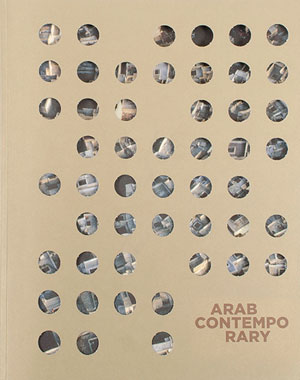
Arab Contemporary: Architecture & Identity

The second in the Louisiana Museum of Modern Art’s Architecture, Culture and Identity series, Arab Contemporary follows the publication two years ago of New Nordic. Each book explores the architecture and art of a specific region and serves as a catalog for an exhibition held at the Danish museum. These crossover exhibitions mix elements of architecture, art, photography, and film.

The new Arab-themed book grabs readers’ attention immediately with a dusty gold cover perforated with coin-size holes offering peeks at some of the projects presented inside. Texts by architectural historian and critic William J.R. Curtis, writer Kaelen Wilson-Goldie, professor Ala al-Hamarneh, architect Boris Brorman Jensen, curator Mette Marie Kallehauge, professor Jakob Skovgaard, architect Jean Nouvel, art historian Bahia Shehab, architect Henning Larsen, and human rights activist Hanna Ziadeh provide a broad range of perspectives. Like informational bricks, the pages of the book build a distinct world that comes into view piece by piece. Chapters provide some thoughtful essays and plenty of renderings, photographs, and video screenshots from the exhibition, which was on display in the first quarter of this year. The pages mention the styles of Lebanon, Syria, Iraq, Jordan, Kuwait, Israel, Palestine, Egypt and Sudan, Saudi Arabia, Qatar, United Arab Emirates, Yemen, Oman, Bahrain, Algeria, Tunisia, Libya, Morocco, and Mauritania. The Arabic language is the common thread tying all these diverse places together, but each country weaves it's own pattern and has its own story to tell.

Why did Scandinavians decide to put together this book and exhibition? "For decades, Danish architects have been working in the Arab regions with a distinctively Nordic transformation of Arab culture, which has also provided models for Arab countries," state the book’s editors. Frequently exhibited Saudi artists Dr. Ahmed Mater (who is also a physician) and Manal Al Dowayan are prominently featured in the book. Moroccan architect, Aziza Chaouni, known for her use of eco-friendly materials, created the Louisiana exhibition’s entrance pavilion made of recycled wood.  An image of Chaouni’s Chwiter Sustainable Design Education Center— which connects Marrakech to Ouarzazate—is on display in the exhibition, as well as the book. Young, Dubai-based X-Architects display their idea of what they call the “Manhattanism” of religious centers in Makkah and Madinah, Saudi Arabia. They show images of the modest holy sites being dwarfed by the tall, gaudy new modern luxury hotels. Their attempt, they say, is to offer a glimpse of the current urban development with which very few non-Muslims are familiar.

"Architecture can be understood both as a reflection of cultural identity and as an activity that in itself shapes cultural identity," state Kjeld Kjeldsen, curator, and Poul Erik Tøjner, director, in their foreword. "We look towards the Arab world and it's spaces; a world which is highly differentiated geographically, climatically and culturally." 

Eighty percent of the Arab World is covered in sand, so land—and often budgets—seem endless. With the Arab Contemporary exhibition and this book, Louisiana aims to show how architecture engages with society and the world—and negotiates between politics, art, culture, and history. In the wake of the Arab Spring uprisings, young people in the Arab world are trying to merge old traditions with new money and modern technology. The book notes the division of the Arab world into private, semi-private, and public spaces, and explains how many architects cater to indoor design while keeping both religious and cultural ideals in mind. In this way, Islamic Art and political graffiti can live side-by-side.

The book aims to simplify who Arabs really are. "Thick walls and minimal window openings help to keep out both the hot climate and unwanted gazes," says Mette Marie Kallehauge in her essay. That appears to be the common view of what Arab homes feel like, and it true in many instances. But it is not the full story. The Arabian Nights fables and Arab Spring realities neither fully represent the population, nor do they define the places Arabs choose to call “home.” The Arab world is a very social community, so sharing big platters of food and Twitter feeds online is the norm. Skyscrapers and futuristic buildings are rising alongside traditional and modest homes.

It is unlikely that any book could comprehensively cover an entire culture, but Arab Contemporary manages to pack a lot into its pages, without seeming too basic. The book is beautifully presented and serves as a great introduction to readers unfamiliar with the Arab world and its architectural identity.

Share This Story

Looking for a reprint of this article?
From high-res PDFs to custom plaques, order your copy today!

Post a comment to this article

Report Abusive Comment

Subscription Center
  • Create an Account
  • Start a Subscription
  • Manage My Account
  • Sign Up for Newsletters
  • Visit Customer Service
  • Update Preferences

More Videos

Sponsored Content

Sponsored Content is a special paid section where industry companies provide high quality, objective, non-commercial content around topics of interest to the Architectural Record audience. All Sponsored Content is supplied by the advertising company and any opinions expressed in this article are those of the author and not necessarily reflect the views of Architectural Record or its parent company, BNP Media. Interested in participating in our Sponsored Content section? Contact your local rep!

close
  • TAMLYN XtremeTrim Exterior Trim
    Sponsored byTamlyn

    Designing Cleaner Panel Facades: Why Exterior Trim Details Matter

  • Building with Vapor Barriers
    Sponsored byReef Industries, Inc.

    Vapor Barriers Help Control Moisture in Tighter Building Designs

  • Duct Interior with Prodeq System
    Sponsored byHenry, a Carlisle Company

    Designing Resilient Water Containment Systems

DESIGN:ED Podcast
Listen to Architectural Record’s DESIGN:ED Podcast

Events

June 10, 2026

Rethinking Stormwater – The Power of Porous Paving

Credits: 1 AIA LU/HSW; 1 AIBD P-CE; 0.1 ICC CEU

Learn how porous paving systems support stormwater management, reduce heat island effects, and enhance sustainable site design performance.

June 11, 2026

Very Early Warning Fire Detection for Mission-Critical Facilities

Credits: 1 AIA LU/HSW; 1 AIBD P-CE; 0.1 ICC CEU

Examine advanced fire detection strategies that support uptime and enhance safety in data centers and other mission-critical facilities.

View All Submit An Event

Products

2026 Architect's Square Foot Costbook

2026 Architect's Square Foot Costbook

See More Products

Popular Stories

Practice Matters illustration

What’s in a (Firm’s) Name? Thinking About Succession and Legacy

Practice Matters illustration

By the Numbers: Counting America's Architects

House on a Hill

Design Vanguard 2026: Forma

Crane Cove, ONO

Design Vanguard 2026 Winners

House A on a Hill

Design Vanguard 2026: Santiago Valdivieso

Broader Sustainability of CMU - Free Webinar - May 21, 2026

Related Articles

  • Building As Ornament: Iconography In Contemporary Architecture

    See More
  • Exhibition Review: Spectacle: 12 Presentations of Contemporary Museum Architecture in China

    See More
  • Constructing the Ineffable: Contemporary Sacred Architecture

    See More

Related Products

See More Products
  • image7.jpg

    Contemporary Architecture in China Towards A Critical Pragmatism

  • book5.jpg

    Contemporary Market Architecture Planning and Design

  • ribbonarch.jpg

    Ribbon Architecture: Light, Shadow, and Reflection in Architecture

See More Products

Events

View AllSubmit An Event
  • September 8, 2026

    Cities’ Identity Through Architecture and Arts (CITAA) – 10th Edition

    The 10th edition of Cities’ Identity Through Architecture and Arts (CITAA) convenes at the Polytechnic University of Turin.
View AllSubmit An Event
×

The latest news and information

#1 Source for Architectural Design, News and Products

SUBSCRIBE
  • RESOURCES
    • Advertise
    • Contact Us
    • Submit
    • Store
  • ACCOUNT CENTER
    • Create an Account
    • Start a Subscription
    • Manage My Account
    • Sign Up for Newsletters
    • Visit Customer Service
    • Update Preferences
  • PRIVACY
    • PRIVACY POLICY
    • TERMS & CONDITIONS
    • DO NOT SELL MY PERSONAL INFORMATION
    • PRIVACY REQUEST
    • ACCESSIBILITY
  • SERVICES
    • Marketing Services
    • Reprints
    • Market Research
    • List Rental
    • Survey/Respondent Access
  • STAY CONNECTED
    • Linkedin
    • Facebook
    • Instagram
    • YouTube
    • X (Twitter)

Copyright ©2026. All Rights Reserved BNP Media, Inc. and BNP Media II, LLC.

Design, CMS, Hosting & Web Development :: ePublishing