Architectural Record
search
cart
facebook twitter linkedin youtube
  • Sign In
  • Subscribe
  • Sign Out
  • My Account
Architectural Record
  • NEWS
    • Latest News
    • Awards
    • Interviews
    • Obituaries
    • Podcasts
      • Design:Ed Podcast
      • Sponsored Podcasts
  • OPINION
    • Book Reviews / Excerpts
    • Exhibition Reviews
    • Forum
  • EXCLUSIVES
    • Videos
    • Design Vanguard
    • Top 300 Firms
    • Sponsored Content
    • Sponsored eBooks
    • From the Archives
  • CONTINUING ED
    • Editorial Continuing Ed
    • CE Center
    • CE Academies
  • PROJECTS
    • Buildings By Type
    • Reuse & Renovation
    • Museums & Arts Centers
    • Colleges & Universities
    • Multifamily Housing
    • Interiors
    • Lighting
    • Kitchen & Bath
  • HOUSES
    • Record Houses
    • House of the Month
    • Featured Houses
  • PRODUCTS
    • Products by Category
    • Record Products of the Year
    • Latest Products
  • EVENTS
    • Dates & Events
    • Record on the Road
    • Innovation Conference
    • Sustainability in Practice
    • Women In Architecture
    • Webinars
    • Ad Excellence Awards
    • Submit an Event
  • CONNECT
    • Ask RECORD AI
    • Newsletters
    • Contact
    • Advertise
    • Editorial Calendar
    • Store
    • Customer Service
  • SUBMIT
    • Submission Guidelines
    • RECORD Competitions
  • MAGAZINE
    • Subscribe
    • My Account
    • Digital Edition
    • Current Issue
    • Firm Pass
    • Historic Archive
Design Vanguard

Sou Fujimoto Fractures Plans and Sections While Bringing Together People
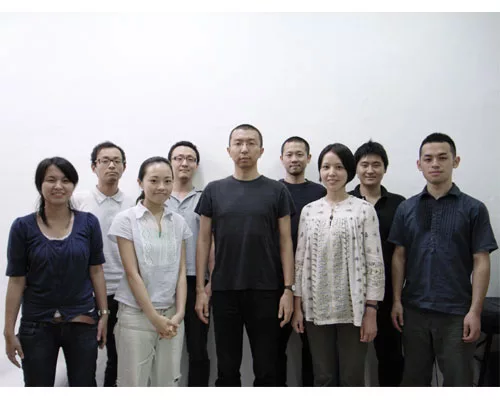
By Naomi Pollock, FAIA
Sou Fujimoto

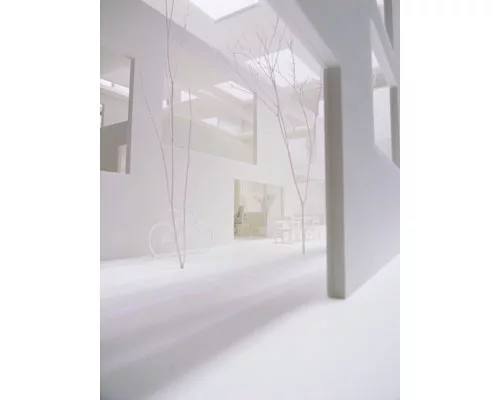
Sou Fujimoto designed House N around the idea of creating gradual shifts from outdoor to indoor space. Three shells of various sizes, with square openings punched out, nest in each other to create a gradation from public to private space.

Image: Courtesy of Sou Fujimoto Architects
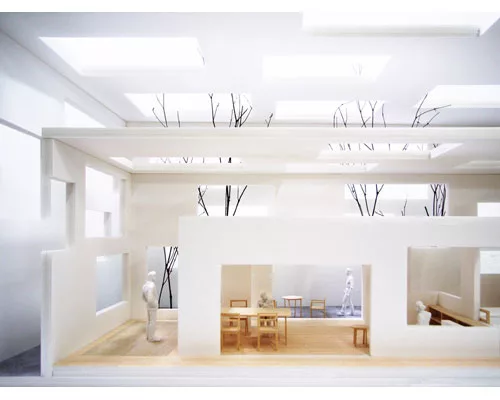
House N

House N was designed for two people and a dog. The outer shell encases a semi-indoor garden, and a cozy, private interior space sits within the innermost shell. According to Fujimoto, residents can align their lives along this gradation, using the different levels of privacy to suit their needs.

Image: Courtesy of Sou Fujimoto Architects
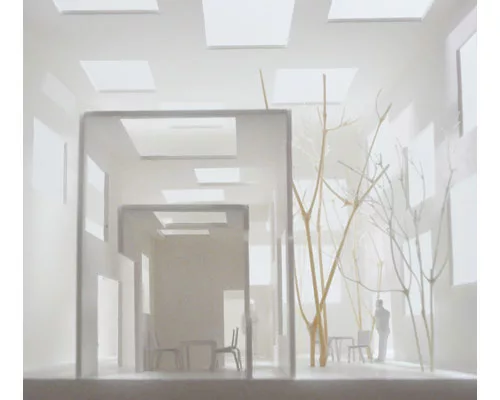
House N

Fujimoto compares life in House N to living in the clouds. He intended to create architecture that expresses the spatial richness of what lies between streets and houses.

Image: Courtesy of Sou Fujimoto Architects
Primitive Future House

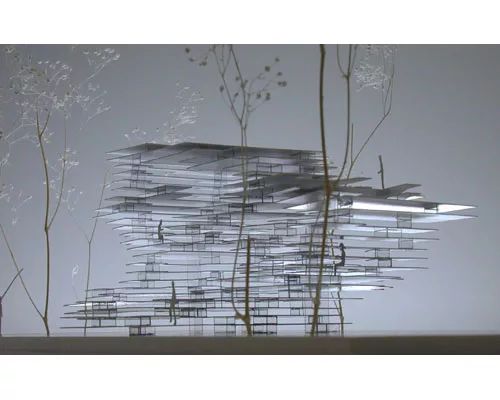
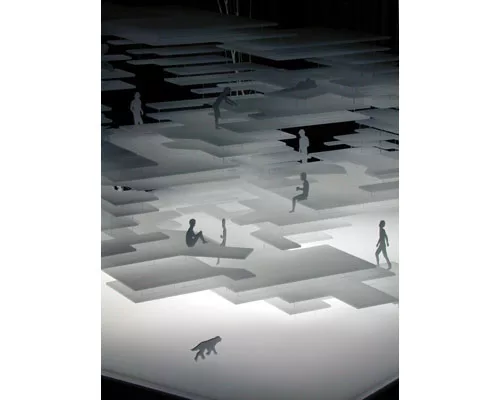
The Primitive Future House is composed entirely of layered slabs, separated by 350 millimeters. The slabs can be used as chairs, desks, floors, shelves, cover, or gardens. Fujimoto aimed to create a primitive place, like a cave, that allows inhabitants to assign various functions to the spaces.

Image: Courtesy of Sou Fujimoto Architects
Primitive Future House

Fujimoto believes the Primitive Future House can be used as an experiment to discover a new prototype for residential architecture.

Image: Courtesy of Sou Fujimoto Architects
Primitive Future House
Sou Fujimoto

Photo: © Sou Fujimoto

Sou Fujimoto
House N
House N
Primitive Future House
Sou Fujimoto
December 19, 2007


Like young architects everywhere, Japanese designers often get their first job from a family member or friend. Rarely, though, does the assignment involve a mental hospital in the middle of a remote, northern island buffeted by Siberian winds. But Sou Fujimoto's psychiatrist father runs a residential facility on Hokkaido. And when the hospital needed an additional building, the doctor turned to his 20-something son, even though the ink on his undergraduate diploma from Tokyo University was barely dry. Earmarked for occupational therapy, the 1,938-square-foot building was realized with the aid of a local architect.

After this debut, Fujimoto hit a five-year dry spell. But instead of closing up shop, going to graduate school, or joining an established firm, he bided his time with competitions and conceptual explorations. "My goal was to create a completely different way to design architecture," he explains. Forsaking standard columns, slabs, and stairs, he envisioned a single, multipurpose element that could play all three roles. This idea coalesced in Primitive Future House, a theoretical project made entirely of stacked slabs that can serve as structure, stairs, fenestration, even furniture.

Now Fujimoto is getting the chance to test this radical approach by designing Atelier/House in Hokkaido for his artist brother. Instead of conventional floors, it consists of five, vertically stacked layers of space used in various combinations to delineate human-scaled, functional areas. Though staggered in section, the project is essentially one room that contains places of different heights and character, explains Fujimoto. Straddling the line between nature and artifice, Atelier/House was not tailored exclusively to the client's needs. Instead, Fujimoto expects his brother to make accommodations to the house. It is precisely this paradox of integrating accidental places and architecture that motivates Fujimoto.

Such unintentional spaces have already generated positive responses from a discerning group of users'the kids who reside at a 50-bed treatment center for mentally disturbed children in Hokkaido's Date City. Commissioned by one of his father's colleagues, Fujimoto created a building that looks like a haphazard group of boxes bound together with window walls. Inside, it works as a pint-size city composed of free-form plazas and tiny cubic buildings. Though the quirky corners and awkward alcoves between minibuildings might make adults blanch, the kids adore them. "Children always invent new uses for space," explains the architect.

Instead of complying with an overriding order, most of Fujimoto's works are compilations of local relationships between one functional zone and its neighbors. Sculptural and site-specific, each rendition of this idea, be it a house or a hospital, is more concerned with the connection between individual parts than the building form or plan as a whole. At the moment, he is taking this concept to new heights in his design for Tokyo Apartment, a five-unit housing project composed of 13 pitched-roof house forms stacked helter-skelter. Though it looks precarious, this building echoes the organic, urban character of Tokyo, the city that Fujimoto now calls home. "I think the city is both very artificial and very natural," says Fujimoto. "For me, this is a very fresh experience."


Share This Story

Looking for a reprint of this article?
From high-res PDFs to custom plaques, order your copy today!
Contributing Editor Naomi Pollock, FAIA, is the author of Japanese Design Since 1945: A Complete Sourcebook and the forthcoming Vanishing Japan: Modern Architecture Gone But Not Forgotten,

Post a comment to this article

Report Abusive Comment

Subscription Center
  • Create an Account
  • Start a Subscription
  • Manage My Account
  • Sign Up for Newsletters
  • Visit Customer Service
  • Update Preferences

More Videos

Sponsored Content

Sponsored Content is a special paid section where industry companies provide high quality, objective, non-commercial content around topics of interest to the Architectural Record audience. All Sponsored Content is supplied by the advertising company and any opinions expressed in this article are those of the author and not necessarily reflect the views of Architectural Record or its parent company, BNP Media. Interested in participating in our Sponsored Content section? Contact your local rep!

close
  • TAMLYN XtremeTrim Exterior Trim
    Sponsored byTamlyn

    Designing Cleaner Panel Facades: Why Exterior Trim Details Matter

  • Building with Vapor Barriers
    Sponsored byReef Industries, Inc.

    Vapor Barriers Help Control Moisture in Tighter Building Designs

  • Duct Interior with Prodeq System
    Sponsored byHenry, a Carlisle Company

    Designing Resilient Water Containment Systems

DESIGN:ED Podcast
Listen to Architectural Record’s DESIGN:ED Podcast

Events

June 10, 2026

Rethinking Stormwater – The Power of Porous Paving

Credits: 1 AIA LU/HSW; 1 AIBD P-CE; 0.1 ICC CEU

Learn how porous paving systems support stormwater management, reduce heat island effects, and enhance sustainable site design performance.

June 11, 2026

Very Early Warning Fire Detection for Mission-Critical Facilities

Credits: 1 AIA LU/HSW; 1 AIBD P-CE; 0.1 ICC CEU

Examine advanced fire detection strategies that support uptime and enhance safety in data centers and other mission-critical facilities.

View All Submit An Event

Products

2026 Architect's Square Foot Costbook

2026 Architect's Square Foot Costbook

See More Products

Popular Stories

Practice Matters illustration

What’s in a (Firm’s) Name? Thinking About Succession and Legacy

Practice Matters illustration

By the Numbers: Counting America's Architects

House on a Hill

Design Vanguard 2026: Forma

Crane Cove, ONO

Design Vanguard 2026 Winners

KRESA by DLR

In Kalamazoo, DLR Group Completes a Mass-Timber Hub for Career and Technical Education Programs

Broader Sustainability of CMU - Free Webinar - May 21, 2026

Related Articles

  • Sou Fujimoto

    L'Arbre Blanc by Sou Fujimoto

    See More
  • The-Collective-Fujimoto-Brooklyn-01.jpg

    Sou Fujimoto to Build First New York Project

    See More
  • Sou Fujimoto's 2013 Serpentine Pavilion Opens in London

    See More

Related Products

See More Products
  • biogenic.jpg

    Manual of Biogenic House Sections

See More Products
×

The latest news and information

#1 Source for Architectural Design, News and Products

SUBSCRIBE
  • RESOURCES
    • Advertise
    • Contact Us
    • Submit
    • Store
  • ACCOUNT CENTER
    • Create an Account
    • Start a Subscription
    • Manage My Account
    • Sign Up for Newsletters
    • Visit Customer Service
    • Update Preferences
  • PRIVACY
    • PRIVACY POLICY
    • TERMS & CONDITIONS
    • DO NOT SELL MY PERSONAL INFORMATION
    • PRIVACY REQUEST
    • ACCESSIBILITY
  • SERVICES
    • Marketing Services
    • Reprints
    • Market Research
    • List Rental
    • Survey/Respondent Access
  • STAY CONNECTED
    • Linkedin
    • Facebook
    • Instagram
    • YouTube
    • X (Twitter)

Copyright ©2026. All Rights Reserved BNP Media, Inc. and BNP Media II, LLC.

Design, CMS, Hosting & Web Development :: ePublishing