Architectural Record
search
cart
facebook twitter linkedin youtube
  • Sign In
  • Subscribe
  • Sign Out
  • My Account
Architectural Record
  • NEWS
    • Latest News
    • Awards
    • Interviews
    • Obituaries
    • Podcasts
      • Design:Ed Podcast
      • Sponsored Podcasts
  • OPINION
    • Book Reviews / Excerpts
    • Exhibition Reviews
    • Forum
  • EXCLUSIVES
    • Videos
    • Design Vanguard
    • Top 300 Firms
    • Sponsored Content
    • Sponsored eBooks
    • From the Archives
  • CONTINUING ED
    • Editorial Continuing Ed
    • CE Center
    • CE Academies
  • PROJECTS
    • Buildings By Type
    • Reuse & Renovation
    • Museums & Arts Centers
    • Colleges & Universities
    • Multifamily Housing
    • Interiors
    • Lighting
    • Kitchen & Bath
  • HOUSES
    • Record Houses
    • House of the Month
    • Featured Houses
  • PRODUCTS
    • Products by Category
    • Record Products of the Year
    • Latest Products
  • EVENTS
    • Dates & Events
    • Record on the Road
    • Innovation Conference
    • Sustainability in Practice
    • Women In Architecture
    • Webinars
    • Ad Excellence Awards
    • Submit an Event
  • CONNECT
    • Ask RECORD AI
    • Newsletters
    • Contact
    • Advertise
    • Editorial Calendar
    • Store
    • Customer Service
  • SUBMIT
    • Submission Guidelines
    • RECORD Competitions
  • MAGAZINE
    • Subscribe
    • My Account
    • Digital Edition
    • Current Issue
    • Firm Pass
    • Historic Archive
Architect Continuing Education

Water and Resilience

Continuing Education: Flood-Proofing Art Museums

Flirting with Disaster: Two recent art museums with prime waterfront sites protect their buildings and collections from severe weather and rising water levels.
By Joann Gonchar, FAIA
Floor-Proofing Art Museums
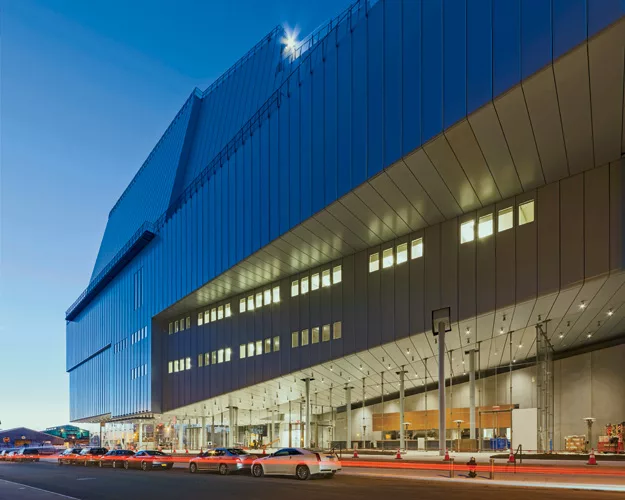
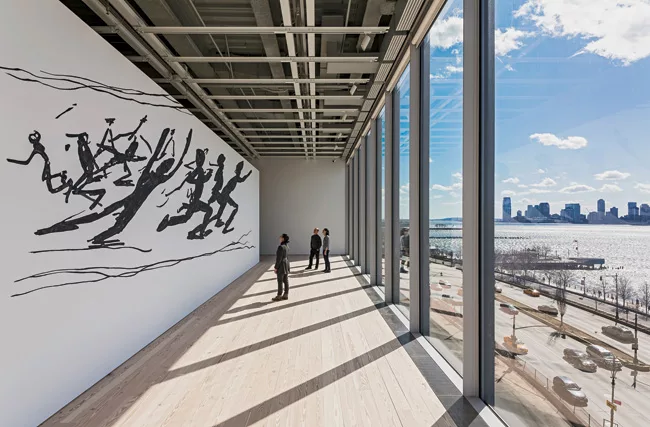
One advantage of the Whitney Museum of American Art’s location is the Hudson River view from a 5th-floor gallery space, which features a work by Jonathan Borofsky.
 
Image © Jeff Goldberg/Esto
Floor-Proofing Art Museums
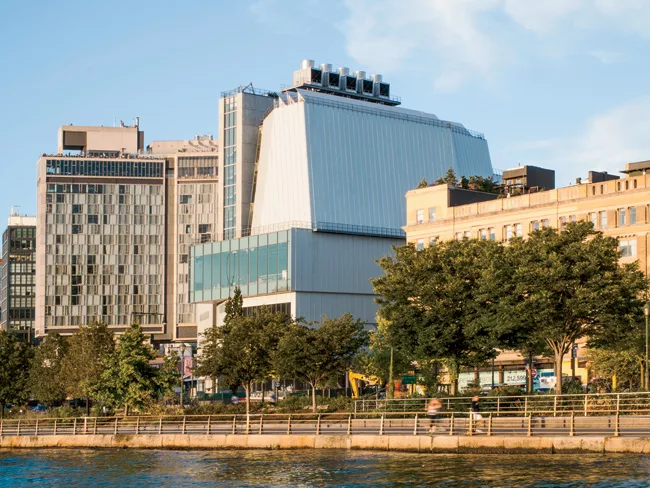
This gallery has a glazed wall and projects from the Whitney’s west facade.
 
Image © Whitney Museum of American Art/Karin Jobst
Floor-Proofing Art Museums
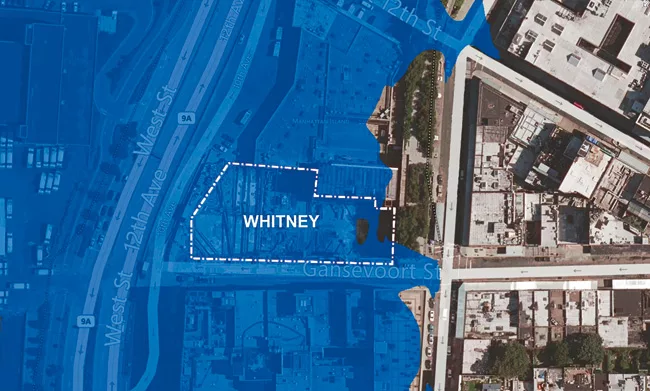
During Hurricane Sandy, while the museum was still under construction, its basement filled with more than 6 million gallons of water.
 
Image Courtesy Cooper Robertson
Floor-Proofing Art Museums
One of the Whitney's most vulnerable features its transparent lobby, enclosed in floor-to-ceiling glass.
 
Photo © Jeff Goldberg/Esto
Floor-Proofing Art Museums
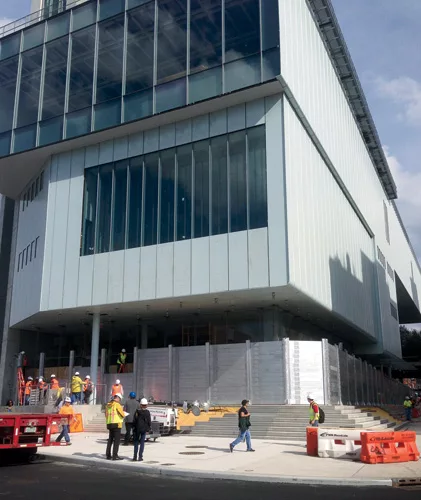
If a severe storm is expected, the Whitney will protect its glass-enclosed lobby with a temporary flood barrier of aluminum “logs” stacked between vertical anchors.
 
Photo courtesy Cooper Robertson
Floor-Proofing Art Museums
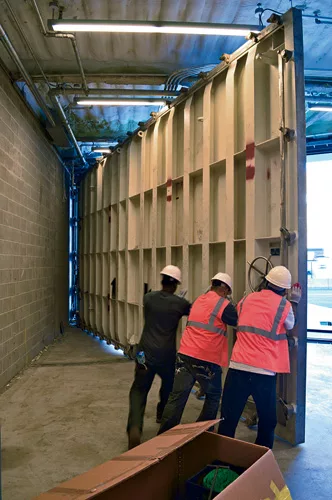
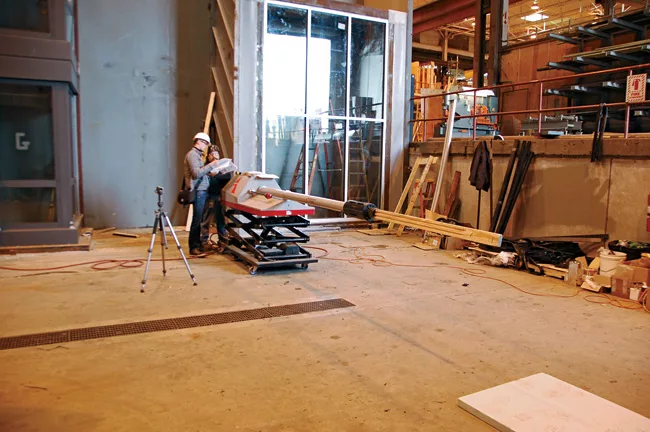
Before a major storm, museum staff will close the loading dock's 5,000-pound floodgate, which was made by a fabricator of doors for naval vessels.
 
Photo courtesy Cooper Robertson
Floor-Proofing Art Museums
To protect the Perez Art Museum Miami from storm surges, architects Herzog & de Meuron placed the three-story building on a plinth.
 
Image courtesy Renzo Piano Building Workshop
Floor-Proofing Art Museums
To protect the Perez Art Museum Miami from storm surges, architects Herzog & de Meuron placed the three-story building on a plinth.
 
Photo © PAMM/Daniel Azoulay
Floor-Proofing Art Museums
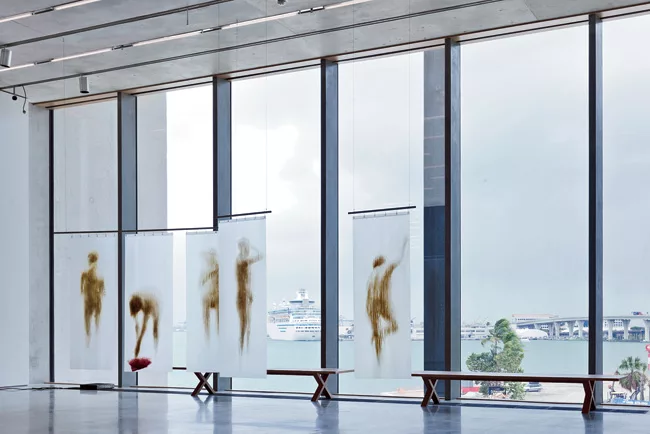
Arguably, the museum’s most notable hurricane-resistant features are its windows, which are as large as 7 feet 6 inches wide and 17 feet 3 inches tall. They flood the galleries with daylight and help show off pieces like Cortinas de Baño by Oscar Muñoz.
 
Photo © Iwan Baan
Floor-Proofing Art Museums
The Perez’s glazing assemblies are considered the largest to undergo a “missile impact test,” which entails firing a two-by-four from a cannon at the glass.
 
Photo courtesy Front
Floor-Proofing Art Museums
July 16, 2015

Continuing Education

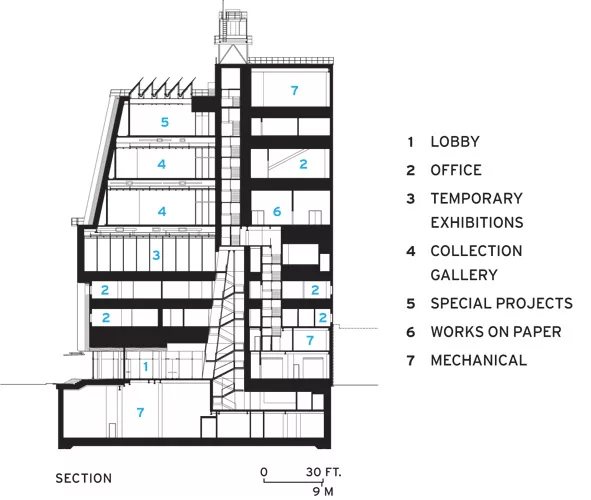
The move of the Whitney Museum of American Art from its Marcel Breuer'designed quarters on Manhattan's Upper East Side to the city's Meatpacking District presented a host of challenges, flooding among them. The museum knew that the new downtown site—sandwiched between the Hudson River and the increasingly popular High Line—would be at risk in an intense storm. That's one of the reasons why the building's architects, Renzo Piano Building Workshop (RPBW) and Cooper Robertson, opted to locate the permanent galleries and art storage for the recently opened museum in the upper reaches of the eight-story structure. It is also why they raised the lobby a foot and a half above the 500-year-flood plain.

But when Hurricane Sandy slammed New York in October 2012, while the new museum was under construction, the storm surge brought more than 6 million gallons of river water into the basement. Although the building was already framed to the fifth-floor level (making it impractical to radically rethink the design), the project team insists that the event provided an opportunity in disguise. “We were lucky it happened when it did,” says Tom Wittrock, a Cooper Robertson partner.

Sandy was the impetus for the museum to seek the help of a German team of engineers—WTM, which has a specialty in port and marine structures—along with experts in storm modeling from the Franzius Institute at the Leibniz University of Hanover. They came up with a plan for protecting the museum up to 16.5 feet above the Manhattan Datum—a level 6.5 feet higher than the lobby floor and more than 5 feet higher than Sandy's floodwaters. They accomplished this with strategies that should go unnoticed by visitors.

For example, the loading-dock entry, which sits at street level and faces the river, is protected by a 27-by-14-foot hinged floodgate. Made by a fabricator of watertight doors for naval vessels, the 8-inch-thick steel door, weighing approximately 15,000 pounds, requires two people to close it.

One of the Whitney's most vulnerable features is the lobby, which is enclosed by floor-to-ceiling glass on three sides. Here the engineers devised a deployable watertight barrier of stackable aluminum “logs.” If a severe storm is predicted, a crew of 20 workers can erect the temporary wall in about 7 hours. The demountable nature of the barrier preserves a key aspect of the design: “The idea was to create an open and transparent ground floor and treat the outside and inside as one,” explains Elisabetta Trezzani, an RPBW partner. The lobby, she says, was conceived as a “big piazza for the city.”

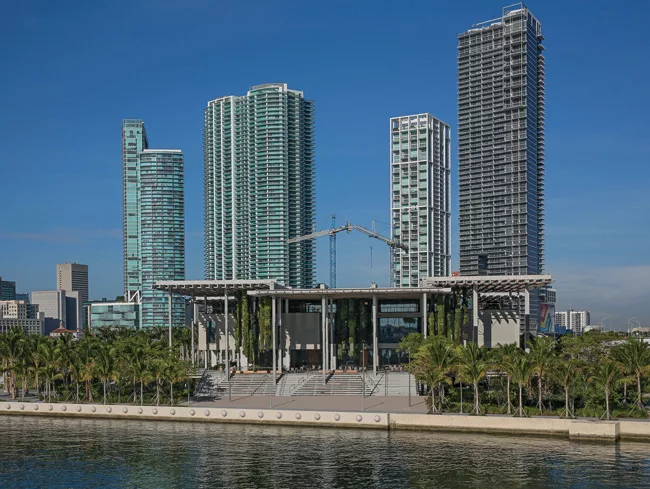
The Whitney is not the only art museum that has grappled with flood mitigation. Just one of several such institutions is Herzog & de Meuron's Perez Art Museum Miami, which sits on the edge of Biscayne Bay. To protect the three-story glass and concrete building and its art exhibits from storm surge, the architects raised it above sea level on a plinth, with the space below dedicated to parking.

But in addition to water, the other severe weather threat that the Perez design team had to consider was hurricane-force wind, and any material it could carry with it. To safeguard against damage in an intense storm, the impossibly thin-looking concrete piloti that support an expansive trellis have been heavily reinforced to withstand both lateral forces and the impact of wind-borne debris. The suspension and irrigation systems for the hanging gardens, designed by green-wall pioneer Patrick Blanc, have also been carefully braced.

Looking for quick answers on architecture and design topics?
Try Ask RECORD, our new smart AI search tool.
Ask RECORD →

Arguably, the Perez's most notable hurricane-resistant features are its windows, the largest of which span 7 feet 6 inches between their ultra-high-performance reinforced concrete mullions and 17 feet 3 inches from slab to slab. By code, the double-glazed units were required to undergo a battery of tests, including a so-called “missile impact test.” This entails firing an 8-foot-long two-by-four at a speed of 50 feet per second at the glass assemblies. The Perez windows are said to be the largest so far to undergo this testing regimen in the U.S.

The code dictates that the missile-impact test must be conducted by an independent laboratory. But the project's facade contractor, Seele, opted to perform its own “pretesting” in its glass-fabrication facility in Germany in order to help determine the optimal glazing assembly. Ultimately Seele settled on an outer lite of two layers of 12 millimeter heat-strengthened glass and an inner one of two layers of 8 millimeter fully tempered glass. Both included a reinforced PVB interlayer.

Results from the company's pretesting of the glazing system were consistent with the official preconstruction test subsequently performed in a lab in York, Pennsylvania. In both instances, the two-by-fours caused significant damage to the unit's outer lite, while the inner one remained intact, as the code mandates. The inside layers of glass are considered the last line of defense. “They are sacrosanct,” explains Bruce Nichol, a partner with Front, the project's facade consultant, while the outer lite is thought of as “sacrificial,” he says.

The Perez has yet to undergo a real-life test. The storm seasons since its opening in late 2013 have been unusually calm, notes interim director Leann Standish. But that doesn't mean that she and her staff are just waiting for the next one to hit. Annually, they reevaluate their emergency procedures, including plans for moving or securing the regularly changing outdoor sculpture. “The only good thing about a hurricane,” she says, “is that you know it is coming.”

Continuing Education
 
CEU symbolTo earn one AIA learning unit (LU), including one hour of health, safety, and welfare (HSW) credit, read the three stories in the "Water and Resilience" section: "New Orleans Goes with the Flow"; "Befriending the Floods"; and "Flirting with Disaster". Then complete the test at architecturalrecord.com. Upon passing the test, you will receive a certificate of completion, and your credit will be automatically reported to the AIA. Additional information regarding credit reporting and continuing-education requirements can be found online at continuingeducation.bnpmedia.com.
 
Learning Objectives
1 Explain how green infrastructure can be used to bolster traditional hard infrastructure for flood control.
2 Describe how green infrastructure tactics can be used to remove pollutants from stormwater.
3 Discuss measures implemented by two recent art museums as protection from flooding.
4 Outline the testing regimen for hurricane-resistant glazing.
 
AIA/CES Course #K1507A
 
For CEU credit, Read “Water and Resilience” and take the Quiz at continuingeducation.bnpmedia.com, or use our architectural record continuing-education app, available in the itunes store.

Share This Story

Looking for a reprint of this article?
From high-res PDFs to custom plaques, order your copy today!


Joann gonchar

Joann Gonchar, FAIA, LEED AP, is deputy editor at Architectural Record. She joined RECORD in 2006, after working for eight years at its sister publication, Engineering News-Record. Before starting her career as a journalist, Joann worked for several architecture firms and spent three years in Kobe, Japan, with the firm Team Zoo, Atelier Iruka. She earned a Master of Architecture degree from the University of Pennsylvania and a Bachelor of Arts from Brown University. She is licensed to practice architecture in New York State.

Post a comment to this article

Report Abusive Comment

Subscription Center
  • Create an Account
  • Start a Subscription
  • Manage My Account
  • Sign Up for Newsletters
  • Visit Customer Service
  • Update Preferences

More Videos

Sponsored Content

Sponsored Content is a special paid section where industry companies provide high quality, objective, non-commercial content around topics of interest to the Architectural Record audience. All Sponsored Content is supplied by the advertising company and any opinions expressed in this article are those of the author and not necessarily reflect the views of Architectural Record or its parent company, BNP Media. Interested in participating in our Sponsored Content section? Contact your local rep!

close
  • cold storage facility
    Sponsored byCarlisle SynTec Systems

    How Architects Can Design More Continuous Cold Storage Envelopes

  • TAMLYN XtremeTrim Exterior Trim
    Sponsored byTamlyn

    Designing Cleaner Panel Facades: Why Exterior Trim Details Matter

  • Building with Vapor Barriers
    Sponsored byReef Industries, Inc.

    Vapor Barriers Help Control Moisture in Tighter Building Designs

DESIGN:ED Podcast
Listen to Architectural Record’s DESIGN:ED Podcast

Events

June 23, 2026

Enhancing Fire Resistance with Advanced PVC Solutions

Credits: 1 AIA LU/HSW; 1 AIBD P-CE; 0.1 ICC CEU; 1 IIBEC CEH

Evaluate advanced PVC solutions that improve fire resistance, support WUI compliance, and enhance resilience in residential and commercial building design.

June 25, 2026

Designing Glass Railing Systems that Enhance Aesthetics and Meet Code

Credits: 1 AIA LU/HSW; 1 AIBD P-CE; 0.1 ICC CEU

Upon course completion, participants will possess a deeper understanding of glass railings to help ensure that safety, aesthetic, and performance objectives are achieved.

View All Submit An Event

Products

2026 Architect's Square Foot Costbook

2026 Architect's Square Foot Costbook

See More Products

Popular Stories

Lorcan O' Herilhy

California Architect Lorcan O’Herlihy Has Died, Age 66

Obama Presidential Center, Chicago

The Obama Presidential Center Opens on Chicago’s South Side

Spoonbill Ranch

Johnsen Schmaling Architects Integrates Spoonbill Ranch into a Pristine Landscape

Image of Bruce Springsteen Center for American Music

The CookFox-designed Bruce Springsteen Center for American Music Opens in New Jersey

Three Courtyards House

Design Vanguard 2026: Balsa Crosetto Piazzi

Enhancing Fire Resistance with Advanced PVC Solutions - Free Webinar - June 23, 2026

Related Articles

  • Airports of the Future

    Continuing Education: Airports of the Future

    See More
  • Timber Grows Up

    Continuing Education: Tall Mass Timber Construction

    See More
  • Continuing Education: Lighting Controls

    Continuing Education: Lighting Controls

    See More

Events

View AllSubmit An Event
  • December 2, 2025

    Future Proofing Life Safety Communications for Smarter, Safer Buildings

    NOW ON DEMANDCredits: 1 AIA LU/HSW; 1 AIBD P-CE; 0.1 ICC CEU; 0.1 IACET CEUDiscover how software-enabled communication devices enhance efficiency, compliance, and safety in life safety systems across hospitals, schools, hotels, warehouses, and other facilities.
  • April 30, 2026

    Designing for Access: ADA Compliance in K–12 and Higher Education Facilities

    NOW ON DEMANDCredits: 1 AIA LU/HSW; 1 AIBD P-CE; 0.1 ICC CEU; 0.1 IACET CEUThrough real-world examples and code-based analysis, attendees will gain practical strategies to design educational environments that are safe, inclusive, and fully compliant.
View AllSubmit An Event
×

The latest news and information

#1 Source for Architectural Design, News and Products

SUBSCRIBE
  • RESOURCES
    • Advertise
    • Contact Us
    • Submit
    • Store
  • ACCOUNT CENTER
    • Create an Account
    • Start a Subscription
    • Manage My Account
    • Sign Up for Newsletters
    • Visit Customer Service
    • Update Preferences
  • PRIVACY
    • PRIVACY POLICY
    • TERMS & CONDITIONS
    • DO NOT SELL MY PERSONAL INFORMATION
    • PRIVACY REQUEST
    • ACCESSIBILITY
  • SERVICES
    • Marketing Services
    • Reprints
    • Market Research
    • List Rental
    • Survey/Respondent Access
  • STAY CONNECTED
    • Linkedin
    • Facebook
    • Instagram
    • YouTube
    • X (Twitter)

Copyright ©2026. All Rights Reserved BNP Media, Inc. and BNP Media II, LLC.

Design, CMS, Hosting & Web Development :: ePublishing