Architectural Record
search
cart
facebook twitter linkedin youtube
  • Sign In
  • Subscribe
  • Sign Out
  • My Account
Architectural Record
  • NEWS
    • Latest News
    • Awards
    • Interviews
    • Obituaries
    • Podcasts
      • Design:Ed Podcast
      • Sponsored Podcasts
  • OPINION
    • Book Reviews / Excerpts
    • Exhibition Reviews
    • Forum
  • EXCLUSIVES
    • Videos
    • Design Vanguard
    • Top 300 Firms
    • Sponsored Content
    • Sponsored eBooks
    • From the Archives
  • CONTINUING ED
    • Editorial Continuing Ed
    • CE Center
    • CE Academies
  • PROJECTS
    • Buildings By Type
    • Reuse & Renovation
    • Museums & Arts Centers
    • Colleges & Universities
    • Multifamily Housing
    • Interiors
    • Lighting
    • Kitchen & Bath
  • HOUSES
    • Record Houses
    • House of the Month
    • Featured Houses
  • PRODUCTS
    • Products by Category
    • Record Products of the Year
    • Latest Products
  • EVENTS
    • Dates & Events
    • Record on the Road
    • Innovation Conference
    • Sustainability in Practice
    • Women In Architecture
    • Webinars
    • Ad Excellence Awards
    • Submit an Event
  • CONNECT
    • Ask RECORD AI
    • Newsletters
    • Contact
    • Advertise
    • Editorial Calendar
    • Store
    • Customer Service
  • SUBMIT
    • Submission Guidelines
    • RECORD Competitions
  • MAGAZINE
    • Subscribe
    • My Account
    • Digital Edition
    • Current Issue
    • Firm Pass
    • Historic Archive
ProjectsBuildings by TypeMultifamily Housing Architecture

Pico Place

Yes, in my backyard: A sympathetic design raises the bar for affordable housing in a not-so-affordable city.

By Deborah Snoonian Glenn
Pico Place
Balanced massing and a variety of cladding materials unite in a dynamic facade along bustling Pico Boulevard. Trees and low hillocks of colorful succulents along the main elevation absorb airborne dust, withstand drought, and offer a contrast to orthogonal building forms.
 
Photo © John Linden
Pico Place
Balanced massing and a variety of cladding materials unite in a dynamic facade along bustling Pico Boulevard. Trees and low hillocks of colorful succulents along the main elevation absorb airborne dust, withstand drought, and offer a contrast to orthogonal building forms.
 
Photo © John Linden
Pico Place
Exterior exit stairs are pleasant to use and add depth to the facade.
 
Photo © John Linden
Pico Place
A planted roof helps keep the community room cool, while retractable glazed panels allow it to open to the courtyard.
 
Photo © John Linden
Pico Place
Most apartments are entered through the courtyard; overhead fabric shades act as a visual shield from guests staying in the adjacent high-rise hotel.
 
Photo © John Linden
Pico Place
Fiber-cement siding, perforated aluminum-zinc coated sheet-steel panels, and integral-pigment stucco are durable and easy to maintain, suiting the complex's modest operating budget.
 
Photo © John Linden
Pico Place
Two- and three-bedroom layouts were designed without hallways to maximize usable space.
 
Image © Ledaean
Pico Place
Palm trees rising from the subterranean garage add a layer of privacy and greenery.
 
Photo © Tara Wujcik
Pico Place
Image courtesy Brooks + Scarpa
Pico Place
Image courtesy Brooks + Scarpa
Pico Place
Image courtesy Brooks + Scarpa
Pico Place
Image courtesy Brooks + Scarpa
Pico Place
Pico Place
Pico Place
Pico Place
Pico Place
Pico Place
Pico Place
Pico Place
Pico Place
Pico Place
Pico Place
Pico Place
October 16, 2014

Architects & Firms

Brooks + Scarpa Architects

Santa Monica, California

People/Products

Affordable housing in Santa Monica sounds like an oxymoron. In 2013, the city's average monthly rent of $2,328 was the priciest in Los Angeles County. Adding insult to injury are local homeowners who fear that buildings for lower-earning households will be eyesores that drive down property values. But that doesn't stop nonprofit developer Community Corporation of Santa Monica from finding places to construct them and tapping good architects to design them. The latest project to refute NIMBYism's premise is Brooks + Scarpa's Pico Place. The attractive complex animates a nondescript block near the city's civic core and provides apartments for families of low to moderate income, earning from 30 to 60 percent less than the area median income (AMI).

Principals Angela Brooks and Lawrence Scarpa have charted these waters before. In 2002 they built Colorado Court less than a mile away for the same client, and it became the first multifamily project in the country to achieve a LEED rating (earning Gold certification), won scores of awards, and cemented their reputation as leading architects for affordable housing in Southern California. At Pico Place, which earned a LEED Platinum certification, the pair deployed some strategies that have worked at past projects to minimize structural, mechanical, and energy requirements, but eschewed the one-size-fits-all mentality that stigmatizes this building type. 'We're now able to make some broad decisions quickly so that we can spend more time tailoring each project to its site and context,' says Brooks.

This approach paid dividends here, where the location complicated a straightforward program. The firm was asked to design a 32-unit complex of affordable family apartments, with a laundry room, community room, and code-mandated underground parking. The area has a 35-foot height restriction, and the long, narrow, sloped site (once five contiguous, down-at-the-heels lots) is ringed by a hodgepodge of structures: a high-rise hotel; single-family houses; a low-rise 1940s office building; and, across Pico Boulevard, the fenced-in campus of Santa Monica High School. The beach is a few blocks to the west. It's a hectic place, both visually and literally.

Brooks and Scarpa's scheme mediates these eclectic surroundings, providing privacy and mitigating street noise. The architects arranged two three-story buildings'one rectangular, one L-shaped'to form an interior courtyard. Three-bedroom units occupy the corners, while the two-bedroom units sit within the legs of the L adjacent to the hotel and the site's southern edge. 'This layout uses the footprint efficiently and allows for stacking similar or identical floor plans,' says Brooks. A single-story volume that fills out the main elevation along Pico Boulevard houses the community and laundry rooms. Walking into the complex, one feels a logical transition from chaos to calm. The entrance and public spaces face and engage the street, while the courtyard beyond offers a sheltered gathering spot. The hubbub finally fades as residents enter their private quarters.

Brooks calls the hefty frame that ties together the facades along Pico Boulevard 'our big design gesture,' its scale and weight a nod to the adjacent hotel. It forms balconies and a planted roof on the second level and a protective 'eyebrow' on the third. The glazed community room and white stucco cladding with bright accent panels add a beachy vibe'we're definitely in SoCal'while recycled fiber-cement siding underscores the site's horizontal, linear nature. The interplay of these surfaces, and siding of different widths, orientations, and spacing, echo the ebb and flow of foot and street traffic. Varied parts form a pleasing whole, a sentiment reflected in the surrounding area's diversity.

Within the complex, thoughtfully designed circulation creates a collegial atmosphere that encourages interaction. Walkways, bridges, and stairs knit together buildings and floors, and the open courtyard permits long sight lines across the property. Because Community Corporation's projects are built without air-conditioning, the architects took advantage of the temperate climate by allowing access to units from outdoors instead of a sealed, double-loaded corridor. Floor plans allow daylight and ocean breezes to pass through; many apartments have private balconies too.

Even the parking area encourages neighborliness. The architects opened it up to the courtyard and added a staircase, a move that, as they learned on an earlier project, eliminated the need for pricey ductwork in the garage. 'People skip the elevator, because they're drawn to the light that spills down from above. It just feels easier to take the stairs,' says Brooks.

Within walking distance of bus stops, prime employment, and commercial centers'civic and corporate office buildings, the Third Street Promenade retail district, the Santa Monica Pier'and the new $48.3 million Tongva Park, Pico Place's location is enviable, but eminently practical for low-income families in particular. Since many of them can't afford a car, living near work, public transit, and services offers them more opportunities and improves their quality of life dramatically. The astute design here makes the case that high-quality housing can and should be accessible to everybody'not just those who can pay a premium for it.

A former senior editor at RECORD, Deborah Snoonian Glenn lives in Los Angeles and writes about design and other topics.


People

Client/Owner:
Community Corporation of Santa Monica
1423 Second St., Suite B
Santa Monica, CA 90401
310-894-8487 x109

Architect:
Brooks + Scarpa
4611 W. Slauson Ave
Los Angeles, CA 90043
Tel. 323-596-4700
Fax 310-453-9696

Project Team:
Lawrence Scarpa, FAIA – Lead Designer
Angela Brooks, FAIA, LEED AP – Principal-in-Charge, Emily Hodgdon - Project Architect, Mark Buckland, Ching Luk, Sri Sumantri, Silke Clemens, Brad Buter - Project Design Team

Landscape: PEG Office of Landscape + Architecture

Engineering:
Weidlinger Associates – Structural Engineering
E2DI – Mechanical, Electrical and Plumbing
Barbara Hall – Civil Engineering
IRC – Roofing/waterproofing

Acoustics: Veneklasen Associates

Specifications: Phil Easton

General Contractor: Benchmark Contractors Inc.

Photographers:
John Linden
Tara Wujcik

Size:

41,000 square feet

Project cost:

$10 million

Completion date:

August 2013


Products

Structural system: Type V-A wood frame over Type I reinforced concrete.

Exterior
Masonry:  Angeles Block Company, Inc.

Metal:  KLA Sheet Metal, Inc.

Concrete: Catalina Pacific and Benchmark Contractors, Inc.

Wood: Open web wood truss joists by BMC Building Materials and Construction Services.

Exterior: Exterior Cement Plaster with integral finish color by Omega.  Exterior Cement Board by James Hardie Siding.

Windows: Milgard Aluminum.  Storefront by CRL/US Aluminum.

Glazing: LowE, argon-filled by Westcoast Insulated Glass Products and LowE PPG Solarban 60.

Doors: Fleetwood  multi-slider, Total Door Systems, Haley Architectural Doors.

Hardware:  Schlage.

Roofing:  Johns Manville built-up roofing with SRI 93 glass cap.

Deck Coating: Pacific Polymers Elasto-Deck 5000x2

Courtyard Shades: SARK Custom Awnings

Green Roof: Greengrid Roof Modules/Weston Solutions.

Interior finishes
Cabinets: SierraPine ‘Medite’, MDF, Formaldehyde-free, by CWP Cabinets.  Caesarstone counter in Community Room, HI-MACS by LG Hausys solid surface countertop in residential units.
Paints:             Zero VOC Paints by Dunn Edwards
Paneling: Gypsum board by CertainTeed.
Flooring: Urban Advantage Group vinyl wood plank and Forbo linoleum.
Lighting: Shaper, Bega, Prudential, Capri, Cole, Lithonia, Kim, Lightways.
Controls: Lithonia
Insulation: Owens Corning EcoTouch blown-in formaldehyde-free insulation with 50% recycled content, GreenGuard Certified.

Plumbing
Fixtures: Toilets by Toto, Sinks by American Standard and Elkay, Faucets by Delta and Price Pfister, Floor drains by JR Smith, Tubs by Fiber Care Baths Inc, Shower head/controls by Symmons.

Appliances:  Frigidaire and GE.

Other:             
Precast concrete storm water drywell infiltration system by Barbara Hall.
Hydronic heating by Noritz and First Company.
Cabinet hardware by Trimco. 
Play equipment by Landscape Structures.  Kid’s play area surfacing: poured-in-place resilient surface by Surface America.

 
KEYWORDS: California

Share This Story

Looking for a reprint of this article?
From high-res PDFs to custom plaques, order your copy today!

Deborah Snoonian Glenn, a former senior editor of RECORD and This Old House, lives in Los Angeles, where she writes about architecture.

Post a comment to this article

Report Abusive Comment

Subscription Center
  • Create an Account
  • Start a Subscription
  • Manage My Account
  • Sign Up for Newsletters
  • Visit Customer Service
  • Update Preferences

More Videos

Sponsored Content

Sponsored Content is a special paid section where industry companies provide high quality, objective, non-commercial content around topics of interest to the Architectural Record audience. All Sponsored Content is supplied by the advertising company and any opinions expressed in this article are those of the author and not necessarily reflect the views of Architectural Record or its parent company, BNP Media. Interested in participating in our Sponsored Content section? Contact your local rep!

close
  • TAMLYN XtremeTrim Exterior Trim
    Sponsored byTamlyn

    Designing Cleaner Panel Facades: Why Exterior Trim Details Matter

  • Building with Vapor Barriers
    Sponsored byReef Industries, Inc.

    Vapor Barriers Help Control Moisture in Tighter Building Designs

  • Duct Interior with Prodeq System
    Sponsored byHenry, a Carlisle Company

    Designing Resilient Water Containment Systems

DESIGN:ED Podcast
Listen to Architectural Record’s DESIGN:ED Podcast

Events

June 10, 2026

Rethinking Stormwater – The Power of Porous Paving

Credits: 1 AIA LU/HSW; 1 AIBD P-CE; 0.1 ICC CEU

Learn how porous paving systems support stormwater management, reduce heat island effects, and enhance sustainable site design performance.

June 11, 2026

Very Early Warning Fire Detection for Mission-Critical Facilities

Credits: 1 AIA LU/HSW; 1 AIBD P-CE; 0.1 ICC CEU

Examine advanced fire detection strategies that support uptime and enhance safety in data centers and other mission-critical facilities.

View All Submit An Event

Products

2026 Architect's Square Foot Costbook

2026 Architect's Square Foot Costbook

See More Products

Popular Stories

Coronado Bridge

The Architect’s Guide to San Diego

Practice Matters illustration

What’s in a (Firm’s) Name? Thinking About Succession and Legacy

Practice Matters illustration

By the Numbers: Counting America's Architects

Inward House

Inward House by VeeV Design Studio

Riverdale House by Studio Lau

Riverdale House by Studio Lau

Broader Sustainability of CMU - Free Webinar - May 21, 2026

Related Articles

  • The Cresta

    See More
  • Blackbirds

    Blackbirds

    See More
  • Pico Branch Library

    See More

Related Products

See More Products
  • of place.jpg

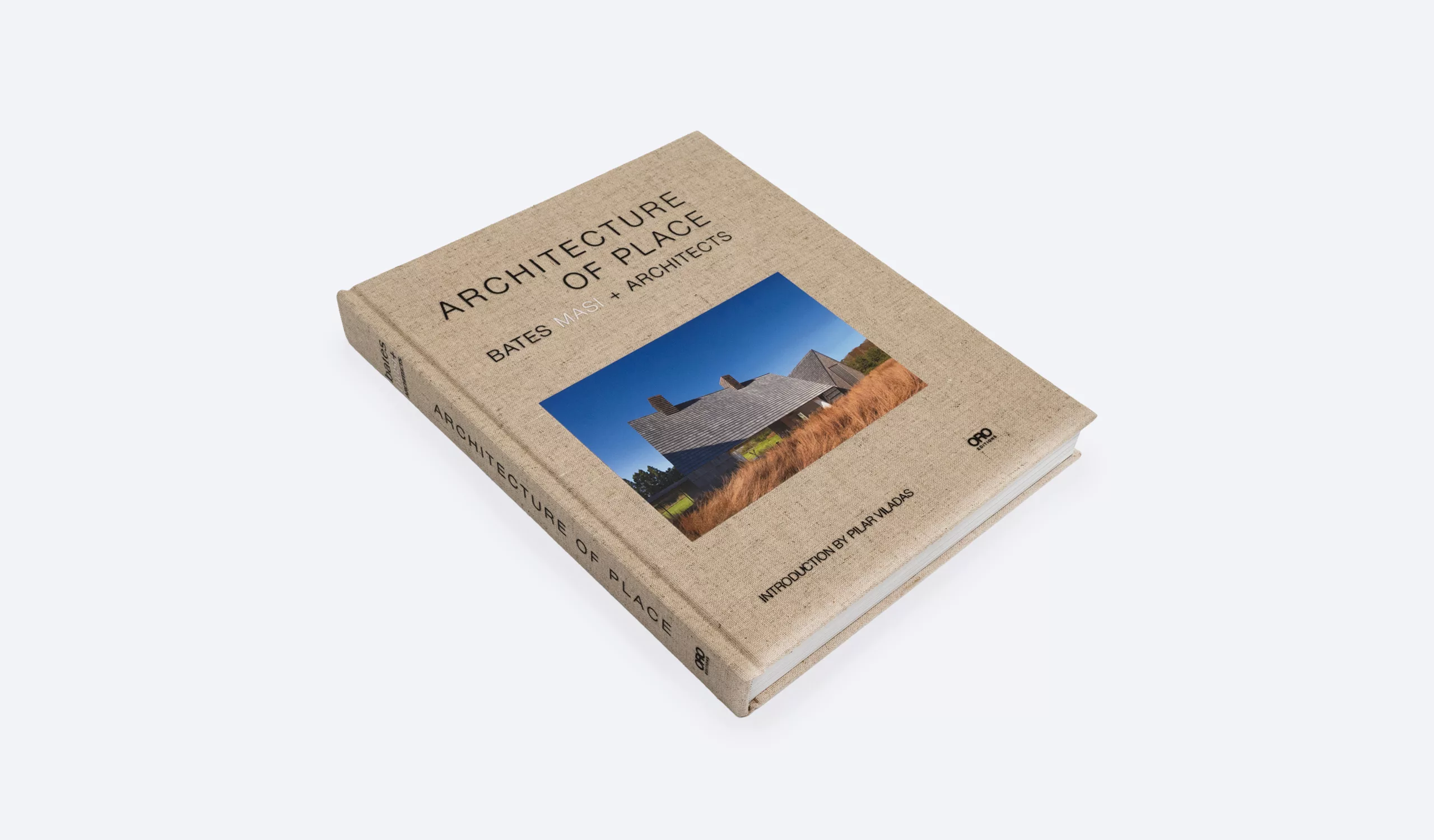
    Architecture of Place

See More Products
×

The latest news and information

#1 Source for Architectural Design, News and Products

SUBSCRIBE
  • RESOURCES
    • Advertise
    • Contact Us
    • Submit
    • Store
  • ACCOUNT CENTER
    • Create an Account
    • Start a Subscription
    • Manage My Account
    • Sign Up for Newsletters
    • Visit Customer Service
    • Update Preferences
  • PRIVACY
    • PRIVACY POLICY
    • TERMS & CONDITIONS
    • DO NOT SELL MY PERSONAL INFORMATION
    • PRIVACY REQUEST
    • ACCESSIBILITY
  • SERVICES
    • Marketing Services
    • Reprints
    • Market Research
    • List Rental
    • Survey/Respondent Access
  • STAY CONNECTED
    • Linkedin
    • Facebook
    • Instagram
    • YouTube
    • X (Twitter)

Copyright ©2026. All Rights Reserved BNP Media, Inc. and BNP Media II, LLC.

Design, CMS, Hosting & Web Development :: ePublishing