Museum of Cultures
Raise high the roof: With sleight of hand, the Basel-based architects built upon an esteemed institution in the heart of their city's historic district.
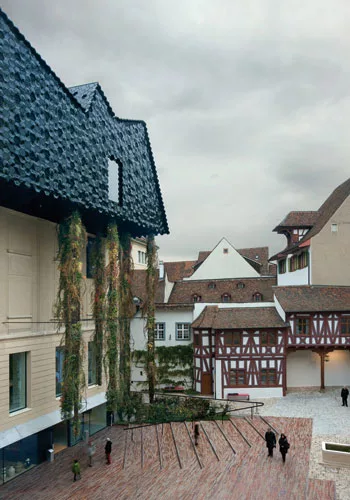
Accessible through an arched passageway on a main square, the museum is a sign of renewal in the heart of the old quarter, with its spectacular addition, inviting new entrance, and curtain of spiraling greenery.
Photo © Duccio Malagamba
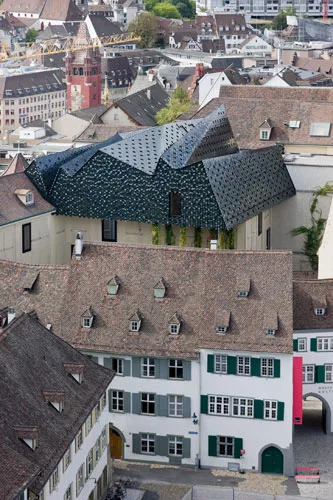
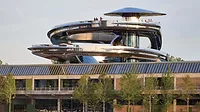
The new roof speaks to the medieval roofscape and mosaics atop Basel’s city hall (Rathaus), upper right, and cathedral (Münster).
Photo © Iwan Baan
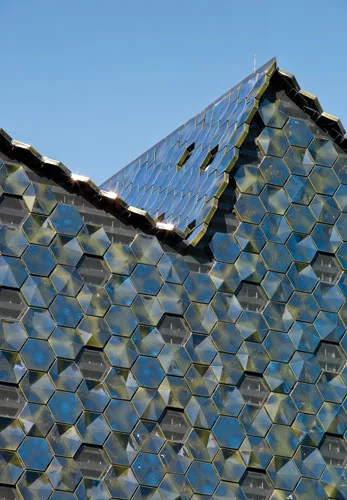
The metal substructure of the addition is clad with iridescent convex, concave, and flat hexagonal ceramic tiles that refract daylight—even on a cloudy day.
Photo © Duccio Malagamba
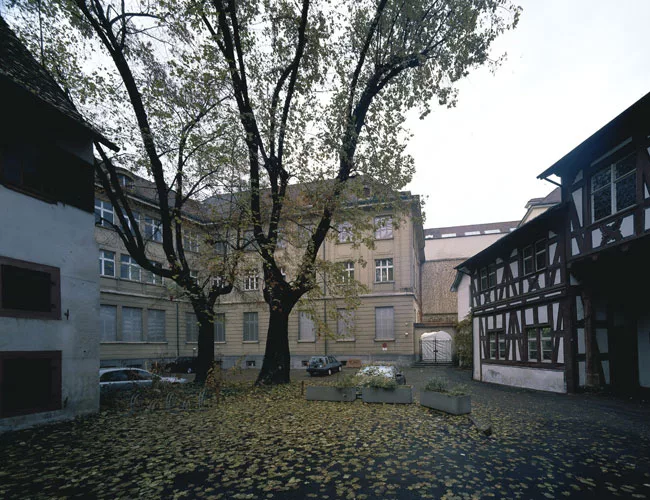
Before the transformation, the original Neoclassical building had an abundance of windows, which were closed.
Photo © Ruedi Walti
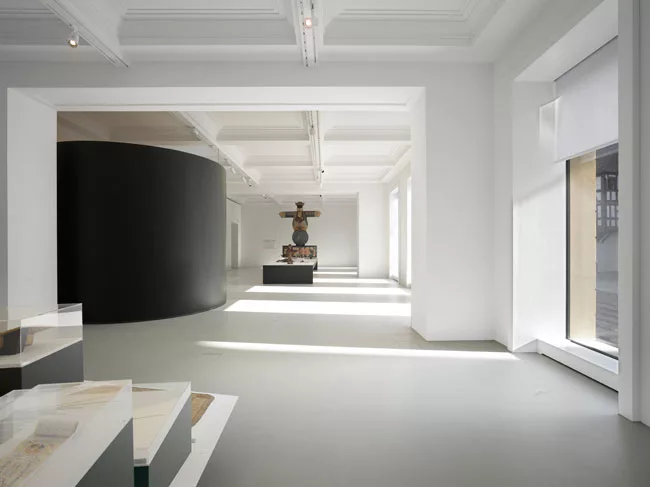
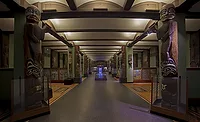
The old rooms feature original coffered ceilings. On the second floor, a wall of enlarged windows enables visitors to view the courtyard.
Photo © Roland Halbe
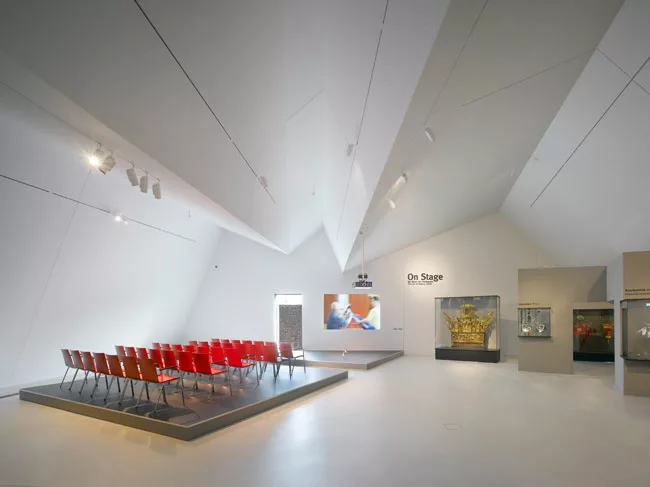
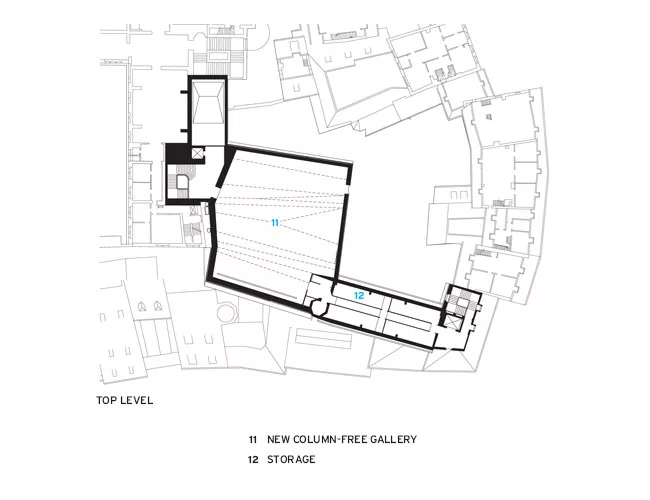
The spacious column-free addition under the roof provides room for conferences, performances, and multimedia presentations.
Photo © Roland Halbe
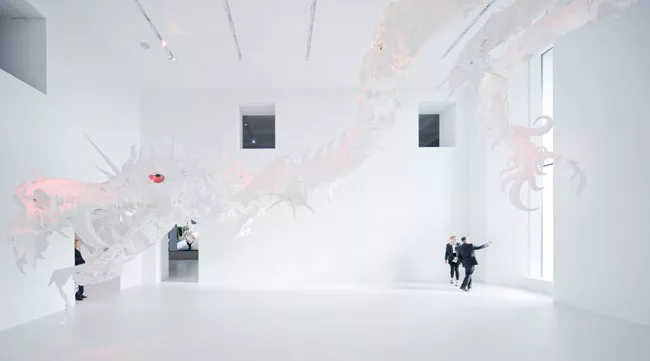
A double-height gallery facilitates supersized displays.
Photo © Iwan Baan
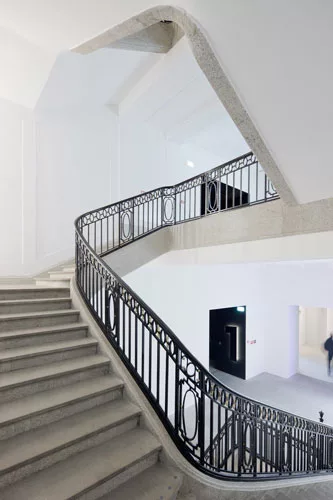
The existing stairs were cleaned up and supplemented with new elevators punched with sleek graphics and matte-black paint.
Photo © Iwan Baan
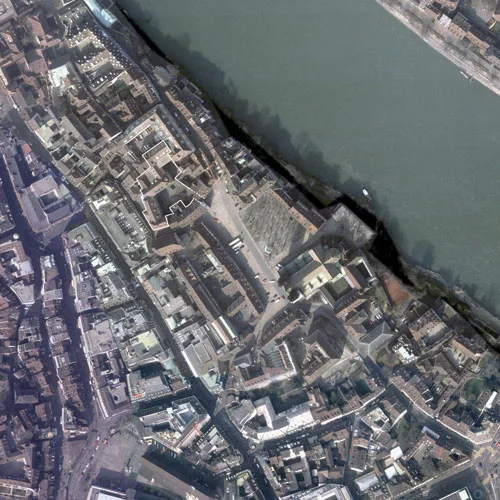
Before the renovation: the existing site is adjacent to Basel's Cathedral (Münster) and Cathedral Square (Münsterplatz) in the heart of the medieval historic district along the Rhine River.
Photo © Orthofoto 2001 - Grundbuch- und Vermessungsamt Basel- Stadt, 22.09.2011
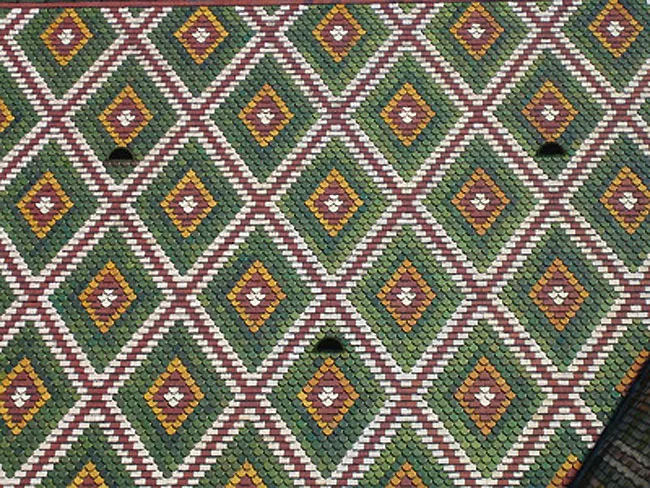
The tile pattern on the roof of the Cathedral (and Basel town hall) inspired Herzog & de Meuron design for the tiled roof of the museum addition.
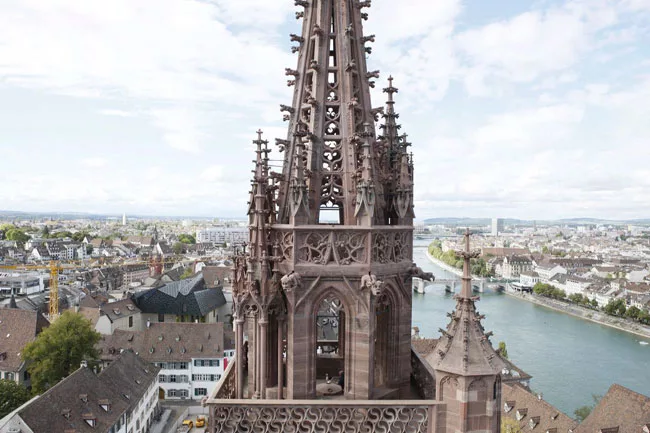
A view of the Museum of Cultures from the spire of the Cathedral reveals the Museum of Cultures within the context of the roofs of the old town.
Photo © Iwan Baan
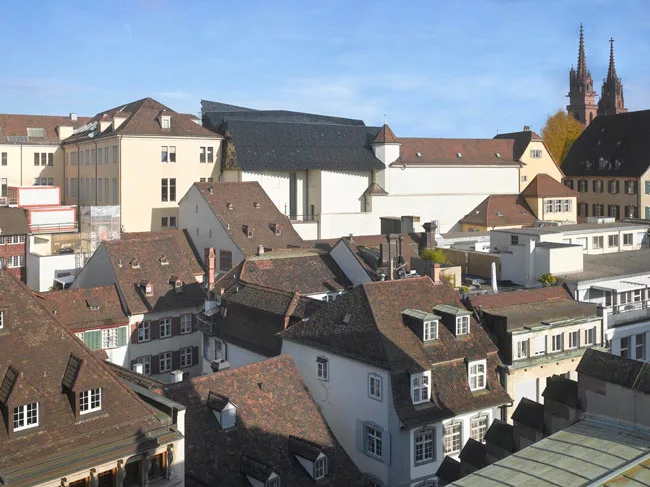
The elegant renovation of the Museum of Cultures—with its jagged roof and selective fenestration—not only fits within the context of the existing structure, it presents a lively, yet gentle reminder that the city can move forward without destroying its past.
Photo © Roland Halbe
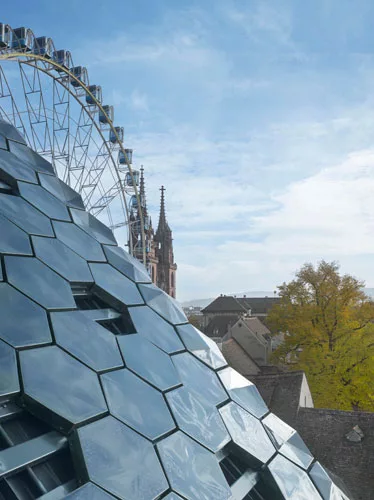
The tile is installed on a prefabricated roof system made of aluminium sheets. The omission of select individual ceramic tiles in the pattern, reduced the weight of the roof and also helped to lower construction costs.
Photo © Roland Halbe
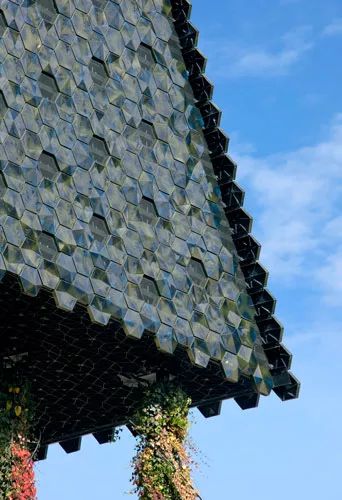
The hanging plants are attached to a rigid metal grid—designed to mimic the pattern of the tile—attached to the bottom of the overhang.
Photo © Duccio Malagamba
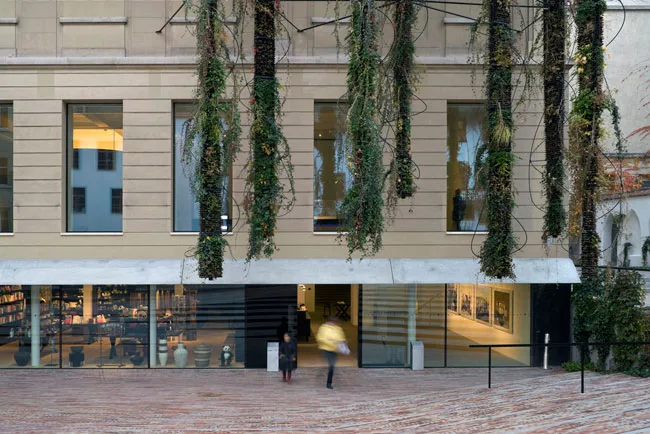
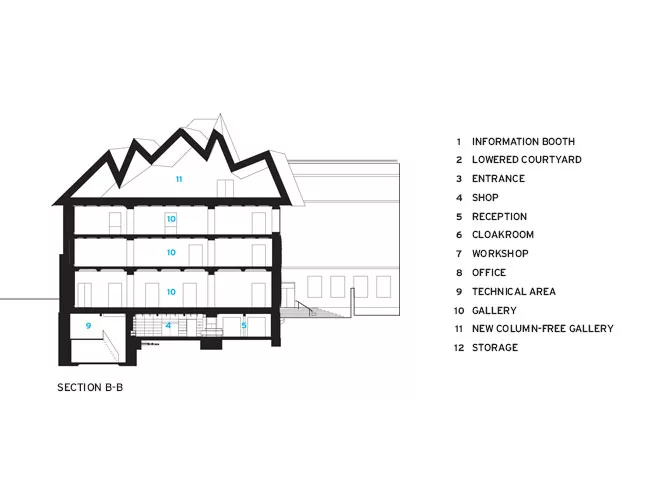
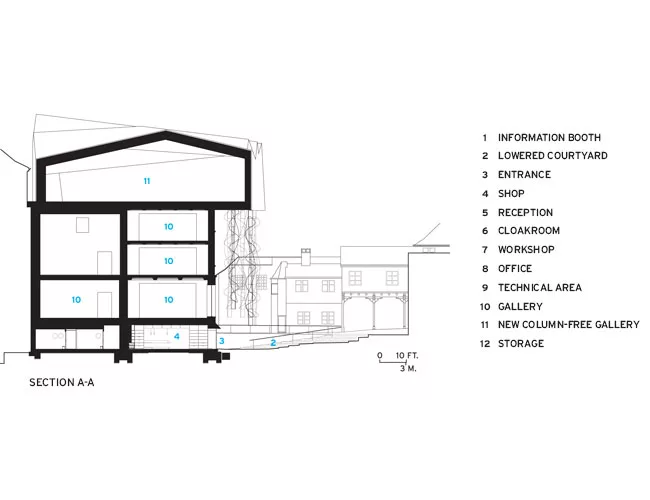
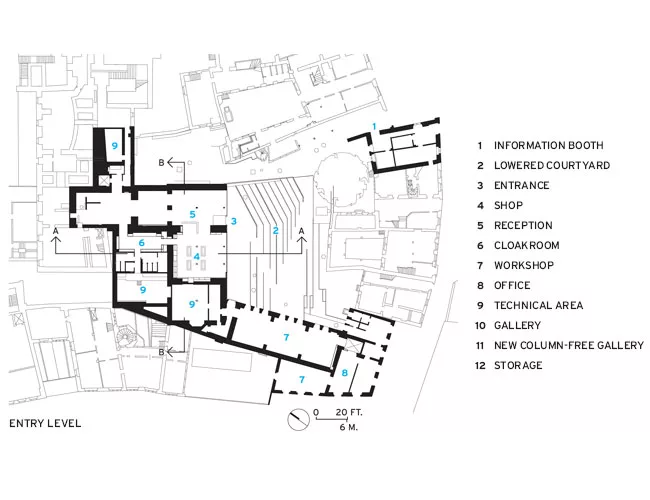
The architects lowered the courtyard and slit the foundation across the entire length of the annex building to create a glazed base with a new entrance and gift shop to welcome visitors inside.
Photo © Duccio Malagamba
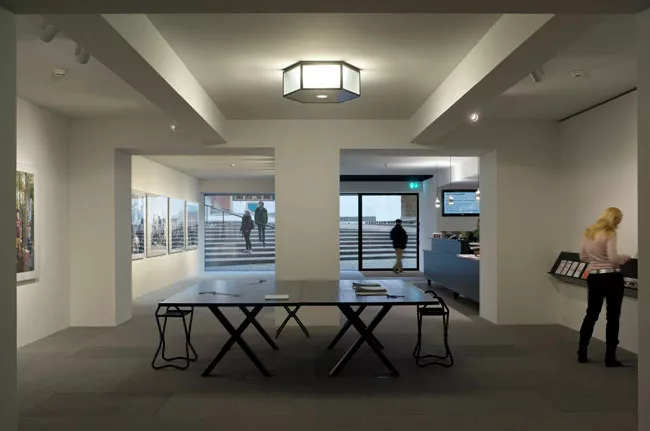
The architects created an open lobby/reception area and gift shop in the building’s former basement.
Photo © Duccio Malagamba
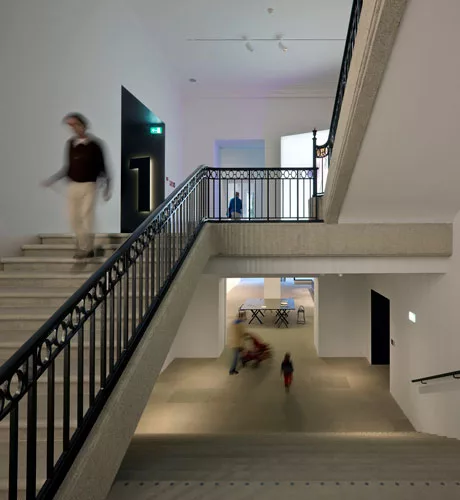
From the reception area, visitors have the option to climb up the refurbished, existing stair or ride the new elevator inserted into graphic, black alcoves on each floor.
Photo © Duccio Malagamba
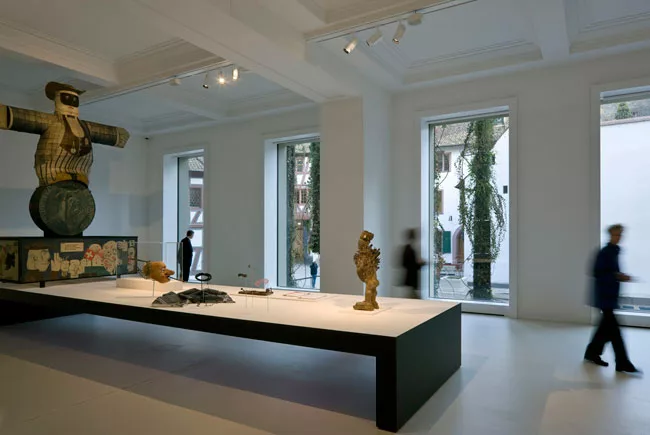
On the second floor, directly above the entrance, tall, deep windows along one wall of the gallery frame views of the courtyard and surrounding area.
Photo © Duccio Malagamba
Architects & Firms
Basel, Switzerland
An architectural tour of Basel and its environs reveals no fewer than 21 completed buildings by the office of natives Jacques Herzog and Pierre de Meuron, with a major addition to the city's convention center and a 213-foot office tower for Novartis slated for 2013 and 2015 completion, respectively.
This verdant corner of Switzerland, known for its patronage of contemporary art and architecture, has been fertile ground for the architects, allowing them the freedom to hone their exhaustive palette of bold strategies and materials through a range of projects, including the twisted, copper-clad Central Signal Box (1999), built for the Swiss Federal Railway, and the whimsically stacked VitraHaus (2009) in nearby Weil am Rhein, Germany. However, when the firm was tapped to upgrade the Museum der Kulturen (Museum of Cultures) in Basel's medieval historic center, preservation issues nearly compromised its typical design autonomy. A thoughtful tribute to the city the partners grew up in, their surprising solution resonates with a confidence and restraint that pays homage to the past with a clear vision toward the future.
Home to one of the most important ethnographic collections in Europe, the Museum of Cultures dates back to 1849, when it opened in the institution's existing Neoclassical building designed by local architect Melchior Berri, which replaced an Augustinian monastery. Its location, backing onto a private courtyard, accommodated a 1917 annex by Vischer & S'hne, but there was little room for growth when the Museum Foundation and Basel Building and Planning Department called upon Herzog & de Meuron to create a new entrance and large multiuse gallery in 2001. The museum's collection had grown to over 300,000 cultural artifacts and photographs from diverse geographic regions, so an expansion was essential. The administration also wanted to make the building more inviting to the public and academic community with improved facilities.
To retain the existing footprint, the design team devised a playfully gabled volume above the annex for the expansion, creating a higher, larger roof'a scheme that raised red flags among preservationists. According to senior partner in charge Christine Binswanger, 'Private heritage associations opposed it because the project would change the roofscape of the old town.' But, after a protracted judicial battle, the plan was approved. 'It just needed patience,' she explains. 'Our clients were convinced that the public's interest in the museum expansion would overrule the resistance.'
The opposition was unwarranted. The ensuing intervention fits comfortably in the quaint urbanscape dominated by traditional timber-frame buildings and the tapered spires of Basel's red sandstone cathedral (or M'nster). As a fond gesture, the jagged gables of the controversial roof are clad in iridescent-green ceramic tiles, to echo vivid mosaics atop the church.
Perched on the 20th-century annex as if dropped from the sky, the lofty addition is a lightweight-steel, space-frame structure that cantilevers on three sides of the building, providing a 6,500-square-foot column-free gallery within it. This complex construction required substantial support, so the crew reinforced two outer walls with three steel pillars that take the loads directly to the foundations. They also installed a layer of composite steel over the existing ceiling of the former top floor to bear the weight of the new gallery floor.
Previously, the Museum of Cultures shared an entrance with the city's Natural History Museum. To bolster their client's identity, Herzog and de Meuron relocated the entrance to the basement level at the rear of the building, opening the cloistered courtyard to the town's main square, the M'nsterplatz'a highly visible location. Now visitors access the museum through an arched passageway, where the architects created a gently stepped and ramped path that leads them to the glazed lobby and gift shop. A curtain of spiraling plants from the underside of the addition introduces an element of life and natural color that animates the architecture.
Inside, the firm tackled the scope of work, which included the installation of elevators, with such subtlety it seems virtually untouched. For the most part, 'we cleaned up and organized the technical features of the existing exhibition spaces,' says Binswanger. She and her colleagues also restored the original structure of the old rooms, crafted a double-height gallery from two, and whitewashed the walls, contrasting them with graphic, matte-black elevator alcoves. Their most assertive move was to eliminate windows for wall space and to enhance the building's weight and elegance.
'It had too many windows,' recalls Binswanger. 'There was too much daylight for the exhibitions, and it looked like a school. So we closed the facade and punctuated it with fewer openings.' Enlarged to reach the floor, the remaining windows have deep reveals that frame views of medieval Basel, a metaphorical and physical connection that'like Herzog & de Meuron's thoughtful renovation'links the museum to the evolving city around it.
Completion Date: September 2011
Gross square footage: 24,811 square feet (including courtyard)
Client: Construction lot 1:Stiftung Museum der Kulturen, Basel, Switzerland
Construction lot 2 and 3: Kanton Basel-Stadt
People
Client
Architect:
Personnel in architect's firm who should receive special credit:
Project Team 2001-2004
Planning Architect Construction: Proplaning AG Architekten, Basel, Switzerland Structural Engineering: ZPF Ingenieure, Basel, Switzerland Construction Management: Proplaning AG Architekten, Basel, Switzerland HVAC Engineering: Waldhauser Haustechnik AG, Basel, Switzerland Plumbing Engineering: Aqua Planing, Arlesheim, Switzerland Electrical Engineering: Herzog Kull Group AG, Basel, Switzerland Landscape Design: Rapp Infra AG, Basel, Switzerland
Photographer(s) |
Products
Contractors
Manufacturers |
Looking for a reprint of this article?
From high-res PDFs to custom plaques, order your copy today!