Architectural Record
search
cart
facebook twitter linkedin youtube
  • Sign In
  • Subscribe
  • Sign Out
  • My Account
Architectural Record
  • NEWS
    • Latest News
    • Awards
    • Interviews
    • Obituaries
    • Podcasts
      • Design:Ed Podcast
      • Sponsored Podcasts
  • OPINION
    • Book Reviews / Excerpts
    • Exhibition Reviews
    • Forum
  • EXCLUSIVES
    • Videos
    • Design Vanguard
    • Top 300 Firms
    • Sponsored Content
    • Sponsored eBooks
    • From the Archives
  • CONTINUING ED
    • Editorial Continuing Ed
    • CE Center
    • CE Academies
  • PROJECTS
    • Buildings By Type
    • Reuse & Renovation
    • Museums & Arts Centers
    • Colleges & Universities
    • Multifamily Housing
    • Interiors
    • Lighting
    • Kitchen & Bath
  • HOUSES
    • Record Houses
    • House of the Month
    • Featured Houses
  • PRODUCTS
    • Products by Category
    • Record Products of the Year
    • Latest Products
  • EVENTS
    • Dates & Events
    • Record on the Road
    • Innovation Conference
    • Sustainability in Practice
    • Women In Architecture
    • Webinars
    • Ad Excellence Awards
    • Submit an Event
  • CONNECT
    • Ask RECORD AI
    • Newsletters
    • Contact
    • Advertise
    • Editorial Calendar
    • Store
    • Customer Service
  • SUBMIT
    • Submission Guidelines
    • RECORD Competitions
  • MAGAZINE
    • Subscribe
    • My Account
    • Digital Edition
    • Current Issue
    • Firm Pass
    • Historic Archive
ProjectsBuildings by TypeStadium Design

California Memorial Stadium and Simpson Center for Student-Athlete High Performance

Winning Playbook: HNTB Architecture and STUDIOS Architecture team up to give a 1920s-era stadium at the University of California, Berkeley, a seismic retrofit and expansion that respects its history.

By Lamar Anderson
The design team tucked the entrance to the Simpson Center for Student-Athlete High Performance, a new training facility on the site, between walls of concrete and limestone.
California Memorial Stadium and Simpson Center for Student-Athlete High Performance
HNTB Architecture and STUDIOS Architecture
Berkeley, California
The design team tucked the entrance to the Simpson Center for Student-Athlete High Performance, a new training facility on the site, between walls of concrete and limestone.
Photo © Jim Simmons
On game days, some 63,000 fans can pack into the newly revamped California Memorial Stadium. A two-story VIP box hovers over the stands, accommodat­ing press facilities and a donor club.
California Memorial Stadium and Simpson Center for Student-Athlete High Performance
HNTB Architecture and STUDIOS Architecture
Berkeley, California
On game days, some 63,000 fans can pack into the newly revamped California Memorial Stadium. A two-story VIP box hovers over the stands, accommodat­ing press facilities and a donor club.
Photo © © Michael O'Callahan
Despite its size—309,000 square feet—the stadium has a discreet presence along one of the university’s main thoroughfares, Piedmont Avenue.
California Memorial Stadium and Simpson Center for Student-Athlete High Performance
HNTB Architecture and STUDIOS Architecture
Berkeley, California
Despite its size—309,000 square feet—the stadium has a discreet presence along one of the university’s main thoroughfares, Piedmont Avenue.
Photo © Tim Griffith
The arena straddles the Hayward Fault, on a site at the base of Berkeley’s foothills.
California Memorial Stadium and Simpson Center for Student-Athlete High Performance
HNTB Architecture and STUDIOS Architecture
Berkeley, California
The arena straddles the Hayward Fault, on a site at the base of Berkeley’s foothills.
Image courtesy HNTB Architecture and STUDIOS Architecture
The sense of openness in both of these spaces is carried into the skylit, below-grade athlete training center.
California Memorial Stadium and Simpson Center for Student-Athlete High Performance
HNTB Architecture and STUDIOS Architecture
Berkeley, California
The sense of openness in both of these spaces is carried into the skylit, below-grade athlete training center.
Photo © Michael O'Callahan
HNTB and STUDIOS created new “donor clubs”—spaces for banquets and other events—including the Field Club on levels 4 and 5, and the University Club on level 8.
California Memorial Stadium and Simpson Center for Student-Athlete High Performance
HNTB Architecture and STUDIOS Architecture
Berkeley, California
HNTB and STUDIOS created new “donor clubs”—spaces for banquets and other events—including the Field Club on levels 4 and 5, and the University Club on level 8.
Photo © Tim Griffith
HNTB and STUDIOS created new “donor clubs”—spaces for banquets and other events—including the Field Club on levels 4 and 5, and the University Club on level 8.
California Memorial Stadium and Simpson Center for Student-Athlete High Performance
HNTB Architecture and STUDIOS Architecture
Berkeley, California
HNTB and STUDIOS created new “donor clubs”—spaces for banquets and other events—including the Field Club on levels 4 and 5, and the University Club on level 8.
Photo © Jim Simmons
California Memorial Stadium and Simpson Center for Student-Athlete High Performance
HNTB Architecture and STUDIOS Architecture
Berkeley, California
Image courtesy Proehl Studios
California Memorial Stadium and Simpson Center for Student-Athlete High Performance
HNTB Architecture and STUDIOS Architecture
Berkeley, California
Image courtesy HNTB Architecture and STUDIOS Architecture
The design team tucked the entrance to the Simpson Center for Student-Athlete High Performance, a new training facility on the site, between walls of concrete and limestone.
On game days, some 63,000 fans can pack into the newly revamped California Memorial Stadium. A two-story VIP box hovers over the stands, accommodat­ing press facilities and a donor club.
Despite its size—309,000 square feet—the stadium has a discreet presence along one of the university’s main thoroughfares, Piedmont Avenue.
The arena straddles the Hayward Fault, on a site at the base of Berkeley’s foothills.
The sense of openness in both of these spaces is carried into the skylit, below-grade athlete training center.
HNTB and STUDIOS created new “donor clubs”—spaces for banquets and other events—including the Field Club on levels 4 and 5, and the University Club on level 8.
California Memorial Stadium and Simpson Center for Student-Athlete High Performance
October 16, 2013

Architects & Firms

HNTB Architecture
Studios Architecture

Berkeley, California

People/Products

Of the many neoclassical buildings that architect John Galen Howard designed for the University of California, Berkeley, in the early twentieth century, California Memorial Stadium was perhaps the most breathtaking and the most imperiled: from its perch at the base of the Berkeley foothills, the concrete structure—part coliseum, part amphitheater dug into the hillside—offered 73,000 Golden Bears fans sweeping views of San Francisco Bay to the west, but on a site straddling the Hayward Fault.

After the University of California's Board of Regents mandated a much-needed seismic revamp in 2005, the university enlisted HNTB Architecture and STUDIOS Architecture to overhaul the 1923 structure, which is listed on the National Register of Historic Places. It was a tall order: designers needed to make the stadium safe and boost square footage by 50 percent. However, they were not permitted to interfere with the historic board-formed-concrete facade. In other words, the university wanted an entirely new building, but without altering the original.

The architects found the solution to this Zen koan of a design brief in the site's slope, much as Howard had 90 years ago. Beginning construction in 2010, they hid a 145,000-square-foot athletic training center largely underground, disguising it behind a series of concentric retaining walls made out of volcanic rock, limestone, and concrete. They demolished the western two-thirds of the old structure—everything but the portion built into the hillside and the facade—and inserted a new eight-story building, including three donor clubhouses, into the original footprint. With the help of Forell/Elsesser Engineers, the team designed the poured-in-place concrete structure (with precast seating platforms in the bowl) in two halves along the fault line, which traces a roughly north-south diagonal from one end zone to the other. For the parts of the bowl directly over the fault, the engineers conceived a pair of wedge-shaped seating sections that can slide up to six feet horizontally and two feet vertically during a powerful quake [see RECORD, January 2009, page 112]. Like a heist in broad daylight, the stadium's dismantling and replacement is the kind of switcheroo that a casual observer could easily miss. “One question you hear from people who were here before is, 'What did you do?' ” recounts Joseph Diesko, HNTB's director of sport architecture. “They say, 'It looks like the same place.' ”

The biggest difference for fans? They now have a place to congregate before and after games: By tucking the training center into the front of the hillside site, the architects created an acre-and-a-half plaza at the stadium's base, where a scruffy parking lot once brought cars right up to the historic facade. The architects also wanted the stadium to feel like the extroverted building of Howard's day. Unlike most football arenas, which direct all eyes to the field, “this one was built to look outward,” says Berkeley assistant athletic director Bob Milano Jr., pointing to the arched windows that frame views of the campus and the bay. In the old stadium, decades of ad-hoc additions had cluttered the corridors and blocked windows; in the new one, every vomitory (the path from the stands to the concourse) offers a view through an arch. “We were trying not only to reinforce the historic architecture, but the historic experience,” says Milano.

The west side of the seating bowl does have one modern-looking addition: a two-story glass-and-steel canopy housing the press box on the lower level and a donor club on top. Because it was important to the architects to honor the stadium's original profile by putting some air between the old and new elements, they housed the press box inside a steel box truss. It is largely supported by two concrete elevator cores instead of a sea of columns. “That makes it appear to float,” says Gregory Baker, HNTB associate vice president.

This arrangement has seismic advantages too. The engineers designed the elevator cores as a separate structure that passes through the stadium. The cores displaced seats (as did other aspects of the modernization, including complying with accessibility requirements), bringing capacity down by 10,000 to approximately 63,000. But the tradeoff was necessary for safety. In an earthquake, the canopy will sway at its own rate, independently of the bowl's motion.

By solving seismic and architectural challenges in the same gesture, the architects and engineers pulled off a stunning sleight of hand, delivering a modern home for Berkeley football that feels as familiar as the original.

Size: 454,000 square feet

Cost: $474 million

Completion Date: August 2012

People

Owner:
University of California Berkeley

Architect(s):
HNTB Architecture
601 W 5th Street, Suite 1000
Los Angeles, CA 90071
and
STUDIOS Architecture
405 Howard Street, Suite 588
San Francisco, CA 94105

Project Attribution:
HNTB Architecture and STUDIOS Architecture

Personnel in architect's firm who should receive special credit:
For HNTB Architecture-
Joseph Diesko, AIA, Executive Architect
Fernando Vazquez, AIA, Project Designer
Gregory Baker, AIA, Project Architect / Design

Design and Construction Team:
John Bechtel, Fred Kimotsuki, Henry Lau, Lanson Nichols, Olivia Ocampo, Vernon Pounds, Greg Prelogar, Corey Schurr, Karl Smith, Taeko Welty, Kalin Yordanov, Clifford Wong

For STUDIOS Architecture-
Darryl Roberson, FAIA, Marc Pfenninger, AIA, Principals in Charge
Jeong Choi, Associate AIA, Project Architect / Design
Kristin Lacy, AIA, Project Architect / Design

Design and construction team:
Eric Gratacap, Nicholas Tsuk AIA, Craig McHenry, Jared Grellner, Daniel Guich, AIA, Geordie Van Der Bosch, Anna Chou, Ben Lorance

Executive Architect:
HNTB Architecture

Associate Architect:
STUDIOS Architecture

Interior Designer:
The two firms jointly developed the Architecture and Interiors

Engineer(s):
STRUCTURAL
Forell / Elsesser Engineers, Inc
San Francisco, CA

MEPT
WSP Flack + Kurtz
San Francisco, CA

CIVIL
Bellecci & Associates
Concord, CA

Consultant(s):
Landscape:
Olin Partnership, Philadelphia, PA

Historic Architect:
Knapp Architects

Lighting:
Horton Lees Brogden, San Francisco, CA

AV/Broadcast:
WJHW, Dallas, TX

Field Turf:
Lloyd Engineering, Scottsdale, AZ

Signage and Graphics:
Debra Nichols Design, San Francisco, CA

Code Consultant:
The Fire Consultants, Inc, Walnut Creek, CA

Structural Glass:
Dewhurst Mcfarlane, New York, NY

General contractor:
Webcor Builders (CMS)
Hunt Construction Group (Simpson Center)

Photographer(s):
Tim Griffith, Tim Griffith Photographer
415-640-1419
Jim Simmons, Jim Simmons Photography
310-740-1999
Steve Proehl, Proehl Studios
707-824-9943
Jeffrey Katz, Jeffrey Katz Photography
jeff@jeffreykatzphotography.com
Michael O'Callahan, Michael O'Callahan Photography
415-552-3686

CAD system, project management, or other software used:
Revit, Newforma


Products

Structural system
Concrete, Precast Concrete, Steel

Exterior cladding
Masonry:
Trenwyth Astra-Glaze

Metal Panels:
Custom Fabrication by Woodbridge Glass

Metal/glass curtain wall:
Arcadia

Precast concrete:
Custom Fabrication by Willis Construction

Moisture barrier:
Dupont Tyvek StuccoWrap

Curtain wall:
Arcadia

Other cladding unique to this project:
Tnemec Paint
Isolatek Cafco Inutmescent
International Cellulose Corporation K-13 Spray On Insulation
Construction Specialties ' Louvers and Seismic Joint Covers

Roofing
Other:
Sika Sarnafil
Tremco Vulkem Roof Terrace / Deck Coating System

Windows
Metal frame:
NanaWall, Tepco Contract Glazing

Glazing
Glass:
Northwestern Industries, Glaspro, Viracon

Doors
Entrances:
Arcadia

Metal doors:
Custom by E.M. Hundley Hardware, Co.

Wood doors:
Custom by E.M. Hundley Hardware, Co.

Hardware
Pemko, Stanley Security Solutions, Norton, Ives, Don-Jo, Schlage

Interior finishes
Acoustical ceilings:
Armstrong, Linder, RPG

Suspension grid:
Armstrong, Linder

Cabinetwork and custom woodwork:
Custom Fabrication by ISEC

Paneling:
3Form

Plastic laminate:
Abet Laminati, Formica

Solid surfacing:
Wilsonart, Silestone

Special surfacing:
Robins Pulastic, Mondo Sports Floor, Eucalyptus Butcher Block by Green Mountain

Floor and wall tile:
Graniti Finadre, Royal Mosa, Dal

Resilient flooring:
Armstrong, Johnsonite

Carpet:
C&A, Interface

Special interior finishes unique to this project:
Newmat Stretch Fabric

Furnishings
Office furniture:
Steelcase, Gunlock

Reception furniture:
Custom by ISEC

Fixed seating:
Custom by ISEC

Chairs:
Herman Miller, Steelcase, Coalesse, KFF, KI, Gunlocke, Arper, High Tower

Tables:
Herman Miller, Steelcase, Coalesse, KFF, KI, Forms + Surfaces

Upholstery:
Carneige, Design TEX, Luna Textiles, Arc Com

Other furniture:
Metro Racks

Lighting
iO Lighting

Interior ambient lighting:
Clikstrip, Linear Lighting

Downlights:
Lighting Systems, Lightolier, Linear Lighting, Dasal

Exterior:
Bega, Musco, iO Lighting, Elliptipar, Lumiere, Kirlin, Dasal

Conveyance
Elevators/Escalators:
Kone

Plumbing
Toto

 
KEYWORDS: California

Share This Story

Looking for a reprint of this article?
From high-res PDFs to custom plaques, order your copy today!
Post a comment to this article

Report Abusive Comment

Subscription Center
  • Create an Account
  • Start a Subscription
  • Manage My Account
  • Sign Up for Newsletters
  • Visit Customer Service
  • Update Preferences

More Videos

Sponsored Content

Sponsored Content is a special paid section where industry companies provide high quality, objective, non-commercial content around topics of interest to the Architectural Record audience. All Sponsored Content is supplied by the advertising company and any opinions expressed in this article are those of the author and not necessarily reflect the views of Architectural Record or its parent company, BNP Media. Interested in participating in our Sponsored Content section? Contact your local rep!

close
  • cold storage facility
    Sponsored byCarlisle SynTec Systems

    How Architects Can Design More Continuous Cold Storage Envelopes

  • TAMLYN XtremeTrim Exterior Trim
    Sponsored byTamlyn

    Designing Cleaner Panel Facades: Why Exterior Trim Details Matter

  • Building with Vapor Barriers
    Sponsored byReef Industries, Inc.

    Vapor Barriers Help Control Moisture in Tighter Building Designs

DESIGN:ED Podcast
Listen to Architectural Record’s DESIGN:ED Podcast

Events

June 23, 2026

Enhancing Fire Resistance with Advanced PVC Solutions

Credits: 1 AIA LU/HSW; 1 AIBD P-CE; 0.1 ICC CEU; 1 IIBEC CEH

Evaluate advanced PVC solutions that improve fire resistance, support WUI compliance, and enhance resilience in residential and commercial building design.

June 25, 2026

Designing Glass Railing Systems that Enhance Aesthetics and Meet Code

Credits: 1 AIA LU/HSW; 1 AIBD P-CE; 0.1 ICC CEU

Upon course completion, participants will possess a deeper understanding of glass railings to help ensure that safety, aesthetic, and performance objectives are achieved.

View All Submit An Event

Products

2026 Architect's Square Foot Costbook

2026 Architect's Square Foot Costbook

See More Products

Popular Stories

SanDiegoAirport

Top 300 Architecture Firms of 2026

Lorcan O' Herilhy

California Architect Lorcan O’Herlihy Has Died, Age 66

Coronado Bridge

The Architect’s Guide to San Diego

CCA, Studio Gang

The Winners of the AIA’s 2026 Architecture Award Range from Collegiate Rowing Hubs to Housing for the Homeless

Spoonbill Ranch

Johnsen Schmaling Architects Integrates Spoonbill Ranch into a Pristine Landscape

Enhancing Fire Resistance with Advanced PVC Solutions - Free Webinar - June 23, 2026

Related Articles

  • Standards for High-Performance Building in the Works

    See More
  • Groups advance two sets of high-performance building standards

    See More
  • Input Sought on High-Performance Building Standard

    See More

Related Products

See More Products
  • facade.jpg

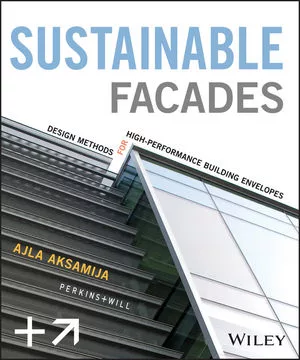
    Sustainable Facades: Design Methods for High-Performance Building Envelopes

See More Products
×

The latest news and information

#1 Source for Architectural Design, News and Products

SUBSCRIBE
  • RESOURCES
    • Advertise
    • Contact Us
    • Submit
    • Store
  • ACCOUNT CENTER
    • Create an Account
    • Start a Subscription
    • Manage My Account
    • Sign Up for Newsletters
    • Visit Customer Service
    • Update Preferences
  • PRIVACY
    • PRIVACY POLICY
    • TERMS & CONDITIONS
    • DO NOT SELL MY PERSONAL INFORMATION
    • PRIVACY REQUEST
    • ACCESSIBILITY
  • SERVICES
    • Marketing Services
    • Reprints
    • Market Research
    • List Rental
    • Survey/Respondent Access
  • STAY CONNECTED
    • Linkedin
    • Facebook
    • Instagram
    • YouTube
    • X (Twitter)

Copyright ©2026. All Rights Reserved BNP Media, Inc. and BNP Media II, LLC.

Design, CMS, Hosting & Web Development :: ePublishing