Architectural Record
search
cart
facebook twitter linkedin youtube
  • Sign In
  • Subscribe
  • Sign Out
  • My Account
Architectural Record
  • NEWS
    • Latest News
    • Awards
    • Interviews
    • Obituaries
    • Podcasts
      • Design:Ed Podcast
      • Sponsored Podcasts
  • OPINION
    • Book Reviews / Excerpts
    • Exhibition Reviews
    • Forum
  • EXCLUSIVES
    • Videos
    • Design Vanguard
    • Top 300 Firms
    • Sponsored Content
    • Sponsored eBooks
    • From the Archives
  • CONTINUING ED
    • Editorial Continuing Ed
    • CE Center
    • CE Academies
  • PROJECTS
    • Buildings By Type
    • Reuse & Renovation
    • Museums & Arts Centers
    • Colleges & Universities
    • Multifamily Housing
    • Interiors
    • Lighting
    • Kitchen & Bath
  • HOUSES
    • Record Houses
    • House of the Month
    • Featured Houses
  • PRODUCTS
    • Products by Category
    • Record Products of the Year
    • Latest Products
  • EVENTS
    • Dates & Events
    • Record on the Road
    • Innovation Conference
    • Sustainability in Practice
    • Women In Architecture
    • Webinars
    • Ad Excellence Awards
    • Submit an Event
  • CONNECT
    • Ask RECORD AI
    • Newsletters
    • Contact
    • Advertise
    • Editorial Calendar
    • Store
    • Customer Service
  • SUBMIT
    • Submission Guidelines
    • RECORD Competitions
  • MAGAZINE
    • Subscribe
    • My Account
    • Digital Edition
    • Current Issue
    • Firm Pass
    • Historic Archive
Architecture News

The Lowdown on the Lowline

RECORD takes a sneak peek into New York’s first underground park.
By Fred A. Bernstein
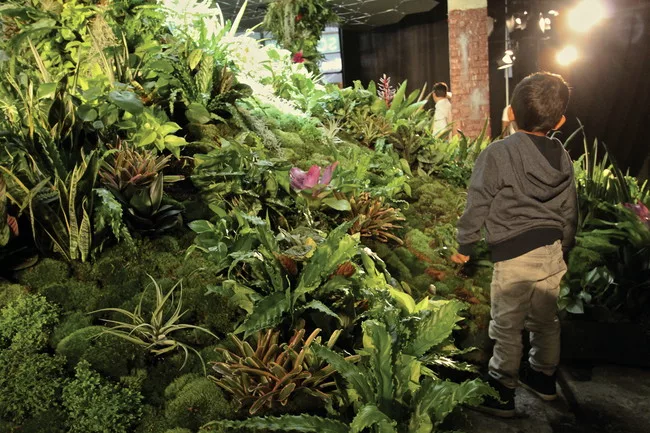
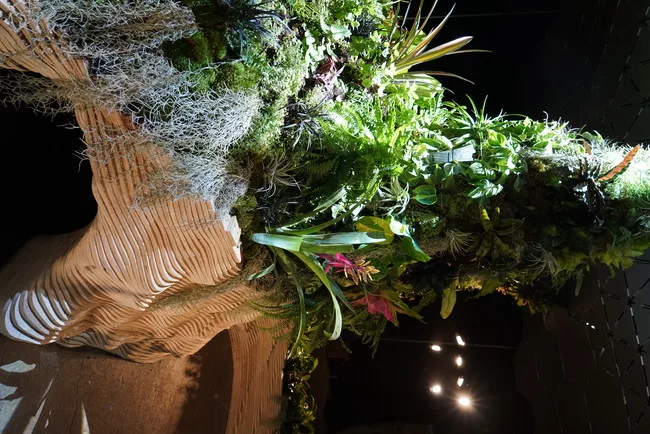
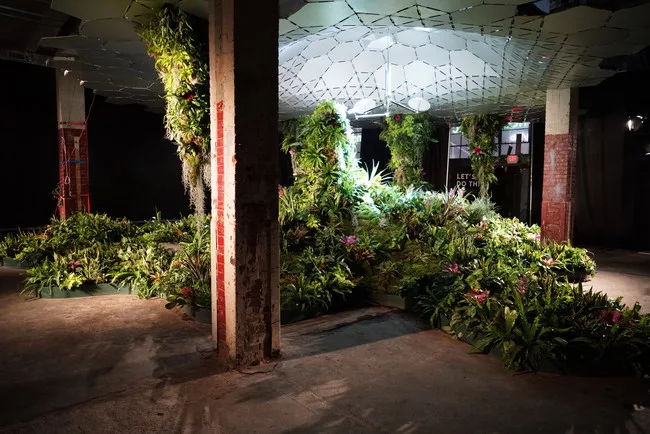
The Lowline Lab is the testing ground for the technology that will turn an abandoned trolley terminal into a lush underground garden.
The Lowdown on the Lowline
The Lowline Lab is the testing ground for the technology that will turn an abandoned trolley terminal into a lush underground garden.
Image courtesy the Lowline
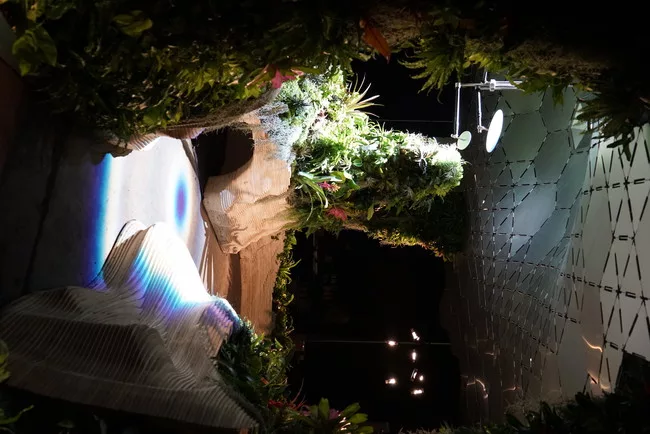
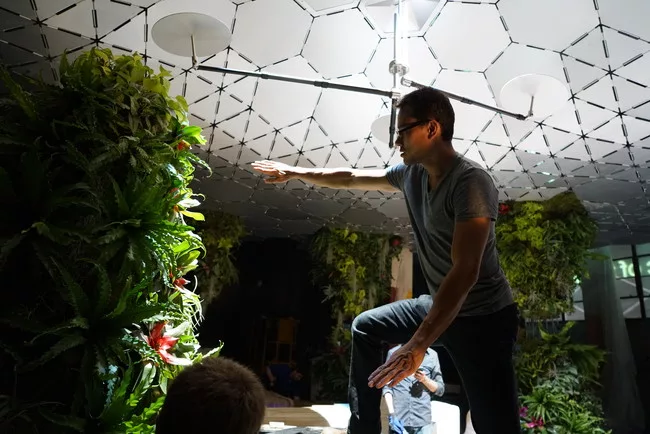
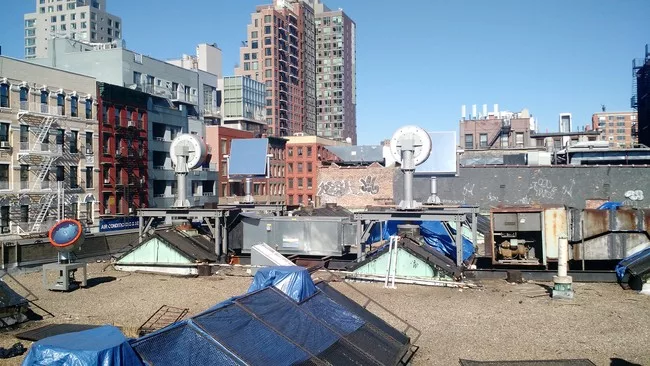
The Lab’s solar concentrators, made by the Korean company Sunportal and configured by RAAD Studio, are mounted on a roof just above the demonstration garden.
The Lowdown on the Lowline
The Lab’s solar concentrators, made by the Korean company Sunportal and configured by RAAD Studio, are mounted on a roof just above the demonstration garden.
Image courtesy the Lowline
The Lab’s solar concentrators, made by the Korean company Sunportal and configured by RAAD Studio, are mounted on a roof just above the demonstration garden.
The Lowdown on the Lowline
The Lab’s solar concentrators, made by the Korean company Sunportal and configured by RAAD Studio, are mounted on a roof just above the demonstration garden.
Image courtesy the Lowline
The Lab’s solar concentrators, made by the Korean company Sunportal and configured by RAAD Studio, are mounted on a roof just above the demonstration garden.
The Lowdown on the Lowline
The Lab’s solar concentrators, made by the Korean company Sunportal and configured by RAAD Studio, are mounted on a roof just above the demonstration garden.
Image courtesy the Lowline
The Lab’s solar concentrators, made by the Korean company Sunportal and configured by RAAD Studio, are mounted on a roof just above the demonstration garden.
The Lowdown on the Lowline
The Lab’s solar concentrators, made by the Korean company Sunportal and configured by RAAD Studio, are mounted on a roof just above the demonstration garden.
Image courtesy the Lowline
The Lab’s solar concentrators, made by the Korean company Sunportal and configured by RAAD Studio, are mounted on a roof just above the demonstration garden.
The Lowdown on the Lowline
The Lab’s solar concentrators, made by the Korean company Sunportal and configured by RAAD Studio, are mounted on a roof just above the demonstration garden.
Image courtesy the Lowline
The Lab’s solar concentrators, made by the Korean company Sunportal and configured by RAAD Studio, are mounted on a roof just above the demonstration garden.
The Lowdown on the Lowline
The Lab’s solar concentrators, made by the Korean company Sunportal and configured by RAAD Studio, are mounted on a roof just above the demonstration garden.
Photo © Architectural Record
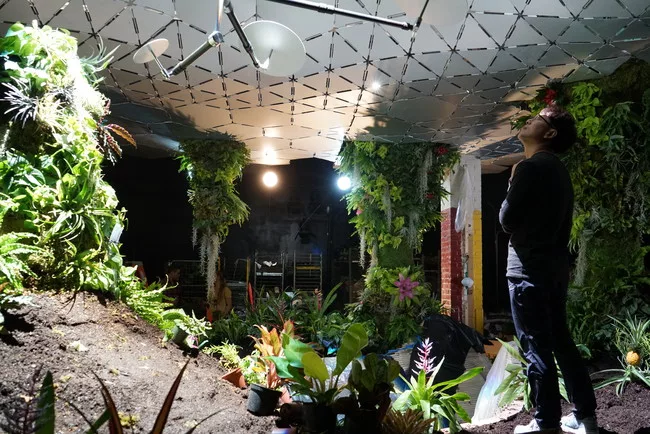
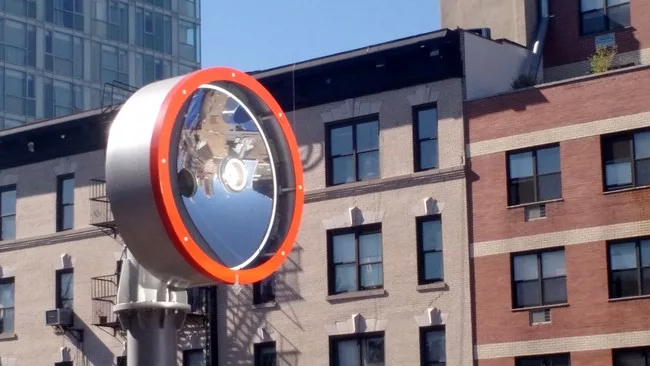
In the case of the actual Lowline, the collectors would reflect light to  street level, possibly hundreds of feet below, where tubes would direct  it to the underground park.
The Lowdown on the Lowline
In the case of the actual Lowline, the collectors would reflect light to street level, possibly hundreds of feet below, where tubes would direct it to the underground park.
Photo © Architectural Record
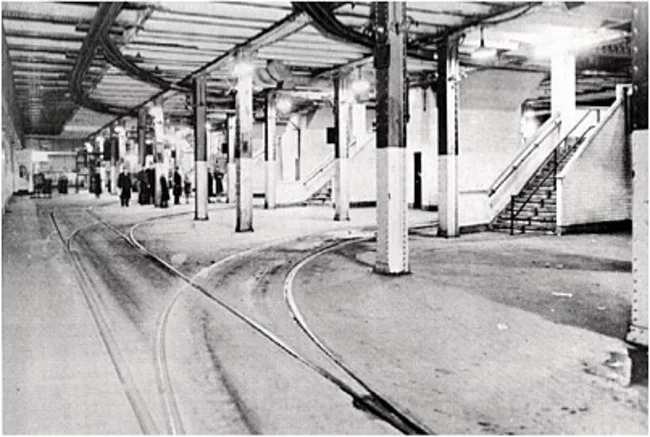
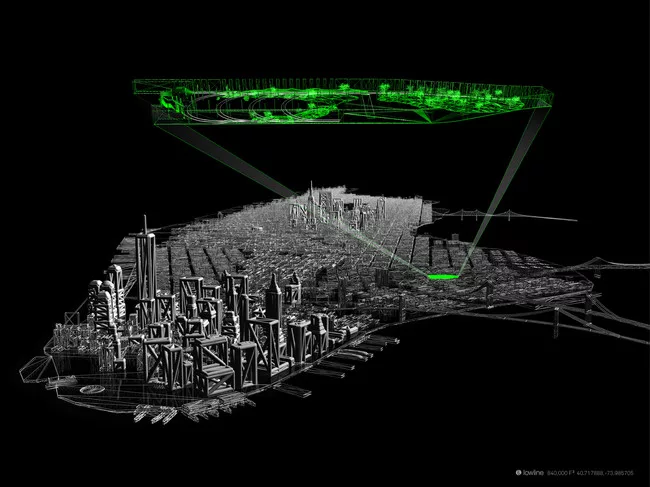
The Lowline will occupy a former trolley terminal on Manhattan's Lower East Side, abandoned in 1948.
The Lowdown on the Lowline
The Lowline will occupy a former trolley terminal on Manhattan's Lower East Side, abandoned in 1948.
Image courtesy the Lowline
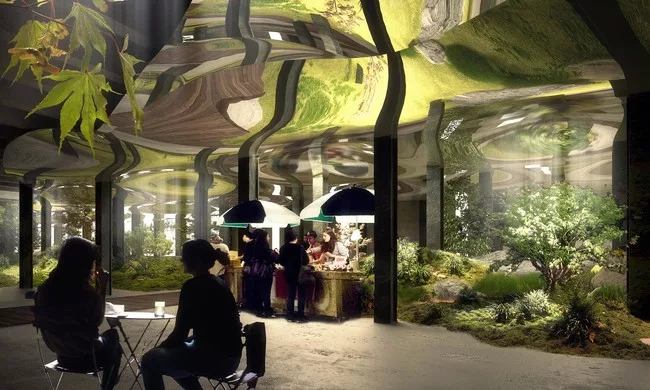
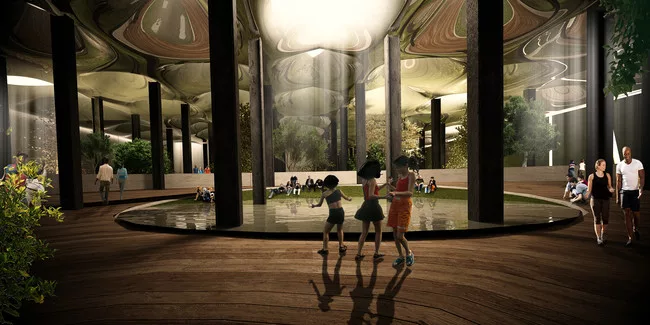
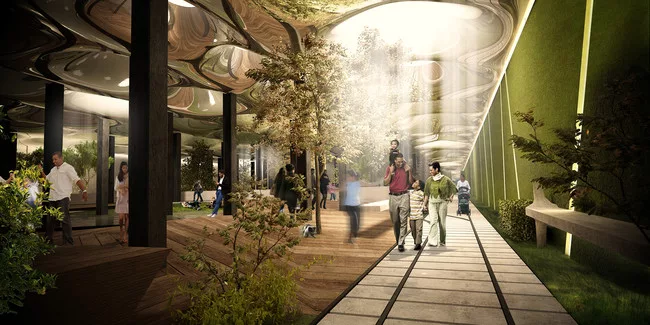
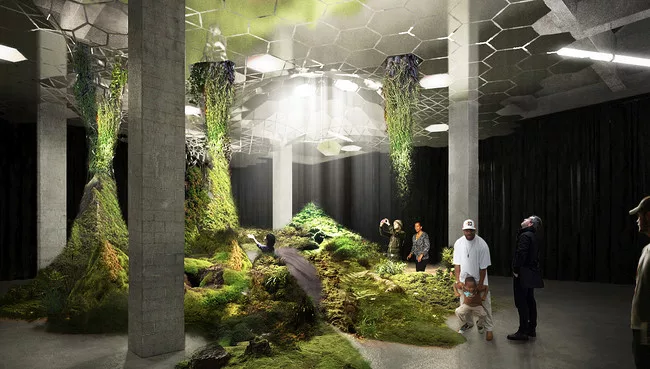
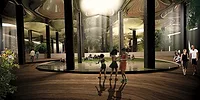
Rendering of the completed Lowline.
The Lowdown on the Lowline
Rendering of the completed Lowline.
Image courtesy the Lowline
Rendering of the completed Lowline.
The Lowdown on the Lowline
Rendering of the completed Lowline.
Image courtesy the Lowline
Rendering of the completed Lowline.
The Lowdown on the Lowline
Rendering of the completed Lowline.
Image courtesy the Lowline
Rendering of the completed Lowline.
The Lowdown on the Lowline
Rendering of the completed Lowline.
Image courtesy the Lowline
The Lowdown on the Lowline
Image courtesy the Lowline
The Lowline Lab is the testing ground for the technology that will turn an abandoned trolley terminal into a lush underground garden.
The Lab’s solar concentrators, made by the Korean company Sunportal and configured by RAAD Studio, are mounted on a roof just above the demonstration garden.
In the case of the actual Lowline, the collectors would reflect light to  street level, possibly hundreds of feet below, where tubes would direct  it to the underground park.
The Lowline will occupy a former trolley terminal on Manhattan's Lower East Side, abandoned in 1948.
Rendering of the completed Lowline.
The Lowdown on the Lowline
October 26, 2015

New Yorkers don’t mind being underground when the surroundings are as welcoming as Rockefeller Center’s concourse or Grand Central Terminal’s Oyster Bar. But when James Ramsey and Dan Barasch announced plans for the Lowline in an abandoned trolley terminal below Manhattan’s Lower East Side, they set the underground bar even higher. That’s because they promised not just a shopping or dining destination, but a park with thousands of plants growing in Edenic profusion beneath Delancey Street.

That posed a technological challenge that Ramsey, a former NASA engineer, and Barasch, now the full-time director of the Lowline, have spent six years addressing. Their goal is to “concentrate” sunlight above ground, then send it through plastic tubes to underground diffusers that will simulate natural lighting well enough to keep plants photosynthesizing.

Will it work? The Lowline Lab, built at a cost of some $200,000, much of it raised on Kickstarter, is meant to help answer that question.

Though it is aboveground, the Lab (open to the public on weekends through March, at 140 Essex Street) is windowless, mimicking the Lowline space. But there are aspects of the Lowline it can't simulate. The Lab’s solar concentrators, made by the Korean company Sunportal and configured by RAAD Studio, a firm headed by Ramsey, are mounted on a roof just above the demonstration garden. In the case of the actual Lowline, the collectors would be mounted atop neighboring buildings; they would reflect light to street level, possibly hundreds of feet below, where tubes would direct it to the underground park.

In the Lowline Lab, more than 50 kinds of plants — chosen by Signe Nielsen of Mathews Nielsen Landscape Architects in partnership with the Brooklyn Botanic Garden and built by John Mini Distinctive Landscapes — seem to be thriving. (Among them are bromeliads and the evocatively named Baby’s Tears and Mother-in-Law's tongue.) In the Lowline, which will be as big as a football field, they will be arranged in swooping gardens, some descending from the ceiling like stalactites, others rising up like stalagmites. The idea, the park’s organizers say, is to stress the verticality of the 16-foot-high space, as well as to take advantage of varying light intensities. Ramsey says the concentrated light can reach 30 times normal intensity. Handled improperly, he says, “it would give you a wicked sunburn.”

But the Lowline organizers face more than just technical challenges. They estimate that the Lowline will cost $2 to $4 million a year to operate; they believe the money can be raised through a combination of grants, donations and facility rentals. However critics are concerned that commercial entanglements — including use of the Lowline as an event space — might limit public access.

Two years ago, the stakes got higher for the Lowline organizers. That’s when the city chose a developer for Essex Crossing, a collection of mixed-use buildings that will occupy a string of former parking lots south of Delancey Street, lots that in an appalling abuse of power had been kept empty by local politicians determined to maintain the Lower East Side’s precarious ethnic balance. The developer, a consortium called Delancey Street Associates, is prepared to spend more than $1 billion on the 1.7 million-square-foot development.

Essex Crossing’s retail component includes an underground mall adjacent to the Lowline space. As a result, Barasch says, “We will need to cooperate in some capacity.” In addition, it is likely the light concentrators would be mounted on Essex Crossing buildings, for which the developers might demand concessions. Barasch said he and Ramsey have been in talks with the Delancey Street Associates, though no agreements have been reached. Meanwhile, Goldman Sachs, which has committed $200 million in funding to Essex Crossing, helped fund the Lowline Lab.

Another hurdle: The Lowline can only become reality if the Metropolitan Transportation Authority, which controls the former trolley terminal (abandoned in 1948), agrees to transfer the space to the city. Making that happen will require political capital. Already a number of city and state officials (as well as celebrities like Lena Dunham and Spike Jones) have thrown their support behind the plan. It can’t hurt, as the Lowline organizers walk a tightrope between public benefit and commercial viability, to have a powerful ally like Goldman.

KEYWORDS: Lowline

Share This Story

Looking for a reprint of this article?
From high-res PDFs to custom plaques, order your copy today!
Fred Bernstein studied architecture at Princeton and law at NYU and writes about both subjects.

Post a comment to this article

Report Abusive Comment

Subscription Center
  • Create an Account
  • Start a Subscription
  • Manage My Account
  • Sign Up for Newsletters
  • Visit Customer Service
  • Update Preferences

More Videos

Sponsored Content

Sponsored Content is a special paid section where industry companies provide high quality, objective, non-commercial content around topics of interest to the Architectural Record audience. All Sponsored Content is supplied by the advertising company and any opinions expressed in this article are those of the author and not necessarily reflect the views of Architectural Record or its parent company, BNP Media. Interested in participating in our Sponsored Content section? Contact your local rep!

close
  • TAMLYN XtremeTrim Exterior Trim
    Sponsored byTamlyn

    Designing Cleaner Panel Facades: Why Exterior Trim Details Matter

  • Building with Vapor Barriers
    Sponsored byReef Industries, Inc.

    Vapor Barriers Help Control Moisture in Tighter Building Designs

  • Duct Interior with Prodeq System
    Sponsored byHenry, a Carlisle Company

    Designing Resilient Water Containment Systems

DESIGN:ED Podcast
Listen to Architectural Record’s DESIGN:ED Podcast

Events

June 10, 2026

Rethinking Stormwater – The Power of Porous Paving

Credits: 1 AIA LU/HSW; 1 AIBD P-CE; 0.1 ICC CEU

Learn how porous paving systems support stormwater management, reduce heat island effects, and enhance sustainable site design performance.

June 11, 2026

Very Early Warning Fire Detection for Mission-Critical Facilities

Credits: 1 AIA LU/HSW; 1 AIBD P-CE; 0.1 ICC CEU

Examine advanced fire detection strategies that support uptime and enhance safety in data centers and other mission-critical facilities.

View All Submit An Event

Products

2026 Architect's Square Foot Costbook

2026 Architect's Square Foot Costbook

See More Products

Popular Stories

Practice Matters illustration

What’s in a (Firm’s) Name? Thinking About Succession and Legacy

Coronado Bridge

The Architect’s Guide to San Diego

Practice Matters illustration

By the Numbers: Counting America's Architects

Riverdale House by Studio Lau

Riverdale House by Studio Lau

KRESA by DLR

In Kalamazoo, DLR Group Completes a Mass-Timber Hub for Career and Technical Education Programs

Broader Sustainability of CMU - Free Webinar - May 21, 2026

Related Articles

  • The Lowline

    The Lowline by RAAD Studio

    See More
  • PEI National Gallery East

    I. M. Pei's Protégé Perry Chin Makes His Own Mark on the National Gallery's East Building

    See More
  • "Disney World on the Hudson" Op-Ed Comes Down on the High Line

    See More
×

The latest news and information

#1 Source for Architectural Design, News and Products

SUBSCRIBE
  • RESOURCES
    • Advertise
    • Contact Us
    • Submit
    • Store
  • ACCOUNT CENTER
    • Create an Account
    • Start a Subscription
    • Manage My Account
    • Sign Up for Newsletters
    • Visit Customer Service
    • Update Preferences
  • PRIVACY
    • PRIVACY POLICY
    • TERMS & CONDITIONS
    • DO NOT SELL MY PERSONAL INFORMATION
    • PRIVACY REQUEST
    • ACCESSIBILITY
  • SERVICES
    • Marketing Services
    • Reprints
    • Market Research
    • List Rental
    • Survey/Respondent Access
  • STAY CONNECTED
    • Linkedin
    • Facebook
    • Instagram
    • YouTube
    • X (Twitter)

Copyright ©2026. All Rights Reserved BNP Media, Inc. and BNP Media II, LLC.

Design, CMS, Hosting & Web Development :: ePublishing