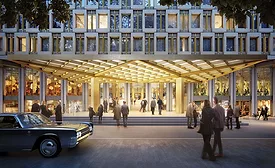
When the United States’ London embassy moves across town from Mayfair to Nine Elms in 2017, it will leave behind a monumental home: the Eero Saarinen–designed Chancery Building.
The department's Bureau of Overseas Buildings Operations intends to release a how-to handbook by July. The State Dept. is pushing ahead with plans to embrace “design excellence” in its embassy construction program, using some elements for a new U.S. embassy in London, now in design, and fleshing out details through a series of documents that will spell out specific Design Excellence program guidelines. Photo: U.S. Department of State / Bureau of Overseas Buildings Operations / Timothy Hursley The Bureau of Overseas Buildings Operations used some Design Excellence elements as it planned and built an embassy in Beijing that was completed
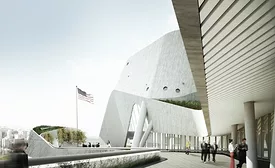
Given the complex forces connecting China and the United States, the new U.S. Embassy in Beijing, designed by Skidmore, Owings & Merrill’s San Francisco office, had to negotiate difficult political, cultural, and architectural terrain.
Security Issues Central to Design Scheme As part of its ongoing effort to fortify and modernize embassies worldwide, the U.S. State Department unveiled plans for its highest-profile project yet, awarding the New London Embassy to KieranTimberlake on February 23. With a concept that seeks to blend iconic design with the State Department’s demand for a highly secure and sustainable facility, the firm has earned equal parts praise from its client and derision from some critics. At a cost of $1 billion, according to The Times of London, the 500,000-square-foot facility would be the most expensive embassy ever built. Ground breaking
The Berlin site is woven into a dense urban fabric, but the embassy in Beijing, designed by Craig Hartman of the San Francisco office of SOM, sits within a gated island of walled space several ring roads removed from the Forbidden City.