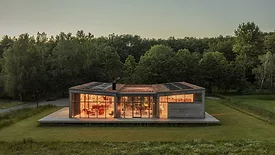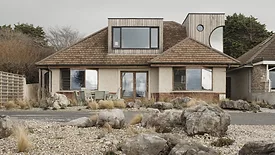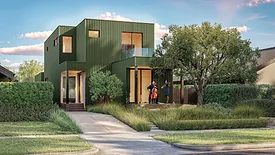
Case Study: Adapt and Case Study 2.0 offer a fire resilience–oriented riff on the famed midcentury program instigated to address the post-World War II housing shortage.
Adjacent Manhattan apartments are merged into a single unit comprising two wings, private and public, with bands of custom wood veneer creating a fluid architectural language.
Clad in untreated spruce and encircled by a cantilevered deck, this mass timber residence near Gothenburg features a central atrium inspired by Japanese garden design.
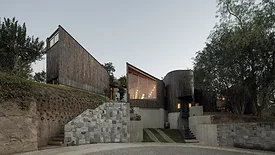
The young owners of this high-performance, site-sensitive dwelling situated near the Ecuadorian capital of Quito allocated 70 percent of the total construction budget to employing skilled local workers.
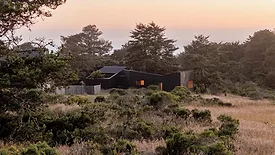
Built from stone, timber, and glass, this California residence serves as both a refuge from harsh coastal conditions and a light-filled dwelling immersed in the landscape.
A series of pavilions, each employing different structural strategies depending on their sizes or programs, come together to form a remote, off-grid lake retreat in Ontario.
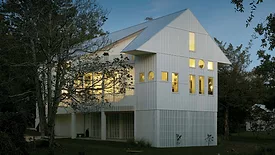
Built from concrete and timber, this bayside suburban home in Dublin was conceived as a refuge from the storm—a cozy shelter where its residents can hunker down in comfort and security.