The village of Gando is more than a three-hour drive from the capital of Burkina Faso, Ouagadougou, on occasionally unpaved roads that thread through a landscape of scorched orange dust and isolated trees buffeted by sub-Saharan winds.
Set at a crossroads in Zwide, a township in Port Elizabeth, this multipurpose center provides pediatric HIV/AIDS testing and treatment, as well as spaces for dance classes, performance, and social functions. By including non-health-care activities and placing the building at an important intersection, the Ubuntu Education Fund aims to integrate the center with the local community and make HIV care a part of people's daily lives. Stan Field, who grew up in Port Elizabeth, and his son Jess designed the building as a series of poured-in-place concrete structures that seem to lean on each other and embody the client's mission
In addition to designing the Girubuntu school, MASS Design Group founders Michael Murphy and Alan Ricks helped select its site, get approvals, and build the organizational infrastructure to support it.
Edited by Nicola Navone. Silvana Editoriale and Mendrisio Academy Press, 2010, 196 pages, $54 Since winning an Aga Khan Award for Architecture in 2004, Diébédo Francis Kéré has continued to garner accolades for his simple yet elegant work in his native country, Burkina Faso. One such honor—the BSI Swiss Architectural Award, given biennially by the BSI Architectural Foundation (a philanthropic arm of BSI Bank), with support from the Academy of Architecture in Mendrisio and the Federal Office for Culture in Bern—led to the publication of this engaging book. The international award recognizes architects age 50 or younger who create sustainable
Edited by Marie J. Aquilino. Metropolis Books, 2011, 303 pages, $35 Beyond Shelter hopes to “stir a passion for reform.” It asks architects to claim responsibility for protecting people during natural disasters and shaping policy and rebuilding efforts after humanitarian crises—events that affect nearly 200 million people, mostly in the developing world. “There is still no career path that prepares students to work as urgentistes-design professionals who intervene at a crucial moment in the recovery process to produce enduring solutions,” writes Marie J. Aquilino, Beyond Shelter’s editor and a professor of architectural history at the École Spéciale d’Architecture in Paris.
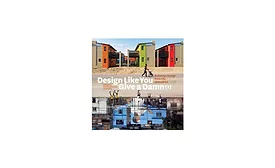
A follow up to the popular Design Like You Give a Damn (2006), this book covers more than 100 recent humanitarian design projects across the globe, selected and edited by Architecture for Humanity (AFH).
Architecture for Humanity’s commitment to socially responsible design has yielded a multitude of projects in low-income and disaster-stricken communities throughout the world.
The dome is a marvel, but as an adult, Chesler was more struck by the Mid-Century modern building beneath it, designed by Gropius prot'g' John Terence Kelly.
I had been cautioned that Communa 13 is one of Medellín’s most dangerous precincts, and was quite surprised as the presence of a heavily armed police force increased as my companions and I went made our way up pedestrian paths and stairways.
by Harry Charrington and Vezio Nava, editors. Helsinki: Rakennustieto, 2011, 427 pages, $59 Thirty-five years after Alvar Aalto's death, his reputation as one of the giants of modern architecture remains unassailable. While the Euro has replaced the 50 Finnmark notes that carried Aalto's image into every Finn's daily life, his shadow looms large over Finland. For example, the University of Art and Design Helsinki merged in 2010 with the Helsinki School of Economics and Helsinki University of Technology to form a new institution named The Aalto University. As with any iconic figure, there is a constant process of re-evaluation and
 RSS
RSS