Is the proliferation of sophisticated tools for modeling, parametric design, and digital fabrication making the practice of sketching by hand obsolete?
Edited by Nicola Navone. Silvana Editoriale and Mendrisio Academy Press, 2010, 196 pages, $54 Since winning an Aga Khan Award for Architecture in 2004, Diébédo Francis Kéré has continued to garner accolades for his simple yet elegant work in his native country, Burkina Faso. One such honor—the BSI Swiss Architectural Award, given biennially by the BSI Architectural Foundation (a philanthropic arm of BSI Bank), with support from the Academy of Architecture in Mendrisio and the Federal Office for Culture in Bern—led to the publication of this engaging book. The international award recognizes architects age 50 or younger who create sustainable
Edited by Marie J. Aquilino. Metropolis Books, 2011, 303 pages, $35 Beyond Shelter hopes to “stir a passion for reform.” It asks architects to claim responsibility for protecting people during natural disasters and shaping policy and rebuilding efforts after humanitarian crises—events that affect nearly 200 million people, mostly in the developing world. “There is still no career path that prepares students to work as urgentistes-design professionals who intervene at a crucial moment in the recovery process to produce enduring solutions,” writes Marie J. Aquilino, Beyond Shelter’s editor and a professor of architectural history at the École Spéciale d’Architecture in Paris.
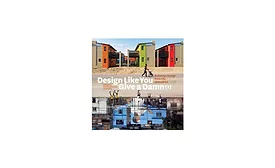
A follow up to the popular Design Like You Give a Damn (2006), this book covers more than 100 recent humanitarian design projects across the globe, selected and edited by Architecture for Humanity (AFH).
by Harry Charrington and Vezio Nava, editors. Helsinki: Rakennustieto, 2011, 427 pages, $59 Thirty-five years after Alvar Aalto's death, his reputation as one of the giants of modern architecture remains unassailable. While the Euro has replaced the 50 Finnmark notes that carried Aalto's image into every Finn's daily life, his shadow looms large over Finland. For example, the University of Art and Design Helsinki merged in 2010 with the Helsinki School of Economics and Helsinki University of Technology to form a new institution named The Aalto University. As with any iconic figure, there is a constant process of re-evaluation and
by Hicks Stone. New York: Rizzoli, 2011, 336 pages, $85 This biography of Ed Stone by his architect son Hicks is a highly personal story of the rather melodramatic life of an architect who came to exemplify the best and worst of the 1950s. Like his fellow Arkansan, Bill Clinton, Ed Stone's rural roots engendered a Southern charm that propelled him to the center of Washington's inner circle and helped him win the commissions to design the U.S. Embassy in India (1954), the U.S. Pavilion at the 1958 Brussels Worlds fair, and the Kennedy Center (1962). Like Clinton, he had
by Charles Bloszies. New York: Princeton Architectural Press, November 2011, 144 pages, $25 Architectural hybrids are all around us. Most historic buildings are now, in fact, examples of additive architecture. But after the schism of modern architecture, making a claim for additions as valid contemporary architecture amounts to a manifesto. A book on this subject, and about the exciting work being produced right now, is sorely needed. This is not that book. Aiming to “explore the union of new and old architecture,” Old Buildings, New Designs is one of a number or recent publications on the question of re-use. But
Is landmarking a shield or a sword in the fight against overdevelopment? Among urbanists in America, the advent of landmark-preservation laws in the 1960s is usually viewed as an inspiring time in urban planning: Concerned communities, academics, and fans of architecture banded together to protect beloved old buildings from the grand plans of rich developers and powerful politicians. And, remarkably enough, the Davids usually defeated the Goliaths. But have they acquired too much power? So say a growing contingent of critics who believe preservation has gotten out of hand. They include left-leaning economic policy wonks, architects, and architectural critics. Photo:
by Richard Weston. London:, Laurence King, 2011, 216 pages, $29.95 Architect, historian, editor, landscape architect, and fashion designer Richard Weston is one of those indefatigable, suavely literate English polymaths who, among other accomplishments, has written studies of Alvar Aalto and Jørn Utzon. He also crafts books on impossibly broad topics like materials or the 20th-century house. Now, following Key Buildings in the Twentieth Century, he has tackled 100 Ideas That Changed Architecture. Click the image above for details about this book mentioned in this review. Unlike another maddeningly useless book of lists or slickly packaged architecture lite, Weston's 100 Ideas
The reversal of the Chicago River has been celebrated as an engineering marvel for more than a century—evidence that modern civilization could use its might and know-how to fix anything—even reorder nature itself.
 RSS
RSS