Architectural Record
search
cart
facebook twitter linkedin youtube
  • Sign In
  • Subscribe
  • Sign Out
  • My Account
Architectural Record
  • NEWS
    • Latest News
    • Awards
    • Interviews
    • Obituaries
    • Podcasts
      • Design:Ed Podcast
      • Sponsored Podcasts
  • OPINION
    • Book Reviews / Excerpts
    • Exhibition Reviews
    • Forum
  • EXCLUSIVES
    • Videos
    • Design Vanguard
    • Top 300 Firms
    • Sponsored Content
    • Sponsored eBooks
    • From the Archives
  • CONTINUING ED
    • Editorial Continuing Ed
    • CE Center
    • CE Academies
  • PROJECTS
    • Buildings By Type
    • Reuse & Renovation
    • Museums & Arts Centers
    • Colleges & Universities
    • Multifamily Housing
    • Interiors
    • Lighting
    • Kitchen & Bath
  • HOUSES
    • Record Houses
    • House of the Month
    • Featured Houses
  • PRODUCTS
    • Products by Category
    • Record Products of the Year
    • Latest Products
  • EVENTS
    • Dates & Events
    • Record on the Road
    • Innovation Conference
    • Sustainability in Practice
    • Women In Architecture
    • Webinars
    • Ad Excellence Awards
    • Submit an Event
  • CONNECT
    • Ask RECORD AI
    • Newsletters
    • Contact
    • Advertise
    • Editorial Calendar
    • Store
    • Customer Service
  • SUBMIT
    • Submission Guidelines
    • RECORD Competitions
  • MAGAZINE
    • Subscribe
    • My Account
    • Digital Edition
    • Current Issue
    • Firm Pass
    • Historic Archive
Design Vanguard

Studio Pei-Zhu Commits to an Energetic Urbanism in Modern China
By Andrew Yang
Studio Pei-Zhu

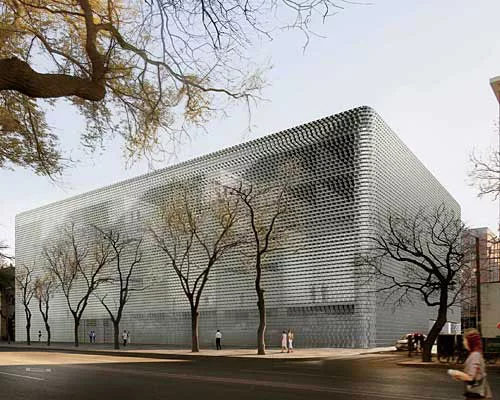
Studio Pei-Zhu often draws inspiration from local history and culture, as shown in a rendering of the Hotel Kapok in Beijing, which he likes to call the Blur Hotel. The design references the area’s traditional building typology – the sihueyuan, or courtyard house – while the semi-transparent skin evokes an image of a Chinese lantern.

Image: Courtesy Studio Pei-Zhu
Studio Pei-Zhu

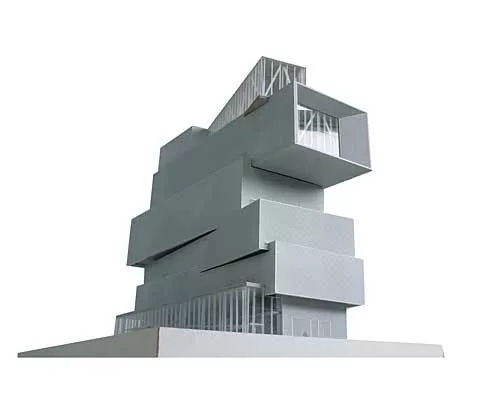
Publishing MicroCity, a project designed for the Beijing Publishing Corporation, features a series of outdoor terraces and dramatic cantilevers overlooking a busy, 6-lane road. A stack of books inspired the structure’s form.

Image: Courtesy Studio Pei-Zhu
Studio Pei-Zhu

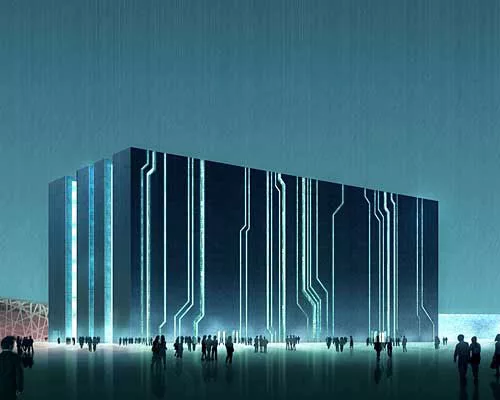
A rendering of the Digital Beijing Building, which will be the control and data center of the Beijing Olympics 2008. With an area of more than one million square feet, the building resembles a super-sized circuit board or digital bar code.

Image: Courtesy Studio Pei-Zhu
Studio Pei-Zhu

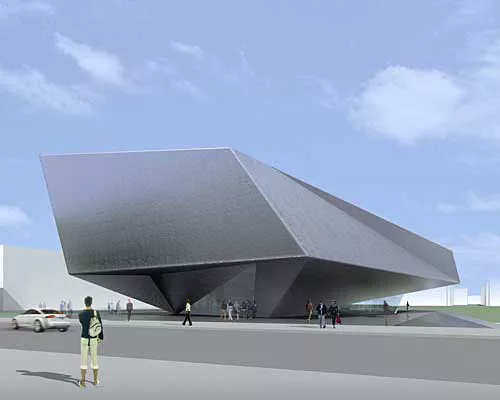
Studio Pei-Zhu is one of 19 firms designing art pavilions for a park in Abu Dhabi. The pavilions will be part of Saadiyat Island, a cultural district being developed in collaboration with the Guggenheim Foundation. Pei-Zhu’s pavilion design, represented in this rendering, accommodates a variety of functions.

Image: Courtesy Studio Pei-Zhu
Studio Pei-Zhu

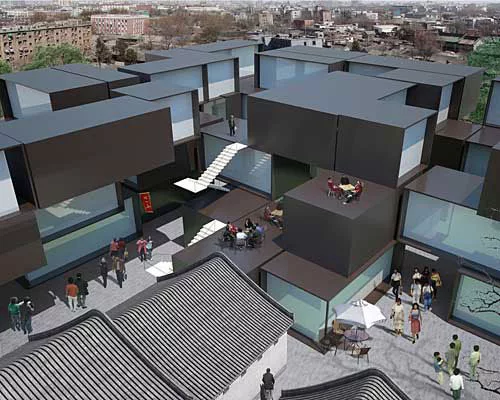
An urban design concept for the Xisi Bei historical district in Beijing references the old city’s vernacular architecture. These structures take their cue from the traditional courtyard house: a stacked, rectangular unit that typically has one open side and faces a plaza.

Image: Courtesy Studio Pei-Zhu

Studio Pei-Zhu

Photo: Courtesy Studio Pei-Zhu

Studio Pei-Zhu
Studio Pei-Zhu
Studio Pei-Zhu
Studio Pei-Zhu
Studio Pei-Zhu
Studio Pei-Zhu
December 19, 2007


Amid the rush to modernize, Chinese cities are becoming homogenized and losing their distinct identities, laments Pei Zhu, principal of the eponymous office, Studio Pei-Zhu, which he started in 2005, after leaving Urbanus [RECORD, December 2005, page 100], the firm he cofounded in 1999. "Our studio seeks to create architecture that reflects contemporary Chinese culture, including its roots and contradictions. We want to energize urban districts."

Studio Pei-Zhu is enjoying some high-profile commissions right now. Earlier this year, Zhu was on a roster of well-known architects—Zaha Hadid, Frank Gehry, and Jean Nouvel—to design a piece of a multibillion-dollar museum complex in Abu Dhabi. Zhu has also been retained by the Guggenheim Foundation to design a future outpost for the foundation in Beijing. Although the project is still under wraps, Zhu reveals this much: "We have come up with an almost invisible building. Most of the structure will be fabricated in a factory, and most of the structure won't touch any of the old buildings. It's almost floating in a courtyard, and it can be installed on the construction site without any damage to the ground."

In a way, the idea of an "invisible" building is a continuation of the urban research that influenced an earlier project, the Blur Hotel (since renamed Kapok), a renovation of a 1980s building east of the Forbidden City. To Zhu, that project was indicative of the insensitive development that has disrupted the traditional hierarchy of the city plan. He reimagined the envelope with a fiberglass-reinforced grid so that it recedes from the foreground, blurring into a translucent block along the traditional streetscape.

Regardless of what will eventually be built for the Guggenheim, the ongoing project is emblematic of the kind of approach that characterizes Zhu's work. "I have turned the direction of my studio more toward architecture and research," he says of his post-Urbanus practice. "We're not just doing projects from an urban-planning point of view; we are using our architecture projects to explore problems."

One of the projects that he took with him from Urbanus is the Digital Beijing building, which will be the control and data center for the 2008 Olympics and will then serve as an exhibition hall once the games are over. In the ongoing process of building Beijing, Zhu's approach seems to be a bit more balanced and nuanced than the government's approach to urbanism, which currently favors large, iconic buildings. His preference is for contemporary structures that leave only a light mark on the cityscape. "There is still something missing in the city. Architecture is not just a tool for urban development," says Zhu. "Architecture can be very interesting, something for people to enjoy. And it can be something to help people relax; it shouldn't just be serious. Everyone shouldn't focus just on economic growth. I want to create buildings that help people enjoy themselves, to have a sense of an experience beyond the physical aspect of the architecture."


Share This Story

Looking for a reprint of this article?
From high-res PDFs to custom plaques, order your copy today!

Post a comment to this article

Report Abusive Comment

Subscription Center
  • Create an Account
  • Start a Subscription
  • Manage My Account
  • Sign Up for Newsletters
  • Visit Customer Service
  • Update Preferences

More Videos

Sponsored Content

Sponsored Content is a special paid section where industry companies provide high quality, objective, non-commercial content around topics of interest to the Architectural Record audience. All Sponsored Content is supplied by the advertising company and any opinions expressed in this article are those of the author and not necessarily reflect the views of Architectural Record or its parent company, BNP Media. Interested in participating in our Sponsored Content section? Contact your local rep!

close
  • TAMLYN XtremeTrim Exterior Trim
    Sponsored byTamlyn

    Designing Cleaner Panel Facades: Why Exterior Trim Details Matter

  • Building with Vapor Barriers
    Sponsored byReef Industries, Inc.

    Vapor Barriers Help Control Moisture in Tighter Building Designs

  • Duct Interior with Prodeq System
    Sponsored byHenry, a Carlisle Company

    Designing Resilient Water Containment Systems

DESIGN:ED Podcast
Listen to Architectural Record’s DESIGN:ED Podcast

Events

June 10, 2026

Rethinking Stormwater – The Power of Porous Paving

Credits: 1 AIA LU/HSW; 1 AIBD P-CE; 0.1 ICC CEU

Learn how porous paving systems support stormwater management, reduce heat island effects, and enhance sustainable site design performance.

June 11, 2026

Very Early Warning Fire Detection for Mission-Critical Facilities

Credits: 1 AIA LU/HSW; 1 AIBD P-CE; 0.1 ICC CEU

Examine advanced fire detection strategies that support uptime and enhance safety in data centers and other mission-critical facilities.

View All Submit An Event

Products

2026 Architect's Square Foot Costbook

2026 Architect's Square Foot Costbook

See More Products

Popular Stories

Practice Matters illustration

What’s in a (Firm’s) Name? Thinking About Succession and Legacy

Coronado Bridge

The Architect’s Guide to San Diego

Practice Matters illustration

By the Numbers: Counting America's Architects

Riverdale House by Studio Lau

Riverdale House by Studio Lau

KRESA by DLR

In Kalamazoo, DLR Group Completes a Mass-Timber Hub for Career and Technical Education Programs

Broader Sustainability of CMU - Free Webinar - May 21, 2026

Related Articles

  • Imperial Kiln Museum.

    Imperial Kiln Museum by Studio Zhu-Pei

    See More
  • Lead1.jpeg

    The Getty Commits $3.1 Million to Conserve Modern Architecture by Black Designers

    See More
  • Microsoft

    Microsoft Commits $500 Million to Affordable Housing in Seattle Area

    See More

Related Products

See More Products
  • 047177751X.gif

    Sustainable Urbanism: Urban Design With Nature

  • image7.jpg

    Contemporary Architecture in China Towards A Critical Pragmatism

See More Products
×

The latest news and information

#1 Source for Architectural Design, News and Products

SUBSCRIBE
  • RESOURCES
    • Advertise
    • Contact Us
    • Submit
    • Store
  • ACCOUNT CENTER
    • Create an Account
    • Start a Subscription
    • Manage My Account
    • Sign Up for Newsletters
    • Visit Customer Service
    • Update Preferences
  • PRIVACY
    • PRIVACY POLICY
    • TERMS & CONDITIONS
    • DO NOT SELL MY PERSONAL INFORMATION
    • PRIVACY REQUEST
    • ACCESSIBILITY
  • SERVICES
    • Marketing Services
    • Reprints
    • Market Research
    • List Rental
    • Survey/Respondent Access
  • STAY CONNECTED
    • Linkedin
    • Facebook
    • Instagram
    • YouTube
    • X (Twitter)

Copyright ©2026. All Rights Reserved BNP Media, Inc. and BNP Media II, LLC.

Design, CMS, Hosting & Web Development :: ePublishing