In a Desert City, a Skyline Grows Ever Higher
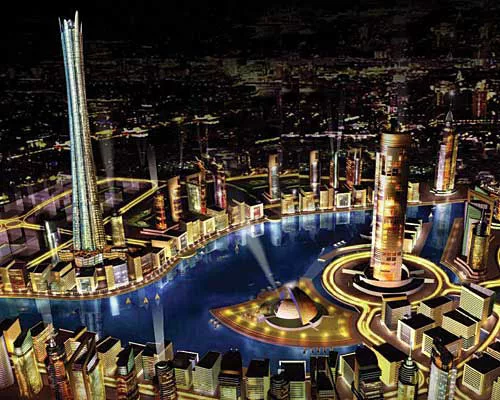
Burj Al Alam
In a Desert City, a Skyline Grows Ever Higher
Burj Al Alam, at left (108 stories; 1,645 feet).
Image courtesy Fortune Group
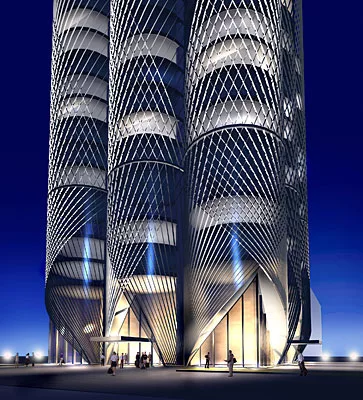
Al Sharq
In a Desert City, a Skyline Grows Ever Higher
Al Sharq (102 stories; 1,180 feet).
Image courtesy SOM
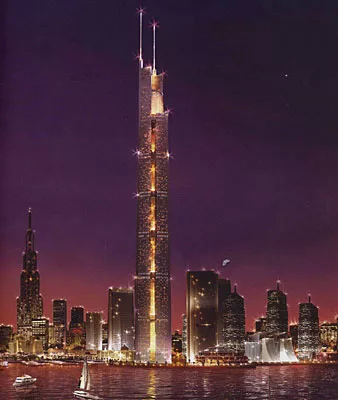
Al Burj
In a Desert City, a Skyline Grows Ever Higher
Al Burj (projected between 180 and 228 stories; 3,400 to 4,590 feet).
Image courtesy Pei Partnership
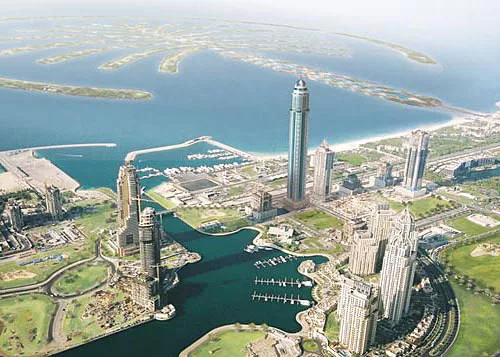
Princess Tower
In a Desert City, a Skyline Grows Ever Higher
Princess Tower (107 stories; 1,360 feet).
Image courtesy Tameer
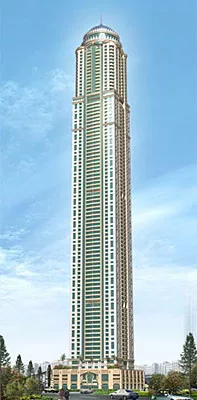
Princess Tower
In a Desert City, a Skyline Grows Ever Higher
Princess Tower (107 stories; 1,360 feet).
Image courtesy Tameer
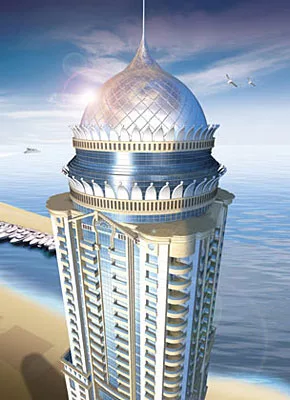
Princess Tower
In a Desert City, a Skyline Grows Ever Higher
Princess Tower (107 stories; 1,360 feet).
Image courtesy Tameer
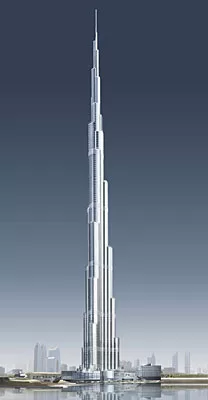
Burj Dubai
In a Desert City, a Skyline Grows Ever Higher
Burj Dubai (162 stories; 2,680 feet).
Image courtesy SOM
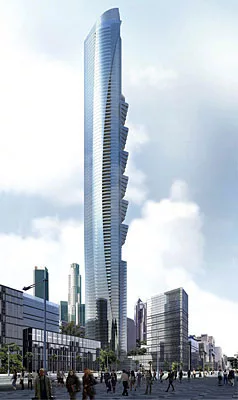
Pentominium
In a Desert City, a Skyline Grows Ever Higher
Pentominium (120 stories; 1,690 feet).
Image courtesy Aedas
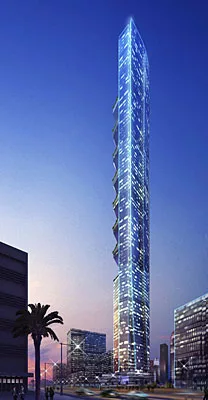
Pentominium
In a Desert City, a Skyline Grows Ever Higher
Pentominium (120 stories; 1,690 feet).
Image courtesy Aedas
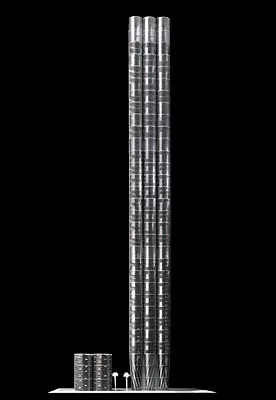
Al Sharq
In a Desert City, a Skyline Grows Ever Higher
Al Sharq (102 stories; 1,180 feet).
Image courtesy SOM
The world’s tallest building, the 162-story, 2,680 foot Burj Dubai, designed by Skidmore, Owings, and Merrill (SOM), is set to open next year. But Dubai also has six other skyscrapers of at least 100 stories in the works, making it the super-tall building capital of the world—head and shoulders above other cities.
The towers include SOM’s Al Sharq (102 stories, 1,180 feet), National Engineering Bureau’s Marina 101 (101 stories, 1,350 feet), Tameer’s Princess Tower (107 stories, 1,360 feet), Nikon Sekkei’s Burj Al Alam (108 stories, 1,645 feet), Aedas’s Pentominium (120 stories, 1,690 feet), and the Tall Tower, formerly known as Al Burj (projected between 180 and 228 stories, 3,400 to 4,590 feet). Their designs range from the formulaic to the fantastic. The Princess, a fairly traditional concrete and blue-tinted-glass tower, will be topped with a faceted, dome-shaped concrete “crown”; the Burj Alam will be fronted by vertical glass curtain walls that open at the top like flower petals; and the Al Sharq will be formed by nine tall, filigreed glass-and-steel cylinders. Most, if completed, will be located either on Sheikh Zayed Road, the city’s central thoroughfare, or in the new Dubai Marina district. Catering to a population dominated by wealthy expatriates, most will include high-end residences and hotels.
“It’s extraordinary,” says Carol Willis, director of the Skyscraper Museum, in New York City. “Dubai wants to position itself as the center of the Middle East, if not the world, and their business plans are impressive.” Developed by multi-national firms such as Emaar and Tameer, the towers are intended to impress—an obsession in Dubai, which also contains the world’s largest man-made islands: The Palm Jebel Ali, The Palm Jumeira, and The Palm Deira. The emirate also is planning the world’s largest theme park, Dubailand, which will cover about 3 billion square feet.
“It’s the greatest game of one-upmanship I’ve ever seen,” says Michael Brendle, design principal at Denver-based RNL, a firm that has worked on several master plans and towers in Dubai. “It’s all about image: bigger, better, cooler, neater.”
Few Middle Eastern cities have towers that even approach the scale of those contemplated in Dubai, where there are already more than 10 towers taller than 50 stories. According to Emporis, a research firm that tracks building projects, the tallest towers in neighboring countries fall under 1,000 feet. Qatar is planning an 87-story, 1,434 foot-tall building, ironically named Dubai Tower, and in Jeddah, Saudi Arabia, the 5,249-foot-tall Mile High Tower has been proposed but not yet approved.
Willis notes that when it comes to building super-tall towers, the eastern hemisphere trumps the West. In fact, China is the only nation that can compete with Dubai. Five of the world’s 10 tallest towers are located here, with hundreds more planned.
Some observers question Dubai’s unbridled exuberance to build higher and higher. Willis, for instance, wonders how the city will deal with traffic and human scale. Others ask if the towers will over-tax the city’s infrastructure and natural resources, and whether or not tenants will ever fill these gigantic buildings.
George Efstathiou, a managing partner at SOM’s Chicago office, has visited Dubai frequently during the last five years while leading the Burj Dubai project. He notes that development thus far has been fairly unplanned and unregulated, with developers “doing their own thing.” But he says that concepts of urban design control—including height limits, zoning for human-scale and walkability, and providing public transportation—are slowly starting to emerge.
Dubai’s recently released Strategic Plan 2015 calls for the adoption of “integrated urban planning,” although it fails to give specifics. The plan does, however, call for a $20 billion investment in new roads and an elevated rail system to alleviate the city’s growing traffic problem. And some developers—including those behind the 100-acre Burj project—are making an effort to include promenades and parks, on a voluntary basis.
Efstathiou is concerned that buildings have low tenancy, despite being sold out, because most units are investment properties. But he thinks a slowdown is unlikely, despite tenuous world real estate markets. “Five years ago everybody I talked to said the activity can’t sustain itself. They were guessing that there would be a five-year window. Nothing has slowed down at all.”
Interestingly, one trend that Efstathiou sees declining is the desire to build more than 100 stories. “I think now the focus is more on quality than height,” he says, adding that clients are starting to hire better firms as they begin to recognize they can’t get the same results with cheaper architects. “They’ve gotten attention from their buildings. I think they’ve gotten it out of their systems.”
Looking for a reprint of this article?
From high-res PDFs to custom plaques, order your copy today!

