Architectural Record
search
cart
facebook twitter linkedin youtube
  • Sign In
  • Subscribe
  • Sign Out
  • My Account
Architectural Record
  • NEWS
    • Latest News
    • Awards
    • Interviews
    • Obituaries
    • Podcasts
      • Design:Ed Podcast
      • Sponsored Podcasts
  • OPINION
    • Book Reviews / Excerpts
    • Exhibition Reviews
    • Forum
  • EXCLUSIVES
    • Videos
    • Design Vanguard
    • Top 300 Firms
    • Sponsored Content
    • Sponsored eBooks
    • From the Archives
  • CONTINUING ED
    • Editorial Continuing Ed
    • CE Center
    • CE Academies
  • PROJECTS
    • Buildings By Type
    • Reuse & Renovation
    • Museums & Arts Centers
    • Colleges & Universities
    • Multifamily Housing
    • Interiors
    • Lighting
    • Kitchen & Bath
  • HOUSES
    • Record Houses
    • House of the Month
    • Featured Houses
  • PRODUCTS
    • Products by Category
    • Record Products of the Year
    • Latest Products
  • EVENTS
    • Dates & Events
    • Record on the Road
    • Innovation Conference
    • Sustainability in Practice
    • Women In Architecture
    • Webinars
    • Ad Excellence Awards
    • Submit an Event
  • CONNECT
    • Ask RECORD AI
    • Newsletters
    • Contact
    • Advertise
    • Editorial Calendar
    • Store
    • Customer Service
  • SUBMIT
    • Submission Guidelines
    • RECORD Competitions
  • MAGAZINE
    • Subscribe
    • My Account
    • Digital Edition
    • Current Issue
    • Firm Pass
    • Historic Archive
Architecture News

Global Report: U.K.

By Kerry Capell
March 19, 2009

Architects Hit Hard by Job Losses

With its economy expected to shrink nearly 3 percent this year, Britain is facing the most severe recession in the developed world. And with troubled banks unwilling to lend, building projects are at a standstill and architects are hurting. “Every firm, regardless of size, is affected,” says John McAslan, chairman of London-based John McAslan & Partners, whose 100-person practice downsized by about 10 percent over the past six months.
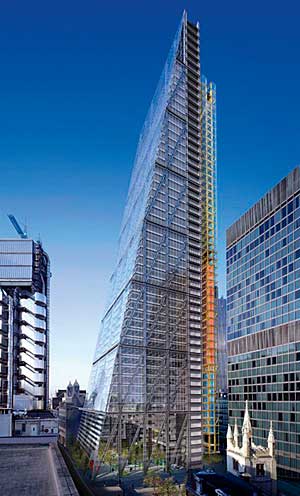
Leadenhall Building in London, by Richard Rogers.
Image courtesy Richard Rogers
Leadenhall Building in London, by Richard Rogers.
Related Links:
Global Report: Brazil Global Report: China Global Report: Germany Global Report: India Global Report: Japan Global Report: Spain Global Report: U.A.E. Global Report: U.K.

Projects by some of the biggest names are among the first casualties. In August, British Land put on hold its 47-story-tall, Richard Rogers–designed Leadenhall Building, known as the Cheesegrater. In November, Dutch bank ING pulled the plug on Frank Gehry’s $433 million waterfront development in Brighton.

Data from Britain’s Office for National Statistics reveals that architects are joining the ranks of the unemployed at a faster rate than any other occupation. Some 870 architects signed up for unemployment benefits in the last quarter of 2008, compared to just 135 in the same period the year before. During the last recession in the early 1990s, about 40 percent of British architects lost their jobs. But because the current recession is global, “we believe this one will be worse,” says Sunand Prasad, president of the Royal Institute of British Architects and a partner at London-based Penoyre & Prasad.

Practices focusing mainly on residential and commercial projects are suffering the most. “We have three months of paid work ahead of us,” says Gianni Botsford, founder of Gianni Botsford Architects, a small, mainly residential practice of four in London. Botsford had hoped a master planning job in Qatar would keep the money flowing, but that project dried up in January.

For bigger firms, such as London-based Llewelyn Davies Yeang, which gets half its revenue from outside of Britain, international projects have helped offset the slowdown. But these days, the firm needs to go farther afield to find them, admits managing director Stephen Featherstone. Recent commissions have taken the firm to countries ranging from Uzbekistan to Vietnam, and Libya.

In Britain, the main opportunity is in the public sector. The government is pumping billions into public-sector projects, ranging from infrastructure to the $66 billion Building Schools for the Future program. Another area offering opportunity is green design and planning. “A lot of people feared the sustainability agenda would collapse in the face of recession,” Featherstone says. “Instead, it is ramping up with legislation emerging on both sides of the Atlantic.”

Share This Story

Looking for a reprint of this article?
From high-res PDFs to custom plaques, order your copy today!

Post a comment to this article

Report Abusive Comment

Subscription Center
  • Create an Account
  • Start a Subscription
  • Manage My Account
  • Sign Up for Newsletters
  • Visit Customer Service
  • Update Preferences

More Videos

Sponsored Content

Sponsored Content is a special paid section where industry companies provide high quality, objective, non-commercial content around topics of interest to the Architectural Record audience. All Sponsored Content is supplied by the advertising company and any opinions expressed in this article are those of the author and not necessarily reflect the views of Architectural Record or its parent company, BNP Media. Interested in participating in our Sponsored Content section? Contact your local rep!

close
  • cold storage facility
    Sponsored byCarlisle SynTec Systems

    How Architects Can Design More Continuous Cold Storage Envelopes

  • TAMLYN XtremeTrim Exterior Trim
    Sponsored byTamlyn

    Designing Cleaner Panel Facades: Why Exterior Trim Details Matter

  • Building with Vapor Barriers
    Sponsored byReef Industries, Inc.

    Vapor Barriers Help Control Moisture in Tighter Building Designs

DESIGN:ED Podcast
Listen to Architectural Record’s DESIGN:ED Podcast

Events

June 30, 2026

Generator Selection and Sizing for Outage-Ready Homes

Credits: 1 AIA LU/HSW; 1 AIBD P-CE; 0.1 ICC CEU

Explore how propane-powered systems and whole-home generators can improve energy resilience, reduce electrical loads, and lower long-term residential costs.

July 1, 2026

Hospitality in Higher Education

Credits: 1 AIA LU/HSW; 1 AIBD P-CE; 0.1 ICC CEU

Explore how hospitality-driven campus design can strengthen belonging, wellbeing, and community connection in higher education environments.

View All Submit An Event

Products

2026 Architect's Square Foot Costbook

2026 Architect's Square Foot Costbook

See More Products

Popular Stories

Obama Presidential Center, Chicago

The Obama Presidential Center Opens on Chicago’s South Side

Spoonbill Ranch

Johnsen Schmaling Architects Integrates Spoonbill Ranch into a Pristine Landscape

Kìwekì Point, Ottawa, Canada

Perched High Above the Ottawa River, Kìwekì Point Showcases Sweeping Views of the Canadian Capital Region

Baileywick Park

An Elegant Pavilion by In Situ Studio Adds Sheltered Courts and a Gateway to a Public Park in Raleigh

Ayn Rand Center rendering

John Ronan Architects Designs Cultural and Education Hub for the Ayn Rand Institute in Austin

Generator Selection and Sizing for Outage-Ready Homes - Free Webinar - June 30, 2026

Related Articles

  • Global Report: India

    See More
  • Global Report: Brazil

    See More
  • Global Report: China

    See More
×

The latest news and information

#1 Source for Architectural Design, News and Products

SUBSCRIBE
  • RESOURCES
    • Advertise
    • Contact Us
    • Submit
    • Store
  • ACCOUNT CENTER
    • Create an Account
    • Start a Subscription
    • Manage My Account
    • Sign Up for Newsletters
    • Visit Customer Service
    • Update Preferences
  • PRIVACY
    • PRIVACY POLICY
    • TERMS & CONDITIONS
    • DO NOT SELL MY PERSONAL INFORMATION
    • PRIVACY REQUEST
    • ACCESSIBILITY
  • SERVICES
    • Marketing Services
    • Reprints
    • Market Research
    • List Rental
    • Survey/Respondent Access
  • STAY CONNECTED
    • Linkedin
    • Facebook
    • Instagram
    • YouTube
    • X (Twitter)

Copyright ©2026. All Rights Reserved BNP Media, Inc. and BNP Media II, LLC.

Design, CMS, Hosting & Web Development :: ePublishing