Architectural Record
search
cart
facebook twitter linkedin youtube
  • Sign In
  • Subscribe
  • Sign Out
  • My Account
Architectural Record
  • NEWS
    • Latest News
    • Awards
    • Interviews
    • Obituaries
    • Podcasts
      • Design:Ed Podcast
      • Sponsored Podcasts
  • OPINION
    • Book Reviews / Excerpts
    • Exhibition Reviews
    • Forum
  • EXCLUSIVES
    • Videos
    • Design Vanguard
    • Top 300 Firms
    • Sponsored Content
    • Sponsored eBooks
    • From the Archives
  • CONTINUING ED
    • Editorial Continuing Ed
    • CE Center
    • CE Academies
  • PROJECTS
    • Buildings By Type
    • Reuse & Renovation
    • Museums & Arts Centers
    • Colleges & Universities
    • Multifamily Housing
    • Interiors
    • Lighting
    • Kitchen & Bath
  • HOUSES
    • Record Houses
    • House of the Month
    • Featured Houses
  • PRODUCTS
    • Products by Category
    • Record Products of the Year
    • Latest Products
  • EVENTS
    • Dates & Events
    • Record on the Road
    • Innovation Conference
    • Sustainability in Practice
    • Women In Architecture
    • Webinars
    • Ad Excellence Awards
    • Submit an Event
  • CONNECT
    • Ask RECORD AI
    • Newsletters
    • Contact
    • Advertise
    • Editorial Calendar
    • Store
    • Customer Service
  • SUBMIT
    • Submission Guidelines
    • RECORD Competitions
  • MAGAZINE
    • Subscribe
    • My Account
    • Digital Edition
    • Current Issue
    • Firm Pass
    • Historic Archive
ProjectsBuildings by TypeK-12 School Design

Wilkes Elementary School by Mahlum Architects

Bainbridge Island, Washington

By Beth Broome
Wilkes Elementary School
A generous entry porch encourages lingering and leads into a long, inviting vestibule.
 
Photo © Benjamin Benschneider
Wilkes Elementary School
Bars of classrooms, with facades of concrete, dark brick, and stained cedar, reach out into the slope.
 
Photo © Jeremy Bittermann
Wilkes Elementary School
The original school stood on the site's lower portion, where the parking lot now is.
 
Photo © Jeremy Bittermann
Wilkes Elementary School
Skybridges connect the classroom bars and are popular with students, who go out of their way to traverse them. 'They're cool and give us more space for the playground,' says third grader Cameron Albee.
 
Photo © Benjamin Benschneider
Wilkes Elementary School
The architects thought of the grass areas below the bridges as amphitheaters, but the children immediately turned them into hills to roll down. A covered play area, at right, occupies space under the library.
 
Photo © Benjamin Benschneider
Wilkes Elementary School
Extensive glazing links interior spaces to each other and to the outdoors, as in the library (left), classrooms, and shared learning spaces. Thermal comfort is aided by radiant heat beneath the recycled-rubber flooring and sensors that instruct teachers when to open windows.
 
Photo © Benjamin Benschneider
Wilkes Elementary School
Shared learning spaces link classrooms to each other and to the outdoors.
 
Photo © Benjamin Benschneider
Wilkes Elementary School
Shared learning spaces link classrooms to each other and to the outdoors.
 
Photo © Benjamin Benschneider
Wilkes Elementary School
Drawing courtesy Mahlum
Wilkes Elementary School
Drawing courtesy Mahlum
Wilkes Elementary School
January 16, 2015

Architects & Firms

Mahlum Architects

People/Products

With a reputation for liberal politics, picturesque landscapes, and a relaxed dress code, 28-square-mile Bainbridge Island in Washington's Puget Sound is viewed by many as an idyllic spot to raise a family. Once dominated by logging and ship building and, later, agriculture, the island has evolved into an affluent bedroom community of Seattle, just a 35-minute ferry ride away. Given its tight control on development and its promotion of green space, it is no surprise that the island—which prides itself on its small-town charm and progressive values—has high expectations for its schools, which reflect and promote the way of life here.

The original Wilkes Elementary School, dating to the mid-50s, had grown in an ad hoc manner into a cluster of four brick buildings with temporary trailers connected by covered walkways. Instruction often happened in its double-loaded corridors, and its heating and plumbing systems were failing. The municipality turned to Seattle-based architects Mahlum, which in 2005 developed its school district master plan. The first goal, say the architects, was to use the full 10-acre site, which was bifurcated by a 20-foot elevation change. But, more importantly, the team focused on creating a building that would embody the school's philosophy, which embraces a broad spectrum of learning styles (accommodating everything from multi-class gatherings to independent study), while underscoring collaboration and the educational value of play. “Teachers used to be like individual contractors, with their room as their domain,” notes principal Sheryl Belt. “But you are always stronger as a team. We wanted to be connected, we wanted a flow.”

Wilkes Elementary, which has 382 students, com-municates its open vibe from the moment parents drop off their children at the covered porch that serves as the entry. The welcoming space prompts casual interactions among parents, students, and staff by inviting them to linger, and announces the value placed here on community and family participation in the education process.

To break down the building's scale, the architects organized the plan as a series of bars separated by courtyards. Within each wing, classrooms are linked by a corridor that widens into a “shared learning space,” where activity can spill out and special programs are hosted. On a recent morning, these areas buzzed quietly: children read independently while a volunteer set up an art project. “We wanted to encourage collaboration by getting not only kids, but also teachers, out of the classroom,” says Mahlum managing partner Gerald (Butch) Reifert. “We thought of the classroom as a house, and the corridor and shared learning space as the porch.” Two long hallways, running north to south, create a circulation ring that fosters interaction among the grades. “The building knits into the land,” notes project designer JoAnn Wilcox, referring to the finger-like volumes that reach out into the site, which the team regraded into a gentle slope. “The overlay here is that teaching is about the whole child, and the idea of learning from play.” To blur the lines between educational and recreational spaces while creating ample sight lines, the architects used extensive glazing, providing views between interiors and out to rain gardens, courtyards, and play areas while filling the school with daylight, even on a gloomy fall afternoon. Some people fear transparency, notes Reifert. “But we believe the opposite: the more transparent, the safer.” The glass has other benefits, Belt adds. “Kids view the whole area as a classroom and know adults can see them every minute. They're more independent, because we can let them be.”

The project added a cafeteria that doubles as a performance space and an enlarged gymnasium, which meets standards for competitive use. These facilities, along with the library, occupy the building's east side, and are accessed by a public hallway with its own entry. Outside school hours, they can remain open and be used by the local basketball league or church groups. While creating a community amenity for the island's north end, which has no town center, these additions have surprising effects, too. For example, a separate cafeteria frees teachers from overseeing meals in their classrooms, points out Tamela J. Van Winkel, the district's director of facilities and capital projects. This buys 15 minutes a day, she says, “which adds up to eight days a year.”

Dignified materials, like dark-fired brick, concrete, and wood are complemented with splashes of color on flooring and textiles—hues inspired by a student project on Matisse cutouts. These choices lend the school a serious yet joyful air without resorting to the condescending primary palette so often employed. And sustainable features abound, from nontoxic finishes to 100 percent on-site stormwater infiltration and waste-water treatment, heat recovery, and a hybrid radiant heating system with 45 geothermal wells.

Since it was founded in 1938, Mahlum has designed dozens of schools. “We look at each project as a template,” says Reifert. “There are always lessons learned. We take many ideas and move them forward.” But rather than applying a cookie-cutter approach whereby design elements are merely recycled, Wilcox notes, “We bring values. For example, we ask, 'How do we create connectivity?' Or quiet—how do we create the building as a backdrop for the life, the color, and the activity that students bring?” In the end, it's about place-making. “You layer on educational design principles, but the goal is to create a place that is whole—bigger than the sum of its parts.”


People

Formal name of building:
Wilkes Elementary School

Location:
12781 Madison Ave NE, Bainbridge Island, WA 98110

Completion Date:
September 2012

Gross square footage:
64,450 sf

Total project cost:
$29 million

Total construction cost:
$21.7 million

Client:
Tamela VanWinkle, Director of Capital Projects

Owner:
Bainbridge Island School District

Architect:
Mahlum
71 Columbia, Floor 4
Seattle, WA 98104
206 441 4151

Personnel in architect's firm who should receive special credit:
Butch Reifert AIA, Principal-in-Charge
David Mount AIA, Managing Principal
JoAnn Wilcox AIA, Project Designer
Jesse Walton AIA, Project Architect
Dwayne Epp AIA
James Steel AIA
Cristine Ross Traber AIA
Amy Noe IIDA NCIDQ, Interior Designer
Masako Wada IIDA, Interior Designer

Interior designer:
Mahlum

Engineers:
Civil: 2020 Engineering
Structural: PCS Structural Solutions
Mechanical, Electrical & Plumbing: ARUP

Consultant(s):
Landscape: Cascade Design Collaborative
Acoustical and AV: SSA Acoustics
Food Service: Bundy & Associates
Cost Estimator: Rider Levett Bucknell
Hazmat: NOVO Laboratory & Consulting Services, Inc.
Commissioning: McKinstry
Geotechnical: Associated Earth Sciences

General contractor:
Spee West Construction

Photographer(s):
Benjamin Benschneider and Jeremy Bittermann

Size:

64,450 square feet

Construction cost:

$21.7 million

Completion date:

September 2012


Products

Exterior cladding
Masonry: Mutual Materials , Ebony Smooth, Norman Size, 1/3 running bond
Metal Panels: Ballard Sheet Metal Works
Metal/glass curtain wall: EFCO Curtainwall
Wood: Issaquah Cedar & Lumber ' cedar siding
Moisture barrier: StoGuard

Roofing
Thermoplastic Membrane Roofing: 60mil FiberTite-SM

Windows
Aluminum Clad Wood Windows: Eagle Windows and Doors

Glazing
Glass: Hartung Glass Industries
Skylights: Sunoptics Prismatic Skylights

Doors
Entrances: EFCO
Metal doors: Ceco Door Products
Wood doors: Eagle Windows and Doors
Security grilles: MobilFlex
Operable partitions: Modernfold
Coiling Doors: The Cookson Company

Interior finishes
Acoustical ceilings: USG
Suspension grid: USG
Cabinetwork and custom woodwork: Genothen
Paints and stains: Sherwin-Williams
Wall coverings: Forbo; Kinetics Noise Control; Camira
Plastic laminate: Nevamar; Formica
Floor and wall tile: Daltile (bathrooms and kitchen)
Resilient flooring: Nora Systems Inc.
Area Rugs: Karastan

Furnishings
Office furniture: VPI
Reception furniture: Harter, Custom Casework
Chairs: VS Furniture; Fixtures Furniture; RT London
Student Tables: VS Furniture; VPI
Cafeteria Tables: Sico
Upholstery: Maharam; Designtex
Bean Bags: Fatboy

Lighting
Downlights: Pathway Lighting; GE, Vantage; Elcast; Ligman; Kurtzon
Task lighting: GE; Alera; Litecontrol; Hubbell; Light Edge; Airey-Thompson; Ligman
Exterior: Kim; GE; Spaulding

Conveyance
Elevator: Otis

Plumbing
(include water fountains and water-saving fixtures as applicable)
Elkay; Kohler; Chicago Faucets; Sloan

Energy
Energy management or building automation system: ATS Automation; Lutron

Other unique products that contribute to sustainability:
AdvanTex Treatment System; LOSS (Large On-site Sewage Systems); H2OG Rainwater Hogs


Looking for quick answers on architecture and design topics?
Try Ask RECORD, our new smart AI search tool.
Ask RECORD →

KEYWORDS: Washington D.C.

Share This Story

Looking for a reprint of this article?
From high-res PDFs to custom plaques, order your copy today!

Former Architectural Record managing editor Beth Broome is a freelance writer based in Brooklyn, New York.

Post a comment to this article

Report Abusive Comment

Subscription Center
  • Create an Account
  • Start a Subscription
  • Manage My Account
  • Sign Up for Newsletters
  • Visit Customer Service
  • Update Preferences

More Videos

Sponsored Content

Sponsored Content is a special paid section where industry companies provide high quality, objective, non-commercial content around topics of interest to the Architectural Record audience. All Sponsored Content is supplied by the advertising company and any opinions expressed in this article are those of the author and not necessarily reflect the views of Architectural Record or its parent company, BNP Media. Interested in participating in our Sponsored Content section? Contact your local rep!

close
  • TAMLYN XtremeTrim Exterior Trim
    Sponsored byTamlyn

    Designing Cleaner Panel Facades: Why Exterior Trim Details Matter

  • Building with Vapor Barriers
    Sponsored byReef Industries, Inc.

    Vapor Barriers Help Control Moisture in Tighter Building Designs

  • Duct Interior with Prodeq System
    Sponsored byHenry, a Carlisle Company

    Designing Resilient Water Containment Systems

DESIGN:ED Podcast
Listen to Architectural Record’s DESIGN:ED Podcast

Events

June 10, 2026

Rethinking Stormwater – The Power of Porous Paving

Credits: 1 AIA LU/HSW; 1 AIBD P-CE; 0.1 ICC CEU

Learn how porous paving systems support stormwater management, reduce heat island effects, and enhance sustainable site design performance.

June 11, 2026

Very Early Warning Fire Detection for Mission-Critical Facilities

Credits: 1 AIA LU/HSW; 1 AIBD P-CE; 0.1 ICC CEU

Examine advanced fire detection strategies that support uptime and enhance safety in data centers and other mission-critical facilities.

View All Submit An Event

Products

2026 Architect's Square Foot Costbook

2026 Architect's Square Foot Costbook

See More Products

Popular Stories

Practice Matters illustration

What’s in a (Firm’s) Name? Thinking About Succession and Legacy

Coronado Bridge

The Architect’s Guide to San Diego

Practice Matters illustration

By the Numbers: Counting America's Architects

Riverdale House by Studio Lau

Riverdale House by Studio Lau

KRESA by DLR

In Kalamazoo, DLR Group Completes a Mass-Timber Hub for Career and Technical Education Programs

Broader Sustainability of CMU - Free Webinar - May 21, 2026

Related Articles

  • Grant High School.

    Grant High School by Mahlum Architects

    See More
  • Arlington Elementary

    Arlington Elementary School by Mahlum

    See More
  • Libraries That Learn

    Library at A.J. Condit Elementary School by VLK Architects

    See More

Related Products

See More Products
  • Web-Regenerative-school4-1920x1125.jpg

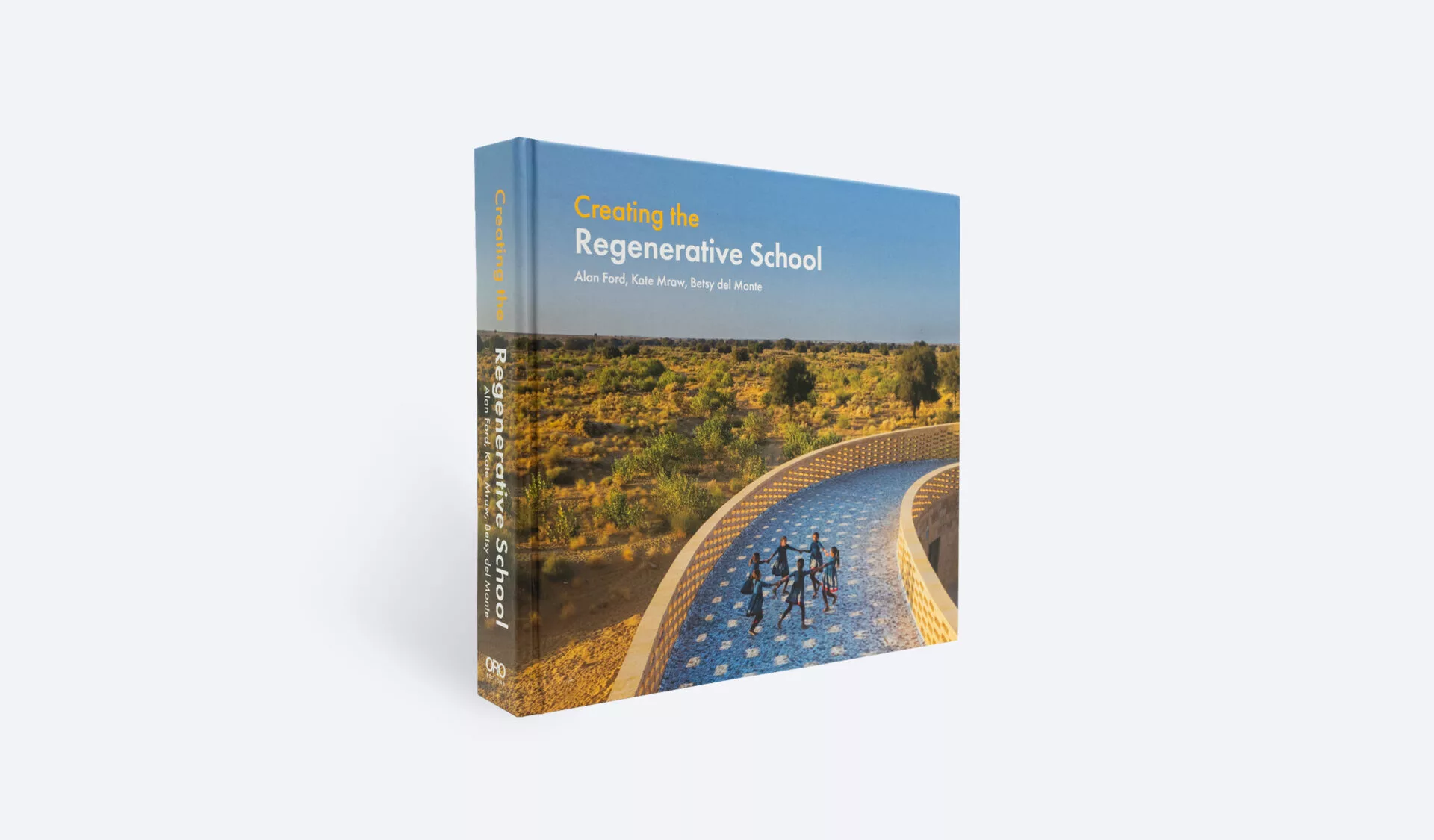
    Creating the Regenerative School

  • WC_-SCA.png

    Building Great Schools for a Great City

See More Products
×

The latest news and information

#1 Source for Architectural Design, News and Products

SUBSCRIBE
  • RESOURCES
    • Advertise
    • Contact Us
    • Submit
    • Store
  • ACCOUNT CENTER
    • Create an Account
    • Start a Subscription
    • Manage My Account
    • Sign Up for Newsletters
    • Visit Customer Service
    • Update Preferences
  • PRIVACY
    • PRIVACY POLICY
    • TERMS & CONDITIONS
    • DO NOT SELL MY PERSONAL INFORMATION
    • PRIVACY REQUEST
    • ACCESSIBILITY
  • SERVICES
    • Marketing Services
    • Reprints
    • Market Research
    • List Rental
    • Survey/Respondent Access
  • STAY CONNECTED
    • Linkedin
    • Facebook
    • Instagram
    • YouTube
    • X (Twitter)

Copyright ©2026. All Rights Reserved BNP Media, Inc. and BNP Media II, LLC.

Design, CMS, Hosting & Web Development :: ePublishing