Architectural Record
search
cart
facebook twitter linkedin youtube
  • Sign In
  • Subscribe
  • Sign Out
  • My Account
Architectural Record
  • NEWS
    • Latest News
    • Awards
    • Interviews
    • Obituaries
    • Podcasts
      • Design:Ed Podcast
      • Sponsored Podcasts
  • OPINION
    • Book Reviews / Excerpts
    • Exhibition Reviews
    • Forum
  • EXCLUSIVES
    • Videos
    • Design Vanguard
    • Top 300 Firms
    • Sponsored Content
    • Sponsored eBooks
    • From the Archives
  • CONTINUING ED
    • Editorial Continuing Ed
    • CE Center
    • CE Academies
  • PROJECTS
    • Buildings By Type
    • Reuse & Renovation
    • Museums & Arts Centers
    • Colleges & Universities
    • Multifamily Housing
    • Interiors
    • Lighting
    • Kitchen & Bath
  • HOUSES
    • Record Houses
    • House of the Month
    • Featured Houses
  • PRODUCTS
    • Products by Category
    • Record Products of the Year
    • Latest Products
  • EVENTS
    • Dates & Events
    • Record on the Road
    • Innovation Conference
    • Sustainability in Practice
    • Women In Architecture
    • Webinars
    • Ad Excellence Awards
    • Submit an Event
  • CONNECT
    • Ask RECORD AI
    • Newsletters
    • Contact
    • Advertise
    • Editorial Calendar
    • Store
    • Customer Service
  • SUBMIT
    • Submission Guidelines
    • RECORD Competitions
  • MAGAZINE
    • Subscribe
    • My Account
    • Digital Edition
    • Current Issue
    • Firm Pass
    • Historic Archive
Projects

Xihe Cereals and Oils Museum and Villagers' Activity Center

Cultural Revolution: A rural village finds new purpose by converting an old granary into a museum and community center.
By Aric Chen
Xihe Cereals and Oils Museum and Villagers' Activity Center
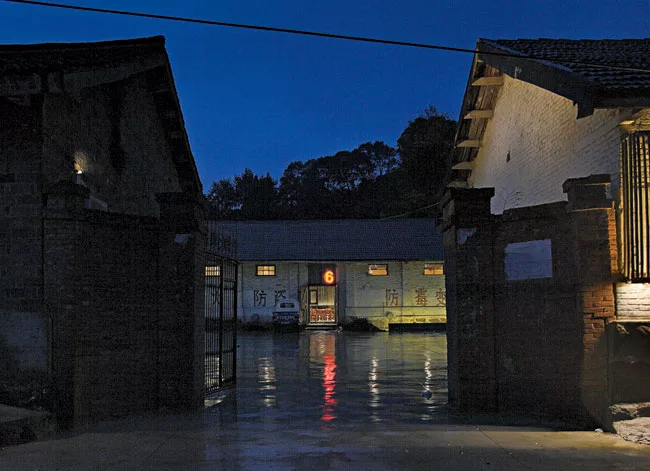
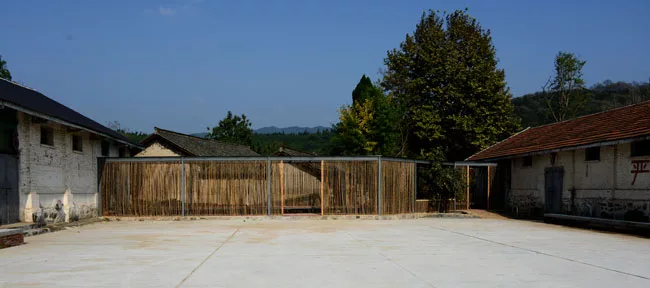
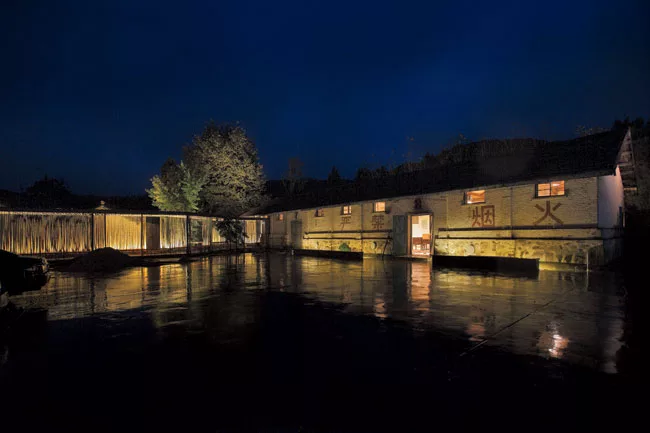
The courtyard of the old granary is still a key element in the new complex. Chinese characters from the Cultural Revolution remain too.
 
Photo © Qi Honghai
Xihe Cereals and Oils Museum and Villagers' Activity Center
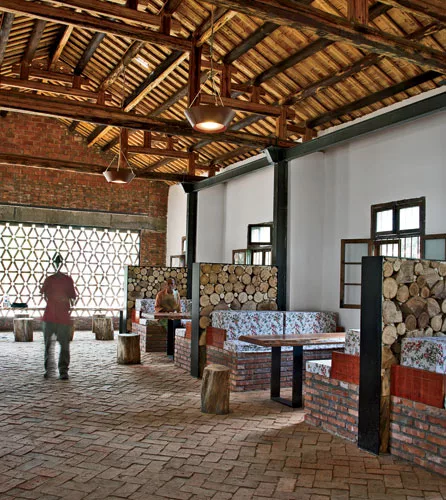
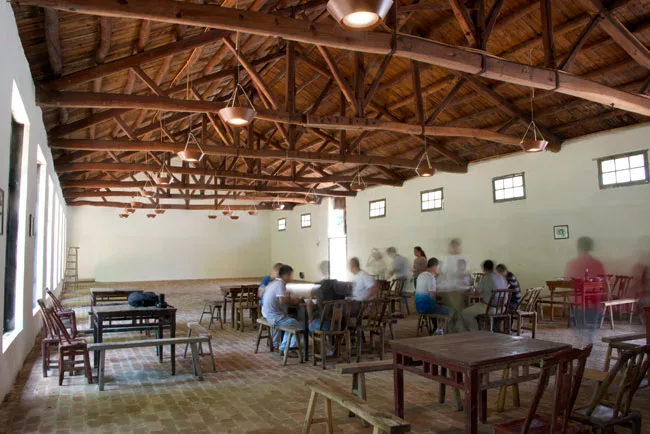
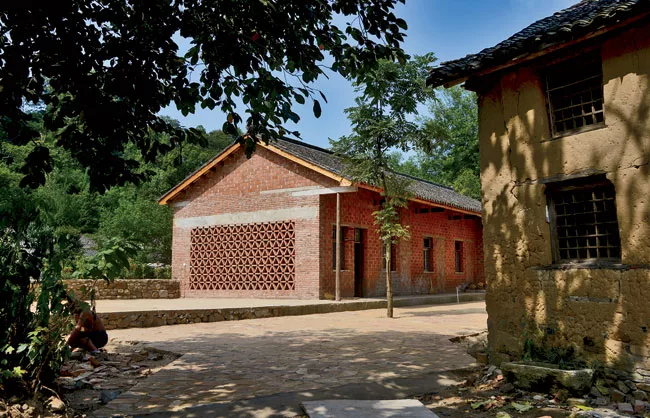
A new restaurant building uses traditional materials such as brick and timber, but in new ways.
 
Photo © He Wei
Xihe Cereals and Oils Museum and Villagers' Activity Center
A new restaurant building uses traditional materials such as brick and timber, but in new ways.
 
Photo © He Wei
Xihe Cereals and Oils Museum and Villagers' Activity Center
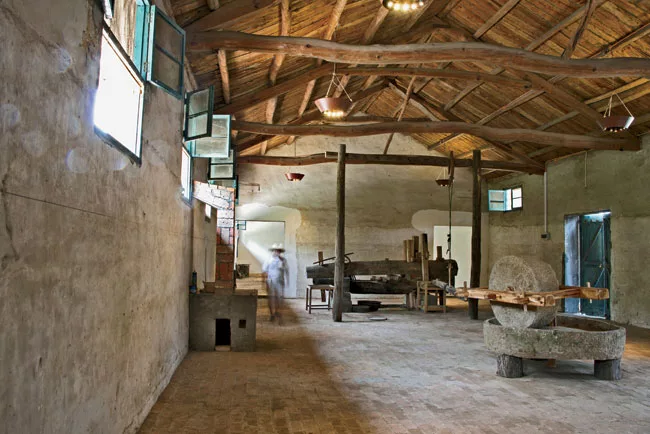
The museum occupies an old building that has been opened up to create one large space.
 
Photo © He Wei
Xihe Cereals and Oils Museum and Villagers' Activity Center
Bamboo screens protect a new glazed facade on the activity center.
 
Photo © Qi Honghai
Xihe Cereals and Oils Museum and Villagers' Activity Center
Instead of “upgrading” the main courtyard with bricks, as some villagers had suggested, the architect merely restored the old concrete to maintain the industrial spirit of the place.
 
Photo © Chen Long
Xihe Cereals and Oils Museum and Villagers' Activity Center
South elevation of the museum building.
 
Photo © He Wei
Xihe Cereals and Oils Museum and Villagers' Activity Center
Outdoor corridor.
 
Photo © He Wei
Xihe Cereals and Oils Museum and Villagers' Activity Center
Villagers' activity center.
 
Photo © He Wei
Xihe Cereals and Oils Museum and Villagers' Activity Center
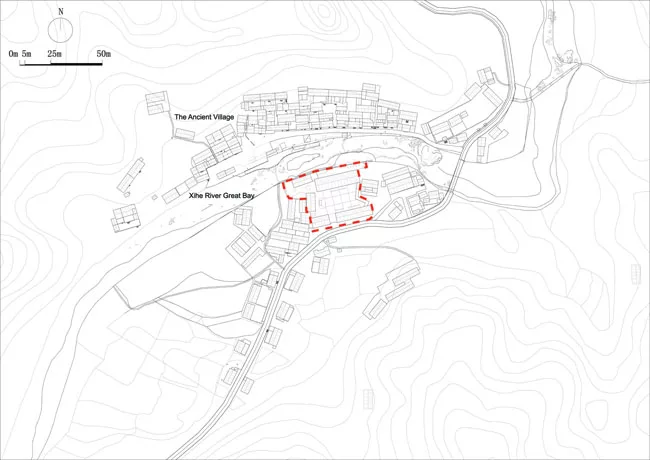
Site plan.
 
Image courtesy He Wei
Xihe Cereals and Oils Museum and Villagers' Activity Center
Site plan.
 
Image courtesy He Wei
Xihe Cereals and Oils Museum and Villagers' Activity Center
June 16, 2015

Architects & Firms

He Wei Architect

Henan Province, China

People/Products

Located in a mountainous part of central China's Henan Province, Xihe was always a small, quiet village that subsisted on growing corn, grains, and tea seeds for oil. But by the time architect He Wei first visited in 2013, it was on life support, having dwindled to just 150 residents—almost all children and elderly farmers.

Xihe represents one of the effects of China's massive urbanization and the corresponding depopulation of the countryside. In recent decades, hundreds of millions of working-age Chinese have migrated to cities in search of higher incomes—often leaving their children in the care of grandparents. “We wanted to help the remaining local people have a better life,” says He. “But buildings are only part of what's needed. An architect also has to address the economic issues.”

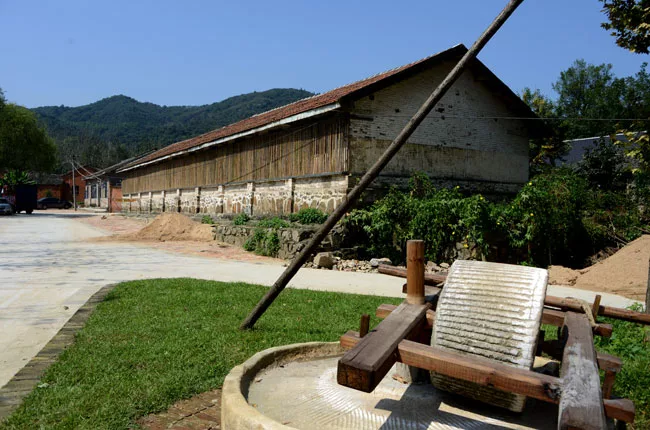
Invited through a government rural-poverty-alleviation program, He, an architecture professor at Beijing's Central Academy of Fine Arts, examined Xihe's prospects. Though dotted with historic structures amid a pleasant landscape, it didn't quite have the picturesque charm that has turned many once-sleepy Chinese villages into tourist attractions. In a country with well over a billion registered mobile phone users, it didn't even have cellular coverage. What it did have, however, was a 1950s granary complex on the south end of town that He, working with local residents, has retooled as the Xihe Cereals and Oils Museum and Villagers' Activity Center.

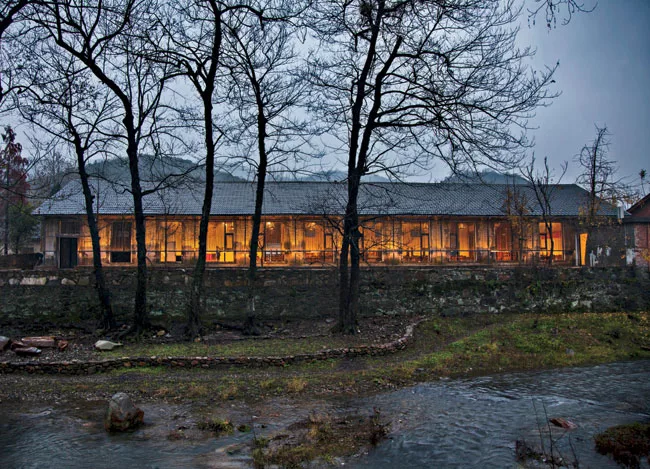
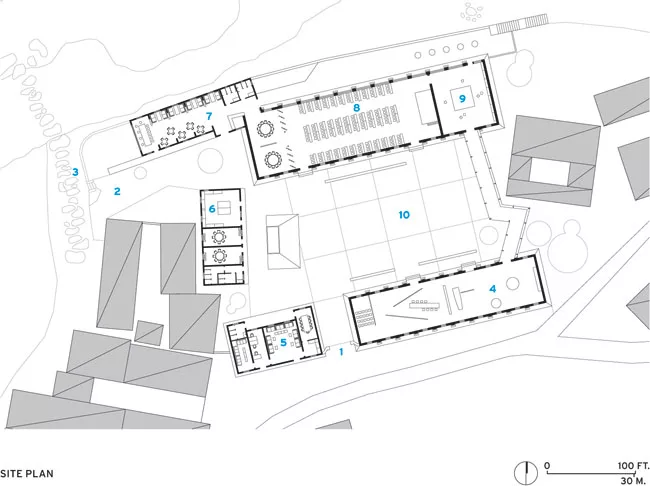
Set beside a stream, the compound consists of five pitched-roof masonry buildings clustered around a courtyard. The small complex now serves a range of community needs while luring newly minted urbanites with the attraction of fast-disappearing rural life—an example of how quickly China has come full circle.

He began by converting a 4,500-square- foot warehouse into a museum that shows the use of traditional millstones, oil presses, and other implements. Across the courtyard, the architect turned a 7,300-square-foot building into an activity center for village meetings, weddings, and other events, and outfitted one end of it as a shop selling locally made tea-seed oil and organic foods that appeal to a Chinese citizenry wary from the country's food-safety scandals. A smaller building was attached to form a restaurant, while the remaining two buildings function as a kitchen and an office.

Throughout, He wanted to maintain as much of the original structures as possible—“to keep the history,” he explains. So he left interior brick floors, timber framing, and plastered walls intact. Painted Chinese characters dating to the Cultural Revolution were retained, as was the concrete paving of the courtyard (now doubling as a playground), despite an early government request to “upgrade” it to brick.

The architect's interventions are subtle, but make a big difference. He opened up the north side of the activity center to create expansive views across a terrace reconstructed with repurposed roof tiles. Bamboo screens shield floor-to-ceiling glazing here and are repeated on the museum's south elevation. Connecting both buildings, a zigzagging outdoor corridor (also of bamboo) helps define the courtyard, where a fire protection pond was turned into a water feature. Inside the activity center, pivoting bamboo partitions separate the main hall from spaces for the restaurant.

For He, this was not a parachute job, but resulted from lengthy discussions with the initially skeptical villagers. “We listened to them and gained their trust,” says the architect, and eventually they contributed both funding and labor. Income from the restaurant, space rentals, and sales of food products, including a new Xihe Oil branded by He, go to the village cooperative. The result appears to be a success. With the aid of publicity campaigns, 20,000 visitors came to Xihe over China's National Day holiday in 2014—“more than even we expected,” He says.


People

Client: Villager Cooperative of Xihe Village

Owner: Villager Cooperative of Xihe Village

Architect:
School of Architecture
China Central Academy of Fine Arts
No.8 Hua Jia Di Nan St.
Chaoyang District, Beijing, P.R.China
Phone: +8613501152262
Fax: +8601064771904

Personnel in architect's firm who should receive special credit:
HE Wei (Not Registered)

Architect of record: HE Wei

Associate architect: CHEN Long

Interior designer: HE Wei, CHEN Long

Engineers: HE Wei, CHEN Long and Villagers from Xihe

Consultant(s):
Landscape: HE Wei, CHEN Long

Lighting: QI Honghai (Z DESIGN&PLANNING), HAN Xiaowei (Geston)
Acoustical: No

Other: Exhibition Designer: ZHAO Zhuoran; Graphic Designer: XIA Boyang

General contractor: Villager Cooperative of Xihe Village

Photographer(s): HE Wei, QI Honghai, CHEN Long

Size: 16,500 square feet

Cost: $240,000 

Completion date: July 2014


Products

Structural system
Wood, Bamboo, Bricks and Steel Frame.

Manufacturer of any structural components unique to this project: All materials (except steel and glass) are local materials.

Lighting
Interior ambient lighting: Nanjing GAIN Lighting Technology Co., Ltd.

Downlights: Nanjing GAIN Lighting Technology Co., Ltd.

Task lighting: Nanjing GAIN Lighting Technology Co., Ltd.

Exterior: Nanjing GAIN Lighting Technology Co., Ltd.

Dimming System or other lighting controls: Nanjing GAIN Lighting Technology Co., Ltd.

 
KEYWORDS: China

Share This Story

Looking for a reprint of this article?
From high-res PDFs to custom plaques, order your copy today!
Aric Chen is director of the Nieuwe Instituut in Rotterdam.

Post a comment to this article

Report Abusive Comment

Subscription Center
  • Create an Account
  • Start a Subscription
  • Manage My Account
  • Sign Up for Newsletters
  • Visit Customer Service
  • Update Preferences

More Videos

Sponsored Content

Sponsored Content is a special paid section where industry companies provide high quality, objective, non-commercial content around topics of interest to the Architectural Record audience. All Sponsored Content is supplied by the advertising company and any opinions expressed in this article are those of the author and not necessarily reflect the views of Architectural Record or its parent company, BNP Media. Interested in participating in our Sponsored Content section? Contact your local rep!

close
  • TAMLYN XtremeTrim Exterior Trim
    Sponsored byTamlyn

    Designing Cleaner Panel Facades: Why Exterior Trim Details Matter

  • Building with Vapor Barriers
    Sponsored byReef Industries, Inc.

    Vapor Barriers Help Control Moisture in Tighter Building Designs

  • Duct Interior with Prodeq System
    Sponsored byHenry, a Carlisle Company

    Designing Resilient Water Containment Systems

DESIGN:ED Podcast
Listen to Architectural Record’s DESIGN:ED Podcast

Events

June 10, 2026

Rethinking Stormwater – The Power of Porous Paving

Credits: 1 AIA LU/HSW; 1 AIBD P-CE; 0.1 ICC CEU

Learn how porous paving systems support stormwater management, reduce heat island effects, and enhance sustainable site design performance.

June 11, 2026

Very Early Warning Fire Detection for Mission-Critical Facilities

Credits: 1 AIA LU/HSW; 1 AIBD P-CE; 0.1 ICC CEU

Examine advanced fire detection strategies that support uptime and enhance safety in data centers and other mission-critical facilities.

View All Submit An Event

Products

2026 Architect's Square Foot Costbook

2026 Architect's Square Foot Costbook

See More Products

Popular Stories

Practice Matters illustration

What’s in a (Firm’s) Name? Thinking About Succession and Legacy

Coronado Bridge

The Architect’s Guide to San Diego

Practice Matters illustration

By the Numbers: Counting America's Architects

Riverdale House by Studio Lau

Riverdale House by Studio Lau

House on a Hill

Design Vanguard 2026: Forma

Broader Sustainability of CMU - Free Webinar - May 21, 2026

Related Articles

  • Trumpf Education Center

    Barkow Leibinger’s Mass-Timber Training Center Buzzes with Activity

    See More
  • A Bright Future

    America's West Coast Sees Rise in Jobs, Wages, and Production Activity

    See More
  • Full Speed Ahead

    Northeastern Manufacturing Sees Uptick in Activity

    See More

Related Products

See More Products
  • Architectural Record - October 2025

    Architectural Record October 2025 Issue

See More Products
×

The latest news and information

#1 Source for Architectural Design, News and Products

SUBSCRIBE
  • RESOURCES
    • Advertise
    • Contact Us
    • Submit
    • Store
  • ACCOUNT CENTER
    • Create an Account
    • Start a Subscription
    • Manage My Account
    • Sign Up for Newsletters
    • Visit Customer Service
    • Update Preferences
  • PRIVACY
    • PRIVACY POLICY
    • TERMS & CONDITIONS
    • DO NOT SELL MY PERSONAL INFORMATION
    • PRIVACY REQUEST
    • ACCESSIBILITY
  • SERVICES
    • Marketing Services
    • Reprints
    • Market Research
    • List Rental
    • Survey/Respondent Access
  • STAY CONNECTED
    • Linkedin
    • Facebook
    • Instagram
    • YouTube
    • X (Twitter)

Copyright ©2026. All Rights Reserved BNP Media, Inc. and BNP Media II, LLC.

Design, CMS, Hosting & Web Development :: ePublishing