Architectural Record
search
cart
facebook twitter linkedin youtube
  • Sign In
  • Subscribe
  • Sign Out
  • My Account
Architectural Record
  • NEWS
    • Latest News
    • Awards
    • Interviews
    • Obituaries
    • Podcasts
      • Design:Ed Podcast
      • Sponsored Podcasts
  • OPINION
    • Book Reviews / Excerpts
    • Exhibition Reviews
    • Forum
  • EXCLUSIVES
    • Videos
    • Design Vanguard
    • Top 300 Firms
    • Sponsored Content
    • Sponsored eBooks
    • From the Archives
  • CONTINUING ED
    • Editorial Continuing Ed
    • CE Center
    • CE Academies
  • PROJECTS
    • Buildings By Type
    • Reuse & Renovation
    • Museums & Arts Centers
    • Colleges & Universities
    • Multifamily Housing
    • Interiors
    • Lighting
    • Kitchen & Bath
  • HOUSES
    • Record Houses
    • House of the Month
    • Featured Houses
  • PRODUCTS
    • Products by Category
    • Record Products of the Year
    • Latest Products
  • EVENTS
    • Dates & Events
    • Record on the Road
    • Innovation Conference
    • Sustainability in Practice
    • Women In Architecture
    • Webinars
    • Ad Excellence Awards
    • Submit an Event
  • CONNECT
    • Ask RECORD AI
    • Newsletters
    • Contact
    • Advertise
    • Editorial Calendar
    • Store
    • Customer Service
  • SUBMIT
    • Submission Guidelines
    • RECORD Competitions
  • MAGAZINE
    • Subscribe
    • My Account
    • Digital Edition
    • Current Issue
    • Firm Pass
    • Historic Archive
Editorial

Framing the Image

By Robert Ivy, FAIA FAIA
August 9, 2009
August 2009

For generations of American architects (generations, not years), Julius Shulman idealized the built world. Born in 1910, and active until recently, Shulman’s eye framed essential architectural imagery and recorded it for the world. His passing on July 15 marks a shift in how we appreciate architecture today and suggests we pause to reflect on architectural photography.

Photo © André Souroujon

First, Julius. This irrepressible personality, lacking formal training in either architecture or photography, but with an upwelling enthusiasm for good architecture, found his calling when he saw Richard Neutra’s California houses in 1936. Shulman subsequently mastered the craft of the architectural photograph, using the basics, none more than light. In his iconic images, real and artificial lighting fill space like ether, allowing us to imagine in two dimensions how three-dimensional reality feels. Light paints surfaces; highlights details; provides strong, shadowy contrast, and consequently provides depth and mass.

Architects love the fact that in Shulman’s best black-and-white pictures, the architectural elements, crisp as fresh chipboard, pop from the page. At the same time, he invariably and intentionally sets the work deeply in the context of its (usually) Southern California setting. In a Shulman photograph, we know exactly where we are, whether perched high in the Hollywood Hills above Laurel Canyon Boulevard—scene of his riveting, dramatic image for Arts and Architecture magazine of Case Study House Number 22, by architect Pierre Koenig for Carlotta and Buck Stahl in 1960)—or architecture melded into the landscape, where walls between interior and exterior disappear in a color image—as in Richard Neutra’s Samuel and Luella Maslon house, in Rancho Mirage, California, of 1962.

By enhancing our appreciation of the depth of field, the photographer managed to engage us beyond the picture plane. The basics of fore-, middle-, and background, so numbingly simple as a principle, yet often overlooked, establish a kind of perspective reminiscent of the craft of quattrocento Italian painters. Who can overlook the twin chairs at Neutra’s Edgar Kaufmann house in Palm Springs of 1946–47, the glowing house behind the pool shot through with light at midrange, and the lumbering insistence of the dark mountains behind? Great architecture; great image.

Craft lay in the photographer’s attention to detail, not leaving the basics to chance. For the Koenig house, Shulman opened his lens on the cosmos of the Los Angeles night for 7.5 minutes with his 4x5 camera, at the same time that a flash highlighted two women standing inside the primary space. Serendipity came from the repeated reflection of a hanging orb that stepped into space, multiplying the spatial effect with that of time: The image ascends from the literal to the metaphorical or philosophical. Craft laid the groundwork that chance compounded; historically, much art has relied on such formulation.

Shulman’s work described the work of ordinary, good, and great architects, for a variety of media, but none more emphatically than the midcentury architectural journals, including Architectural Record. His clientele included a who’s who of practitioners in his own backyard, from Frank Lloyd Wright, Richard Neutra, Rudolph Schindler, Charles Eames, Eero Saarinen, Albert Frey, Harwell Hamilton Harris, John Lautner, and Mies van der Rohe. His own photographs described the flowering of contemporary American architecture, introducing us to it through his lens. Shulman was not alone. His peers included the late Marvin Rand in Southern California, the Hedrich Blessing firm in Chicago, Balthazar Korab in Detroit, and the late Ezra Stoller in New York.

Today, architectural photographers continue to do what Julius did, though with some changes. Most have jettisoned the 4x5 for digital cameras, taking multiple pictures of the same scene, rather than relying on the staged shot, which might take three hours to execute. Like architects, many travel beyond their home territories, following the trail of contemporary work as far as Outer Mongolia, if talent has built there. They know the airports well.

Today’s architectural photographers continue to idealize architecture, but sometimes catch the entire urban or rural scene, including the stuff that makes up real life, including wires and people and cars and potholes. They shoot, almost exclusively in color, broadcast their work electronically, and e-mail their images to clients and publications, whether magazines or books. They see a large volume of new work, and shoot multiple projects.

Seeing constitutes a form of making. Like Julius Shulman, Iwan Baan and Timothy Hursley, Roland Halbe and Christian Richters, Peter Aaron, Alan Karchmer, and Jeff Goldberg act as our surrogates. They travel for us, see the new architecture, and remake the world each month. We know contemporary architecture first through their eyes. As long as there are journals or monographs or Web sites, we need their curatorial expertise, to catch the shot, to choose the best, and describe the work. How this highly refined craft will evolve, as we transition toward new technologies, including three-dimensional media, remains to be seen. Once seen, will we appreciate this world as fully as we have enjoyed it through eyes of Julius Shulman? Ever optimistic about the next generation, he would have laughed away the doubt.

If you wish to write to our editor-in-chief you can email him rivy@mcgraw-hill.com.

Share This Story

Looking for a reprint of this article?
From high-res PDFs to custom plaques, order your copy today!
Post a comment to this article

Report Abusive Comment

Subscription Center
  • Create an Account
  • Start a Subscription
  • Manage My Account
  • Sign Up for Newsletters
  • Visit Customer Service
  • Update Preferences

More Videos

Sponsored Content

Sponsored Content is a special paid section where industry companies provide high quality, objective, non-commercial content around topics of interest to the Architectural Record audience. All Sponsored Content is supplied by the advertising company and any opinions expressed in this article are those of the author and not necessarily reflect the views of Architectural Record or its parent company, BNP Media. Interested in participating in our Sponsored Content section? Contact your local rep!

close
  • TAMLYN XtremeTrim Exterior Trim
    Sponsored byTamlyn

    Designing Cleaner Panel Facades: Why Exterior Trim Details Matter

  • Building with Vapor Barriers
    Sponsored byReef Industries, Inc.

    Vapor Barriers Help Control Moisture in Tighter Building Designs

  • Duct Interior with Prodeq System
    Sponsored byHenry, a Carlisle Company

    Designing Resilient Water Containment Systems

DESIGN:ED Podcast
Listen to Architectural Record’s DESIGN:ED Podcast

Events

June 10, 2026

Rethinking Stormwater – The Power of Porous Paving

Credits: 1 AIA LU/HSW; 1 AIBD P-CE; 0.1 ICC CEU

Learn how porous paving systems support stormwater management, reduce heat island effects, and enhance sustainable site design performance.

June 11, 2026

Very Early Warning Fire Detection for Mission-Critical Facilities

Credits: 1 AIA LU/HSW; 1 AIBD P-CE; 0.1 ICC CEU

Examine advanced fire detection strategies that support uptime and enhance safety in data centers and other mission-critical facilities.

View All Submit An Event

Products

2026 Architect's Square Foot Costbook

2026 Architect's Square Foot Costbook

See More Products

Popular Stories

Practice Matters illustration

What’s in a (Firm’s) Name? Thinking About Succession and Legacy

Coronado Bridge

The Architect’s Guide to San Diego

Practice Matters illustration

By the Numbers: Counting America's Architects

House on a Hill

Design Vanguard 2026: Forma

Crane Cove, ONO

Design Vanguard 2026 Winners

Broader Sustainability of CMU - Free Webinar - May 21, 2026

Related Articles

  • As prefabrication sheds its off-the-rack image, automation via 3D printing threatens to transform conventional construction

    See More
  • A wood-framed house under construction

    "American Framing" Returns to Wood Framing’s Geographic and Cultural Origin

    See More
  • Acts of Hate Highlight Architecture’s Role In Framing History

    Acts of Hate Highlight Architecture's Role in Framing History

    See More

Related Products

See More Products
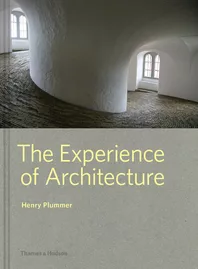
  • experience of arc.jpg

    The Experience of Architecture

See More Products

Events

View AllSubmit An Event
  • September 23, 2025

    Beyond The Image: Designing and Specifying Printed Wall Protection

    NOW ON DEMANDCredits: 1 AIA LU/Elective; 1 AIBD P-CE; 0.1 ICC CEU; 0.1 IACET CEU; 1 IDCEC CEU/HSWThis course explores how imagery can shape interior environments through the thoughtful use of printed wall protection.
View AllSubmit An Event
×

The latest news and information

#1 Source for Architectural Design, News and Products

SUBSCRIBE
  • RESOURCES
    • Advertise
    • Contact Us
    • Submit
    • Store
  • ACCOUNT CENTER
    • Create an Account
    • Start a Subscription
    • Manage My Account
    • Sign Up for Newsletters
    • Visit Customer Service
    • Update Preferences
  • PRIVACY
    • PRIVACY POLICY
    • TERMS & CONDITIONS
    • DO NOT SELL MY PERSONAL INFORMATION
    • PRIVACY REQUEST
    • ACCESSIBILITY
  • SERVICES
    • Marketing Services
    • Reprints
    • Market Research
    • List Rental
    • Survey/Respondent Access
  • STAY CONNECTED
    • Linkedin
    • Facebook
    • Instagram
    • YouTube
    • X (Twitter)

Copyright ©2026. All Rights Reserved BNP Media, Inc. and BNP Media II, LLC.

Design, CMS, Hosting & Web Development :: ePublishing