In the Cause of Architecture
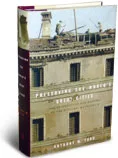
Preserving the World's Great Cities
The author collected tales of cities known for their historic beauty, contrasting their thoughtless destruction with the story of those who fought to save them.
Architectural Record Is there a universal trait that you have found among the cultures that have done a good job of preserving their cities?
Anthony Tung The universal trait for preserving cities is unnecessary loss: all cities that have initiated conservation protections have suffered the loss of architectural culture and, in retrospect, have come to the conclusion that what was gained did not warrant the harm that was done.
AR What about the ones who have let things decay or be torn down?
AT The universal factor which causes cities to erase their own patrimony is the allure of a better future. With industrialization, an extraordinary global phenomenon occurred: during the twentieth century, cities across the world, at different stages of development, of different historic cultural characteristics, were seduced by the appeal of modernization and in the name of a somewhat illusionary future embarked upon what we might today describe as a global wave of eradication of architectural patrimony. International experts estimate that something on the order of 50 percent of humankind’s historic architectural heritage was erased in 100 years.
AR What about those who say change is better? Preservation may be in vogue at the moment, but to play devil’s advocate, I’ll ask: are you being reactionary? Isn’t part of the appeal of cities their constant change?
AT Yes, but let’s change for the better. For instance, during the twentieth century Cairo has added about 9 million people living in shanty towns in dire poverty with increased child mortality rates.
And in developed nations, in New York for example, in terms of architecture, doesn’t it make sense to accrue positive environmental value?Only 2.4 percent of the city is designated (including about 20 percent of Manhattan). Are we overwhelmed by the architectural beauty that surrounds us? Is there too much of it? I suspect that most of your readers would say the opposite: that the world would benefit if we built better. The simple equation in my mind is: why tear down something old and beautiful in order to build something new and beautiful? Why not accrue value and by the end of the twenty-first century perhaps 3 percent of New York will warrant protection: which would require that about 6,000 beautiful contemporary structures be added to the cityscape without destroying anything that is landmarked. Does anyone want to take bets on this proposition?
Looking for quick answers on architecture and design topics?
Try Ask RECORD, our new smart AI search tool.
Ask RECORD →
AR What place does new development have, in your view? Is there a proper balance between preservation and renewal (not to say the Urban Renewal movement of several decades ago)?
AT First, I believe it would be tragic if we were to continue to destroy architectural heritage as in the century just completed. We are erasing the story of the cultural diversity of human history.
Second, we should remember that 90 to 95% of the built world was constructed in the past 100 years. For the most part, we never really needed to destroy the beauty of the past in order to achieve this: most cities grew 10- and 20-fold during the past century, becoming vast extended agglomerations in which the historic core was a minute area at the center. Yet in our imaginations the historic center seems larger that it actually is. Perhaps this is because it’s beauty fills our mind with memorable architectural images as in Beijing, Venice, Paris. Jerusalem, Amsterdam. Why tear it down?
The challenge is: How to build in confluence with the beauty we have inherited? Can we conceive of an urban environment that is pluralistic but not fractured and schizophrenic? Can we invent a contemporary architecture that is a true cultural expression of modern life, yet relates with respect, with civility, to the architecture of the past? I think a question of the ethic of architectural planning emerges: how do we build new life-enhancing environments without simultaneously being destructive? For instance, can we learn to honor the ecological balance of the natural world?
AR Are your findings unique to urban areas, or do you think that they could be applied to less densely populated areas? What is the special quality of cities? Is it just that they have more buildings to preserve or not preserve?
AT In making this study: Preserving the World’s Great Cities, I tried not to bite off more than I could chew. It already seemed a rather daunting mouthful. So I restricted myself to the examination of historic urban centers: places that were at one time a center of a regional civilization. Yet every large place once was small. We recognize the ultimate accrued magic of New York, Cairo, Kyoto, and Vienna and I suspect all these places were also magical at various smaller sizes in their evolution. In purely architectural terms, preservation is about saving the magic of places, whatever their size. Is not good architecture a matter of magic making? Of the ephemeral, intangible chemistry of form and meaning? Of the delight and wonder produced in the human heart when an effective work of architecture touches us? In the end, what we are preserving is evidence of our ability to make life positive.
AR How much of the phenomenon of preservation (and also of building and tearing down) is an individual or small group process, and how much do you think is attributable to societies as wholes? Or waves of change versus specific confluences of events?
AT As modern urban societies across the world spontaneously enacted preservation laws, individuals, groups, cities, nations, were responding to the "culture" of modernization,which often has had as an underlying principle the rejection of the past: as in Sant’ Elia, in La Città Nuova in 1914: "I conclude in disfavor of preservation, reconstruction, reproduction of ancient monuments." Today, we understand Sant’ Elia’s statement to be polemical. In retrospect , we dismiss it as ridiculous. Even if we had saved everything from the past, 90 percent of us would still be living in contemporary structures. Given the confluence of events, our emerging global society was inevitable.
Yet have we truly dismissed such blanket hostile attitudes to conservation–as individuals, groups, cities, nations? Are such values imbued in the ethic of modernism, placed there by the founders of the modern movement? Sure, when asked to be the good citizen and to design a contextual structure, most architects will try to comply. But don’t architects dream of the grand commission: winning the chance to design a new skyscraper, a museum? To generate forms never before imagined? The superstar culture of architecture is only human.
I can’t help wonder if we would benefit from a basic shift in values. In the twenty-first century perhaps one of the great challenges for the architectural profession will be to redefine the HONOR of the architect so that it is measured against this standard: the architect builds affirmatively, without destroying other life-enhancing values in the process: social, ecological, cultural, historical. That would engender a wondrous wave of change indeed.
Looking for a reprint of this article?
From high-res PDFs to custom plaques, order your copy today!