Architectural Record
search
cart
facebook twitter linkedin youtube
  • Sign In
  • Subscribe
  • Sign Out
  • My Account
Architectural Record
  • NEWS
    • Latest News
    • Awards
    • Interviews
    • Obituaries
    • Podcasts
      • Design:Ed Podcast
      • Sponsored Podcasts
  • OPINION
    • Book Reviews / Excerpts
    • Exhibition Reviews
    • Forum
  • EXCLUSIVES
    • Videos
    • Design Vanguard
    • Top 300 Firms
    • Sponsored Content
    • Sponsored eBooks
    • From the Archives
  • CONTINUING ED
    • Editorial Continuing Ed
    • CE Center
    • CE Academies
  • PROJECTS
    • Buildings By Type
    • Reuse & Renovation
    • Museums & Arts Centers
    • Colleges & Universities
    • Multifamily Housing
    • Interiors
    • Lighting
    • Kitchen & Bath
  • HOUSES
    • Record Houses
    • House of the Month
    • Featured Houses
  • PRODUCTS
    • Products by Category
    • Record Products of the Year
    • Latest Products
  • EVENTS
    • Dates & Events
    • Record on the Road
    • Innovation Conference
    • Sustainability in Practice
    • Women In Architecture
    • Webinars
    • Ad Excellence Awards
    • Submit an Event
  • CONNECT
    • Ask RECORD AI
    • Newsletters
    • Contact
    • Advertise
    • Editorial Calendar
    • Store
    • Customer Service
  • SUBMIT
    • Submission Guidelines
    • RECORD Competitions
  • MAGAZINE
    • Subscribe
    • My Account
    • Digital Edition
    • Current Issue
    • Firm Pass
    • Historic Archive

Before the Architecture

An urban planning expert identifies the real next steps for the World Trade Center site.
By Kevin Lerner
Old streets
Pathway
Pathway
Connector
Ferry
West Side
Comparison
Rockefeller
World Trade Center
New World Trade Center site
Mixed Use
Commercial
West Final
Final display
Craig Whitaker
New WTC site
Old streets
Pathway
Pathway
Connector
Ferry
West Side
Comparison
Rockefeller
World Trade Center
New World Trade Center site
Mixed Use
Commercial
West Final
Final display
Craig Whitaker
New WTC site
January 18, 2016

Lerner: How do you get the public interested in things like real estate finance, construction, and engineering?

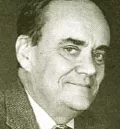
Whitaker: I think you have to do it partially as text, but partially as a picture show. You have to do it by letting the public know that this effort is going to go through a series of steps, and we’re going to bring the first problem to be solved within whatever period of time. Six weeks. And we will show you all the graphics with it, and then six weeks later, we’re going to bring you the next problem. And so on and so forth until you get through it.

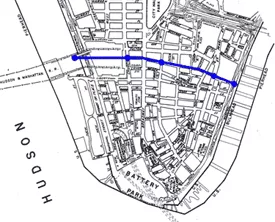
I’ll go back to something I was showing when I was invited to RECORD to show you what we’d been doing with Next Steps, Hard Choices. And I kept being taken back to William Wilgus’s plan for Terminal City north of Grand Central. There wasn’t a lot of hyperbole about grand urban design schemes. They put in Park Avenue and stitched together the cross streets. And that infrastructure investment paid off handsomely because it gave developers specific sites to work on.

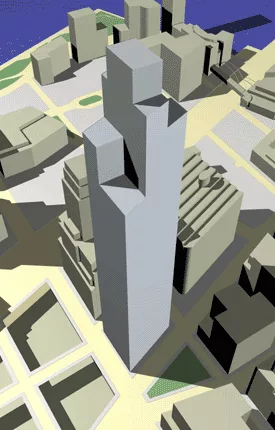
I think one of the things that needs to be done is that you need a plat for lower Manhattan. You know, in the 19th Century, when we were moving westward and creating cities out of whole cloth, oftentimes, the city fathers in a particular municipality would have a lithograph commissioned, a bird’s eye view of Salt Lake City or whatever other place we’re thinking about, and these lithographs would be sent back east so that prospective settlers could get a picture of what this place was going to be like. But you’d often see these lithographs with three or four principal buildings in them. In the case of Salt Lake City, this was the Mormon Temple and a couple of other public buildings. And then a scattering of other buildings that had been built, the clear invitation to settlers being "there’s a lot for you." But it was also the way, I think, that urban design really works. You have to create a plat, a site plan, on which people can build. This happens all the time, for instance, in the suburbs. You’ll find a development that may be built out over five, six years, but the first step with the planning board is a site plan.

So part of the reason that the public reaction to the LMDC proposals was so intensely negative is that without defining the falseness of the solutions, you know in your gut that a building that may not be built for thirty years is going to be a very different building than what the architects are showing today. It’s kind of unreal for people to be deciding today whether this building should be 45 stories or 62 stories.

Lerner: Who should be in charge now? Should this be zoned and parceled out to developers?

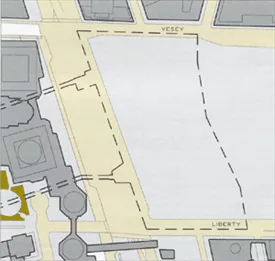
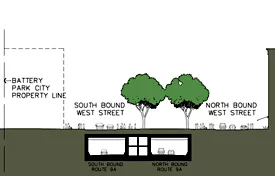
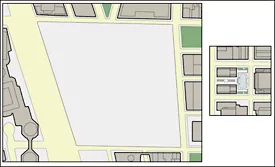
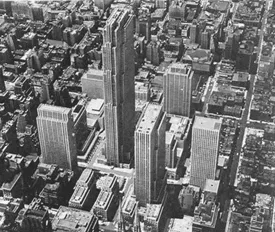
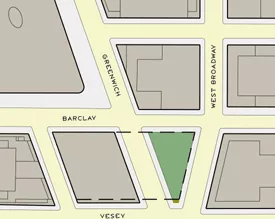
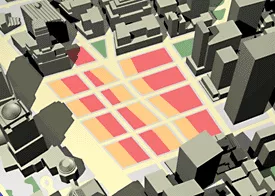
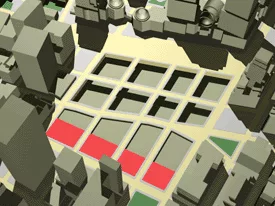
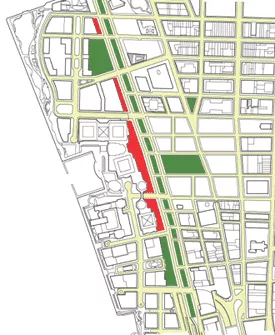
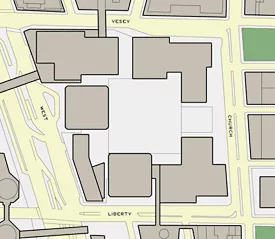
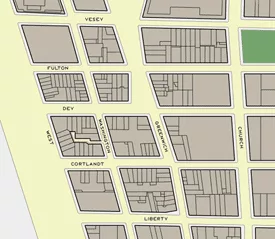
Whitaker: Well, you can make a plat that’s an interesting plat. People started immediately talking after 9/11 about how this was a wonderful opportunity to stitch together the streets, because the World Trade Center was a classic example of superblock, tower-in-a-park planning. And there’s a very powerful argument that can be made for reestablishing a good part of the street grid. One is that from an architect’s point of view, it gives better scale. Jane Jacobs discovered this in the 1960s in Greenwich Village, but we have to keep going back and relearning the lesson. Smaller blocks were more interesting: more corners, more opportunity for interesting stores. Another reason is that the more choices a motorist or a pedestrian has, the less crowding there is.

Looking for quick answers on architecture and design topics?
Try Ask RECORD, our new smart AI search tool.
Ask RECORD →

Lerner: Do you think part of the negative public reaction is the grand "here’s what’s going in here" gesture that in one fell swoop, the LMDC is planning the whole site?

Whitaker: Yes, I think you put it very well. I think we need to go back to the really tough, grubby, step-by-step process of rebuilding that part of the city. I also think it’s in the various political figures’ interest to begin to show some momentum.

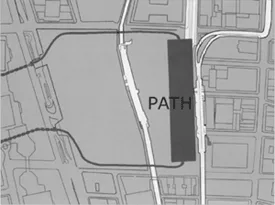
I also think that with each of these "packets," as I guess I’m now calling them of information or discussion or choices that need to be made, you need to show the public what the consequences are. I go back to the PATH station. If they locate it where it is now, who is going to pay for the columns that they have to put in, and what are those columns going to be for? Or are we going to create, by default, a large swath above the station that won’t be built on, because it will be nearly impossible to go in and ask the commuter waiting for the next train to Hoboken to please move over because we’re going to drill a caisson next to where he’s standing?
 

KEYWORDS: New York City urban planning World Trade Center

Share This Story

Looking for a reprint of this article?
From high-res PDFs to custom plaques, order your copy today!

Previous 1 2 3 4 5 Next

Post a comment to this article

Report Abusive Comment

Subscription Center
  • Create an Account
  • Start a Subscription
  • Manage My Account
  • Sign Up for Newsletters
  • Visit Customer Service
  • Update Preferences

More Videos

Sponsored Content

Sponsored Content is a special paid section where industry companies provide high quality, objective, non-commercial content around topics of interest to the Architectural Record audience. All Sponsored Content is supplied by the advertising company and any opinions expressed in this article are those of the author and not necessarily reflect the views of Architectural Record or its parent company, BNP Media. Interested in participating in our Sponsored Content section? Contact your local rep!

close
  • TAMLYN XtremeTrim Exterior Trim
    Sponsored byTamlyn

    Designing Cleaner Panel Facades: Why Exterior Trim Details Matter

  • Building with Vapor Barriers
    Sponsored byReef Industries, Inc.

    Vapor Barriers Help Control Moisture in Tighter Building Designs

  • Duct Interior with Prodeq System
    Sponsored byHenry, a Carlisle Company

    Designing Resilient Water Containment Systems

DESIGN:ED Podcast
Listen to Architectural Record’s DESIGN:ED Podcast

Events

June 10, 2026

Rethinking Stormwater – The Power of Porous Paving

Credits: 1 AIA LU/HSW; 1 AIBD P-CE; 0.1 ICC CEU

Learn how porous paving systems support stormwater management, reduce heat island effects, and enhance sustainable site design performance.

June 11, 2026

Very Early Warning Fire Detection for Mission-Critical Facilities

Credits: 1 AIA LU/HSW; 1 AIBD P-CE; 0.1 ICC CEU

Examine advanced fire detection strategies that support uptime and enhance safety in data centers and other mission-critical facilities.

View All Submit An Event

Products

2026 Architect's Square Foot Costbook

2026 Architect's Square Foot Costbook

See More Products

Popular Stories

Practice Matters illustration

What’s in a (Firm’s) Name? Thinking About Succession and Legacy

Coronado Bridge

The Architect’s Guide to San Diego

Practice Matters illustration

By the Numbers: Counting America's Architects

Riverdale House by Studio Lau

Riverdale House by Studio Lau

House on a Hill

Design Vanguard 2026: Forma

Broader Sustainability of CMU - Free Webinar - May 21, 2026

Related Articles

  • LA Before the Freeways Lead.jpg

    A New Edition of ‘Los Angeles Before the Freeways’ Comes at a Time When L.A. Again Finds Itself at a Crossroads

    See More
  • Gund-Hall-1.jpg

    The Architecture of Architecture Schools

    See More
  • Cathleen McGuigan

    August 2021 Editor's Letter: The Architecture of Urban Infrastructure

    See More

Related Products

See More Products
  • arch concept.jpg

    The Architecture Concept Book

  • reuse.jpg

    Resource Salvation: The Architecture of Reuse

See More Products
×

The latest news and information

#1 Source for Architectural Design, News and Products

SUBSCRIBE
  • RESOURCES
    • Advertise
    • Contact Us
    • Submit
    • Store
  • ACCOUNT CENTER
    • Create an Account
    • Start a Subscription
    • Manage My Account
    • Sign Up for Newsletters
    • Visit Customer Service
    • Update Preferences
  • PRIVACY
    • PRIVACY POLICY
    • TERMS & CONDITIONS
    • DO NOT SELL MY PERSONAL INFORMATION
    • PRIVACY REQUEST
    • ACCESSIBILITY
  • SERVICES
    • Marketing Services
    • Reprints
    • Market Research
    • List Rental
    • Survey/Respondent Access
  • STAY CONNECTED
    • Linkedin
    • Facebook
    • Instagram
    • YouTube
    • X (Twitter)

Copyright ©2026. All Rights Reserved BNP Media, Inc. and BNP Media II, LLC.

Design, CMS, Hosting & Web Development :: ePublishing