Architectural Record
search
cart
facebook twitter linkedin youtube
  • Sign In
  • Subscribe
  • Sign Out
  • My Account
Architectural Record
  • NEWS
    • Latest News
    • Awards
    • Interviews
    • Obituaries
    • Podcasts
      • Design:Ed Podcast
      • Sponsored Podcasts
  • OPINION
    • Book Reviews / Excerpts
    • Exhibition Reviews
    • Forum
  • EXCLUSIVES
    • Videos
    • Design Vanguard
    • Top 300 Firms
    • Sponsored Content
    • Sponsored eBooks
    • From the Archives
  • CONTINUING ED
    • Editorial Continuing Ed
    • CE Center
    • CE Academies
  • PROJECTS
    • Buildings By Type
    • Reuse & Renovation
    • Museums & Arts Centers
    • Colleges & Universities
    • Multifamily Housing
    • Interiors
    • Lighting
    • Kitchen & Bath
  • HOUSES
    • Record Houses
    • House of the Month
    • Featured Houses
  • PRODUCTS
    • Products by Category
    • Record Products of the Year
    • Latest Products
  • EVENTS
    • Dates & Events
    • Record on the Road
    • Innovation Conference
    • Sustainability in Practice
    • Women In Architecture
    • Webinars
    • Ad Excellence Awards
    • Submit an Event
  • CONNECT
    • Ask RECORD AI
    • Newsletters
    • Contact
    • Advertise
    • Editorial Calendar
    • Store
    • Customer Service
  • SUBMIT
    • Submission Guidelines
    • RECORD Competitions
  • MAGAZINE
    • Subscribe
    • My Account
    • Digital Edition
    • Current Issue
    • Firm Pass
    • Historic Archive
Opinion

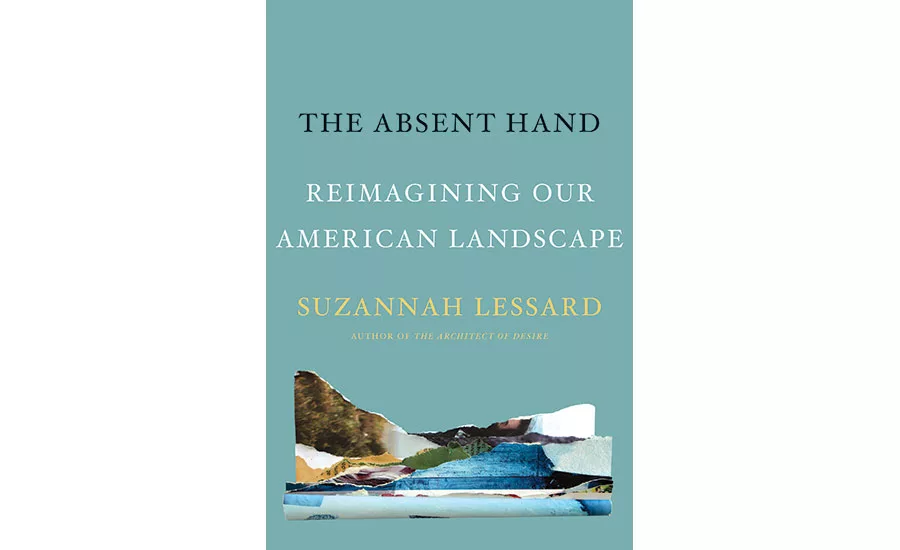
Review of 'The Absent Hand: Reimagining Our American Landscape'

By Suzannah Lessard
By James S. Russell, FAIA Emeritus
The Absent Hand

The Absent Hand: Reimagining Our American Landscape, by Suzannah Lessard. Counterpoint, 305 pages, $26.

July 5, 2019

This book of thought-provoking essays queries the nature of place, asking landscapes to reveal their meanings. Suzannah Lessard begins in Rensselaerville, a remote village not far from Albany, New York, that you reach by descending a forested ridge into an intimate valley. The first sign of town is an elegant 19th-century church spire poking through the treetops; it’s like entering Brigadoon. Her elegant prose unveils contradictions behind the beauty, where neglect and abandonment lap at the edges of the carefully tended historic village.

Lessard, author of The Architect of Desire (on Stanford White’s tragic story), tries to set aside her own predilections (against suburbia, for example), which she admits is something of a fool’s errand, as she develops themes that include authenticity and its corporate exploitation and our fascination with the ruined and discarded.

She does not revel in the nostalgia for a golden past, as essayists of the landscape often do. She is skeptical and, with a keen eye, she goes well beyond the rote analyses implied by such well-worn terms as “context” and “precedent.”

One essay begins with her casual decision to attend a small Memorial Day ceremony in Rensselaerville, where she lives part time. That leads to a consideration of the evolving meaning of the holiday: while it originally commemorated those of the North who died in the Civil War, it has conveniently erased slavery as the reason the war was fought. In another essay, she visits Gettysburg, Pennsylvania, where the National Park Service interpretation sanitizes the war’s history just as Jim Crow laws eradicated the gains of Reconstruction for blacks in the South. The setting is so delightful, she finds, that it is next to impossible to conjure the horrors of the battles that introduced industrial-scale death to combat.

As Lessard looks at other places where the design arts are used to beautify troubled pasts, she concludes “the need for romance—the usefulness of romance—is over.” The Greek Revival antebellum mansions of Natchez, Mississippi, were paid for in the blood of slaves. But the frail economy of the now biracial city seems to require catering to tourists’ Gone with the Wind preconceptions instead of telling the deeper, more tragic stories: a less damning context-free preservation of old architecture has become the city’s means of financially sustaining itself.

At her other home, in Brooklyn, Lessard is not fooled for long by the apparent stasis of the historic neighborhood she moved into in the 1990s. She appreciates the restoration of brownstones but sees that row houses once accommodating five or more apartments have become palatial single-family homes, displacing hundreds on a single block. She offers no glib solutions; she realizes that she, who lives on her own nice two floors of a brownstone, is an agent of change as well as a student of urban dynamism.

There are contradictory forces that divide people like her from her full-time country friends, whose destiny is tied to farming (which is increasingly less viable). Her neighbors could subdivide their land, spoiling her contemplative view, or assure their future by selling to fracking companies, a fate she adamantly, if guiltily, opposes.

In thinking about Gettysburg, she argues, “What we need now is as deep and complex a sense of our humanity as possible: to really know ourselves, because it is going to be out of that self-knowledge that an effective response to our latter-day predicaments will come.” She eloquently asks us to look harder at our surroundings, and ask better questions about what we see.

Looking for quick answers on architecture and design topics?
Try Ask RECORD, our new smart AI search tool.
Ask RECORD →

KEYWORDS: Book Reviews / Excerpts

Share This Story

Looking for a reprint of this article?
From high-res PDFs to custom plaques, order your copy today!
James S. Russell, FAIA Emeritus, a journalist who often focuses on sustainability and resilience, is the author of­­­­­ ­­­The Agile City: Building Well Being and Wealth in an Era of Climate Change (Island Press, 2011).

Post a comment to this article

Report Abusive Comment

Subscription Center
  • Create an Account
  • Start a Subscription
  • Manage My Account
  • Sign Up for Newsletters
  • Visit Customer Service
  • Update Preferences

More Videos

Sponsored Content

Sponsored Content is a special paid section where industry companies provide high quality, objective, non-commercial content around topics of interest to the Architectural Record audience. All Sponsored Content is supplied by the advertising company and any opinions expressed in this article are those of the author and not necessarily reflect the views of Architectural Record or its parent company, BNP Media. Interested in participating in our Sponsored Content section? Contact your local rep!

close
  • cold storage facility
    Sponsored byCarlisle SynTec Systems

    How Architects Can Design More Continuous Cold Storage Envelopes

  • TAMLYN XtremeTrim Exterior Trim
    Sponsored byTamlyn

    Designing Cleaner Panel Facades: Why Exterior Trim Details Matter

  • Building with Vapor Barriers
    Sponsored byReef Industries, Inc.

    Vapor Barriers Help Control Moisture in Tighter Building Designs

DESIGN:ED Podcast
Listen to Architectural Record’s DESIGN:ED Podcast

Events

June 23, 2026

Enhancing Fire Resistance with Advanced PVC Solutions

Credits: 1 AIA LU/HSW; 1 AIBD P-CE; 0.1 ICC CEU; 1 IIBEC CEH

Evaluate advanced PVC solutions that improve fire resistance, support WUI compliance, and enhance resilience in residential and commercial building design.

June 25, 2026

Designing Glass Railing Systems that Enhance Aesthetics and Meet Code

Credits: 1 AIA LU/HSW; 1 AIBD P-CE; 0.1 ICC CEU

Upon course completion, participants will possess a deeper understanding of glass railings to help ensure that safety, aesthetic, and performance objectives are achieved.

View All Submit An Event

Products

2026 Architect's Square Foot Costbook

2026 Architect's Square Foot Costbook

See More Products

Popular Stories

SanDiegoAirport

Top 300 Architecture Firms of 2026

Lorcan O' Herilhy

California Architect Lorcan O’Herlihy Has Died, Age 66

Coronado Bridge

The Architect’s Guide to San Diego

CCA, Studio Gang

The Winners of the AIA’s 2026 Architecture Award Range from Collegiate Rowing Hubs to Housing for the Homeless

Spoonbill Ranch

Johnsen Schmaling Architects Integrates Spoonbill Ranch into a Pristine Landscape

Enhancing Fire Resistance with Advanced PVC Solutions - Free Webinar - June 23, 2026

Related Articles

  • The Man in the Glass House: Philip Johnson, Architect of the Modern Century

    Review of 'The Man in the Glass House: Philip Johnson, Architect of the Modern Century'

    See More
  • The Evolution of a Building Complex: Louis I. Kahn's Salk Institute for Biological Studies

    Review of 'The Evolution of a Building Complex: Louis I. Kahn's Salk Institute for Biological Studies'

    See More
  • Routledge-Companion to Italian Fascist Architecture

    Review of 'The Routledge Companion to Italian Fascist Architecture: Reception and Legacy'

    See More

Related Products

See More Products
  • american arch.jpg

    American Architecture: An Illustrated Encyclopedia

See More Products
×

The latest news and information

#1 Source for Architectural Design, News and Products

SUBSCRIBE
  • RESOURCES
    • Advertise
    • Contact Us
    • Submit
    • Store
  • ACCOUNT CENTER
    • Create an Account
    • Start a Subscription
    • Manage My Account
    • Sign Up for Newsletters
    • Visit Customer Service
    • Update Preferences
  • PRIVACY
    • PRIVACY POLICY
    • TERMS & CONDITIONS
    • DO NOT SELL MY PERSONAL INFORMATION
    • PRIVACY REQUEST
    • ACCESSIBILITY
  • SERVICES
    • Marketing Services
    • Reprints
    • Market Research
    • List Rental
    • Survey/Respondent Access
  • STAY CONNECTED
    • Linkedin
    • Facebook
    • Instagram
    • YouTube
    • X (Twitter)

Copyright ©2026. All Rights Reserved BNP Media, Inc. and BNP Media II, LLC.

Design, CMS, Hosting & Web Development :: ePublishing