Architectural Record
search
cart
facebook twitter linkedin youtube
  • Sign In
  • Subscribe
  • Sign Out
  • My Account
Architectural Record
  • NEWS
    • Latest News
    • Awards
    • Interviews
    • Obituaries
    • Podcasts
      • Design:Ed Podcast
      • Sponsored Podcasts
  • OPINION
    • Book Reviews / Excerpts
    • Exhibition Reviews
    • Forum
  • EXCLUSIVES
    • Videos
    • Design Vanguard
    • Top 300 Firms
    • Sponsored Content
    • Sponsored eBooks
    • From the Archives
  • CONTINUING ED
    • Editorial Continuing Ed
    • CE Center
    • CE Academies
  • PROJECTS
    • Buildings By Type
    • Reuse & Renovation
    • Museums & Arts Centers
    • Colleges & Universities
    • Multifamily Housing
    • Interiors
    • Lighting
    • Kitchen & Bath
  • HOUSES
    • Record Houses
    • House of the Month
    • Featured Houses
  • PRODUCTS
    • Products by Category
    • Record Products of the Year
    • Latest Products
  • EVENTS
    • Dates & Events
    • Record on the Road
    • Innovation Conference
    • Sustainability in Practice
    • Women In Architecture
    • Webinars
    • Ad Excellence Awards
    • AIA 2026 Videos
    • Submit an Event
  • CONNECT
    • Ask RECORD AI
    • Newsletters
    • Contact
    • Advertise
    • Editorial Calendar
    • Store
    • Customer Service
  • SUBMIT
    • Submission Guidelines
    • RECORD Competitions
  • MAGAZINE
    • Subscribe
    • My Account
    • Digital Edition
    • Current Issue
    • Firm Pass
    • Historic Archive
Architecture News

Master Plan in Qatar Raises Bar for Mixed-Use Developments
By Michael Webb
Master Plan in Qatar Raises Bar for Mixed-use Developments

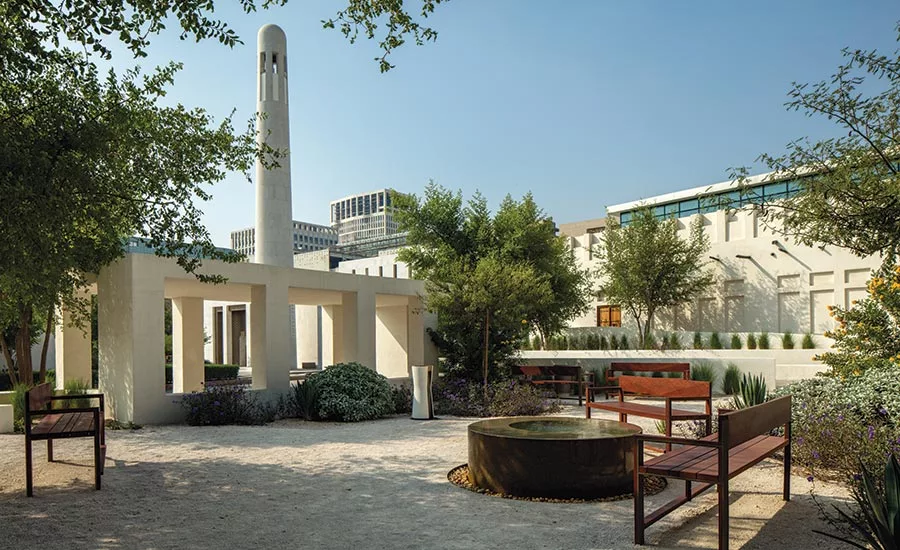
A pocket square sits between the Heritage House Museums and the Diwan Amiri Quarter.

Photo © Gerry O'Leary
Master Plan in Qatar Raises Bar for Mixed-use Development

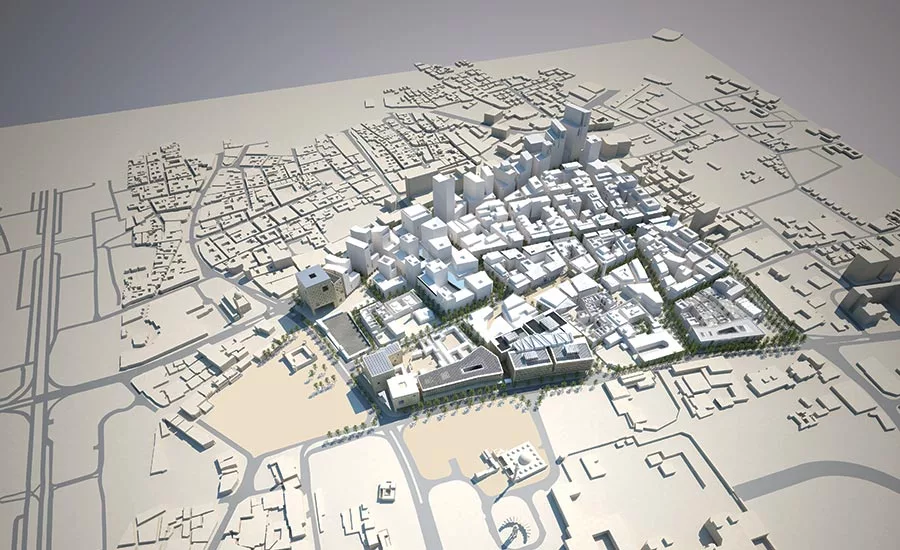
More than 100 buildings comprise the 77-acre master-planned community Msheireb.

Image courtesy Allies and Morrison
Master Plan in Qatar Raises Bar for Mixed-use Development

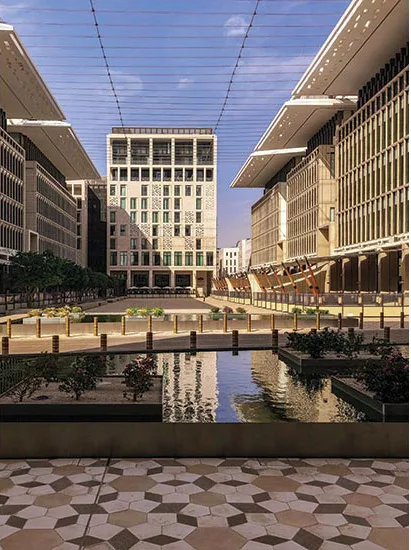
Mixed-use buildings by Mosessian Architecture flank the Mandarin Oriental Hotel by John McAslan + Partners, anchoring Msheireb’s Barahat Square.

Photo © Allies and Morrison

Master Plan in Qatar Raises Bar for Mixed-use Developments
Master Plan in Qatar Raises Bar for Mixed-use Development
September 30, 2019

While Doha, Qatar, is home to acclaimed architecture, including Jean Nouvel’s National Museum, OMA’s National Library, and I.M. Pei’s decade-old Museum of Islamic Art, the city abounds in flash and trash, even though (or perhaps because) it’s the capital of one of the richest countries in the world. The Qatar Foundation for Education, Science and Community Development is trying to raise the bar—most notably with Msheireb Downtown Doha, a model development that replaces a crumbling sector of the inner city and should be completed next year.

Constructed in phases over the past 10 years, Msheireb now comprises more than 100 buildings, grouped in megablocks of irregular shape that contain a mix of residential, office, retail, dining, and hospitality, as well as three mosques. Four below-grade levels accommodate parking and services. Most structures in the complex are low-rise, except for towers of just over 20 stories on the southern edge to draw winds through the development. Broad and narrow streets are oriented to channel breezes and maximize shade in a city where temperatures regularly reach 100 degrees; overhangs and arcades enhance the pedestrian experience. Every building is targeted to achieve a LEED Gold or Platinum rating. Visitors and residents are encouraged to walk or bicycle, or use an electric tram that loops around the community or the new station on the citywide subway network to get around.

In 2005, the Qatar Foundation tapped Arup, EDAW (since purchased by Aecom) and Allies and Morrison to master-plan the 77-acre site adjoining the Emir’s palace and the souk. Named for the subterranean river and springs on the site, Msheireb (which means “place of sweet water”) was envisioned as a harmonious ensemble of buildings that would abstract the regional vernacular and employ passive cooling strategies. Sheikha Moza bint Nasser, who chairs the Foundation and is part of the ruling family, wanted to create a strong sense of place—to reinforce the identity of Doha and reinterpret the traditional culture that was ebbing away.

Allies and Morrison spent two years researching indigenous architecture. As partner Simon Gathercole discovered, “the prevailing style was minimal, with bare walls enclosing courtyards, framed by recesses, pillars, and parapets. Ornament was used sparingly, usually only on important portals.” The firm distilled their observations into seven design principles that would guide Msheireb’s development by emphasizing continuity with the past. The architects aimed to build on Qatari tradition “by using a new language rich in reference and strong in resonance . . . to be spoken in many accents,” as the guidelines prescribe. The Foundation chose eight other offices, including John McAslan + Partners, Adjaye Associates, and Gensler, by competition, to contribute buildings that would engage in a low-key conversation with their neighbors rather than shout “look at me.” Structures and open spaces were to be “carved from urban clay,” according to the client brief, instead of standing out as objects. Above all, the new neighborhood was to provide a good living environment, to encourage families who commuted through clogged traffic from suburban villas to move back to the city.

Though Msheireb has yet to be fully realized, it seems poised to fulfill the vision of its planners. The first megablock was built and tested to validate the concept before construction continued, and facades were mocked up in a yard close by. More than 100 architects and engineers from participating firms have found inventive ways of interpreting the guidelines, concealing the infrastructure, and avoiding the monotony and sterility of some master-planned communities. Upward of 30 different kinds of stone, imported from Saudi Arabia, Oman, and Iran (local stone is too porous), clad the steel-and-concrete structures, imparting a feeling of permanence. Subtle color variations enhance the irregular openings and patterns etched into metal and carved into stone. McAslan restored a cluster of four historic houses to serve as museums that chronicle the history of Qatar and demonstrate how the affluent lived before oil and natural gas, as well as electricity and air conditioning, transformed the country.

There is a constant shift of scale and perspective within Msheireb, as narrow lanes open onto landscaped courtyards and the main square. On summer days, this expansive space can be shaded by a retractable awning, and misting devices lower the temperature by some 15 degrees in the sidewalk cafés. Undulating ribbons of concrete conceal one of the two cooling plants, and the street furniture, from lighting to bollards and bicycle racks, has been meticulously designed. Msheireb is a stage awaiting its full complement of players, and a fount of inspiration for planners around the world—though few municipalities can afford the investment this has required.

Looking for quick answers on architecture and design topics?
Try Ask RECORD, our new smart AI search tool.
Ask RECORD →

KEYWORDS: Qatar

Share This Story

Looking for a reprint of this article?
From high-res PDFs to custom plaques, order your copy today!
Post a comment to this article

Report Abusive Comment

Subscription Center
  • Create an Account
  • Start a Subscription
  • Manage My Account
  • Sign Up for Newsletters
  • Visit Customer Service
  • Update Preferences

More Videos

Sponsored Content

Sponsored Content is a special paid section where industry companies provide high quality, objective, non-commercial content around topics of interest to the Architectural Record audience. All Sponsored Content is supplied by the advertising company and any opinions expressed in this article are those of the author and not necessarily reflect the views of Architectural Record or its parent company, BNP Media. Interested in participating in our Sponsored Content section? Contact your local rep!

close
  • 3D configurator
    Sponsored byDoorBird

    How DoorBird’s 3D Configurator Is Redefining Customization Across Residential and Commercial Design

  • interior of modern office
    Sponsored byCurrent

    The Downlight's Second Life: Why Below-Ceiling Serviceability Is the Specification Detail That Matters Most

  • cold storage facility
    Sponsored byCarlisle SynTec Systems

    How Architects Can Design More Continuous Cold Storage Envelopes

DESIGN:ED Podcast
Listen to Architectural Record’s DESIGN:ED Podcast

Events

July 22, 2026

Water Containment Waterproofing: Best Practices and System Selection

Credits: 1 AIA LU/HSW; 1 AIBD P-CE; 0.1 ICC CEU

Examine waterproofing strategies for water containment structures that enhance durability, prevent failures, and support long-term building performance.

July 29, 2026

Adaptive Reuse Reimagined: Designing Multifamily Housing from Existing Buildings

Credits: 1 AIA LU/HSW; 1 AIBD P-CE; 0.1 ICC CEU; 1 IIBEC CEH

Examine adaptive reuse envelope strategies that improve energy performance, preserve architectural character, and transform existing buildings into high-performing multifamily housing.

View All Submit An Event

Products

2026 Architect's Square Foot Costbook

2026 Architect's Square Foot Costbook

See More Products

Popular Stories

7480 N Delaware

A Portland Apartment Building by Daniel Toole Architecture Stands as a Study in Adaptation

Bergen complex frontage

Brooklyn’s Bergen Establishes Place with a Modulated Concrete Facade and an Idyllic Garden

Chacarita Alta Housing

In Paraguay’s Capital, MOS and Adamo-Faiden Rethink Public Housing for Residents of Informal Settlements

The Bend in Winnipeg, Canada

The Bend Wraps an Adapted Winnipeg Warehouse, Adding Apartments and Defining Public Space

Kaya, San Diego

With San Diego’s Kaya, Jeff Svitak Melds Housing Density with Community

Water Containment Waterproofing: Best Practices and System Selection - Free Webinar - July 22, 2026

Related Articles

  • Paseo Mallorca 15.

    OHLAB’s Paseo Mallorca 15 Raises the Bar for City Living

    See More
  • Grimshaw and Gruen Score Contract for Union Station Master Plan in Los Angeles

    See More
  • WORKac Wins Job to Design Master Plan for Island in Russia

    See More
×

The latest news and information

#1 Source for Architectural Design, News and Products

SUBSCRIBE
  • RESOURCES
    • Advertise
    • Contact Us
    • Submit
    • Store
  • ACCOUNT CENTER
    • Create an Account
    • Start a Subscription
    • Manage My Account
    • Sign Up for Newsletters
    • Visit Customer Service
    • Update Preferences
  • PRIVACY
    • PRIVACY POLICY
    • TERMS & CONDITIONS
    • DO NOT SELL MY PERSONAL INFORMATION
    • PRIVACY REQUEST
    • ACCESSIBILITY
  • SERVICES
    • Marketing Services
    • Reprints
    • Market Research
    • List Rental
    • Survey/Respondent Access
  • STAY CONNECTED
    • Linkedin
    • Facebook
    • Instagram
    • YouTube
    • X (Twitter)

Copyright ©2026. All Rights Reserved BNP Media, Inc. and BNP Media II, LLC.

Design, CMS, Hosting & Web Development :: ePublishing