Nebraska Center for Advanced Professional Studies by BVH Architecture
Nebraska
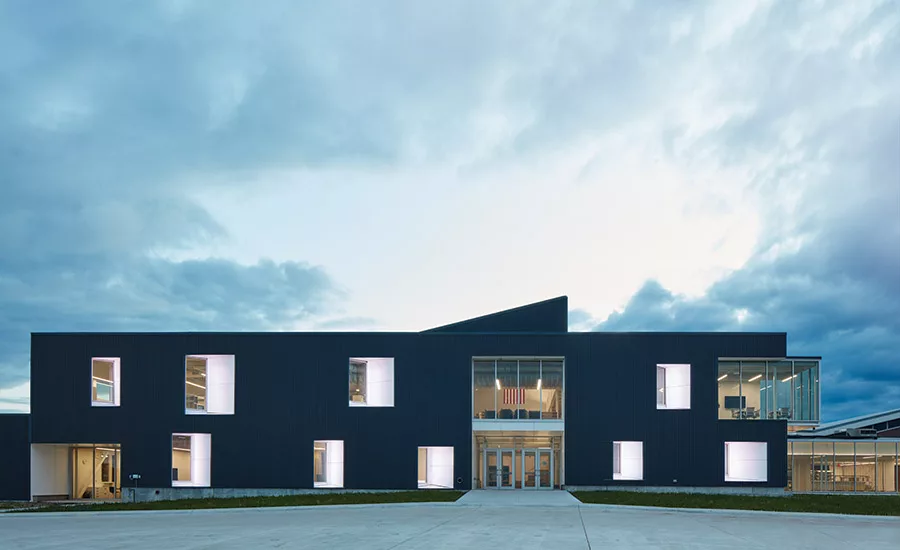
The two-story structure fits into the existing school, replacing a single-level classroom corridor.
Photo © Corey Gaffer
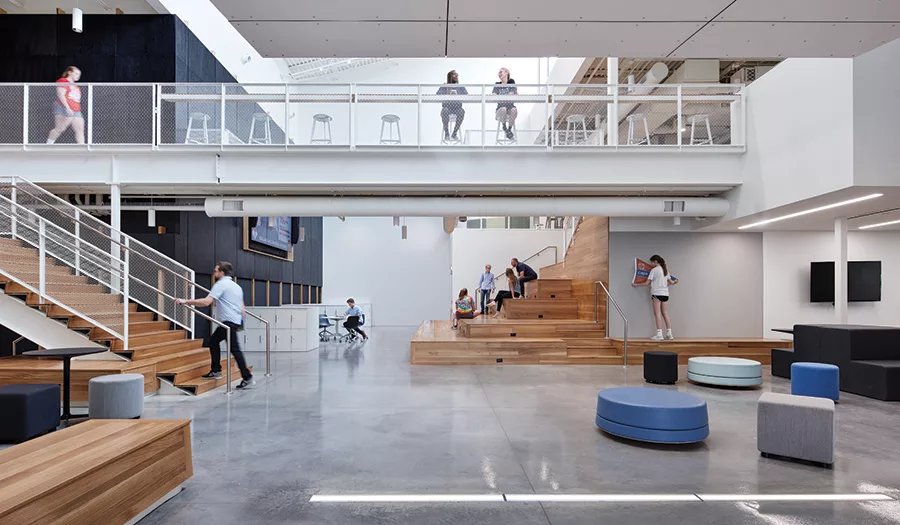
The new building opens to a school forum, plus flexible spaces and writable-glass nooks for learning and gathering.
Photo © Corey Gaffer
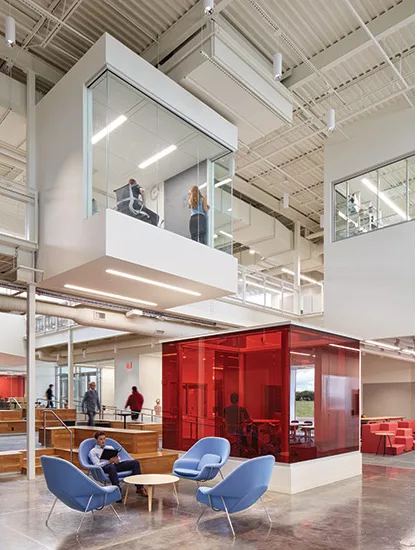
The new building opens to a school forum, plus flexible spaces and writable-glass nooks for learning and gathering.
Photo © Corey Gaffer
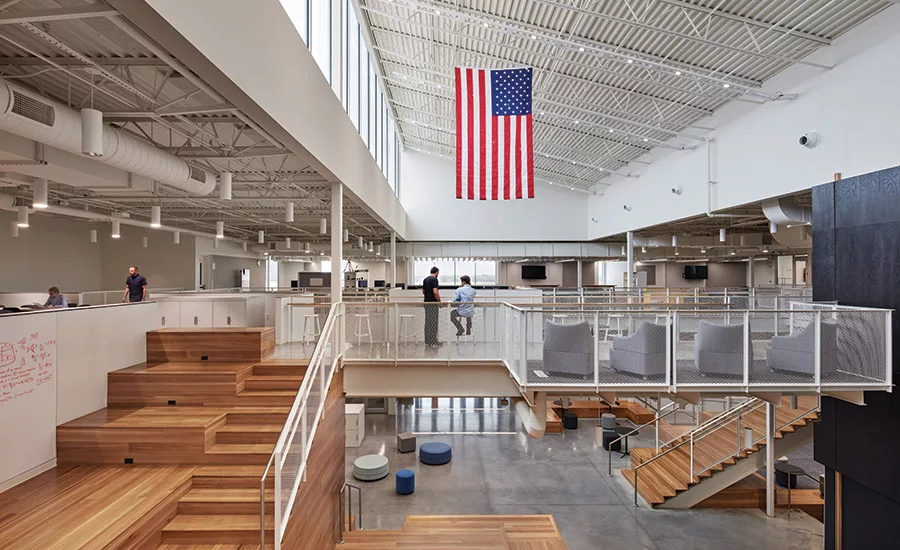
A clerestory monitor floods the interior with daylight (shown) that penetrates a teaching niche on the loftlike upper floor, as well as central and glass-enclosed spaces on both levels.
Photo © Corey Gaffer
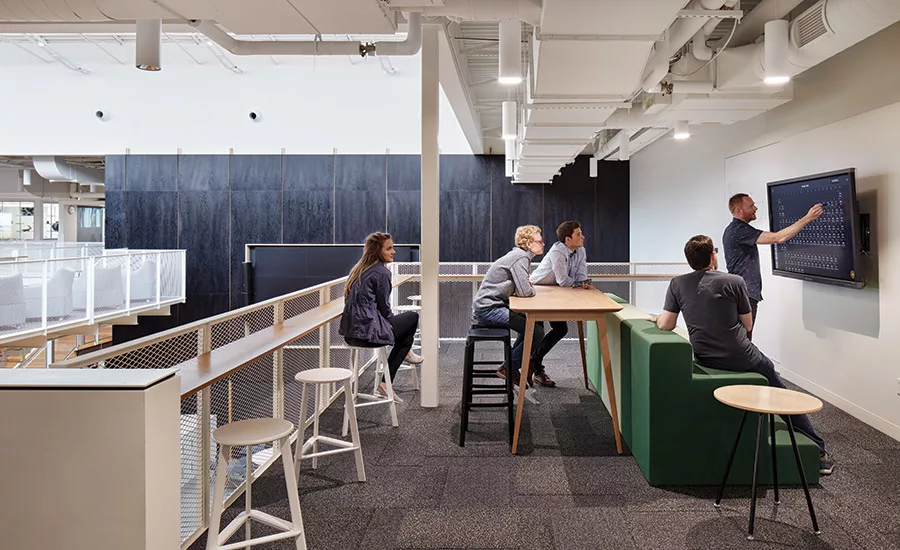
A clerestory monitor floods the interior with daylight that penetrates a teaching niche on the loftlike upper floor (shown), as well as central and glass-enclosed spaces on both levels.
Photo © Corey Gaffer
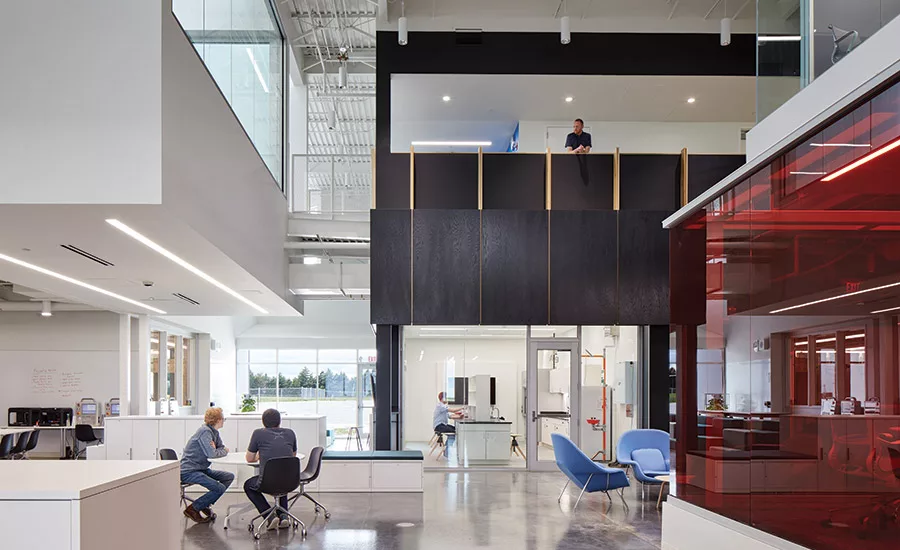
A clerestory monitor floods the interior with daylight that penetrates a teaching niche on the loftlike upper floor, as well as central and glass-enclosed spaces on both levels (shown).
Photo © Corey Gaffer
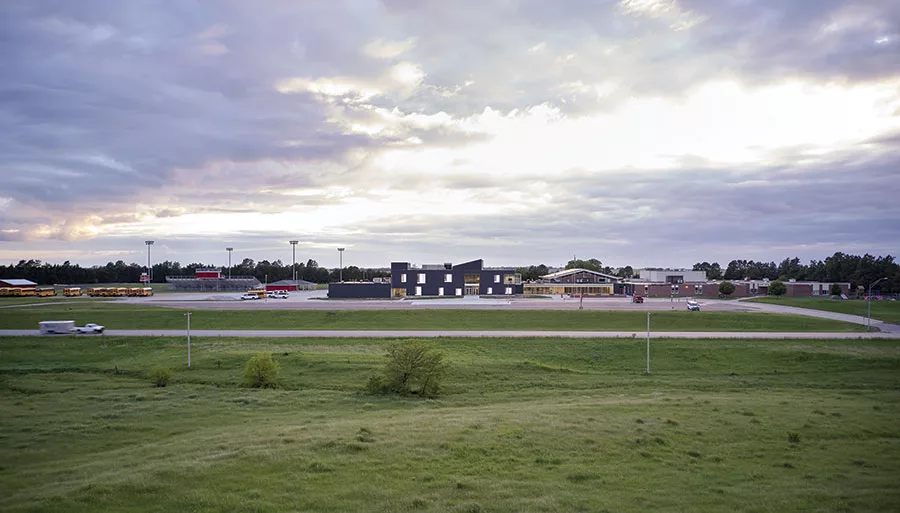
The new building is stitched to the sprawling 1960s architecture with a glazed cafeteria addition.
Photo © Corey Gaffer
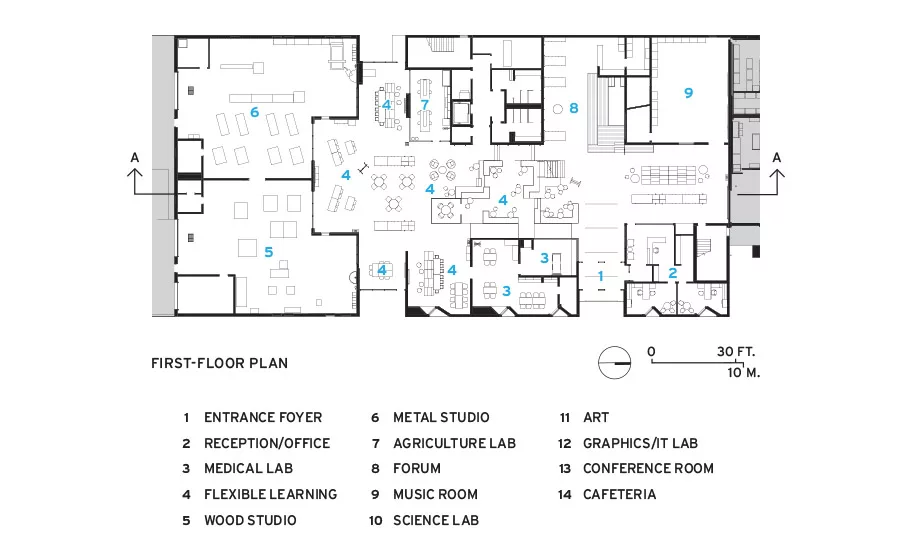
Image courtesy BVH Architecture
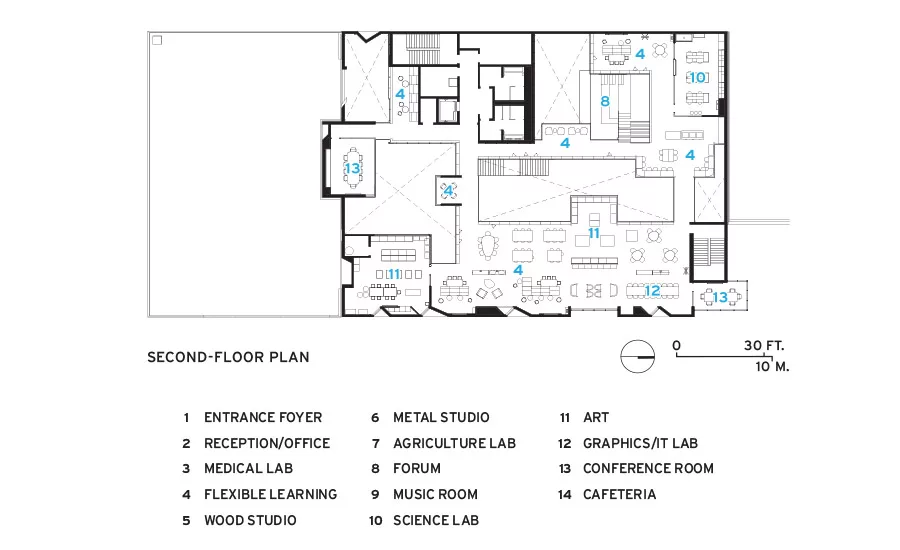
Image courtesy BVH Architecture
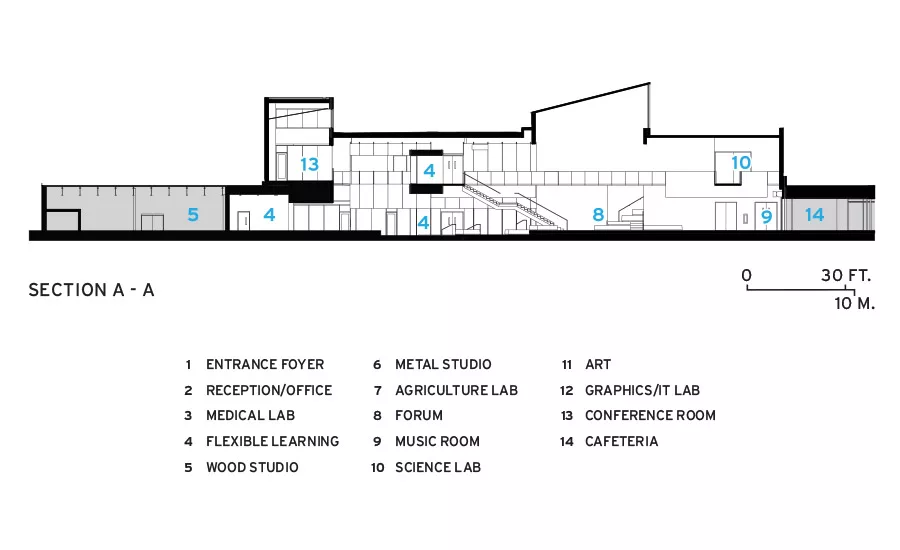
Image courtesy BVH Architecture
Architects & Firms
Driving past the harvested fields and pastures of eastern Nebraska on a cloudy late-autumn day, the big takeaway (at least for this urban native) was: land is abundant here. “Out in these rural stretches, there is room to sprawl,” says Dennis Coudriet, a principal at BVH Architecture. Even in the metro areas of Lincoln and Omaha (each home to one of the firm’s two studios), “you rarely find a school that’s not one level,” notes coprincipal Mark Bacon.
Additional Content:
– Credits & Specifications
– Video
To challenge this norm, the architects created a two-story facility for a fledgling public high school—the Nebraska Center for Advanced Professional Studies (NCAPS)—that not only doubles the region’s typical building height for K–12 institutions, it speaks to a progressive pedagogy with an unconventional approach designed to encourage creative thinking and collaboration.
Located 100 miles southwest of Lincoln in the farming community of Fairfield, the NCAPS campus, which opened a year ago, is an outgrowth of the Sandy Creek School, where kindergarteners through graduating seniors have coexisted since the 1960s in a rambling collection of contiguous low-lying masonry buildings. When South Central Unified School District #5 decided to transform its traditional high school into one with an interactive, profession-based syllabus (the first of its kind in Nebraska), it turned to BVH to develop a scheme for the existing site, which sits on the edge of a cornfield.
The new school, serving ninth to 12th graders from the Unified School district of Sandy Creek and Lawrence-Nelson, encourages dynamic collaborative teaching and offers all juniors and seniors opportunities to take free college-level courses for college credit, as well as to explore a variety of career paths—with mentorships at local organizations and companies—in such disciplines as health care, education, design and construction, manufacturing, agriculture, business, law, culinary science, and the arts.
The BVH team worked closely with the educators, including district leaders and school principal Jason Searle, to determine the needs of this innovative learning model. After visiting a network of similar programs in other states and brainstorming with their clients, the architects developed renderings, physical and digital models, and virtual- reality walk-throughs to communicate potential spatial relationships. “We even looked at examples of workplace and other noneducational spaces,” says Coudriet, because they didn’t want a common school plan. In fact, he notes, early on, they considered one big space with no segregated rooms at all.
“We were looking to get away from the typical lecture format, to create a more engaging atmosphere for our students and teachers,” says district curriculum director Amanda Skalka. “We knew we had to give them a different space. Otherwise, nothing would change.”
Building up rather than out, the architects devised a radically new, 40,000-square-foot physical plant, remaining within the extant structural footprint. First, they demolished a cramped, narrow portion of the old school between the cafeteria on the northern side and a shop classroom on the south. In its place they inserted a double-height, steel-frame structure that extends into the existing single-story cafeteria with a 16-foot-deep, 1,700-square-foot addition, and connects to the shop. Then they wrapped this assemblage with an insulated ribbed-aluminum skin, a nod to the agricultural buildings dotting the surrounding landscape.
Several daylighting strategies—implemented for energy-saving, alertness, and wellness factors—mitigate the sun’s glare yet provide ample natural light and views out. These include deeply recessed and canted east-facing windows, framed with white phenolic-resin panels; expanses of high-performance light-transmitting glazing with automated shades; and a north-facing clerestory roof monitor, its south-facing slope reinforced with infrastructure for future photovoltaics. Sensors activate electric illumination only as needed, so the interiors are largely daylit for the greater part of the day (depending on the season).
Inside the voluminous steel shell, the architects constructed a compact but open environment on two levels that comfortably accommodates the diversity of desired spaces for the 22 teachers and 195-plus students who circulate here throughout a school day. (Middle schoolers also come for introductory classes, like shop.) Some spaces are glass-enclosed (mostly for code issues), like the medical-simulation and agriculture labs on the ground floor, as well as the science, 3-D-art, and conference rooms on the prominent loftlike upper level. Other areas are partially glazed or without walls, and tucked into nooks or arranged in surprising configurations. All the interiors are accessible via broad wood steps, ramp, or elevator and are highly visible from the central gathering and learning place on the ground floor, where stacked wood benches and stylish contract furnishings invite convening for class, study, or just hanging out. This hub flows into the shop—renovated and split into up-to-date woodworking and manufacturing studios (both on view through transparent walls)—as well as the enlarged cafeteria, which now has a teaching kitchen and a student commons with cozy seating along the length of its new glass facade.
The industrial quality of the space is much more in keeping with the vibe of a young tech company or a university, with glossy concrete floors, surprising jolts of color, and remarkably sophisticated and varied furnishings, including classics by Saarinen and Eames (purchased at a discount). “None of it is typical education furniture,” says BVH interior designer Jackie Bacon. “They wanted flexibility, so we selected pieces from 20 different manufacturers with components that could work together to create assorted groupings in different places.”
To make sure every arrangement and surface is functional, the designer specified easily movable pieces (some with built-in power sources), partitions that support electronics and storage, and an abundant use of writable-glass walls. To control the acoustics in the unobstructed setting, she employed sound-absorbing wall materials and ceiling baffles, installed carpet in credits strategic spaces, and used soft furnishings whenever possible.
Walking into the school, one immediately senses a productive energy. Clusters of students, huddled around teachers or on their own, occupy the central hub, the flexible learning areas, and the bleacher-style steps that double as the school forum. A constant hum rises and falls, as in many professional offices. And while one senior told record that the noise could be distracting, he added that it was usually not an issue for him and was far outweighed by the openness of the new architecture and the choices it provides. Its similarities to real work situations, he notes, “are preparing us for the future.”
According to Skalka, after a year in the new space, “the culture is more collaborative.” And with the whole school on view, there’s a greater sense of accountability. Even teachers who were skeptical at the beginning are coming on board. “They’ve just embraced it,” she says.
Science teacher Ashley Borer was one of those who was initially opposed to “the open-concept stuff.” But now, she says, “I honestly love it, and would have a hard time going back to the way it was.”
Video © BVH Architecture
CreditsArchitect: BVH Architecture — Dennis Coudriet, principal; Jon Wiles, Mike Daily, Ryan Hier, Jim Berg, architects; Jackie Bacon, Amy Dishman, interior designers
Engineering: Lange Structural Group (structural); Morrissey Engineering (m/e); REGA Engineering (civil)
Consultant: Foodlines (food service)
General contractor: Cheever Construction
Size: 40,000 square feet
Cost: $11.4 million
Completion date: December 2018 |
SpecificationsStructure Apollo Steel; ClarkDietrich Building Systems
Masonry Christensen Concrete Products; Hohmann & Barnard
Metal panels Kingspan (Morin)
Curtain wall Kawneer
Glass Guardian; Insulite
Rainscreen Trespa
Surfaces Armstrong (ceiling); PPG (paint); Koroseal Wilsonart; Formica; Metro Quartz; SRP; Milliken; Bentley
Furnishings Allsteel; Herman Miller; Knoll; National; Arper; Maharam; BuzziSpace; Spacestor; Kimball
Lighting Columbia; Hubbell; Alights; Cree; Leviton; Finelite; Pathway; V2lighting |
Looking for a reprint of this article?
From high-res PDFs to custom plaques, order your copy today!