Belzberg Architects' XOMA Hotel Sails into Mexico City
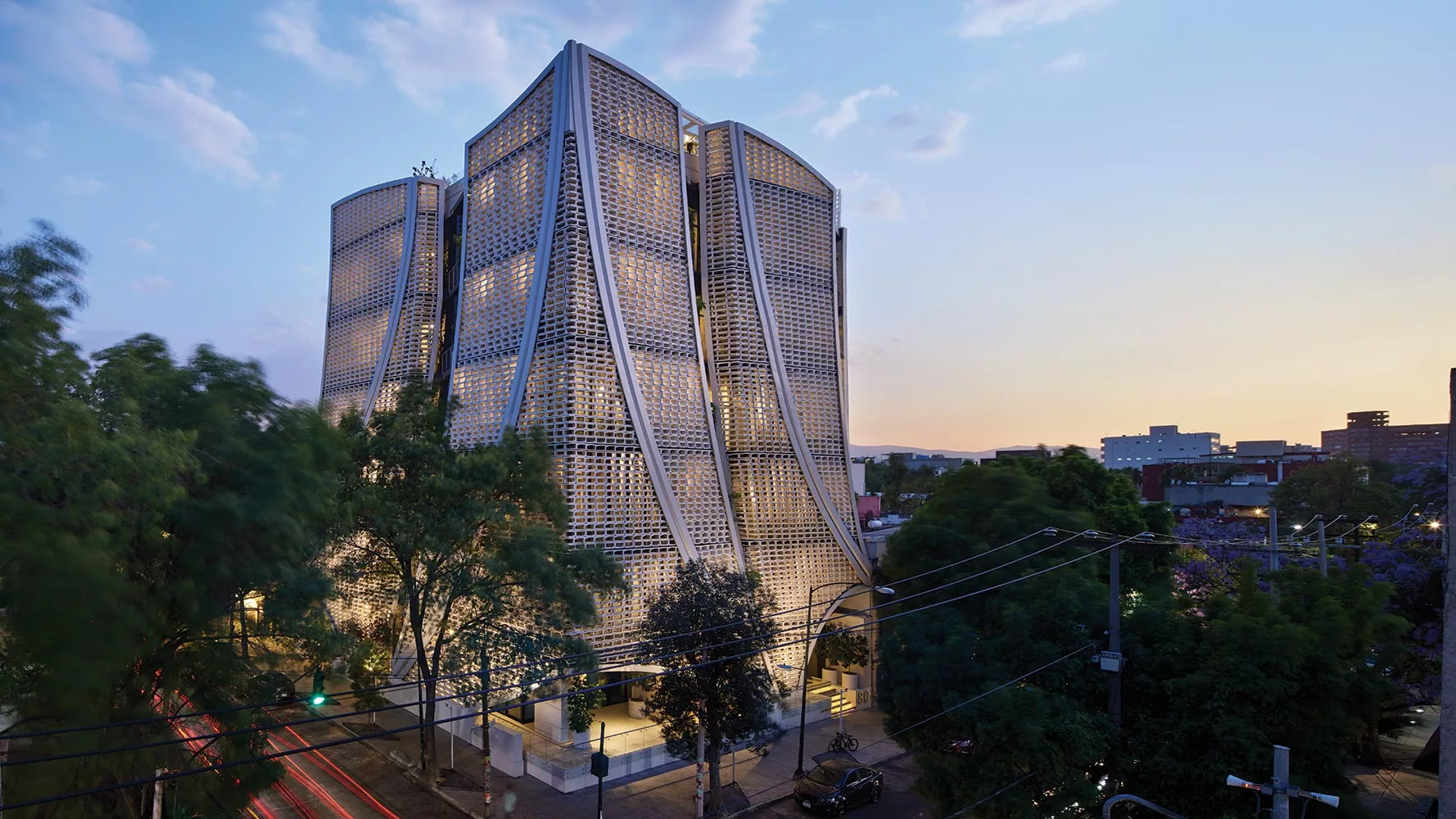
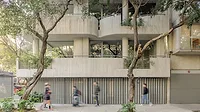
XOMA Hotel’s porous facades are composed of open masonry blocks. Photo © Bruce Damonte
Architects & Firms
When you imagine billowing, diaphanous sails, you probably don’t think of concrete blocks. But the recently completed XOMA, a boutique apartment hotel in Mexico City, sheathed in swooping screens of open masonry units, could make you think again.
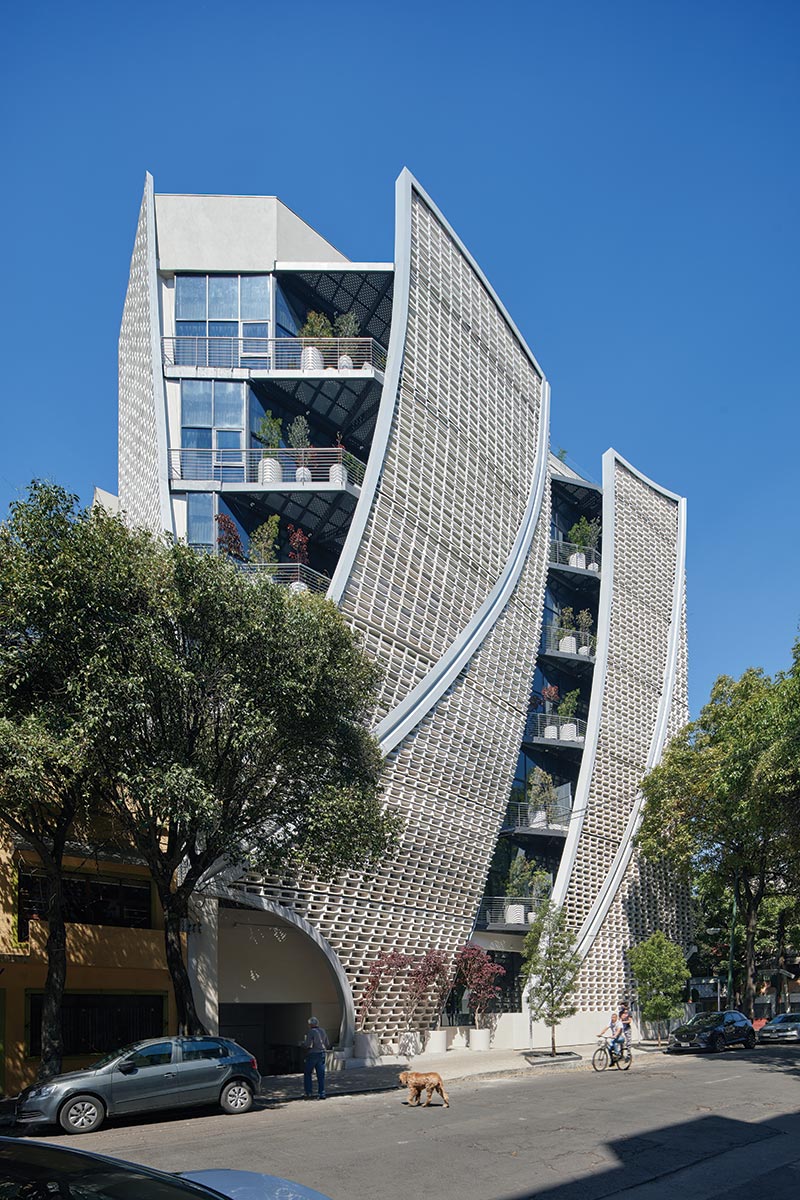
Photo © Bruce Damonte, click to enlarge.
Designed for Viadora, a luxury hospitality brand, by Belzberg Architects of Santa Monica, California, in collaboration with Neme Design Studio of Long Beach, the 52,000-square-foot development sits on a corner site in the Roma Norte neighborhood. At six stories high, with three levels of parking below grade, it is taller than the area’s prevailing context of two- and three-story buildings. Many of these display an eclectic mix of Belle Époque European styles known as “Porfirian,” in reference to the Mexican president Porfirio Díaz, who launched an ambitious modernization plan for the capital in the early 20th century that included the establishment of this area as an enclave for the affluent. Later development added Art Deco and Modernism to the mix. The district’s decline began in the 1940s and was hastened by an earthquake in 1985. Recent gentrification has reversed its fortunes, and it is now a magnet for an international crowd of the young and chic, in a manner similar to neighboring Condesa.
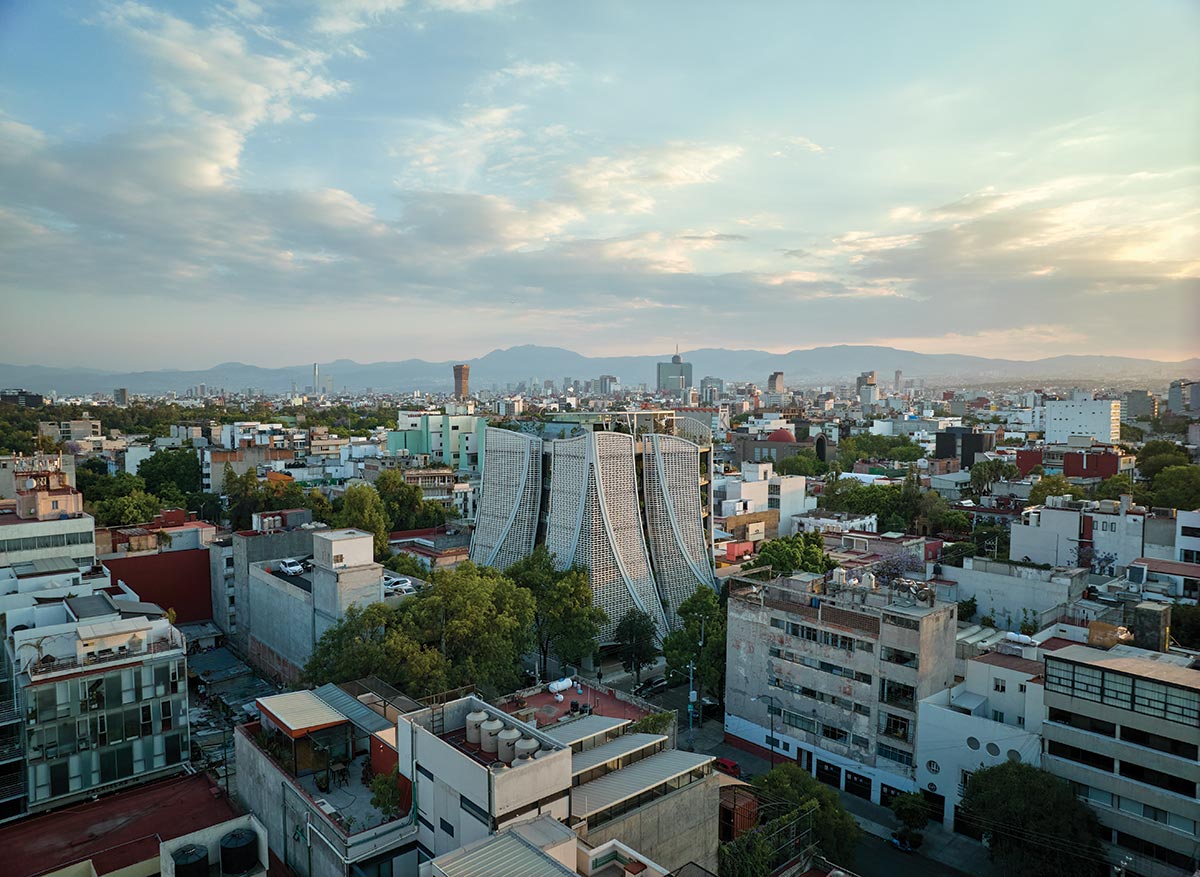
Photo © Bruce Damonte
XOMA is one of 12 projects designed by Belzberg for Grupo Anima, a Mexico City–based real-estate developer whose founding partner, Alberto Djaddah, toured the Belzberg-designed Los Angeles Museum of the Holocaust in 2013 and liked what he saw. Djaddah’s brief to the architect was to exemplify modern Mexican luxury. “We intended to make a statement that this is no longer ‘your father’s Mexico City,’ ” says the developer. “But we wanted to use an efficient local construction method that would translate to lower costs and a traditional tectonic quality. Since the building is in an historic neighborhood, the mix of old and new also had to be considered.”
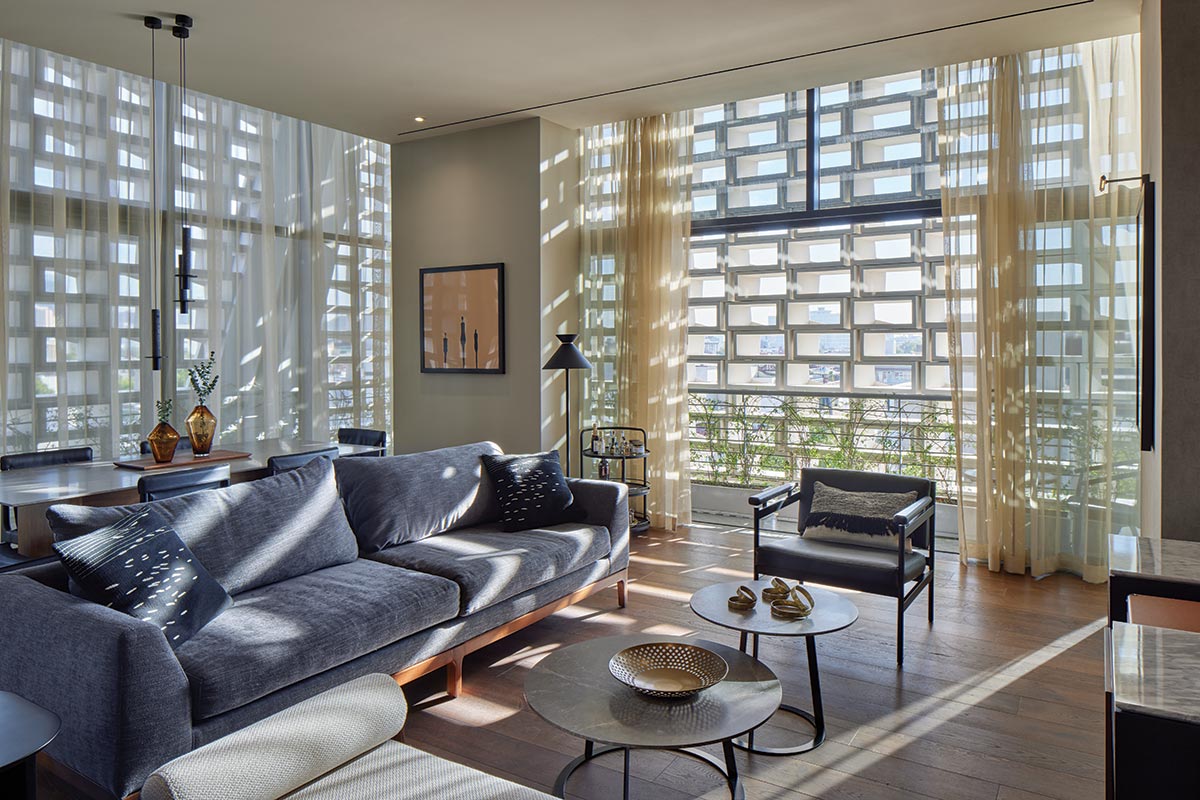
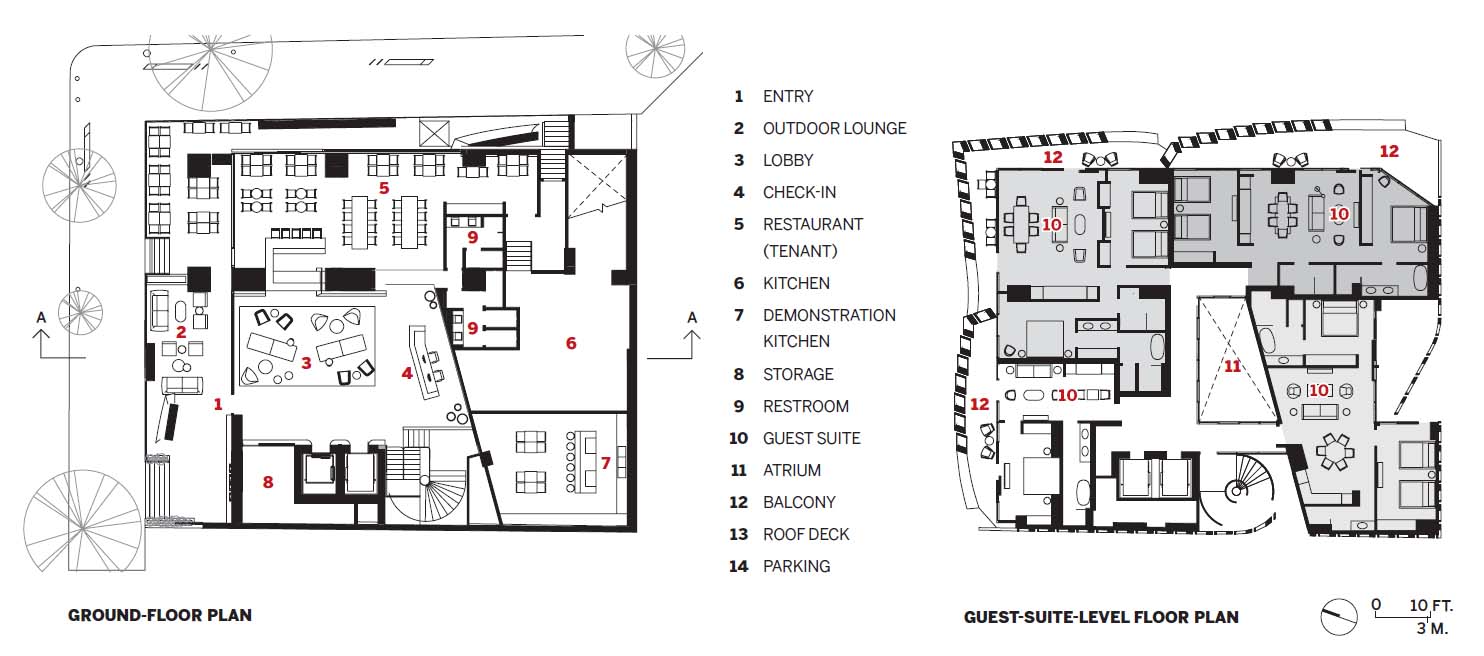
Belzberg obliged with a concrete structure that stacks five compact floors of guest suites, organized around an atrium, above a street level that includes a lobby, an outdoor lounge, a restaurant, and a demonstration kitchen. “The plan parti,” explains founding partner Hagy Belzberg, “takes advantage of a local planning-code allowance to project up to 1 meter beyond the property lines with outdoor spaces and facade elements, as long as the walls and floors are porous.” This allows balconies—a desirable amenity in Mexico City’s temperate climate—for all rooms fronting the streets, and enough depth for the facade to take an expressive form without reducing interior floor area. The design team used the creative opportunity provided by this extra layer of space to fashion three flowing vertical “sails” made of open concrete blocks. These partially enclose the balconies—providing privacy, shade, and framed views while allowing ventilation—as they curve in two directions, tapering as they touch down at street level.
1
2
3
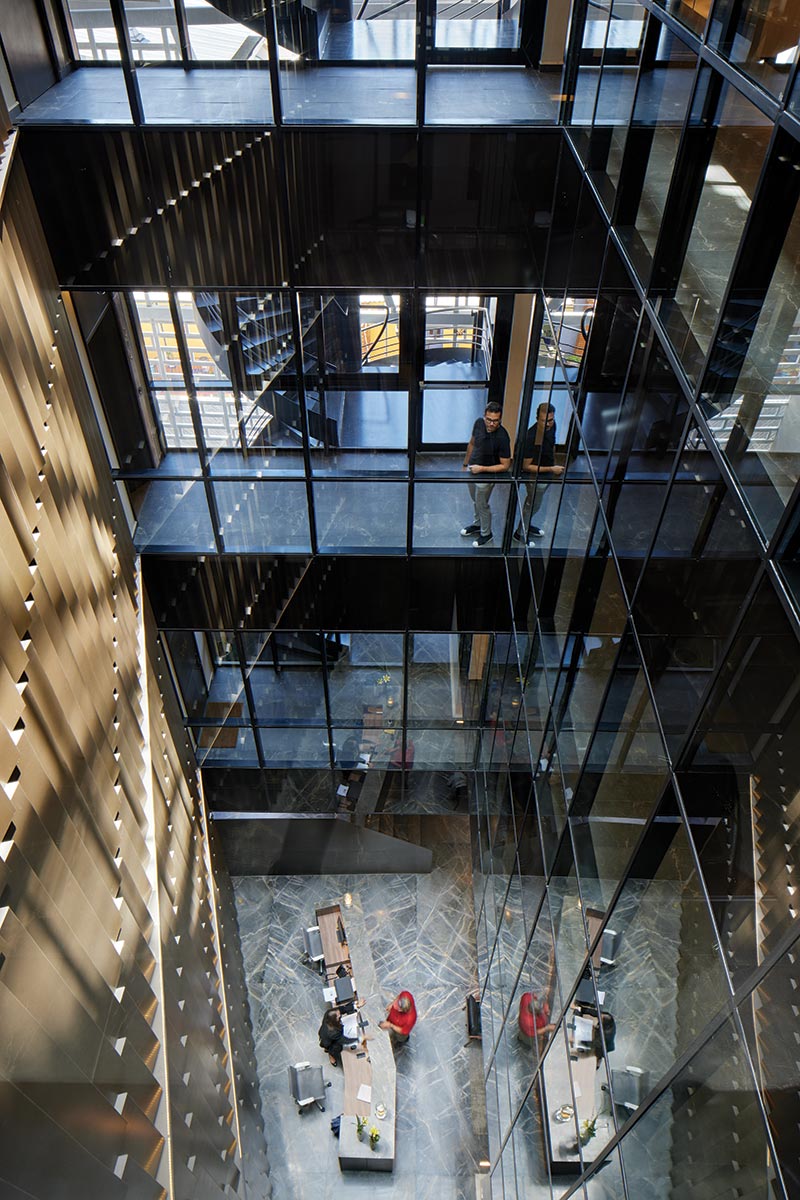
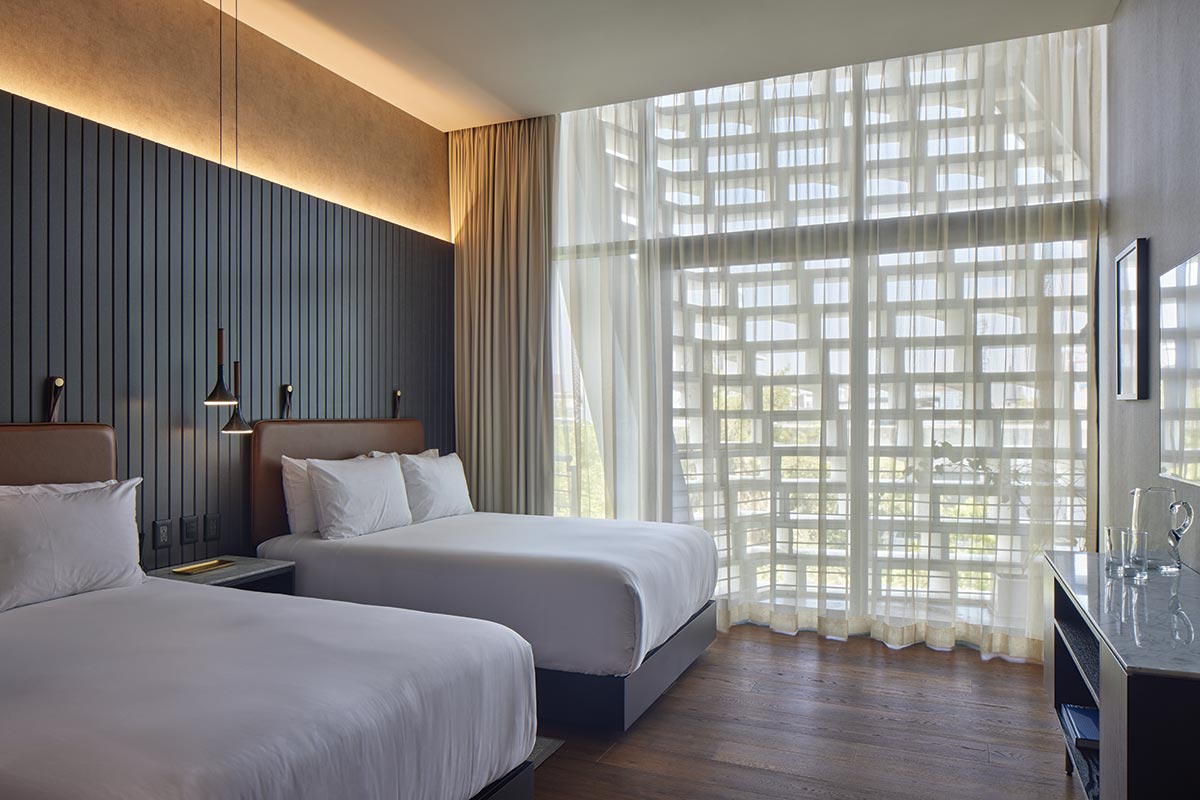
An atrium (1) is surrounded by guest suites (2 & 3). Photos © Bruce Damonte
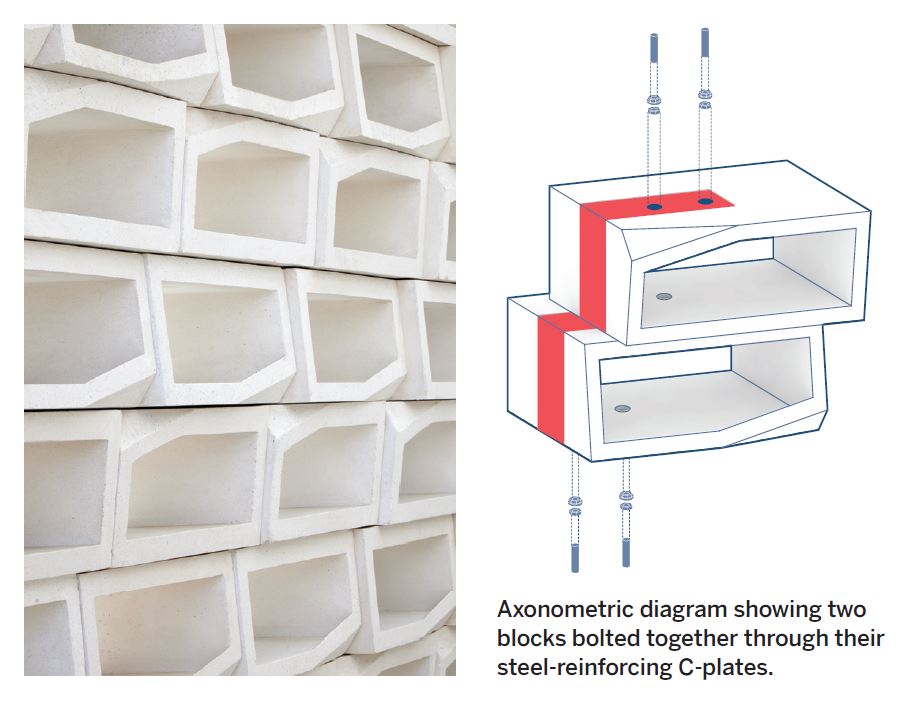
To form complex curves that could withstand earthquakes, Belzberg worked closely with architect and facade consultant Becher Neme and structural engineer Stephan Kordt in developing a technique for assembling the blocks. They are incrementally offset, to create curvature, and connected vertically by C-shaped metal plates, which are embedded in each unit and fastened together with only two bolts. “The continuous metal supports eliminate the need for grout, mortar, and rebar and enable the entire assembly to flex as a mesh under lateral force,” explains Belzberg. “This liberates concrete-block construction aesthetically and enables the facades to exceed seismic requirements.” The geometry of the masonry units, the modeling of the curved forms, and the positioning of the metal plates were all designed digitally and tested with numerous full-scale mock-ups.
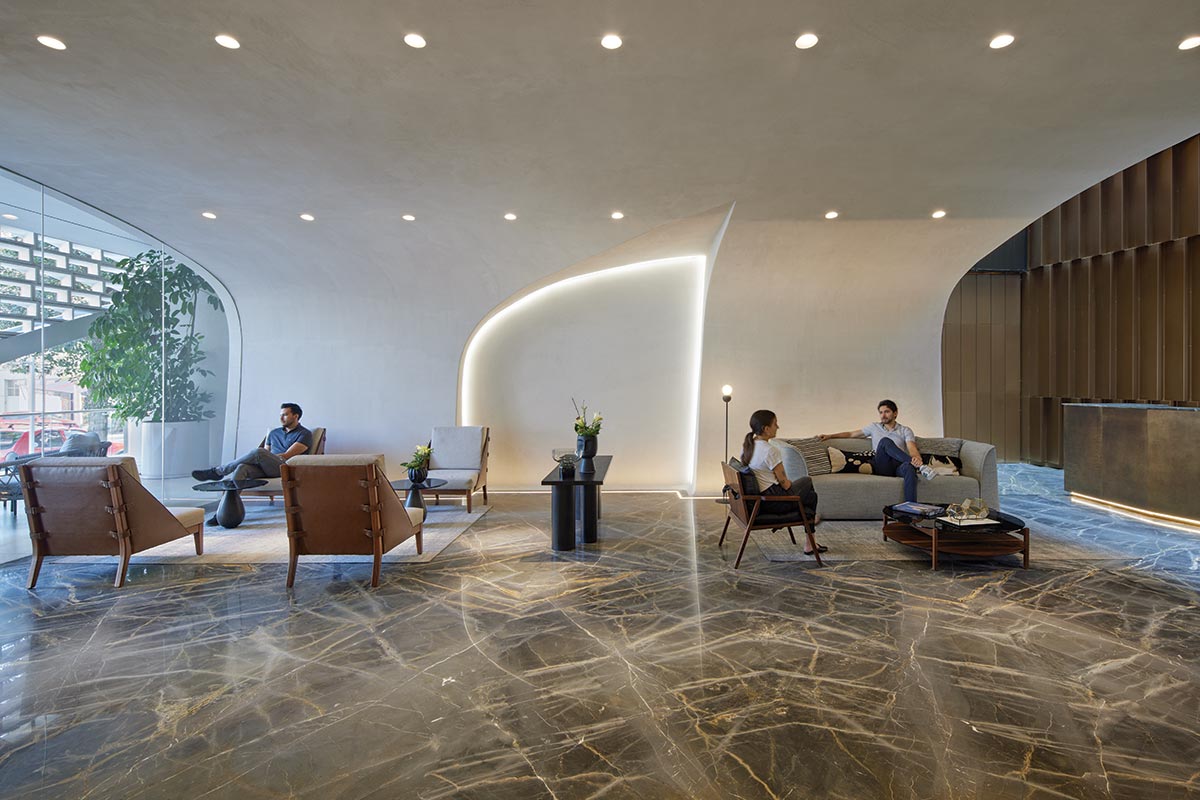
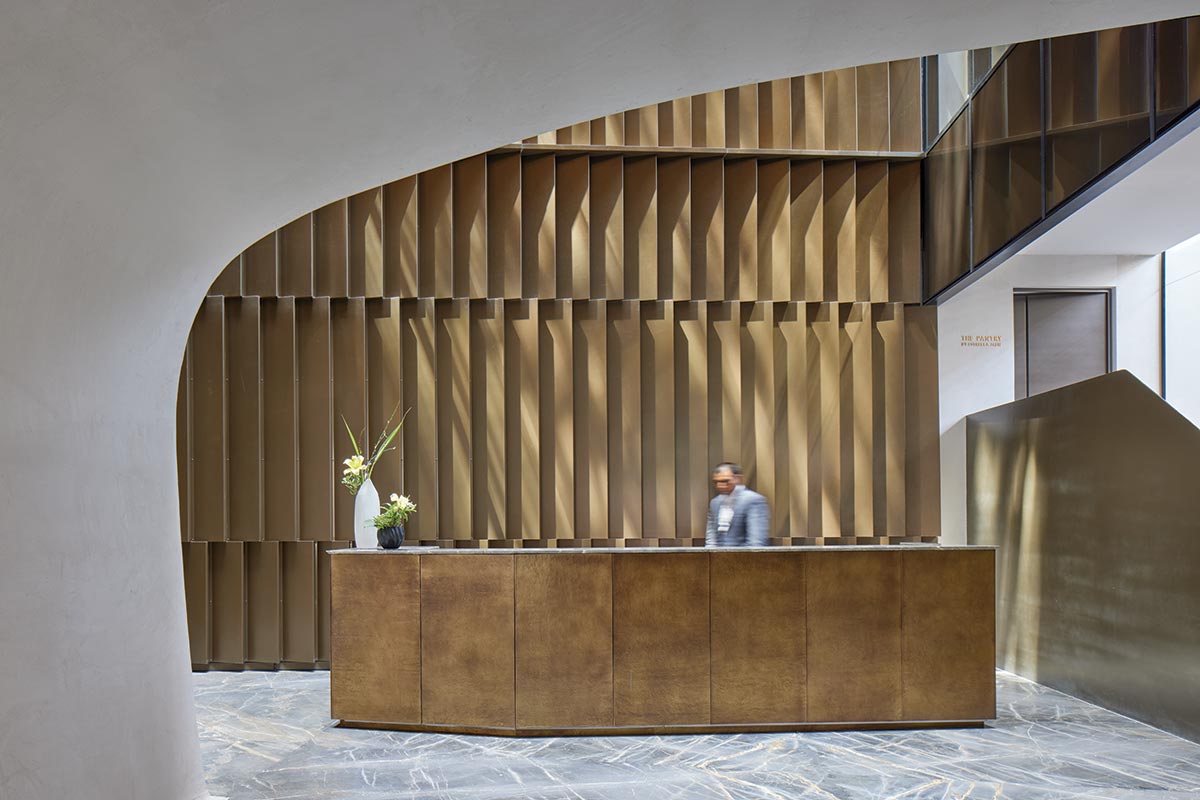
The concrete blocks have a smooth texture and pale creamy color, thanks to a mix that includes polymers and white pigment. In combination with the subtle curves and seamless assembly, the effect is surprisingly soigné. This quality carries into the lobby, where asymmetrically vaulted plaster ceilings echo the swooping forms outside and hover above a richly veined marble floor. A wall of weathering-steel panels rises behind the reception desk into the atrium above, which is surrounded by guest suites rendered in a rich palette of dark wood floors and millwork, pale neutral walls and fabrics, and crisply detailed white marble bathrooms. The client got the modern luxury he requested.
4
In the lobby, asymmetrically vaulted ceilings echo the forms outside (4) and weathering-steel panels rise behind the reception desk (5). Photos © Bruce Damonte
5
Not everyone in Roma Norte is happy with the project’s relationship to its context. “Even though it’s not substantially taller than the buildings around it,” says one resident, “the vertical sweep of that perforated skin makes it seem enormous, looming over the street in a way nothing nearby even remotely does.” Obtaining approvals was not easy. “The biggest challenge was getting the historic commission to accept a contemporary design,” recalls Djaddah. “We worked with them, making case studies of old and new in cities like Paris and Barcelona.” Belzberg’s experiential approach to urban scale and surroundings ultimately prevailed. “The pedestrian experience here is defined by tree canopies, historic architectural features visible beneath the trees, and street life within the first two stories,” he explains. “Our facade lifts off the ground at various points to this same height, providing continuity.” It’s a persuasive argument, buttressed by his creative take on masonry, which, notes the architect, “has a long and rich history in Mexico City. It can be made by hand, laid by hand, and take on a variety of shapes, sizes, and textures. All of this speaks to the culture of place.”
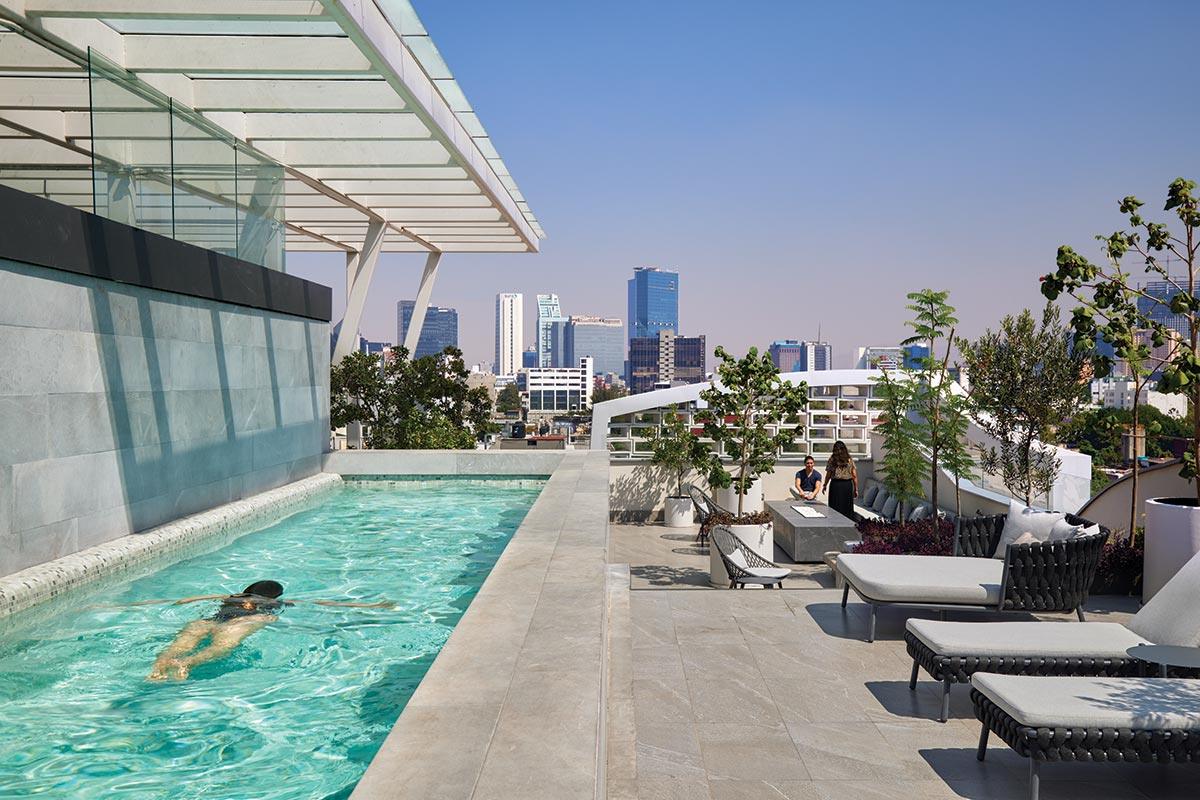
A roof terrace and pool cap the six-story building. Photo © Bruce Damonte
Click plan to enlarge
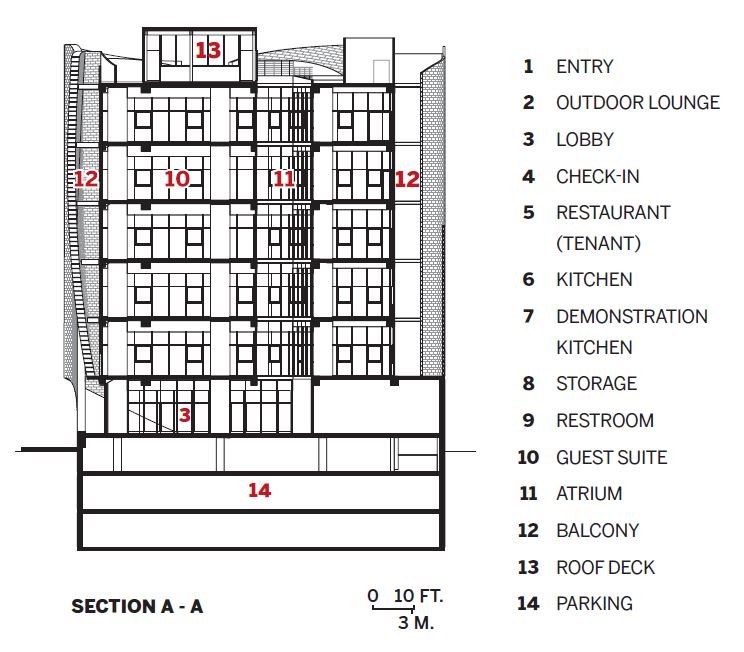
Click section to enlarge
Click detail to enlarge
Credits
Architect:
Belzberg Architects — Jessica Hong, Brock DeSmit, Hagy Belzberg, Jennifer Wu, Josh Hanley, Joseph Ramiro
Architect of Record:
Grupo Anima — Alberto Djaddah, Carlos Pacheco, Hugo Balderas, Jacobo Levy, Daniel Balmori
Consultants:
Arup (structural engineer), Neme Design Studio (facade consulting), Kordt Engineering Group (facade engineering)
General Contractor:
Grupo Anima
Client:
Viadora
Owner:
Grupo Anima
Size:
52,000 square feet
Cost:
Withheld
Completion Date:
October 2021
Sources
Facade System:
Arista Taller
Windows:
Extrusiones Metálicas
Glazing:
Crisvisa
Custom Metal Doors & Metal Panels:
Lámina Industrial Manufacturas y Acabados
Hardware:
Assa Abloy
Wood Panels:
Valchromat
Stone:
Stones Piedras Naturales
Lighting:
Bandido, Diez Company
Elevator:
Kone
Looking for quick answers on architecture and design topics?
Try Ask RECORD, our new smart AI search tool.
Ask RECORD →
Looking for a reprint of this article?
From high-res PDFs to custom plaques, order your copy today!