3XN’s Quay Quarter Tower in Sydney Transforms and Expands an Outmoded 1970s Skyscraper

Architects & Firms
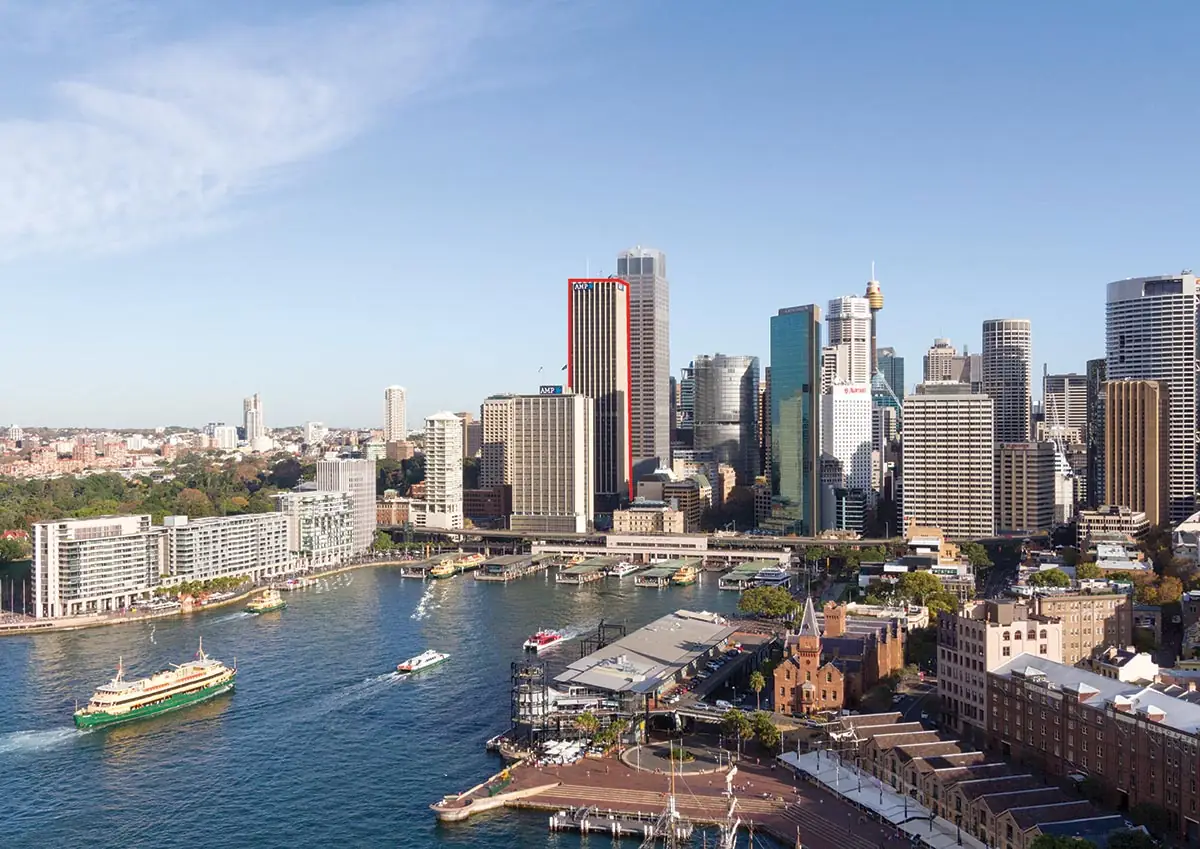
The 50-story Quay Quarter Tower (QQT) overlooking Sydney’s world-famous harbor is clearly contemporary. With its twisting geometry, its cantilevering blocks that appear to reach toward the water, and its jazzy gridded facade, the 676-foot-tall office building stands out as a distinctly recent addition to the city’s quickly changing skyline.
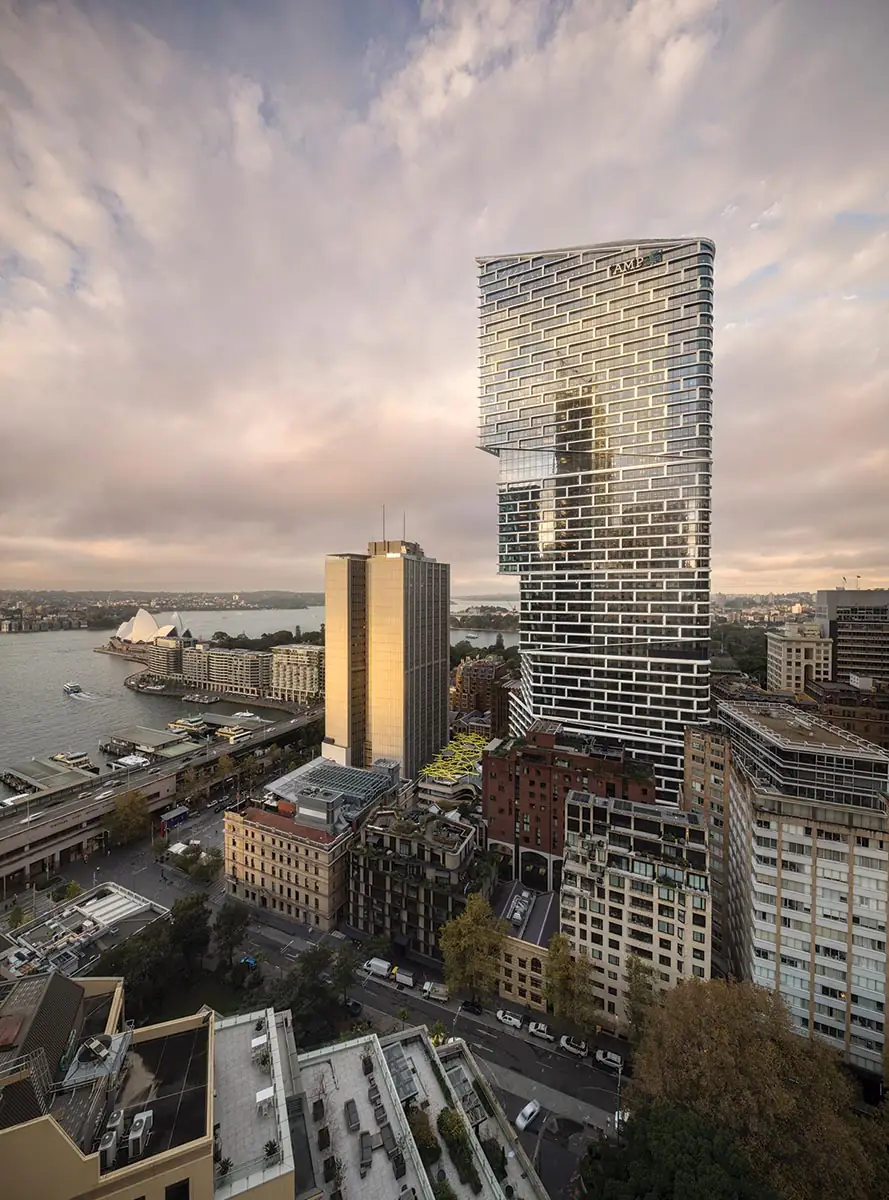
Quay Quarter Tower rises from a prime harborside Central Business District site (above and top of page). Photo © Adam Mork, click to enlarge.
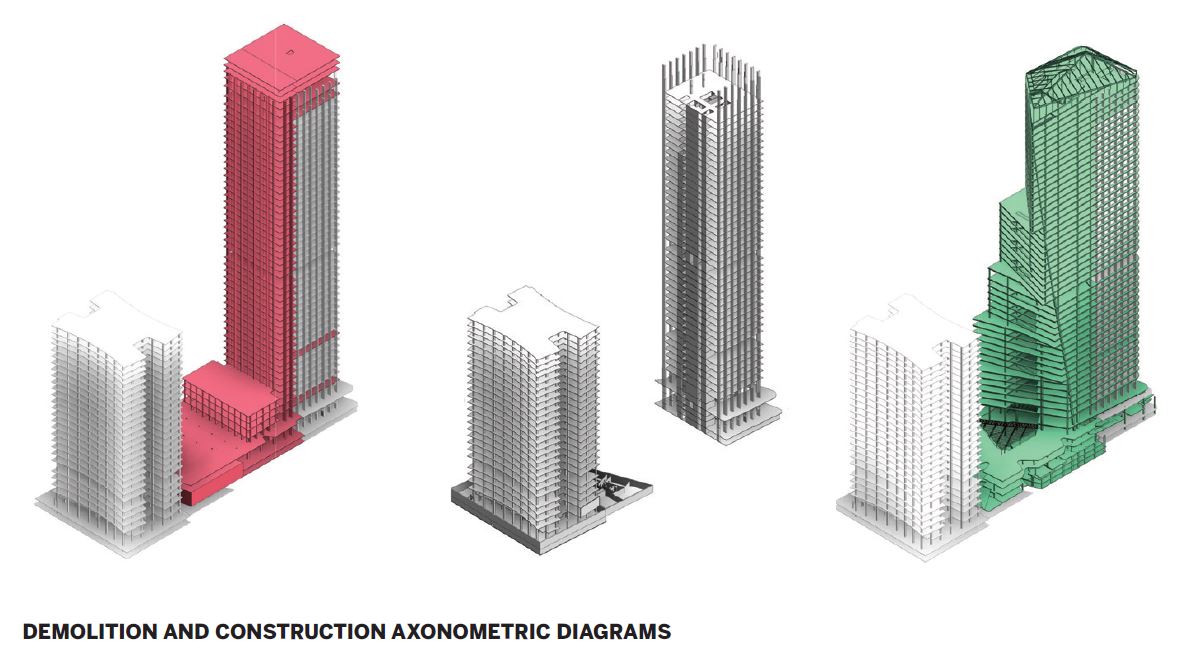
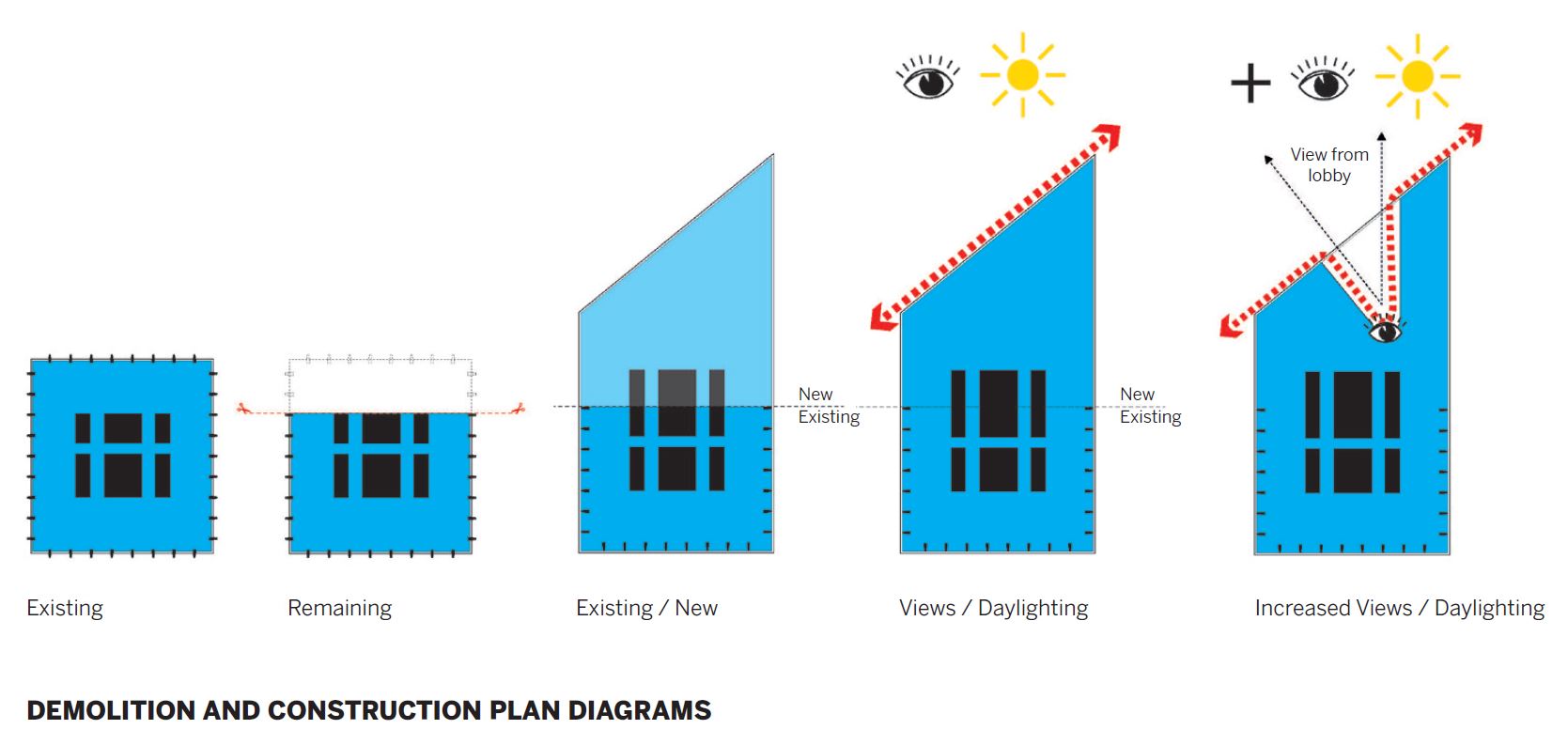
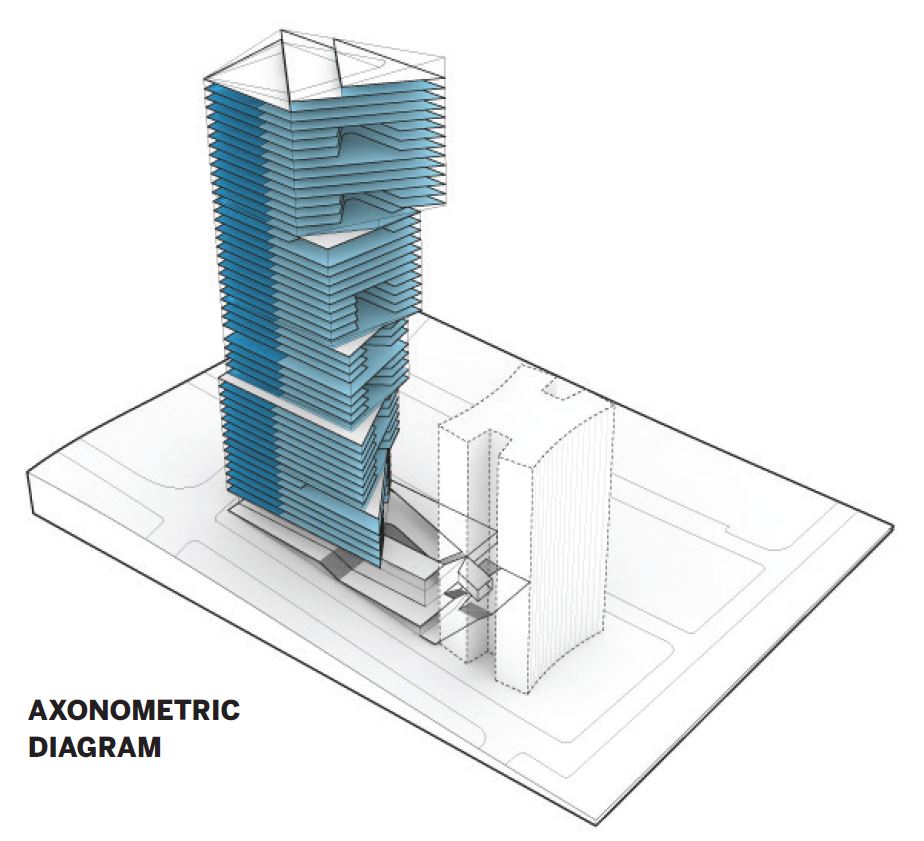
However, despite this aura of newness, QQT is not new, or not entirely so. The skyscraper is the product of the adaptation and expansion of a 46-story tower completed on the prime Central Business District (CBD) site in 1976 and no longer considered attractive to tenants, due to its too-small floor plates. The recent $600 million transformation—designed by Danish firm 3XN—retains nearly all the existing tower’s structure, reusing 95 percent of its core and 65 percent of its beams, columns, and slabs. The scheme, developed in partnership with architect of record BVN, more than doubles usable floor area, to 1.1 million square feet. But, most notably, at least from a climate perspective, the upcycling strategy saved 12,000 metric tons of embodied carbon—greenhouse-gas emissions equal to those produced, the architects say, by 8,800 flights between Sydney and Copenhagen.
For AMP Capital, 3XN’s client and QQT’s owner and anchor tenant, retaining as much of the older structure as possible was a requirement, one outlined in its 2014 design competition brief. However, AMP’s interest in building reuse was not prompted by the potential environmental benefits, but instead by economics. The approach shaved nine to 12 months off the construction schedule and saved about $100 million, estimates Fred Holt, a 3XN partner based in Sydney. “Circular economy is about economy,” he says. No small factor, of course, were planning restrictions that limited the height of a new tower, had the existing one been demolished.
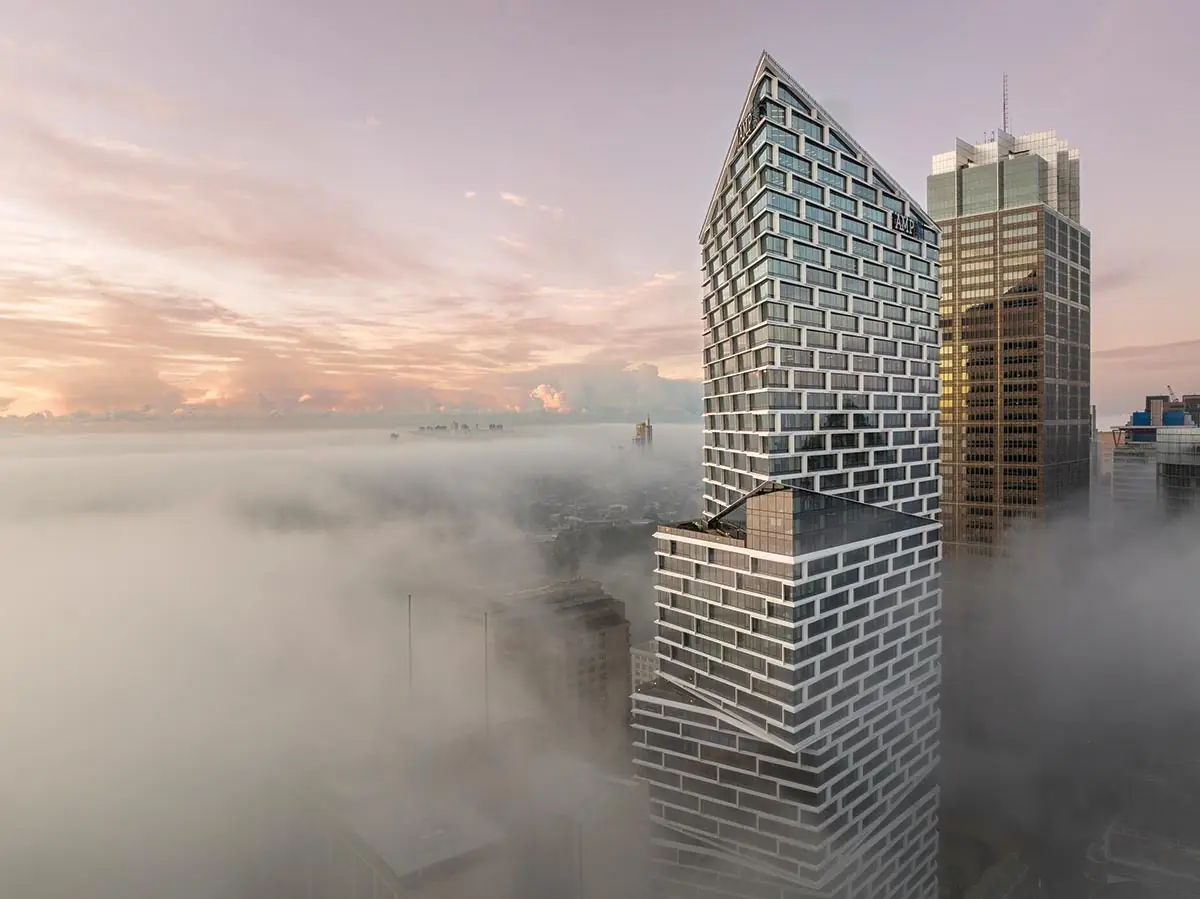
Photo © Adam Mork
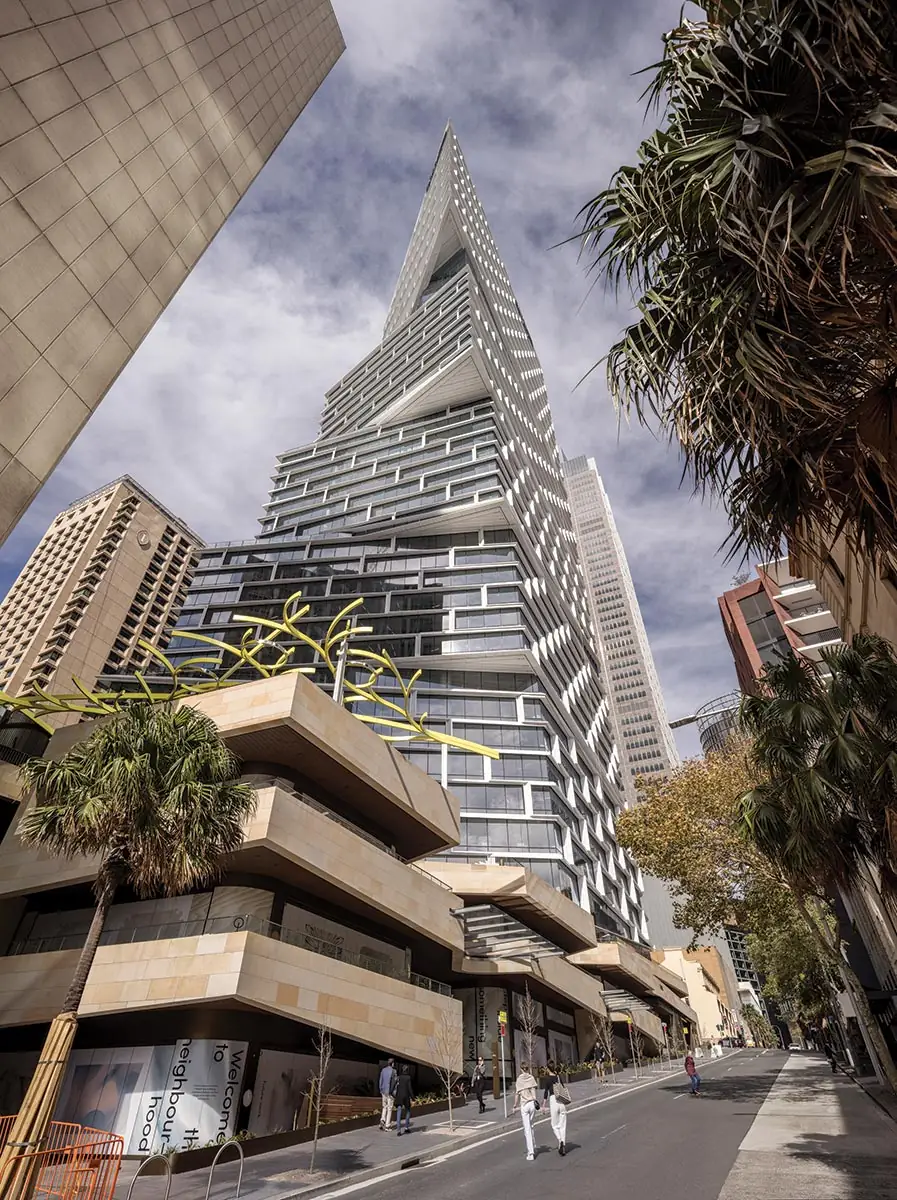
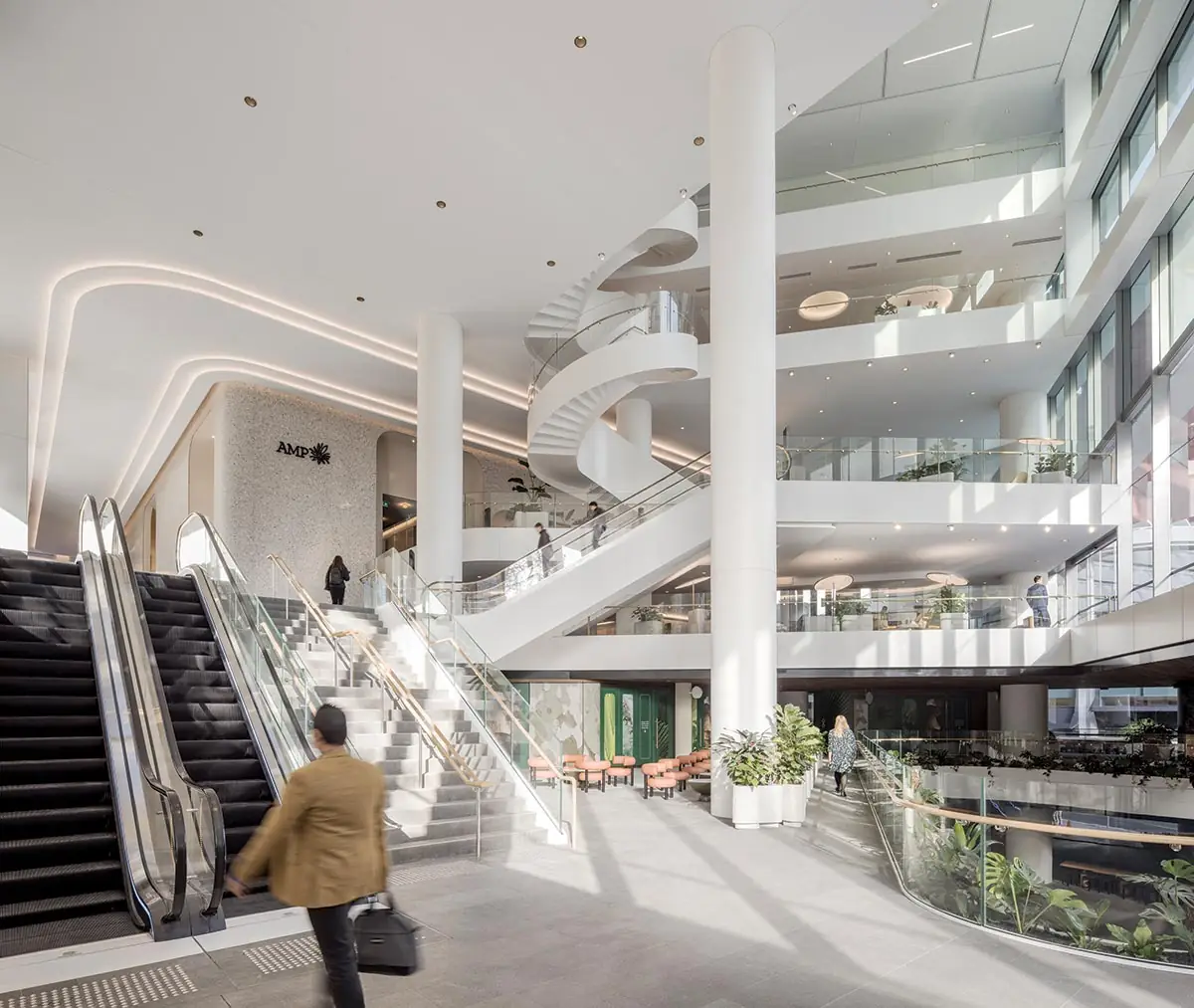
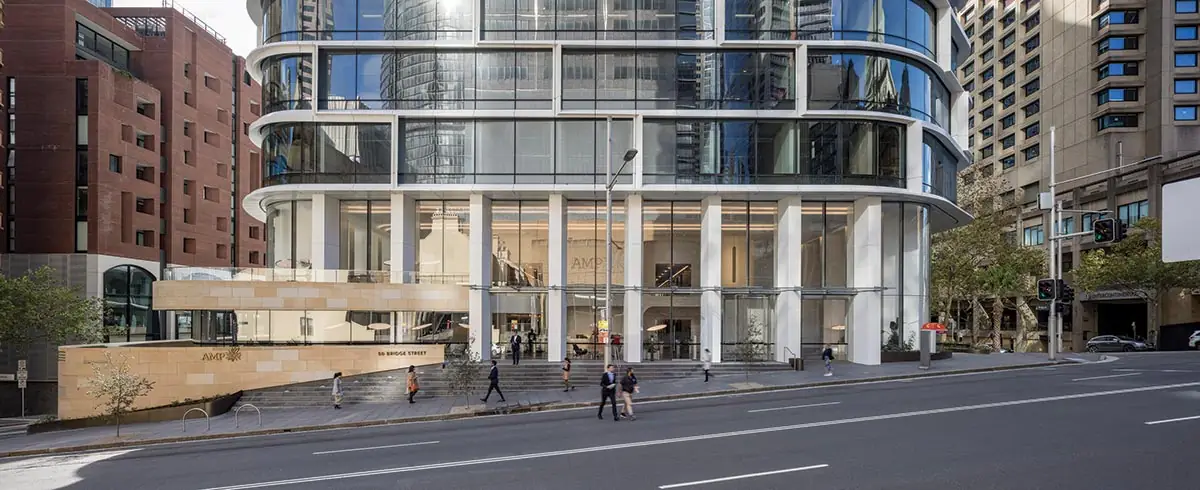
The now-expanded building rises from a new mixed-use podium clad in Sydney sandstone, the material of many of the neighboring historic buildings. The platform establishes a level ground plane on the steep site as it slopes sharply from the primary entrance on Bridge Street northward, toward the harbor. The podium houses a spatially dynamic, loftlike multilevel lobby and offers dining and retail options, aimed not only at QQT tenants but at the surrounding blocks of the CBD. And on the podium’s roof, a publicly accessible park is sheltered under a trellis by Icelandic-Danish artist Olafur Eliasson.
1
2
The tower’s site slopes up from the harbor (1) to the main entry on Bridge Street (3), allowing for a multilevel lobby (2). Photos © Adam Mork
3
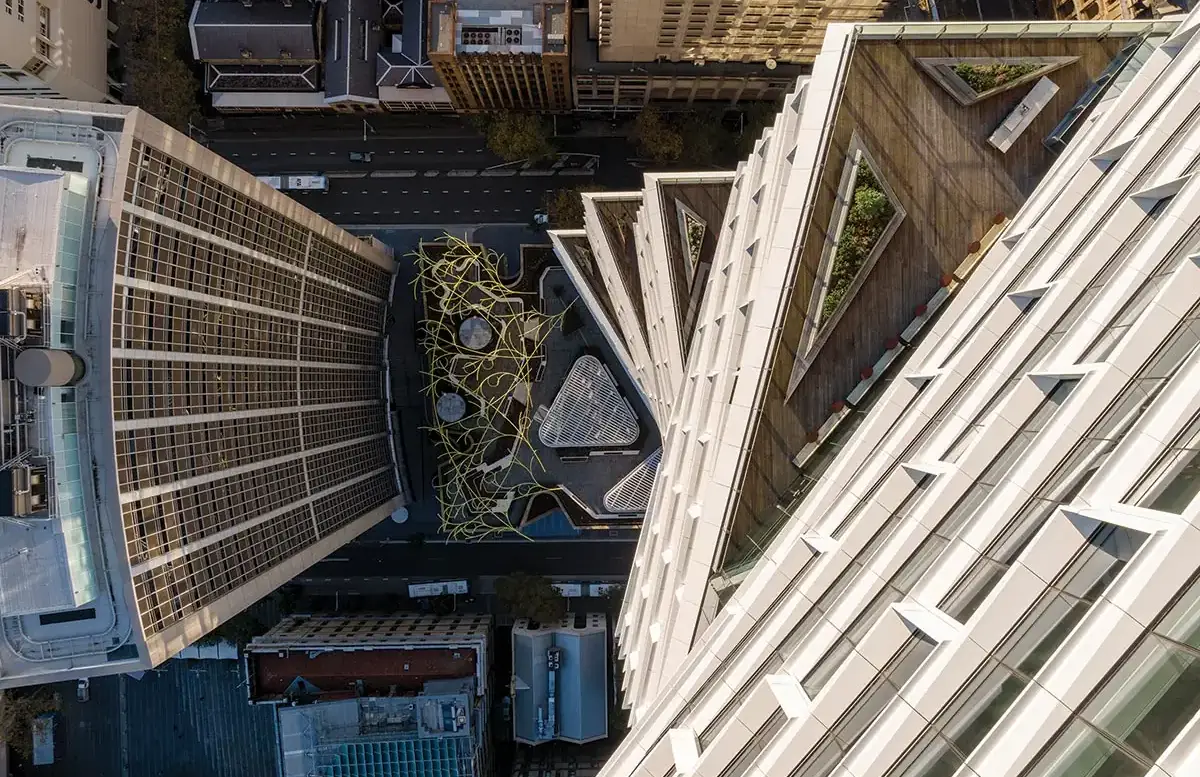
From this base, QQT’s office levels are stacked in five blocks, each twisting to take full advantage of the maximum allowed envelope while making the most of views of the trusses of the Harbour Bridge, the “sails” of Jørn Utzon’s Opera House, and the ferries coming and going from Circular Quay. Creating the tower’s geometry, with floor plates that are now about 22,000 square feet (up from 13,000 square feet), involved sacrificing the northernmost portion of the older building’s square-in-plan “tube-in-tube” structure, so called because of its closely spaced perimeter columns and placement of its core. The revamp process included grafting on new floor plates and then enclosing the expanded volume in a new glass curtain wall, which is in turn wrapped within an aluminum brise-soleil. Its grid pattern steps in alternating directions to distinguish each stack of floors from the next.
But the grid is more than aesthetic. “Its design is informed—it isn’t just form,” quips Holt. Depending on the facade’s solar orientation, the depth and profile of the brise-soleil’s blades vary to cut heat gain by more than 30 percent, lowering mechanical cooling requirements and thereby reducing operational carbon. In addition, the brise-soleil dispenses with the need for blinds, which would—for at least part of the day—block the all-important views.
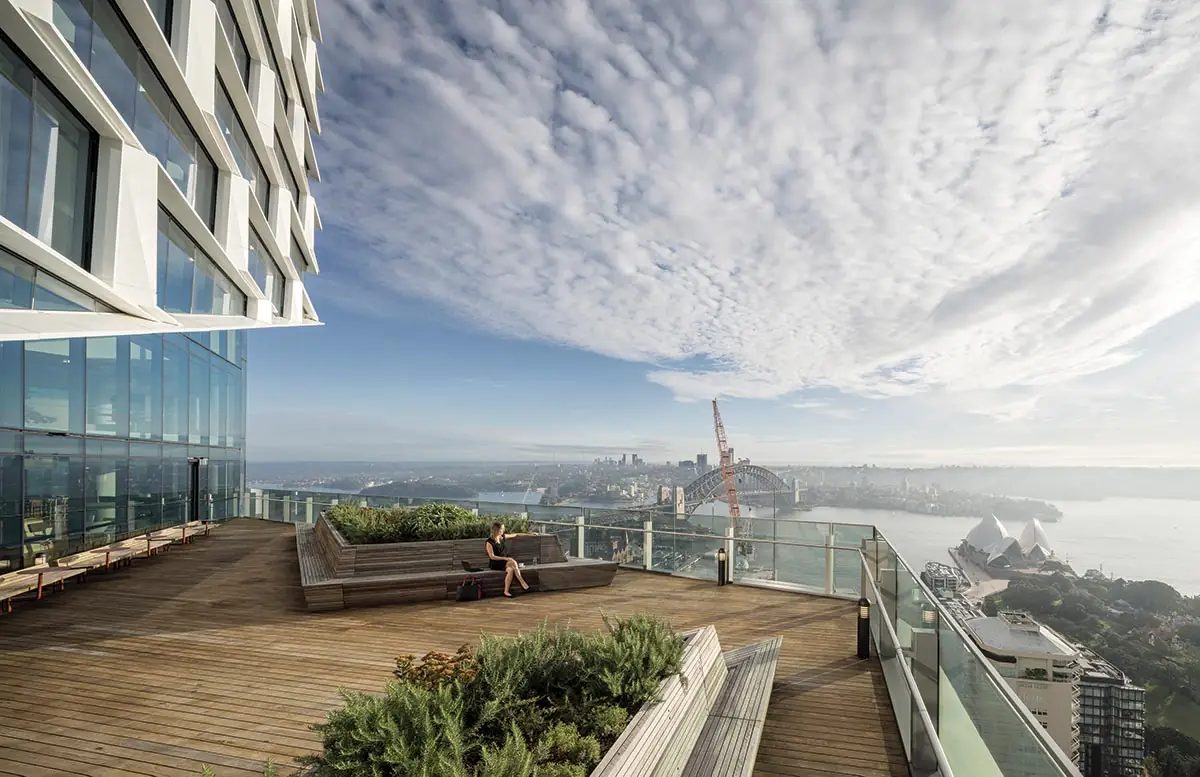
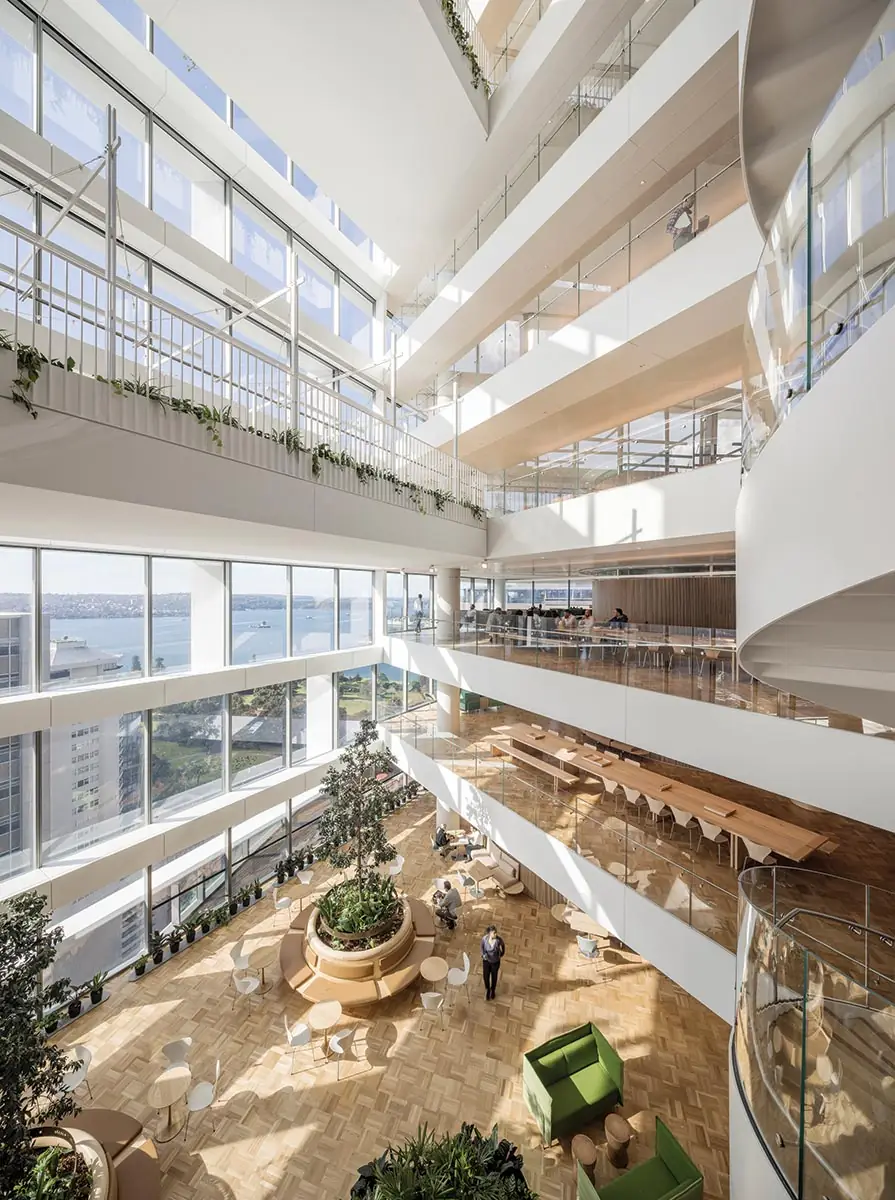
Within QQT’s stacked blocks, the office space is organized as a series of vertical “neighborhoods,” each focused on its own multistory social space at the building’s northern edge and a rooftop terrace at the base of each stack. The atria, which tenants and visitors see as soon as they get off the elevators, serve, says Holt, to democratize access to the tower’s stunning vistas. They also drive daylight deep into the tower’s footprint, and allow for workspaces with an airy, informal feel that clearly appeals to tenants: As of late last year, the tower, completed in April, was already 95 percent leased—impressive performance in this work-from-anywhere era.
Looking for quick answers on architecture and design topics?
Try Ask RECORD, our new smart AI search tool.
Ask RECORD →
4
The arrangement of blocks of floors that twist and cantilever creates the opportunity for terraces (4 & 5). Photos © Adam Mork
5
QQT is believed to be the largest and tallest building-transformation project anywhere. And, as one might expect, adaptive reuse at such a scale comes with a host of engineering and construction complexities. Chief among the challenges was the differential settlement between the new construction, which consists of concrete-filled steel-tube columns and steel beams, and the old building, with its concrete frame. “Usually, we just have to connect a tower to the ground, but here we also had to connect to an existing structure,” says Tom Benn, a senior associate with structural consultant BG&E. The concern was that shrinkage of the new construction would pull the existing core and its adjacent columns downward, affecting all facets of construction, including the elevators and the facades. The solution was to leave a temporary gap between the building’s old and new portions, tying the two together permanently only after the new construction had substantially settled.
6
The original 1970s tower (6) had closely spaced, view-obstructing perimeter columns, in contrast to QQT’s vertical villages, with their stunning harbor vistas (7). Photos © Adam Mork
7
The designers and contractors not only had to take vertical settlement into account—they also had to consider lateral movement, for the completed, expanded structure, and for the new and old portions during construction. Predicting this performance, however, was complicated by the unconventional construction sequence that entailed top-down demolition happening concurrently with new construction at the base. Throughout the process, the engineers tracked building movements with a variety of low- and high-tech instruments, including plumb bobs, strain gages, tilt sensors, and accelerometers. This “structural health monitoring” allowed verification of the accuracy of the engineers’ early structural simulations and constant calibration of QQT’s digital twin, and provided a keen understanding of the retrofit needs for the older building. Along with some 1,600 core samples taken from the 1970s tower, the dynamic 3D model helped engineers pinpoint places where reinforcement was needed, adding such elements as steel jackets to increase compressive capacity and carbon-fiber laminates to strengthen for tension.
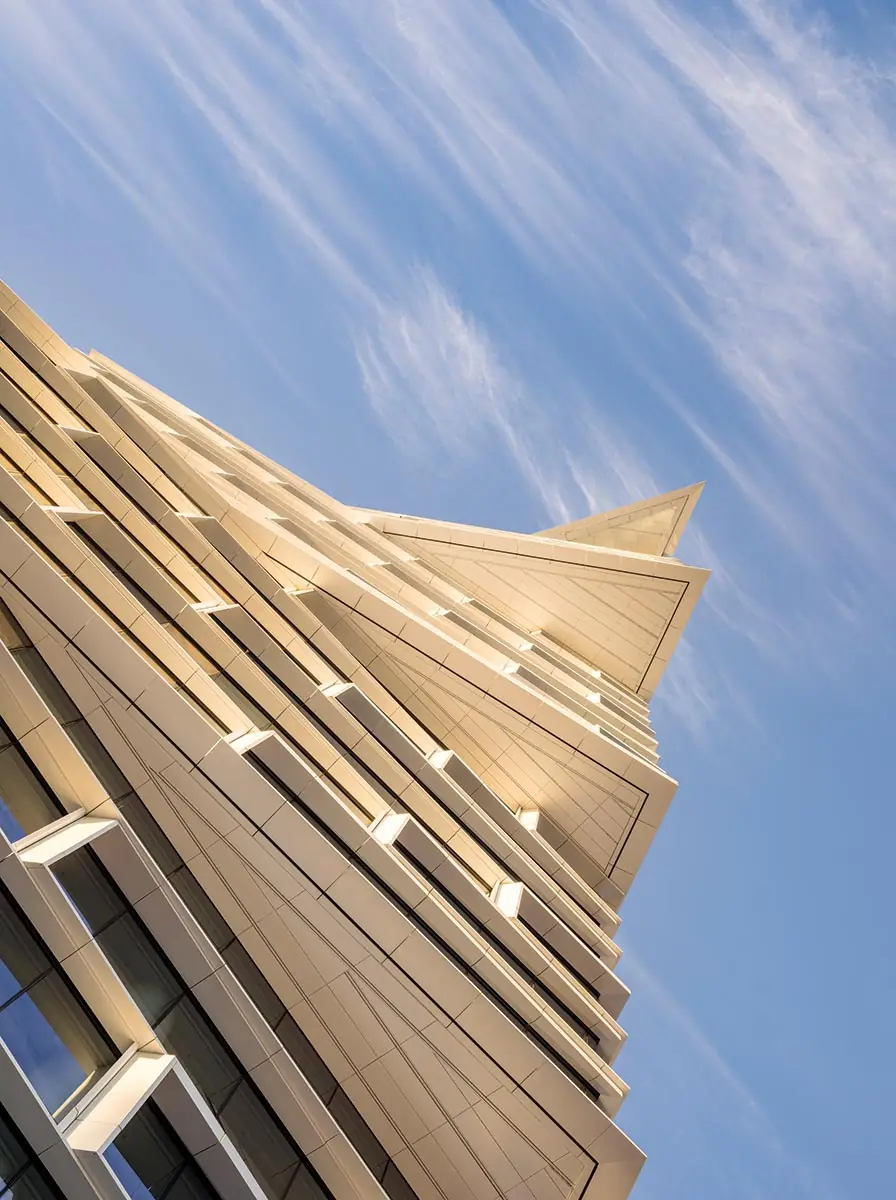
Photo © Adam Mork
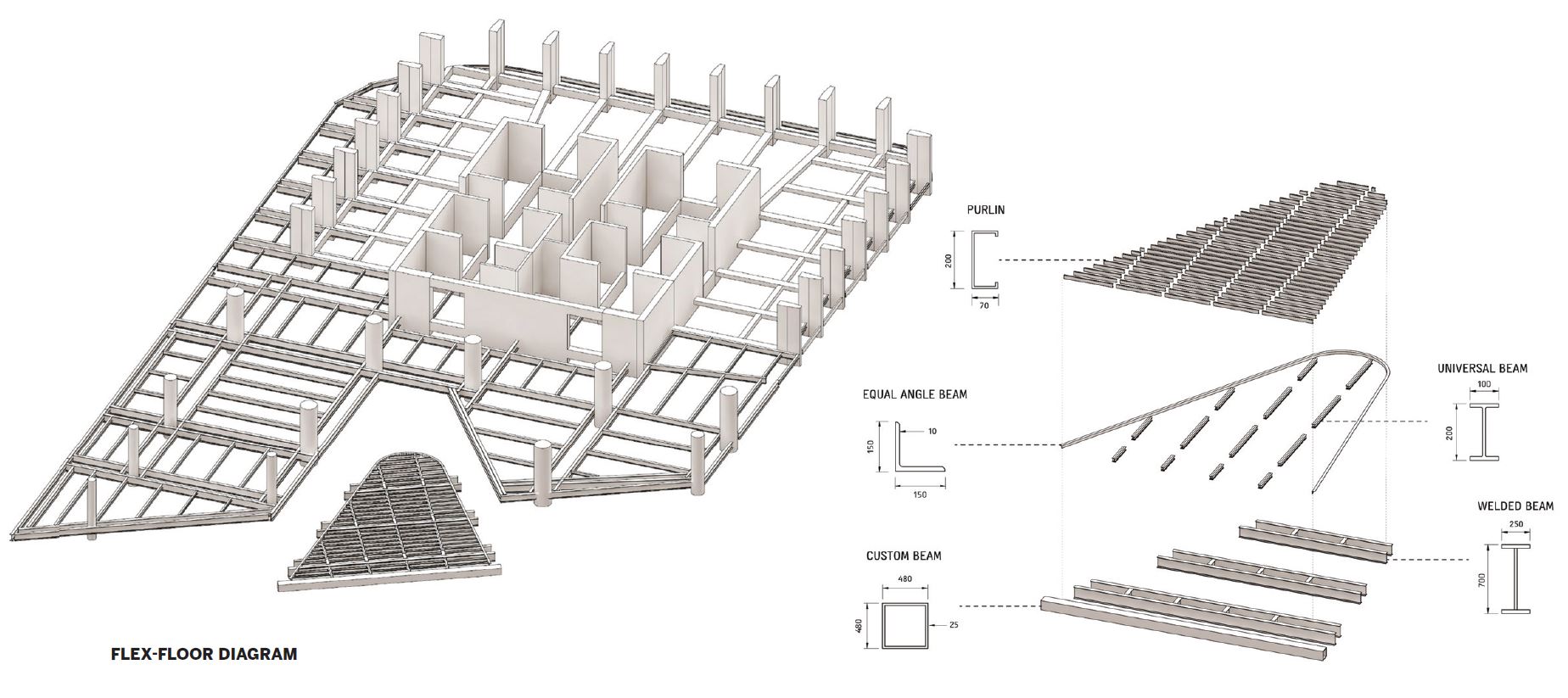
One of QQT’s most ingenious features is its “flex floors”—floors above and below the atria that have been configured to be removed, should tenants wish to extend their vertical neighborhood. The connections are primarily bolted, rather than welded, and the elements in the IKEA-like kit of parts are sized so they can be taken out of the building in the freight elevator without the need for temporary lifts or external scaffolding. Levels currently without such infill floors have connections ready that would allow their insertion if tenants so desired. It is a testament to the quality of the workspaces that 3XN has created that no tenant so far has chosen to fill in its atrium, prioritizing daylight, views, and social space over more occupiable square feet.
That the expanded tower has been designed with further transformation in mind should help keep it viable well into the future. QQT offers a model for the many outmoded mid- and late 20th-century office buildings in cities globally, demonstrating that they can be reimagined, rather than demolished. The project shows that aging commercial towers can be redefined to create world-class workspaces—without the huge environmental toll of new construction.
3XN partner Fred Holt is a featured speaker at the forthcoming Boston edition of Record on the Road on June 20.
Click graphic to enlarge
Click graphic to enlarge
Click graphic to enlarge
Click graphic to enlarge
Credits
Architect:
3XN — Kim Herforth Nielsen, founder & creative director; Fred Holt, partner in charge, 3XN Australia; Jeanette Hansen, Audun Opdal, partners; Alyssa Murasaki Saltzgaber, project manager
Architect of Record:
BVN
Consultants:
BG&E and ADG (structure); Arup (m/e/p, fire, facades); ASPECT Studios (landscape); Design Research Studio (lobby and market hall interiors); Studio Olafur Eliasson/Studio Other Spaces (public artwork)
General Contractor:
Multiplex
Client:
AMP Capital
Size:
1.1 million square feet
Cost:
$600 million
Completion Date:
April 2022
Sources
Podium Stone:
Deemah Stone
Podium Glazing:
G. James
Facades:
Sharvain Projects
Lobby Feature Wall:
Terrazzo Australian Marble
Feature Stairs:
Icon Metal, Top Knot Projects
Raised Floors:
ASP Access Floors
Glazed Balustrades:
YAP Engineering
Vertical Transport:
Schindler
Tuned Mass Damper:
Visotech
Looking for a reprint of this article?
From high-res PDFs to custom plaques, order your copy today!


.webp?height=200&t=1756301506&width=200 "CocoliaHotel_Mazunte_PremiumOceanView (13).jpg")