Sourcing Sustainable Timber Starts with the Forest
Wood is an ages-old construction material—but it is one that is receiving renewed attention, especially with the rise of mass timber. This group of engineered-wood products offers the possibility of, rather than extracting the raw materials for our buildings and cities from the earth, growing them instead, capturing climate-warming greenhouse gases in the process. But is timber always good for the environment? Or is it simply less bad than mineral-based materials such as concrete and steel?
Answering these questions is far from straightforward, but it starts with where the wood is grown. Managing a forest sustainably involves balancing productivity with protection of water bodies, preservation of wildlife habitat, and consideration of carbon and climate. “Exemplary forestry is a holistic look at all three,” explains Jennifer Shakun, bio-economy-initiative director of the New England Forestry Foundation, a land trust and conservation organization.
One tool that can help determine if a wood product originated from such a forest is certification. The most dominant wood-certification labels in North America are those administered by the Forest Stewardship Council (FSC) and the Sustainable Forestry Initiative (SFI). These programs take into account such factors as the size of clear cuts, levels of live-tree retention, pesticide use, and the protection of threatened and endangered species. Of the two, FSC is considered the more stringent, with SFI-sanctioned practices being equivalent to what Canadian and U.S. regulations already require. “FSC is more robust,” says Amy Leedham, U.S. carbon practice leader for sustainability consultancy Atelier Ten. “It addresses more criteria in more depth,” she says. But there is a rub: FSC products are not always available, and the certification process can be expensive, putting it beyond the reach of small private landowners and tribally managed forests.
The best management practices promote forest ecosystems that sequester more carbon. However, estimating just how much biogenic carbon is in any given wood product is tricky. One reason is that most life-cycle assessment (LCA) calculators—tools that quantify the environmental impacts of manufactured products—use national data sets that do not account for the wide variation in practices at individual forests. “With current LCA tools, it is hard to understand the underlying assumptions,” says Jacob Dunn, a ZGF associate principal. In collaboration with the University of Washington’s Applied Research Consortium, the firm is trying to remedy this situation through its UpStream Forestry Carbon & LCA Tool. Currently in public beta testing, the open-source calculator aims to make underlying data transparent and easy to manipulate. “The idea is to help designers better understand the dynamics between the forests and the wood products that come from them.”
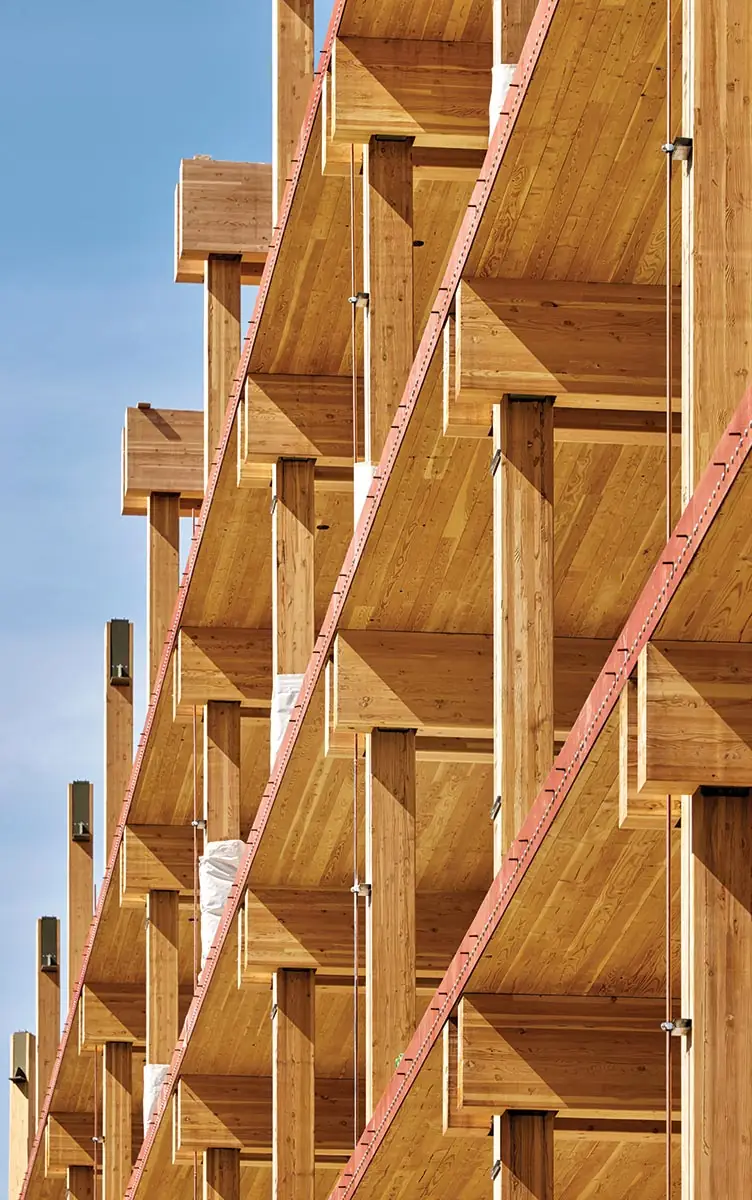
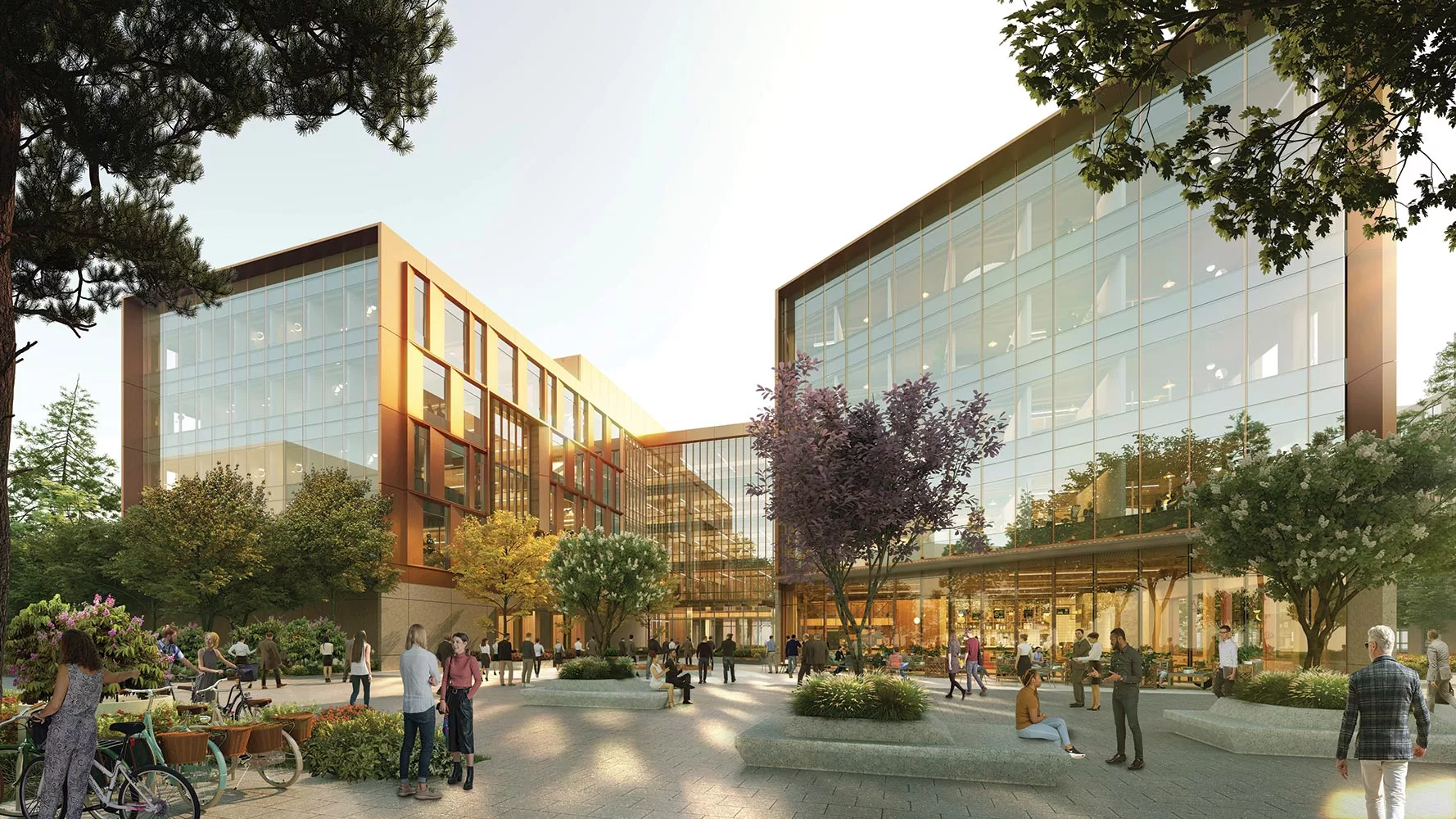
SOM’s COB3 (top of page) has a frame (above) designed for disassembly. Photo © Cesar Rubio, click to enlarge.
Given current limitations, one of the best ways for architects to get a handle on where the wood products they are specifying are coming from is to work directly with manufacturers, asking them detailed questions. For instance, the team behind COB3—a $230 million SOM-designed mass-timber office building for San Mateo County, nearing completion in Redwood City, California—evaluated potential fabricators for the building’s custom-engineered cross-laminated timber (CLT) floor panels. They researched manufacturers’ capability for panel size and limitations on bearing capacity, but also investigated their supply chains. The Montana fabricator eventually selected was less than a mile from the forest where the timber was harvested and was next door to another plant making fiberboard from CLT scraps.
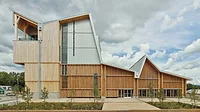
Increasingly, project teams are tailoring the wood-sourcing process to reflect the priorities of their clients. Portland, Oregon–based LEVER Architecture did so on the $10.8 million 19,800-square-foot headquarters it designed for the grant-making organization Meyer Memorial Trust. Completed in 2020 in Portland’s Lower Albina neighborhood, the sawtooth-roofed building has structural components fabricated primarily from mass plywood—a large-scale engineered panel made of wood veneers. The building also incorporates numerous other wood products, including roof trusses, flooring, and ceilings. For Meyer, the construction process and the procurement of these materials was an opportunity to advance its mission of racial, social, and economic justice, particularly in Oregon.
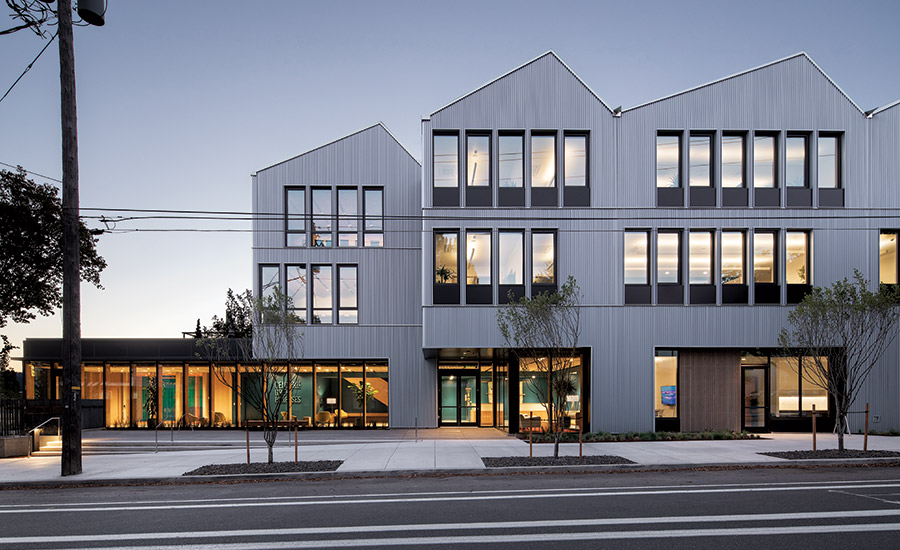
The sourcing criteria for LEVER’s Meyer Memorial Trust project reflected the values of the owner. Photo © Jeremy Bittermann
Meyer worked with the nonprofit Sustainable Northwest to develop procurement guidelines that went beyond forestry and manufacturing processes, also considering a supplier’s proximity to the site, minority and small-business ownership, and cost. The premium for this strategy was negligible, amounting to less than $25,000, or about three percent of the $745,000 wood package. But the modest investment had an outsize impact. Over the building’s 12 categories of wood products, 10 were grown and manufactured in Oregon. Minority-owned companies were involved in the purchase and installation of six of the 12, while small businesses were responsible for seven. Nine of the products were sourced from forests that were determined to be ecologically managed. The project influenced sites beyond the building, says Thomas Robinson, LEVER founder.
Looking for quick answers on architecture and design topics?
Try Ask RECORD, our new smart AI search tool.
Ask RECORD →
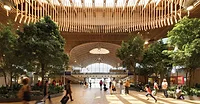
The revamp of the main terminal at the Portland International Airport is another project with custom-tailored sourcing criteria, but one that is taking the approach to a whole new scale. Designed by ZGF, the $1.8 billion expansion, currently under construction, has a 380,000-square-foot wavelike roof being built from over 2.6 million board feet of glulam beams and 400,000 square feet of mass-plywood panels. For the terminal’s owner, the Port of Portland, transparency and traceability were key. “They wanted to know the timber’s local story,” says Dunn. “They wanted to know who owned the land and how they were stewarding it,” he says.

Timber transparency and traceability were key priorities for ZGF's terminal expansion at PDX. Image © Port of Portland/ZGF
Virtually all the wood products used in the terminal can be traced back to individual landowners and mills in Oregon and Washington State, or are FSC-certified. Much of the timber originated from small, family-owned forests or from Pacific Northwest tribal lands. About 370,000 board feet for the glulam elements came from the forests of the Yakama Nation, for whom the land has spiritual and cultural importance but is also a source of water, food, and revenue. The tribe’s forest-management practices include thinning from below to leave the largest and healthiest trees, generous buffers around waterways, and “no-harvest” protected areas. Such owners “have a fundamentally different relationship to the land compared to large, industrialized operations,” says Dunn.
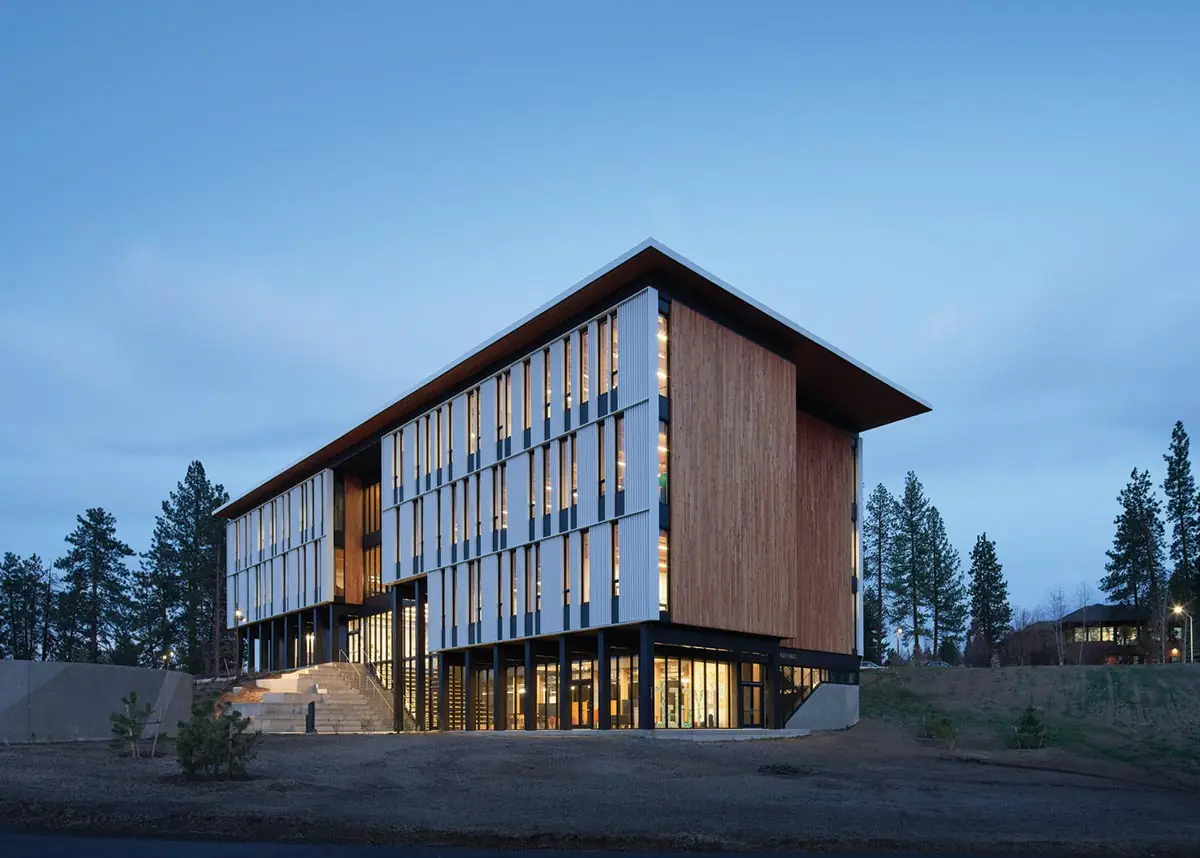
Even when the wood comes from exemplary forests, it is still crucial that it be used thoughtfully, say timber specialists. SRG Partnership discovered just how critical the judicious use of timber can be on Edward J. Ray Hall, a $49 million, 50,000-square-foot lab and classroom building the Seattle-based architecture firm designed at Oregon State University-Cascades in Bend. Completed in 2021, the four-story mass-timber structure includes glulam columns and beams, CLT floors with concrete topping slabs, and concrete cores. Initial schemes were based on a column spacing of 13 feet 4 inches. But, through extensive analysis, it was determined that shortening this distance would result in significant materials savings. A 10-foot column spacing—which is what was eventually built—permitted CLT with fewer plies, which in turn allowed shallower beams, translating into a 25 percent reduction in wood fiber. Although the architects did not quantify the two schemes’ embodied carbon, it is logical to conclude that the closer spacing produced meaningful savings, since it also made possible a 3 percent reduction in concrete, and an overall reduction of 10 percent in building mass. Notably, it shaved $10 per square foot from the construction cost. “The analysis underscores the importance of whole-systems thinking,” says Lisa Petterson, SRG principal in charge.
1
Closer column spacing at SRG’s building for the University of Oregon-Cascades (1 & 2) saved material. Photo © Kevin Scott (1), courtesy SRG Partnership (2)
Click graphic to enlarge

2
Using timber wisely also includes considering what will happen to the material once the structure has reached the end of its useful life. Buildings, the experts say, should be detailed to increase the chances that components will be reused rather than discarded. At SOM’s COB3, details that will decrease the likelihood that its components will end up in landfill—where they would return their stored carbon to the atmosphere—include steel bucket connections at the base of each glulam column in the H-shaped five-story building. Their threaded rods and nuts could be unscrewed, if necessary, says Eric Long, a structural engineer and SOM partner.
Other features of COB3 were conceived to prevent its obsolescence. The building anticipates changes, with structural bays designed to accommodate a variety of open- or closed-office configurations. Precut penetrations in the building’s beams, which will in large part remain exposed, should allow for the necessary infrastructure, regardless of workspace layout, including lighting, mechanical systems, and sprinklers. “The future has been built in from day one,” says architect Francesca Oliveira, an SOM principal.
COB3’s forward-looking strategy demonstrates the relevance of design in addressing climate, and how decisions made now, starting with the forest but extending to the building’s frame, can affect the future. “The reality is, our choices have an impact,” says LEVER’s Robinson. Architects need to be cognizant of that, he says, designing for the larger materials landscape. “It is a role for architects to play.”
Looking for a reprint of this article?
From high-res PDFs to custom plaques, order your copy today!