Turning Inaction into Action: Key Takeaways from COP29
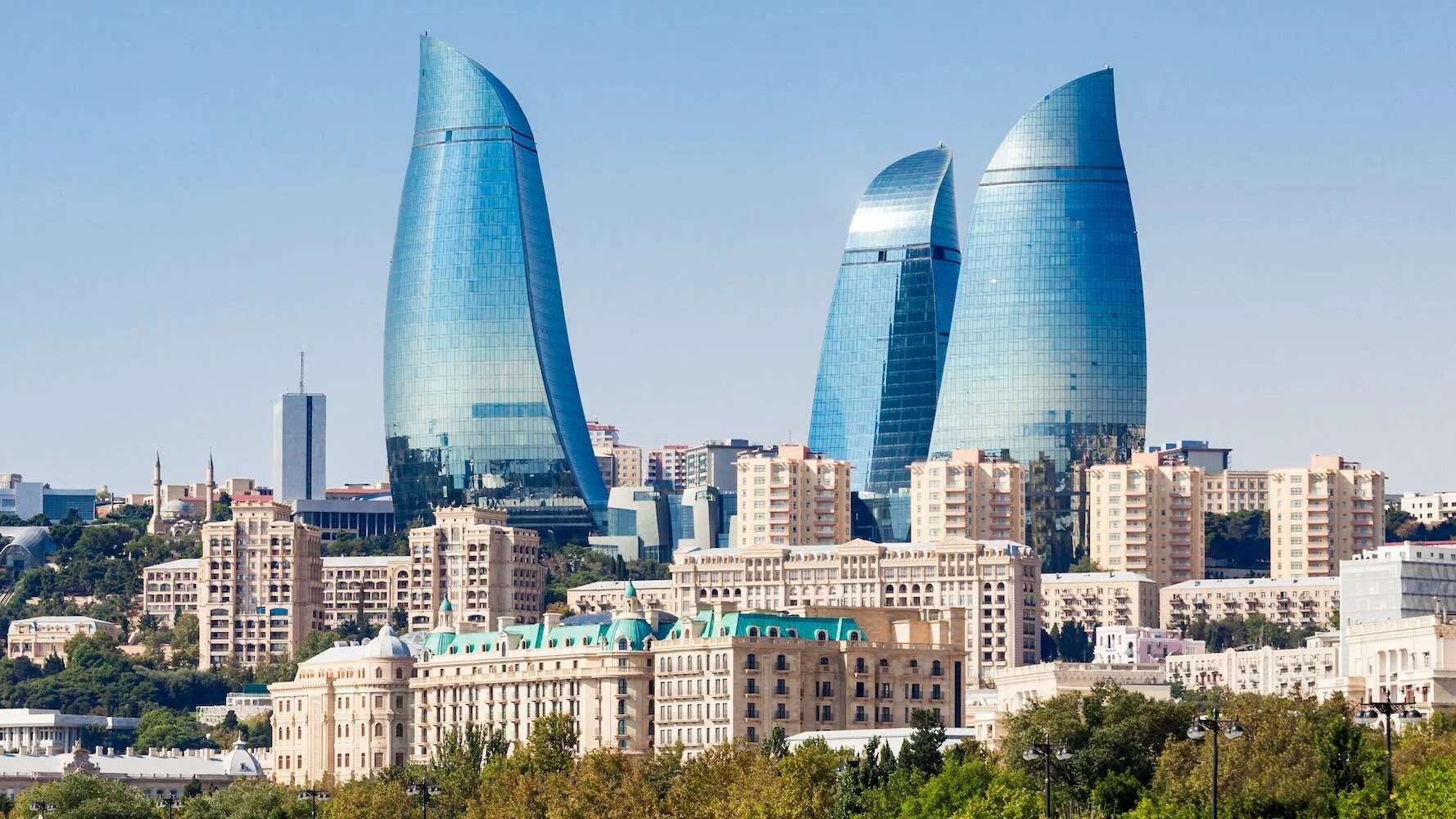
Skyline of Baku, Azerbaijan, including the HOK-designed Flame Towers. The city served as host of this year's United Nations climate talks. Photo by saiko3p, Shutterstock
Were the UN climate talks held last month in Baku, Azerbaijan, a success? A dismal failure? According to Yasemin Kologlu, the outcome of the 29th Conference of Parties (COP29) fell somewhere in between. The global policy discussions and national commitments that the nearly two-week-long event produced will not be enough to stall the Earth’s warming, she says. However, they offer glimmers of hope.
Kologlu is a senior fellow at Architecture 2030 and is founder of Futureeq, a climate action and sustainability consultancy. Before joining Architecture 2030 and starting her own company, Kologlu was a principal at Skidmore, Owings & Merrill (SOM), where she created its firm-wide Climate Action Group, focused on decarbonization of the SOM’s operations and its projects. While at SOM, she led the design and implementation of projects that include Urban Sequoia, a radical proposal for a carbon sequestering high-rise; a master plan for the net-zero-carbon district Charenton-Bercy, in Paris; and Karlatornet in Gothenburg, Sweden, the tallest near-net-zero tower in Scandinavia.
Kologlu joined an influential group of government ministers, policy makers, architects, engineers, and researchers at COP29. She attended as a part of a delegation representing Architecture 2030. These are her takeaways.
A turning point for the built environment
Over the past decade, the built environment has been a significant contributor to global carbon emissions. According to the Global Status Report for Building and Construction, last year we observed a small, but encouraging decline of almost 1 percent in operations and construction related energy demand compared to 2022—a trend projected to continue in the next year. I believe we have reached a peak and are now on a downward trajectory. The collective efforts of those in the design and construction industries is beginning to show measurable impact. We should celebrate this milestone, but then we must focus our actions to accelerate this momentum.
COP29 marked the launch of several encouraging initiatives that will advance this downward trend in emissions. Under the leadership of Brazil, France, and Kenya, alongside many other nations, the newly inaugurated International Council for Buildings and Climate will address the building sector’s climate impact, foster global collaboration, and advance policy development. Building on developments from COP28 in Dubai, the Breakthrough Agenda unveiled the ‘Baku’ International Priority Actions. The plan brings together 61 nations—representing 80 percent of global emissions—and targets high-carbon sectors, including energy, and steel, as well as construction. The actions will help drive net-zero emissions and resilient buildings towards 2030 and beyond.
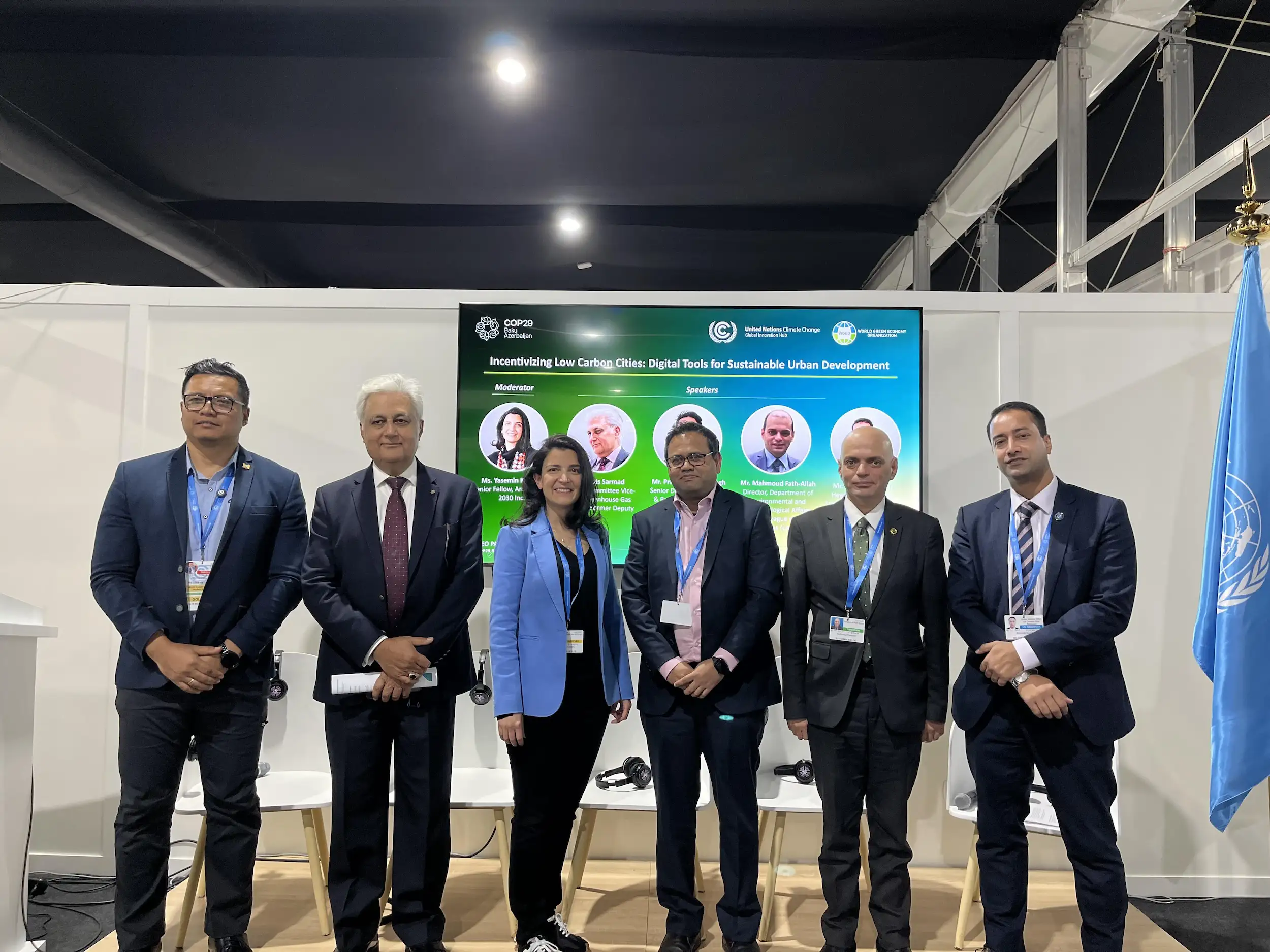
Speakers, pictured left to right: His Excellency Marciano Dasai, Minister of Spatial Planning and Environment of Suriname; Ovais Sarmad, Vice Chair of Greenhouse Gas Protocol Steering Committee; Yasemin Kologlu, senior fellow at Architecture2030; Pramod Kumar Singh, senior director of Research & Programmes, Alliance for an Energy Efficient Economy, India; Mahmoud Fath-Allah, director at Department of Environmental and Meteorological Affairs, League of Arab States; Animesh Kumar, head of United Nations Office for Disaster Risk Reduction Office in Bonn. Photo courtesy WGEO, World Green Economy Organization
In March 2025, nations will submit the next generation of their Nationally Determined Contributions (NDCs) and their National Adaptation Plans (NAPs). Taken together, the NDCs and NAPs outline a country’s climate ambitions and describe the mitigation and adaptation efforts it will undertake. These documents will define climate actions in our industry. I will be looking for how nations plan to address sufficiency, build capacity, increase capability and knowledge in our sector, as well as how culture, local wisdom, and contextual responses will continue to push the built environment forward.
A shared commitment to climate financeA major outcome of COP29 was the announcement of the New Collective Quantified Goal on Climate Finance, which will triple funding for developing countries from the previous $100 billion to $300 billion annually by 2035. While this new fund is a step forward, it is too little too late. The $1.3 trillion requested by many nations was the real target, and 2035 is far too distant. Although this shared frustration radiated across all nations, it seems that the binary between developing and developed countries is beginning to fade—giving me hope that the division between nations in climate conversations is shifting, and that we are moving towards a more unified approach.
Looking for quick answers on architecture and design topics?
Try Ask RECORD, our new smart AI search tool.
Ask RECORD →
At COP29, it was easy to feel frustrated by what appeared to be a lack of ambition and action from some nations. Yet it served as a reminder that change doesn’t always happen in the ministerial chambers. It is driven by us—in the private sector, through nonprofits, and within subnational governments and institutions. From geospatial and smart technologies in sustainable cities to sufficiency and low-carbon building systems, we are already creating an impact at a grassroots level, with growing commitment from individuals, companies, NGOs, and local governments. In fact, recognizing the role of subnational initiatives for decarbonizing our cities, many financial institutions such as the European Investment Bank and International Finance Corporation are focusing on new funds available to cities worldwide, both big and small, some even without sovereign guarantees. We are all a part of something bigger—an unstoppable wave of commitment and action that we must continue to propel forward.
As we enter a new political and economic era, if we are disappointed with a lack of action at the national level, I urge us to remember: We can turn others’ inaction into our action. Others’ lack of courage will be our courage. Others’ lack of ambition will be our ambition. Let’s not forget this is a moment in time as we forge ahead to secure the future for generations to come.
Looking for a reprint of this article?
From high-res PDFs to custom plaques, order your copy today!