Architectural Record
search
cart
facebook twitter linkedin youtube
  • Sign In
  • Subscribe
  • Sign Out
  • My Account
Architectural Record
  • NEWS
    • Latest News
    • Awards
    • Interviews
    • Obituaries
    • Podcasts
      • Design:Ed Podcast
      • Sponsored Podcasts
  • OPINION
    • Book Reviews / Excerpts
    • Exhibition Reviews
    • Forum
  • EXCLUSIVES
    • Videos
    • Design Vanguard
    • Top 300 Firms
    • Sponsored Content
    • Sponsored eBooks
    • From the Archives
  • CONTINUING ED
    • Editorial Continuing Ed
    • CE Center
    • CE Academies
  • PROJECTS
    • Buildings By Type
    • Reuse & Renovation
    • Museums & Arts Centers
    • Colleges & Universities
    • Multifamily Housing
    • Interiors
    • Lighting
    • Kitchen & Bath
  • HOUSES
    • Record Houses
    • House of the Month
    • Featured Houses
  • PRODUCTS
    • Products by Category
    • Record Products of the Year
    • Latest Products
  • EVENTS
    • Dates & Events
    • Record on the Road
    • Innovation Conference
    • Sustainability in Practice
    • Women In Architecture
    • Webinars
    • Ad Excellence Awards
    • Submit an Event
  • CONNECT
    • Ask RECORD AI
    • Newsletters
    • Contact
    • Advertise
    • Editorial Calendar
    • Store
    • Customer Service
  • SUBMIT
    • Submission Guidelines
    • RECORD Competitions
  • MAGAZINE
    • Subscribe
    • My Account
    • Digital Edition
    • Current Issue
    • Firm Pass
    • Historic Archive
Architecture NewsOpinion

‘Touristic Intents’ Ponders the ‘Guilt’ of Buildings with Difficult Histories
By Dante A. Ciampaglia
Prora-lead.jpg

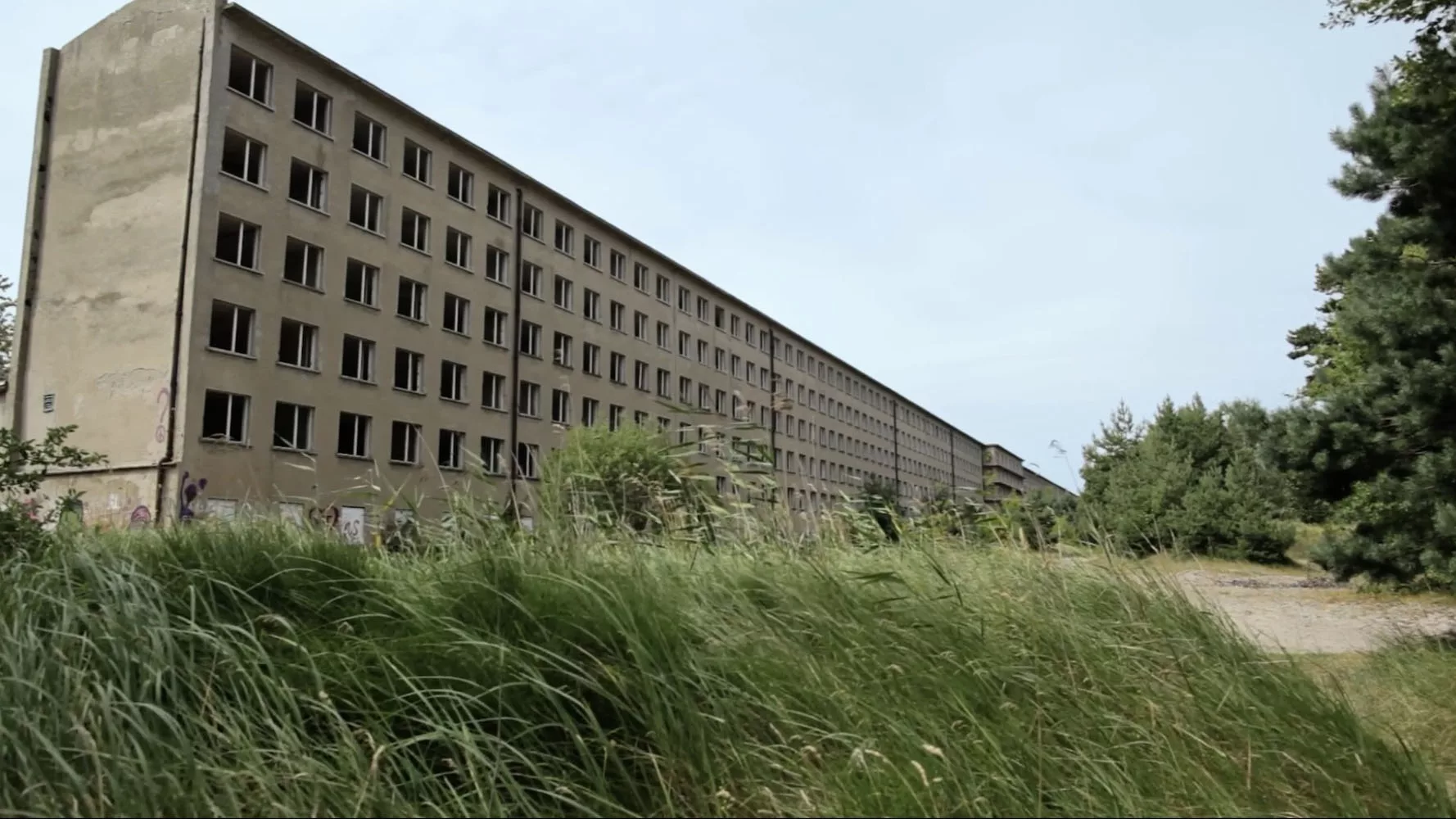
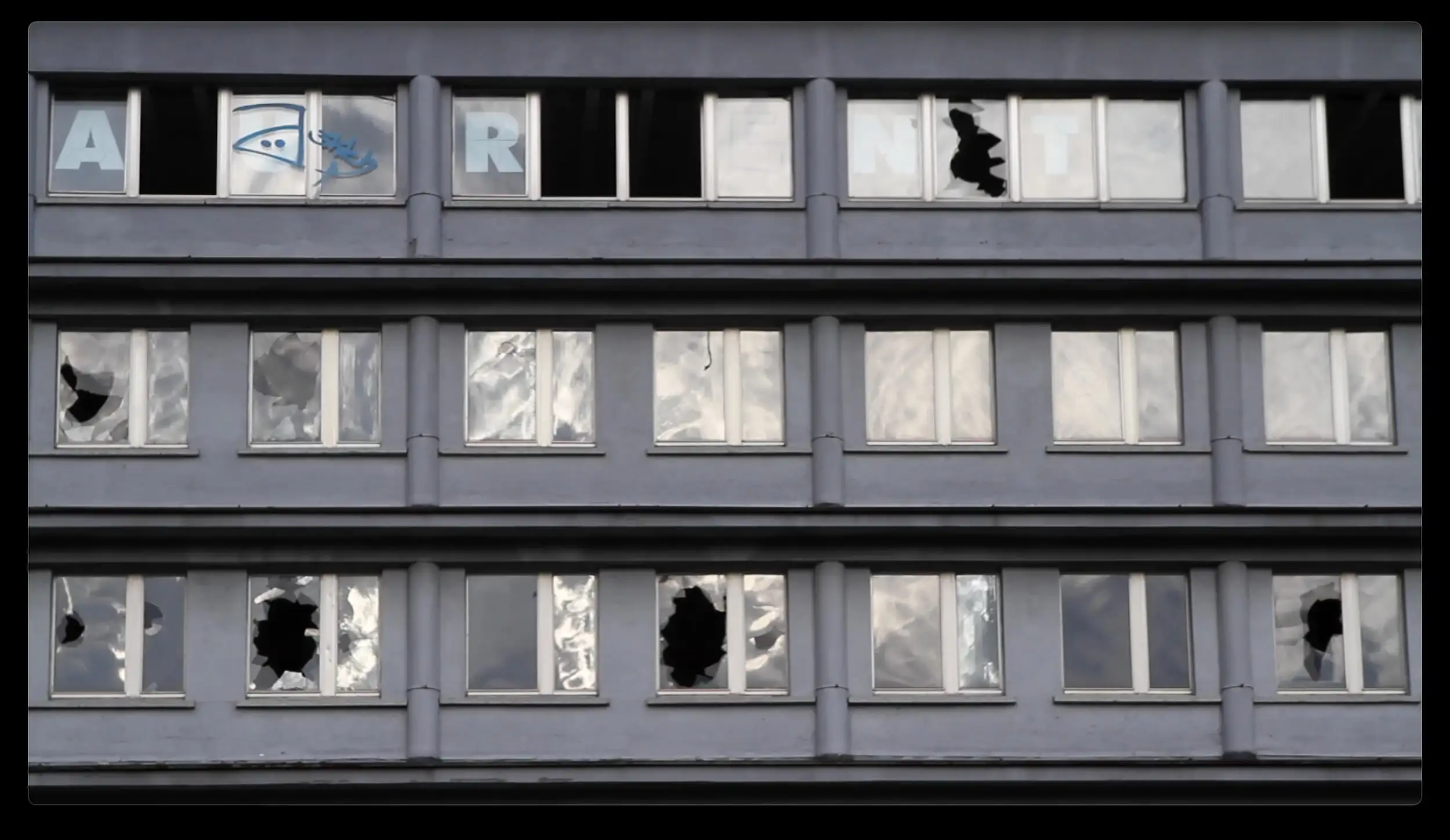
Image of an abandoned building at Prora, Binz, Germany, from Touristic Intents. Film still courtesy First Run Features

January 31, 2025
✕
Image in modal.

Arguing about how and whether to conserve historic buildings can often get complicated. But wrangling over preservation versus redevelopment gets thorny when one side must qualify its position about the future of a space by stating, with zero hyperbole, “We’re not renovating a concentration camp.”
touristic intents.

Courtesy First Run Features

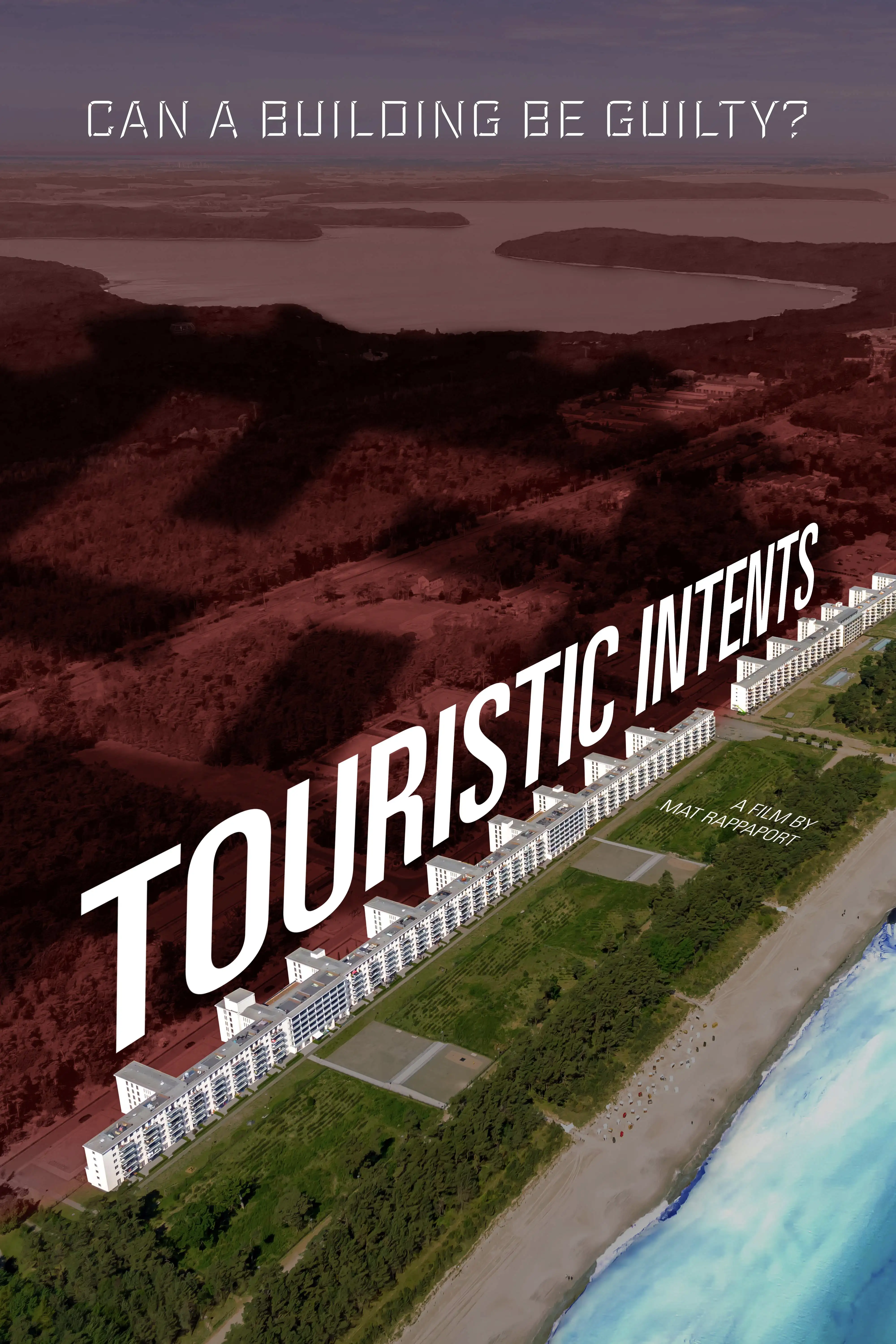
That’s how one developer defends his plans for two sections of Prora, an infamous seaside resort complex on northeast Germany’s Isle of Rügen, in Mat Rappaport’s documentary Touristic Intents. The 75-minute film, which first premiered at the Architecture Film Festival Rotterdam and is now available on streaming services and physical media, asks the provocative—though not exactly novel—question, “Can a building be guilty?” It’s not something we often confront in the United States, but it’s a fact of life in Germany, where countless structures were conceived, initiated, and completed by the Nazi Party. But unlike Albert Speer’s Nuremberg Rally Grounds or the Reich Chancellery in Berlin, where the story and history about these explicitly Nazi spaces is clear, the narrative around what was begun on the Baltic Sea with Prora isn’t so straightforward.
touristic intents.

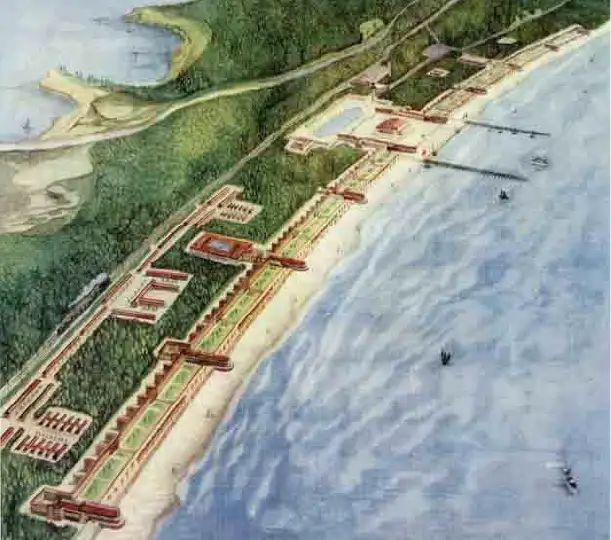
Period illustration of Prora. Courtesy First Run Features

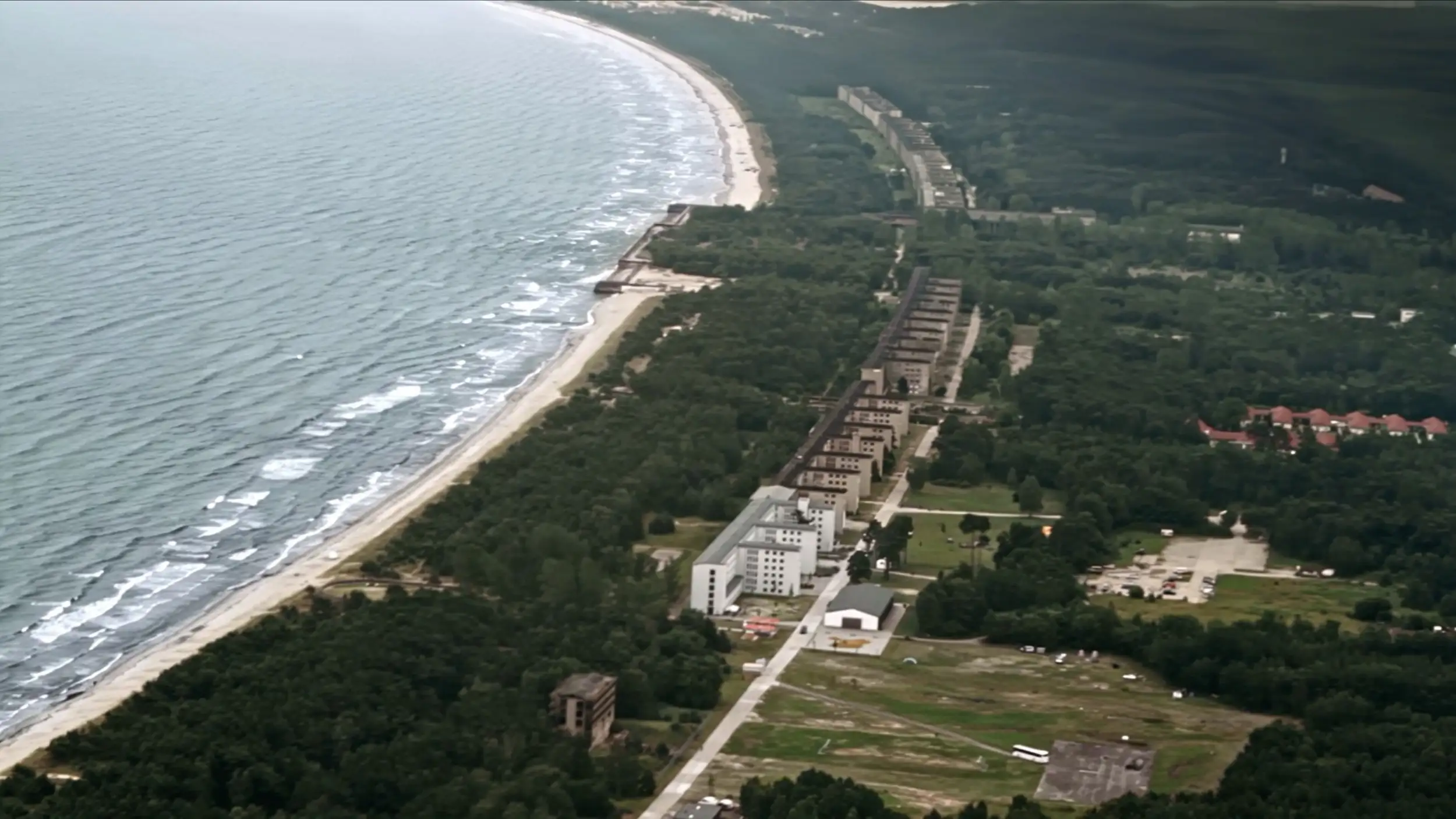
Like most Nazi architecture, Prora is monumental. A ribbon of five identical blocks of resort lodgings, each a kilometer-long and five stories high line a stretch of prime beachfront property. A project of the Nazi organization Kraft durch Freude (Strength Through Joy), it was intended as a leisure palace and place of respite for the Reich’s working class and poor, meant to accommodate 20,000 vacationers.

It was designed by Clemens Klotz, a Bauhaus-trained architect whose “semi-modern” and “watered-down Modernism," as described by historians in the film, allowed him to work in a regime violently antagonistic toward the “degenerate art” of true Modernists. His original concept for the site included a never-realized Neoclassical central plaza, in line with Adolf Hitler’s preferred architectural style. (Klotz won a Grand Prix at the 1937 Paris World Exhibition for his Prora model.)

The first stone was laid on May 2, 1936; construction finally began in April 1938—with work done by enslaved labor; Hitler invaded Poland in September 1939; and the war was on. The Nazis never completed the project, and no tourists ever visited despite staged photos placed in Reich newspapers. What was erected, however, became a military site used to house police battalions—including those that guarded trains bound for Auschwitz. After the war, the German Democratic Republic—East Germany—took control, completed more of the project, and, again, used it primarily as barracks. After the Cold War, Prora was abandoned and fell into disrepair.
touristic intents.

Film still Courtesy First Run Features

Touristic Intents is a fantastic history of a project that likely few outside Germany know. A significant part of the film’s focus is providing context and debunking myths about Prora. No, it was never a secret Communist submarine base; yes, some people vacationed there when it was under GDR control; no, the Nazis never intended to build a leisure-for-leisure’s sake resort—it was always meant to prepare Germans in mind, body, and spirit for the coming war. (It gets bogged down, though, in a discussion about Henry Ford, his ideas about working class leisure, and the Nazis’ fetishization of Ford’s philosophies.) But the film’s primary concern is what’s happening to Prora now, and how that history impacts, or doesn’t, what’s getting built. And in this, viewers will find familiar conflicts.
touristic intents.

Film still courtesy First Run Features

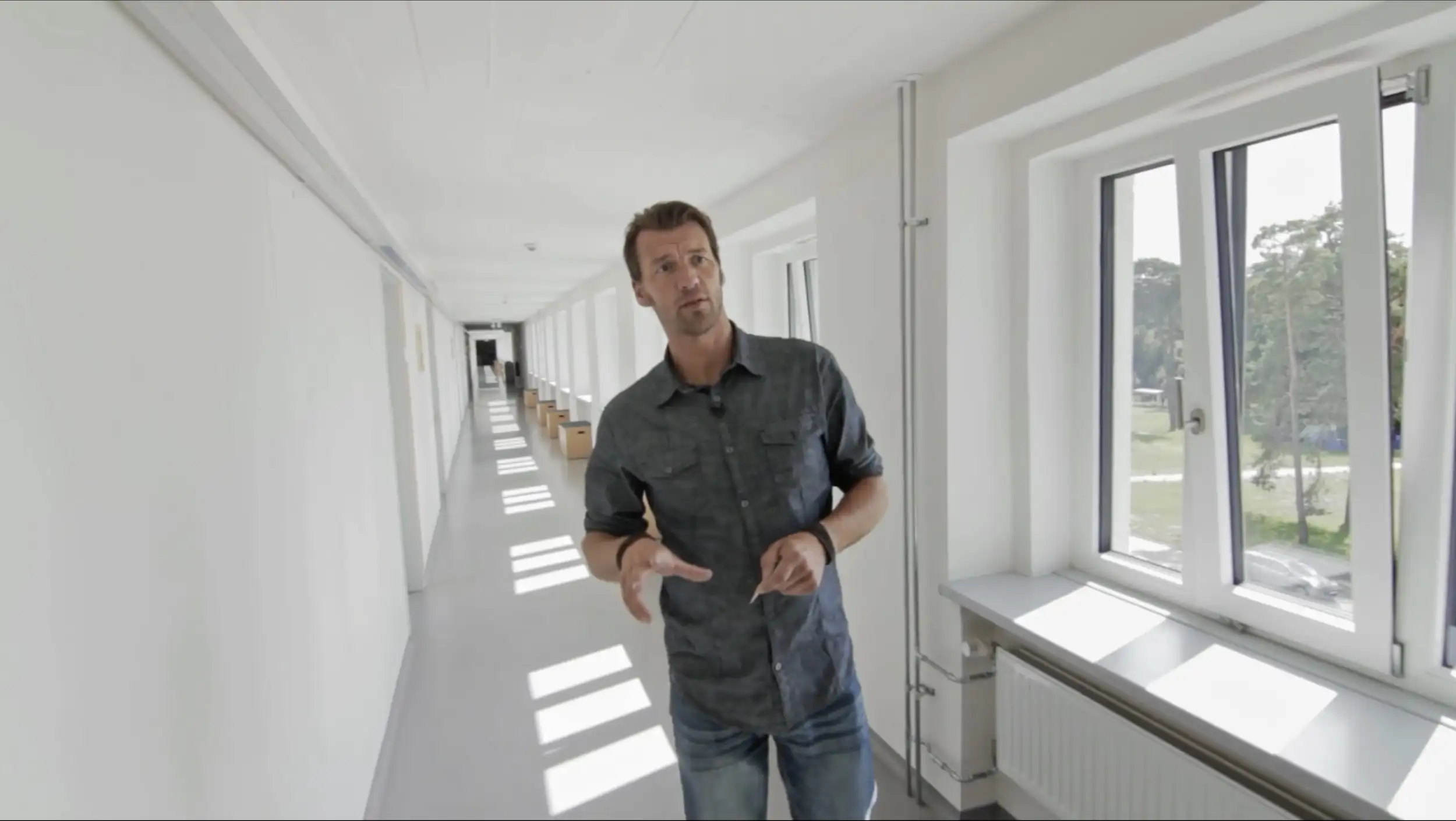
On one side are historians and cultural institutions committed to preserving Prora as a site of memory and truth; on the other are developers who see an enormous investment opportunity. A 500-bed hostel occupies a section of one building; a visitors center and archive are located in parts of others. Some sections of the complex are little more than ruins. But the buildings in the best shape at Prora have been bought and transformed into condos. Ulrich Busch, the developer who insists they’re not dealing with a concentration camp, says he purchased two blocks in 2006 for $360,000. Today, some units sell for that much. His pitch to potential buyers: “You can make money. You can make history. And you can be part of history.” But how is that last part possible, the preservationists argue, if Prora is altered beyond recognition by the addition of not-in-plan balconies and out-of-context paint and roofing? “You cannot have the building without the ideology” and violence of the Nazis, one historian argues.

Looking for quick answers on architecture and design topics?
Try Ask RECORD, our new smart AI search tool.
Ask RECORD →
touristic intents.

Film still courtesy First Run Features

Prora has a legacy of forced labor and militarism, and it was part of a larger Nazi architectural program where everything—from homes to government buildings—was propaganda. But, indeed, it’s not a concentration camp. It’s not even a site of bureaucracy. What do we do with a building like that? How do we square the object, its legacy of oppression, and the system that birthed it with current needs, preservation, and memory?

We hear “Nazi building” and we think we know how we’d respond to those questions. But, like the one about guilt at the center of the film, Touristic Intents proves there are no easy answers.

KEYWORDS: film review Germany historic preservation

Share This Story

Looking for a reprint of this article?
From high-res PDFs to custom plaques, order your copy today!

Dante ciampaglia

Dante A. Ciampaglia has two decades experience editing print and digital magazines, including at Newsweek, Sports Illustrated, and Time. He has been a contributor to Architectural Record for more than 10 years, writing about the intersection of architecture, film, and the visual arts. His work has also been published by the Washington Post, Paris Review, Wired, Los Angeles Review of Books, Metropolis, and the Brooklyn Rail, among others.

Post a comment to this article

Report Abusive Comment

Subscription Center
  • Create an Account
  • Start a Subscription
  • Manage My Account
  • Sign Up for Newsletters
  • Visit Customer Service
  • Update Preferences

More Videos

Sponsored Content

Sponsored Content is a special paid section where industry companies provide high quality, objective, non-commercial content around topics of interest to the Architectural Record audience. All Sponsored Content is supplied by the advertising company and any opinions expressed in this article are those of the author and not necessarily reflect the views of Architectural Record or its parent company, BNP Media. Interested in participating in our Sponsored Content section? Contact your local rep!

close
  • TAMLYN XtremeTrim Exterior Trim
    Sponsored byTamlyn

    Designing Cleaner Panel Facades: Why Exterior Trim Details Matter

  • Building with Vapor Barriers
    Sponsored byReef Industries, Inc.

    Vapor Barriers Help Control Moisture in Tighter Building Designs

  • Duct Interior with Prodeq System
    Sponsored byHenry, a Carlisle Company

    Designing Resilient Water Containment Systems

DESIGN:ED Podcast
Listen to Architectural Record’s DESIGN:ED Podcast

Events

June 10, 2026

Rethinking Stormwater – The Power of Porous Paving

Credits: 1 AIA LU/HSW; 1 AIBD P-CE; 0.1 ICC CEU

Learn how porous paving systems support stormwater management, reduce heat island effects, and enhance sustainable site design performance.

June 11, 2026

Very Early Warning Fire Detection for Mission-Critical Facilities

Credits: 1 AIA LU/HSW; 1 AIBD P-CE; 0.1 ICC CEU

Examine advanced fire detection strategies that support uptime and enhance safety in data centers and other mission-critical facilities.

View All Submit An Event

Products

2026 Architect's Square Foot Costbook

2026 Architect's Square Foot Costbook

See More Products

Popular Stories

Practice Matters illustration

What’s in a (Firm’s) Name? Thinking About Succession and Legacy

Practice Matters illustration

By the Numbers: Counting America's Architects

House on a Hill

Design Vanguard 2026: Forma

Crane Cove, ONO

Design Vanguard 2026 Winners

House A on a Hill

Design Vanguard 2026: Santiago Valdivieso

Broader Sustainability of CMU - Free Webinar - May 21, 2026

Related Articles

  • National Archives in Hangzhou, China

    In a New Book, Béatrice Grenier Ponders the Evolving Role of Cultural Infrastructure

    See More
  • eliot noyes at bubble house

    A New Documentary Wrestles With the Legacy of Designer Eliot Noyes—and Corporate Modernism

    See More
  • Doris Duke Theatre

    A New Dance Venue Rises on the Site of a Theater Fire at Jacob’s Pillow in the Berkshires

    See More

Related Products

See More Products
  • 047177751X.gif

    Sustainable Urbanism: Urban Design With Nature

  • reuse.jpg

    Resource Salvation: The Architecture of Reuse

See More Products
×

The latest news and information

#1 Source for Architectural Design, News and Products

SUBSCRIBE
  • RESOURCES
    • Advertise
    • Contact Us
    • Submit
    • Store
  • ACCOUNT CENTER
    • Create an Account
    • Start a Subscription
    • Manage My Account
    • Sign Up for Newsletters
    • Visit Customer Service
    • Update Preferences
  • PRIVACY
    • PRIVACY POLICY
    • TERMS & CONDITIONS
    • DO NOT SELL MY PERSONAL INFORMATION
    • PRIVACY REQUEST
    • ACCESSIBILITY
  • SERVICES
    • Marketing Services
    • Reprints
    • Market Research
    • List Rental
    • Survey/Respondent Access
  • STAY CONNECTED
    • Linkedin
    • Facebook
    • Instagram
    • YouTube
    • X (Twitter)

Copyright ©2026. All Rights Reserved BNP Media, Inc. and BNP Media II, LLC.

Design, CMS, Hosting & Web Development :: ePublishing